

Published Oct 25, 2026 | 9:40 AM ⚊ Updated Oct 25, 2026 | 9:40 AM

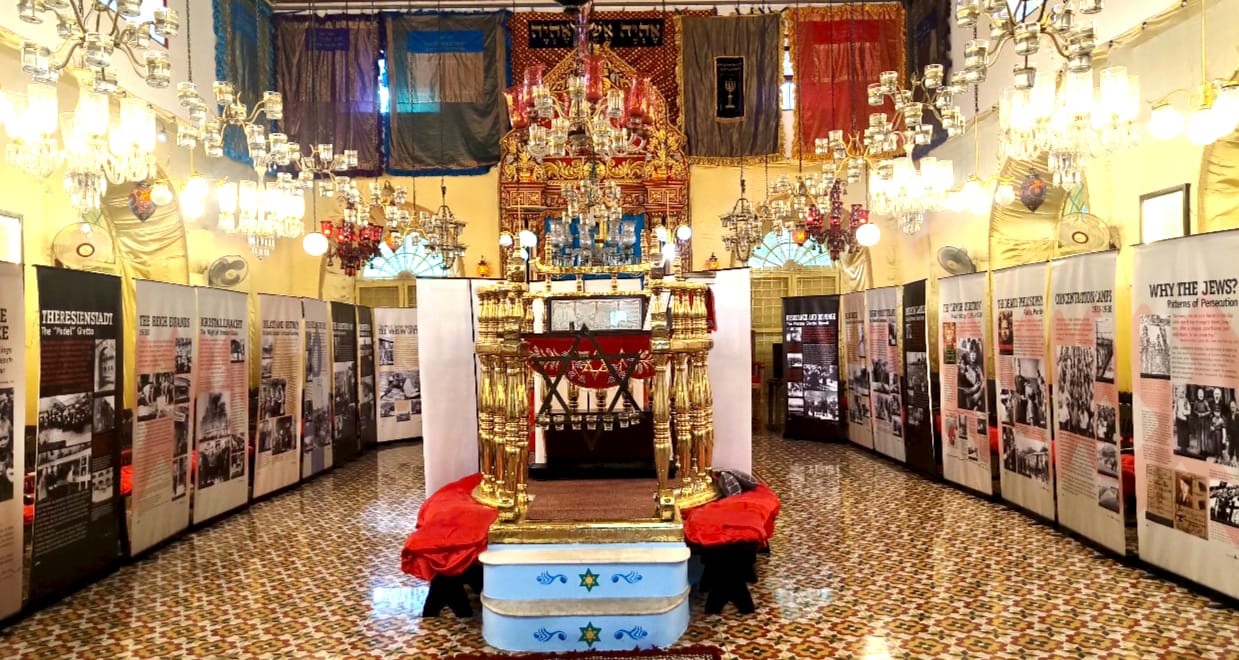
Kadavumbhagam Synagogue, Kochi

Synopsis: Kochi is home to around 38 linguistic, ethnic and religious communities. Despite the city’s long history of coexistence, an attempted arson near the Kadavumbhagam Synagogue and a fire at the heritage Koder House have sparked a rumour mill, with claims pointing to sources ranging from Islamic extremists to the Lawrence Bishnoi gang. Investigations are still underway into the synagogue arson, while no deliberate cause has been established for the Koder House fire. An official told South First that fabricated content and unverified claims are being deliberately manufactured to drive up attention.
On a Sunday morning in October 2023, Jehovah’s Witnesses gathered for a regional prayer convention at the Zamra International Convention Centre in Kalamassery, Kochi. At around 9.40 am, three successive improvised explosive device (IED) blasts tore through the gathering. Five women, two men and a child were killed, and more than 50 others were injured.
Before the police could establish what had happened, two narratives had taken hold. One blamed Islamic extremists, citing the area’s sizeable Muslim population. The other speculated that the explosions resulted from an accident or a lapse at the nearby Naval Armament Depot.
Hours later, a man named Dominic Martin surrendered at a police station in Kodakara. He had planned and carried out the attack using bomb-making information sourced online, the police said. The investigation found no links to any terrorist organisation.
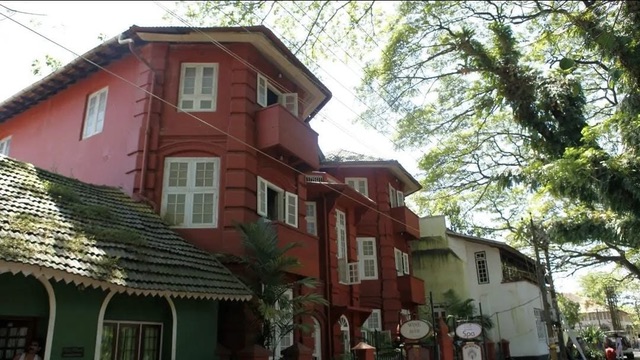
Koder House is among the prominent historic buildings in Fort Kochi. (File photo)
Nearly three years later, two more incidents have put Kochi’s minority communities at the centre of fresh speculation: a fire at the heritage Koder House in Fort Kochi on 29 September and an attempted arson near the Kadavumbhagam Synagogue in Ernakulam Market on 12 October.
The claims now range from Islamic extremists to the Lawrence Bishnoi gang, but follow a familiar pattern: fabricated content exploiting the incidents to attract attention and drive up engagement.
Also Read: Crying wolf over Kashi, Jinnah and beef: North Indian vlogger angers Keralam with Fort Kochi video
Kochi is home to around 38 linguistic, ethnic and religious communities, including domestic and international migrants. They include Konkan and Goan settlers, Gujarati and Kutch traders, the Tamil diaspora, Telugu and Kannada communities, Kashmiris, Marwari Brahmins and Agarwals.
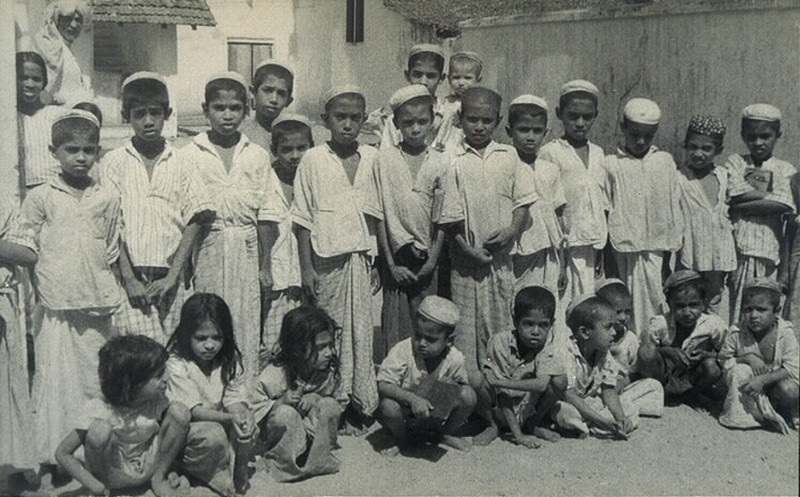
Jewish children in Kochi, 1936 (Wikimedia Commons)
Malabari and Paradesi Jews, Anglo-Luso Indians and other communities have also made Mattancherry and Fort Kochi their homes over centuries of maritime trade.
Keralam’s spice trade drew Jewish settlers from West Asia to its ports. Over the centuries, Kochi developed a Jewish community broadly divided into two groups: Malabari Jews and Paradesi Jews.
Malabari Jews are believed to have arrived from West Asia much earlier and intermarried with local communities. Paradesi Jews arrived mainly in the 15th and 16th centuries from Europe and the Ottoman Empire, and largely preserved their European ancestry through marriage within their community.
Today, only around 15 Malabari Jews and one Paradesi Jew remain in Kochi, according to Thoufeek Zakriya, a historian specialising in the city’s Jewish community and an epigrapher.
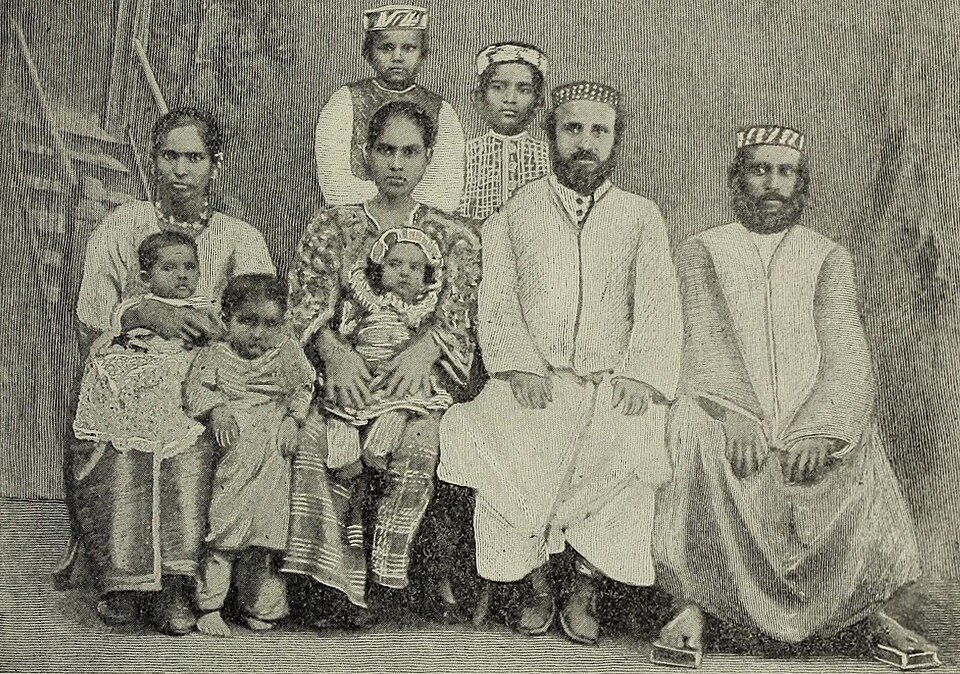
A Malabari Jewish family, 1900 (Wikimedia Commons)
Elias Josephai, caretaker of the Kadavumbhagam Synagogue, had earlier told South First that “Jews never lived in peace” during an interview about the lives of Jewish communities across the world. He declined to comment after the attempted arson at the synagogue.
The community has never faced attacks by extremist groups, Zakriya said. During periods of geopolitical tension, however, the government has routinely arranged police security for synagogues as a precaution.
In Ruby of Cochin: An Indian Jewish Woman Remembers, Ruby Daniel and Barbara C Johnson document the social conditions in which Kochi’s Jewish community lived.
“The book describes how the Jews here often lived with a sense of apprehension, not because Keralam was unsafe, but because of geopolitical developments. During World War II, for instance, they feared that Germany might attack them. They considered the possibility of an attack an obvious concern, but nothing of that sort ever happened. There have been no attacks on the community or its synagogues,” he told South First.
The Koder House, believed to date back to the Dutch period in Kochi (1663–1795), was bought and renovated in the 19th century by SS Koder, the patriarch of a Paradesi Jewish family in Fort Kochi.
Thoufeek Zakriya said no synagogue in Kochi remains fully active, though some religious practices continue at two synagogues.
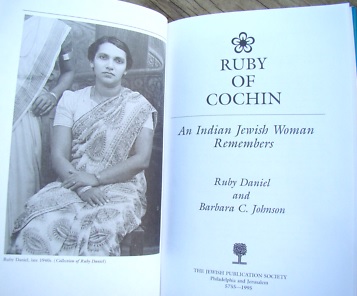
Ruby of Cochin: An Indian Jewish Woman Remembers documents the social conditions in which Kochi’s Jewish community lived.
“Conducting prayers requires at least 10 men above the age of 40. There is also no rabbi at these synagogues. At the Kadavumbhagam Synagogue, Elias brought a Torah from Israel in 2018 and learned the religious practices. Prayers are held only when Israeli tourists visit,” he told South First.
Kochi-based cultural curator Bony Thomas said the attempted arson at the Kadavumbhagam Synagogue should not be given a communal colour before the facts are established.
“Adding communal colour to the recent incident at the Kadavumbhagam Synagogue is unnecessary. Without any verification or clear indications of the motive behind the act, how can we blindly manufacture narratives? The Jewish community in Kochi is shrinking, as many of its members have migrated to different parts of the world,” he said.
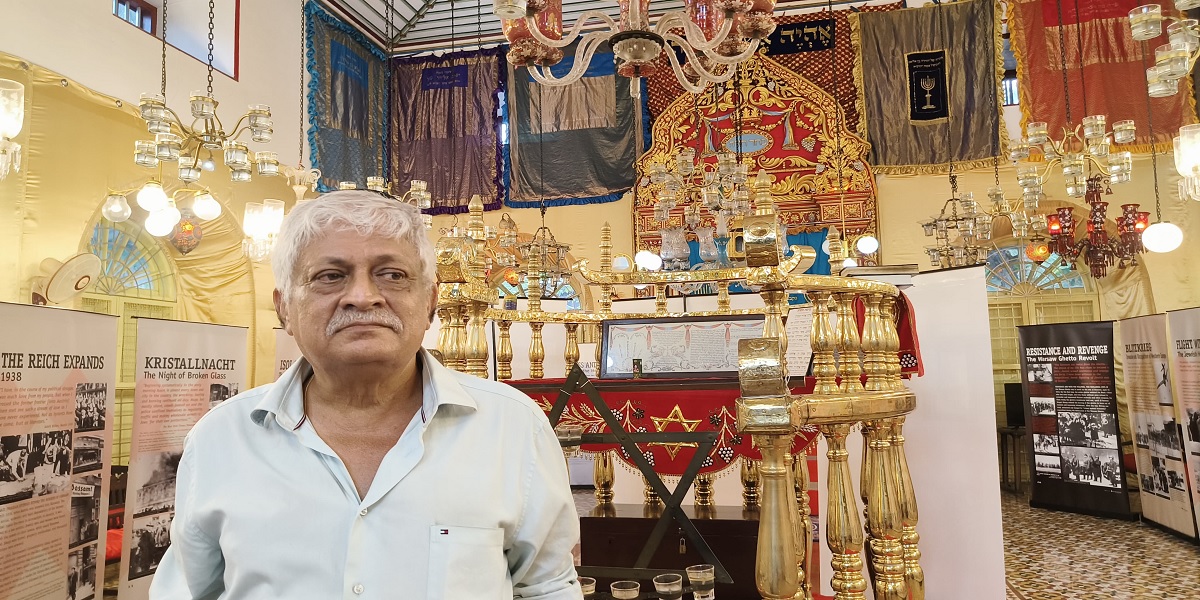
Elias Josephai/South First
Ruby of Cochin: An Indian Jewish Woman Remembers traces the community’s history of persecution, uncertainty and migration. It describes the Portuguese conquest of the 16th century as the period when Cochin’s Jews faced their most severe religious persecution and fear.
The book also recounts the anxieties surrounding India’s Independence in 1947, the economic and political changes that followed, and the eventual mass migration, or aliyah, of community members to the newly established state of Israel in 1951.
Also Read: Actor Balu Varghese faces legal notice over alleged misconduct; Sushin Shyam shares report
Ernakulam Central Police have arrested a resident of Vadayambadi in connection with the Kadavumbhagam Synagogue arson. Ebin B Paul, 32, is caught on CCTV camera arriving in a car and walking towards the spot where the fire started with a can of petrol.
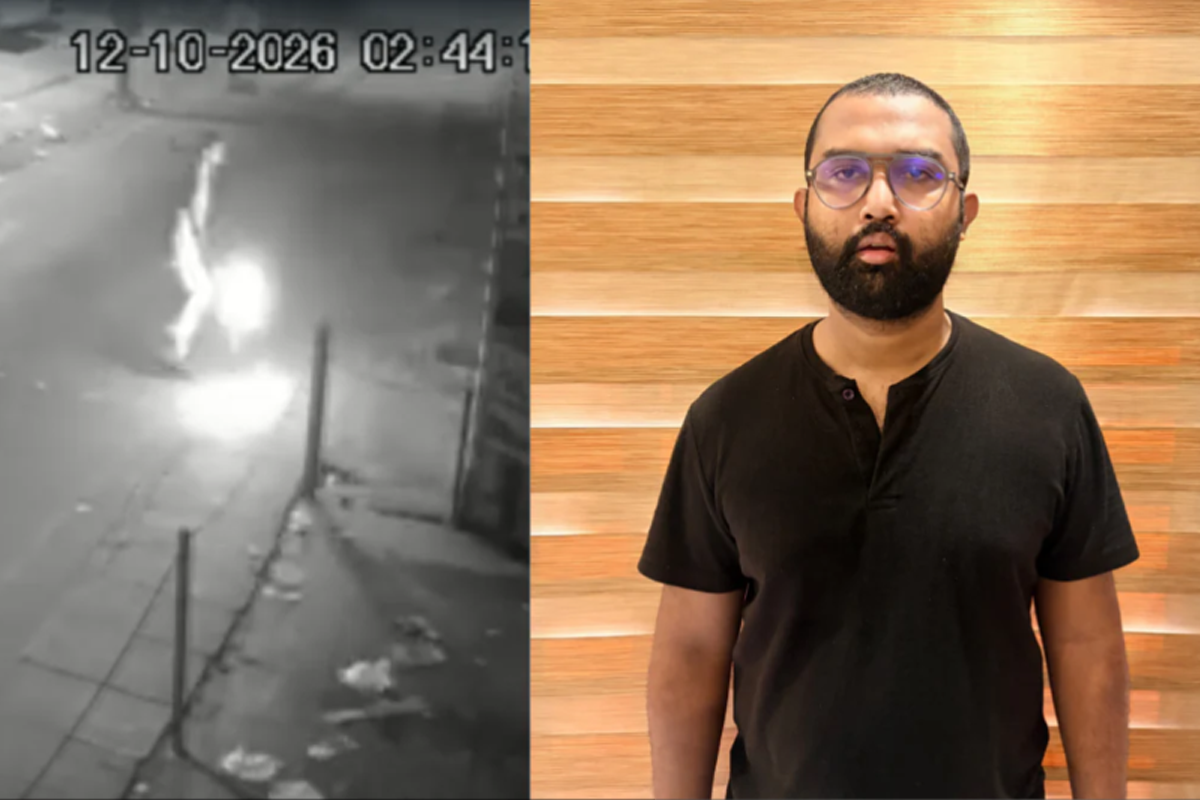
Police arrested Ebin Paul after a nursery outside Kochi’s synagogue was set ablaze.
Police also found indications that Paul acted on instructions from a person identified as “Boss” through an anonymous Telegram account. They suspect he received cryptocurrency after sending the person a video of the attack. Documents seized during the investigation point to possible links between Paul and a suspicious group, police said.
The Kochi City Police have written to Telegram seeking details that could help identify the account holder.
The National Investigation Agency (NIA) and the Intelligence Bureau (IB) are examining the digital conversations for links to foreign terrorist groups.
Police have also invoked the Unlawful Activities (Prevention) Act (UAPA) against Paul. The investigation team has submitted a report to the Ernakulam magistrate court. Sections 16 and 18 of the UAPA prescribe punishment for terrorist acts and conspiracy to commit terrorist acts, respectively.
The investigation is ongoing, and police have yet to establish a clear link to any extremist groups. Separately, police have yet to find evidence that the fire at the Koder House was deliberate.
Also Read: Keralam’s Labour Codes dilemma: Rules delayed, safeguards at stake, can talks break the deadlock?
Manufactured claims linking the synagogue case to the Lawrence Bishnoi gang were being circulated merely to attract attention, according to a cybersecurity official, who requested anonymity.
“Linking this case to the Lawrence Bishnoi gang merely to gain traction is manufactured news. I am not saying the investigating team will not examine this angle. They will examine every possibility. But spreading narratives and creating digital footprints before anything is established can cause further damage, especially when algorithms know how to manipulate us,” they said.
Nandakishore Harikumar, a cybersecurity expert and founder of Falcon Feeds, told South First that Telegram’s user-friendly interface and privacy features have made it a platform for various illicit activities.
Unlike Google and Meta, Telegram does not readily share user data in response to requests from governments and investigating agencies, he said.
Harikumar cited two recent cases in the United States in which Telegram reportedly shared data, including a case involving Mahmoud Amin Ya’qub Al-Muhtadi.
“Extensive data-sharing could help curb illicit activities on the platform. But there are geopolitical aspects to this as well. How Telegram responds to India’s requests remains a question,” he said.
Harikumar also warned that misleading information and unverified photographs can remain online long after the claims they support have been disproved.
He cited the Sukumara Kurup case in Keralam, referring to a photograph of an ordinary person wrongly identified as being associated with the case. The photograph continues to circulate online, he said, while the channel that published it has not apologised.
(Edited by Dese Gowda)



