
Published Nov 23, 2026 | 7:00 AM ⚊ Updated Nov 23, 2026 | 7:00 AM

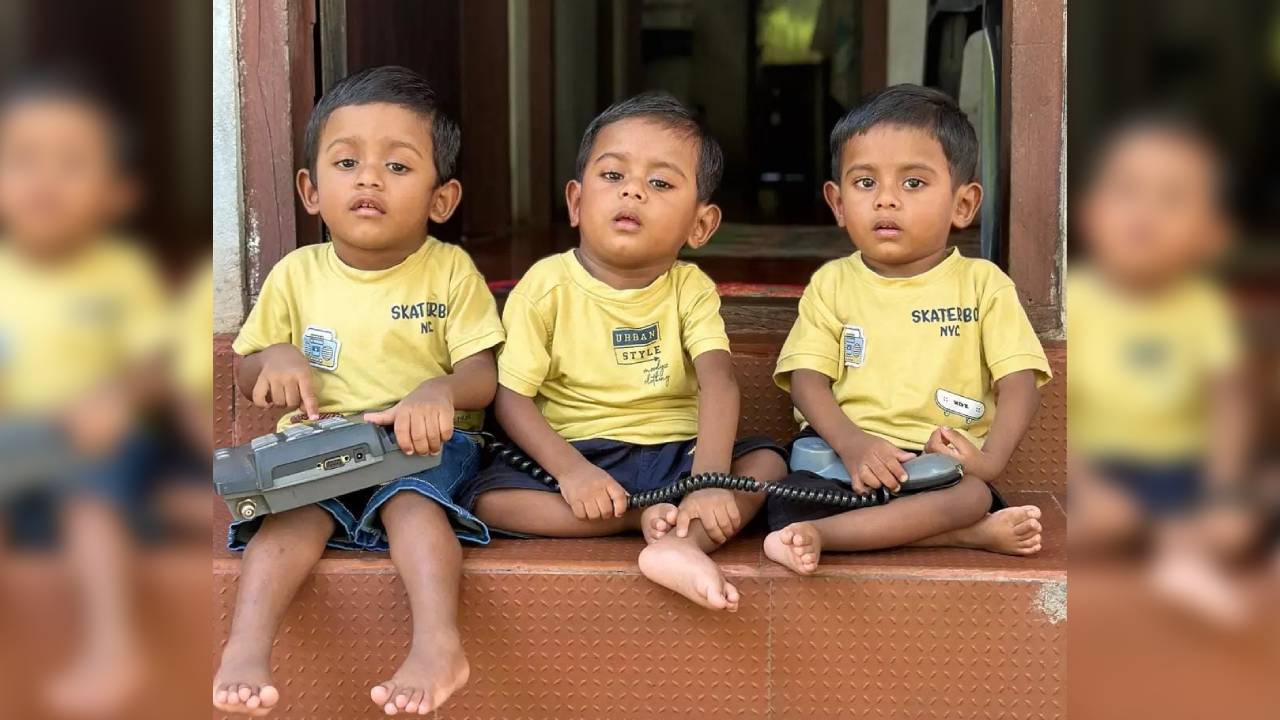
Triplets - David Magnus Arun, Ethan Mosses Arun and Oliver Jonah Arun - who were diagnosed with SMA Type 2

Synopsis: Three 20-month-old brothers battling a rare genetic disorder have brought Keralam together in an extraordinary ₹50-crore fundraising campaign. From bus conductors setting aside daily collections to schoolchildren donating pocket money, people are doing their bit to help the triplets access a costly gene therapy before they turn two. But misinformation and an alleged fundraising fraud have dented public confidence, slowing donations as the family races against time.
A bus conductor setting aside a day’s collection, schoolchildren handing over their pocket money, organisations contributing their savings, and people organising musical nights and even biriyani-eating challenges to raise funds.
Across Keralam, and beyond, an extraordinary campaign is unfolding, with people finding their own ways to contribute to a cause that has brought strangers together.
Geographical boundaries, financial differences and social identities have taken a back seat as the state rallies behind three little boys who have not known a life without medical battles.
David Magnus Arun, Ethan Mosses Arun and Oliver Jonah Arun, the 20-month-old triplet sons of Arun P.D. and Shalmi of Kallurutty in Omassery, Kozhikode have all been diagnosed with Spinal Muscular Atrophy (SMA) Type 2, a rare genetic disorder that progressively weakens muscles.
Their hope rests on one of the world’s most expensive medicines -Zolgensma, a one-time gene therapy, administered as a single intravenous infusion, and is intended to address the genetic defect responsible for SMA.
The family estimates that it may cost around ₹17–18 crore for each child.
With the family and support committee setting a staggering ₹50-crore target for all three, the campaign has become a race against time, as doctors stress that the treatment is most effective before the children turn two.
What began as a few appeals to friends and acquaintances has grown into a remarkable public movement, bringing together people from across Keralam and the Malayali diaspora within and outside India in a collective effort to give three young lives a chance.
But the campaign has had to contend with more than the enormous financial target.
False claims that the required amount had already been raised and a separate alleged fraud involving unauthorised collections have affected public confidence and slowed donations.
Also Read: A new economic equation? Keralam’s twin bets for the next five years
For Arun and Shalmi, every passing day matters. The children need to undergo the necessary medical assessments and other procedures before the medicine can be ordered, making the age deadline particularly important.
Speaking to South First, Arun said the controversies had taken a toll on the fundraising effort, with potential donors becoming increasingly cautious about where their money was going.
“After the fraud incident, contributions started coming down. People have their concerns and naturally become doubtful. Some even cross-check whether the contact number given in an appeal actually belongs to me,” he said.
The triplets were diagnosed with SMA, a rare genetic disorder that progressively damages the motor neurons responsible for controlling muscle movements.
The condition causes increasing muscle weakness and can affect a child’s ability to sit, crawl, walk, swallow and breathe. Without appropriate treatment, it can lead to severe disability and, in some cases, life-threatening complications.
Doctors have advised the parents to explore gene therapy while the children are still below two years of age.
Zolgensma, which contains a functional copy of the defective SMN1 gene, is administered through a one-time intravenous infusion lasting approximately an hour.
The treatment is designed to help the body produce the protein needed for the normal functioning of motor neurons. However, it is not a straightforward procedure. Patients must undergo a series of medical assessments before they are considered eligible for the therapy.
For the three children, the estimated cost is around Rs 50 crore, an amount far beyond the family’s means.
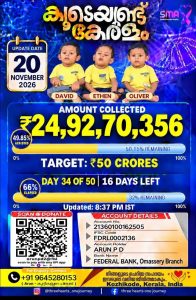
Target achieved as of 20 November
The parents initially approached relatives, friends and well-wishers for assistance. What began as an appeal within their personal circle gradually developed into a statewide fundraising campaign.
A treatment assistance committee was formed in October, with the participation of people’s representatives and local organisations. MPs, including Priyanka Gandhi and M.K. Raghavan, MLAs, the district panchayat president and the Mukkam Municipality chairperson were among those named as patrons of the initiative.
Following a convention in Omassery, 17 local self-government institutions in the Thiruvambady and Koduvally Assembly constituencies joined hands to coordinate the fundraising effort.
A dedicated bank account was opened at the Federal Bank’s Omassery branch to receive contributions. The committee announced that the account would stop accepting donations once the Rs 50-crore target was achieved.
The appeal soon reached far beyond Kozhikode. Private bus operators organised a ‘Karunya Yatra’, setting aside the collections of a day’s services for the children’s treatment. Schools, student groups, residents’ associations and other organisations organised fundraising programmes. One school initiative alone mobilised more than Rs 1.25 lakh.
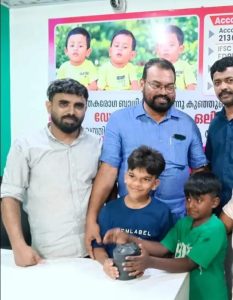
Children contributing their share towards the treatment assistance
Contributions also began arriving from different parts of Keralam and expatriate communities.
The initial response was encouraging.
At the peak of the campaign, daily contributions touched Rs 1.4 crore to Rs 1.5 crore. By November 7-8, around 20 days after the intensive drive began, the collection had reached approximately Rs 16.5 crore.
However, the momentum did not last.
Two separate incidents have complicated the campaign: misinformation about the fundraising target and an alleged fraud attempt to collect money using the children’s medical documents.
In early November, audio messages and social media posts began circulating, claiming that the entire Rs 50 crore had already been raised. Some messages even claimed that the designated bank account was no longer operational and urged people to stop contributing.
The claims were false. At the time, the committee had collected only around Rs 16.3 crore.
The impact was quickly felt.
Daily contributions, which had earlier touched more than Rs 1 crore, reportedly fell to between Rs 20 lakh and Rs 35 lakh.
Volunteers campaigning in different areas also began encountering people who believed the fundraising target had already been met.
Arun and committee representatives issued appeals asking people not to circulate unverified information. They clarified that the bank account would remain open until the target was reached and indicated that they would approach the cyber police over the misleading messages.
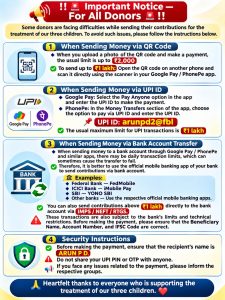
A word of caution from the committee
A separate controversy emerged when the Mukkam police registered a case against Nizam, chairman of the Sree Lakshmi Charitable Trust based at Mampetta, over allegations of collecting donations in the triplets’ names without the treatment committee’s approval.
According to the committee’s complaint, the trust chairman had used the children’s treatment documents and fundraising cards to solicit contributions but directed the money to a QR code linked to a family member’s bank account rather than the designated campaign account.
Around Rs 1 lakh was allegedly collected through the unauthorised appeal. The police registered a case invoking provisions relating to cheating under Section 318 of the Bharatiya Nyaya Sanhita and froze the linked bank account. The investigation also looked into other alleged collections and transactions.
The committee has since repeatedly urged donors to verify the details before transferring money and to contribute only through the officially designated account.
Arun said the decision to pursue Zolgensma was driven by the long-term cost and the need to ensure continuity of treatment.
The children have been receiving Risdiplam, a medicine used to treat SMA.
Under the state government’s KARE (Kerala United Against Rare Diseases) programme, eligible patients receive the medicine free of cost.
The government has also been widening access to the treatment, including extending eligibility for free Risdiplam to patients with SMA Type 2 up to the age of 25.
Before receiving government assistance, the family had to spend approximately Rs 58,000 every month for the three children. Five bottles of the medicine were required each month, with the dosage determined by the children’s body weight.
“As the children grow, their weight increases and the dosage also has to be increased. That means the cost will keep rising. We approached the government, and two of our children have been provided the medicine free of cost. The documents submitted for the third child are still under consideration,” Arun said.
Although Risdiplam has provided access to treatment, the parents are concerned about the financial burden of continuing it over the long term.

A word of caution before contributing
“That medicine has to be given throughout their lives. When we look at the long-term expenses, it becomes very costly. Also, the results are slow. That is why we decided to explore the possibility of a one-time gene therapy such as Zolgensma,” he said.
The parents hope the treatment will give their children a better chance at a normal childhood.
“We want our children to be back to normal. The government is supporting us, but there are several procedures that have to be completed before the medicine can be ordered. That is why we are so particular about the timeline,” Arun said.
Also Read: Doctors link Instagram-promoted fairness cream to serious kidney disorder in Keralam teenager
Zolgensma, whose active ingredient is onasemnogene abeparvovec, is a gene replacement therapy developed for patients with SMA caused by mutations in the SMN1 gene.
In SMA, a defect in the SMN1 gene prevents the body from producing sufficient amounts of the survival motor neuron (SMN) protein, which is essential for motor neurons.
The resulting damage leads to progressive muscle weakness.
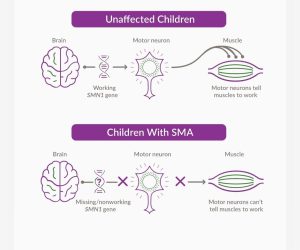
The difference
courtesy – Novartis
Zolgensma uses a modified, harmless adeno-associated virus (AAV9) to deliver a functional copy of the SMN1 gene into the body. This helps the cells produce the protein needed to support motor neuron function.
It is administered as a single intravenous infusion over approximately 60 minutes in a hospital under specialist supervision.
The treatment is approved for specific patient groups, and eligibility depends on genetic findings, clinical assessment and other medical criteria.
Its use in children aged two and above has limited supporting evidence, making early treatment particularly important in the case of young children.
However, being below two years of age does not automatically make a child eligible.
Several tests and medical assessments are required before the therapy can be administered.
Also Read: Hit by a bus, driven to act: The story behind Idivandi. com
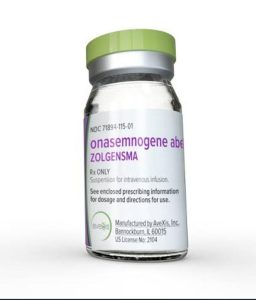
Zolgensma
courtesy – Novartis
A paediatric neurologist at a government hospital explained that obtaining Zolgensma involves regulatory, financial and medical procedures.
As the medicine is imported for individual treatment, the family must follow the applicable import-permit process.
Under Rule 36 of the Drugs and Cosmetics Rules, 1945, an application in Form 12A can be submitted to the Central Drugs Standard Control Organisation (CDSCO) for permission to import a drug for personal use. If approved, the authority issues a permit in Form 12B. The application requires a prescription from a registered medical practitioner.
The manufacturer and its authorised supply partners also have to coordinate with the treating hospital to arrange the medicine.
The manufacturer, Novartis, requires the necessary treatment documentation, the child’s exact weight and confirmation of medical eligibility.
Since the medicine is prepared and supplied for individual patients and requires strict cold-chain handling, arrangements for payment and delivery have to be completed before the supply process can move forward.
The family may also have to demonstrate financial readiness through arrangements such as an escrow account, bank guarantee or other proof of funds, as required by the supply process.
The children must also undergo specialised blood tests to establish whether they are suitable candidates for the treatment.
“These include genetic tests to confirm the SMA diagnosis, an anti-AAV9 antibody test, liver and kidney function tests, a complete blood count and cardiac assessment. The results are crucial to establish their eligibility and ensure they are fit to receive the treatment,” said the paediatric neurologist.
Children receiving Zolgensma also require corticosteroid medication to manage the body’s immune response, along with regular monitoring of liver function and platelet counts for several months.
For the family, completing these procedures while the children remain within the recommended age window is another reason the fundraising cannot afford to lose momentum.
And as Arun points out, every delay has consequences when the treatment window is measured in months rather than years.
(Edited by Fayisa CA)



