

Published Nov 21, 2026 | 11:25 AM ⚊ Updated Nov 21, 2026 | 11:25 AM

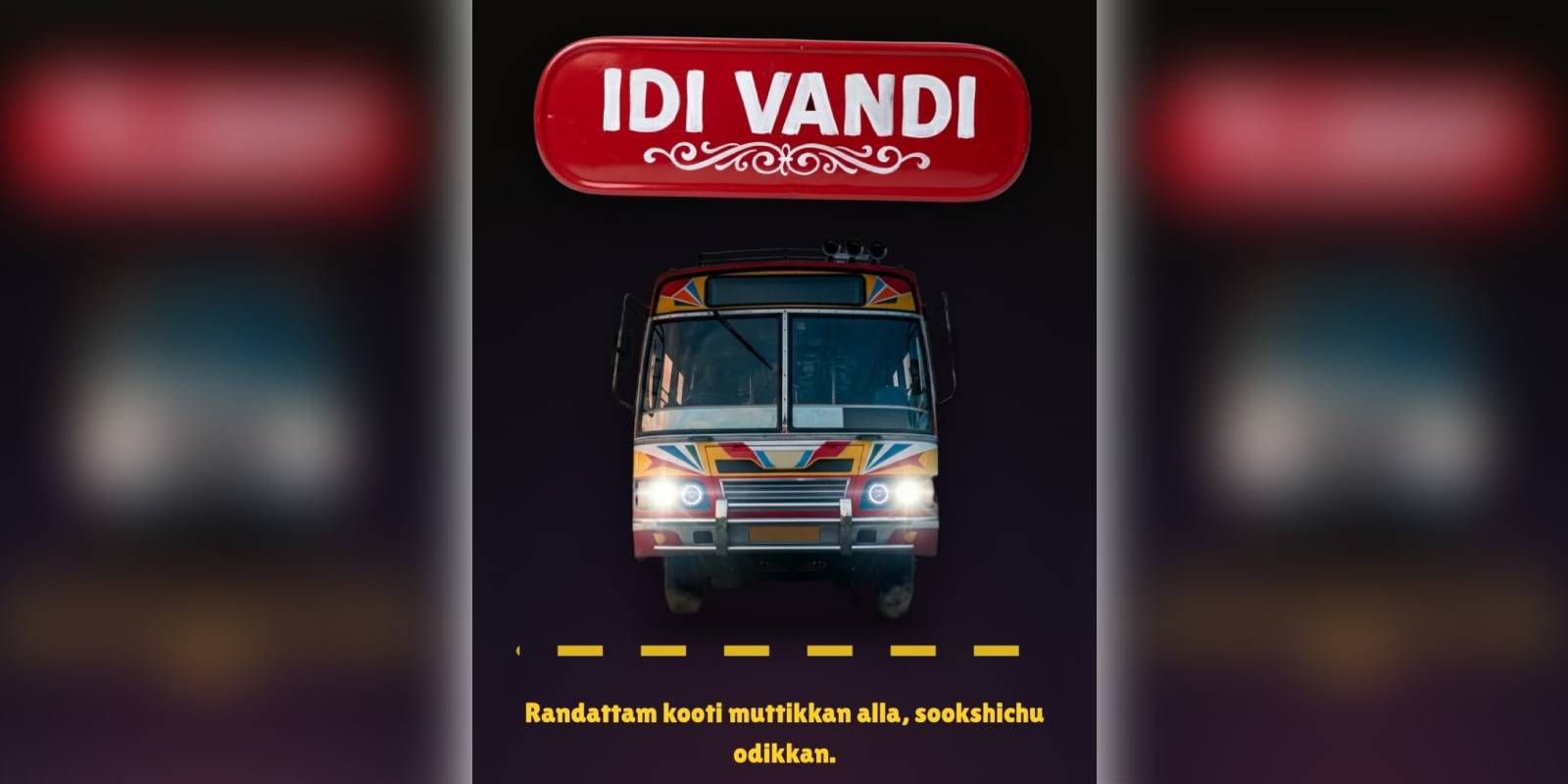
Idivandi. com, a crowdsourced platform designed to put errant buses under public scrutiny and push the authorities to act

A private bus rammed into his brand-new car and drove away without taking responsibility.
The experience left Bengaluru-based entrepreneur Hrishikesh Vinod angry, but it also set him thinking about a problem that thousands of motorists in Keralam encounter on the roads every day.
His answer was Idivandi. com, a crowdsourced platform designed to put errant buses under public scrutiny and push the authorities to act.
Also Read: ‘Breakdown in collective responsibility’: Adoor Prakash renews attack on CM Satheesan
Hrishikesh, founder of a Bengaluru-based marketing agency, had travelled to Kannur in late April 2026 in his new Toyota Hilux to surprise his parents.
The excitement of bringing home the vehicle was short-lived. Just two days after showing it to his family, he found himself dealing with an accident after a private bus coming from the opposite direction struck the rear of his parked car.
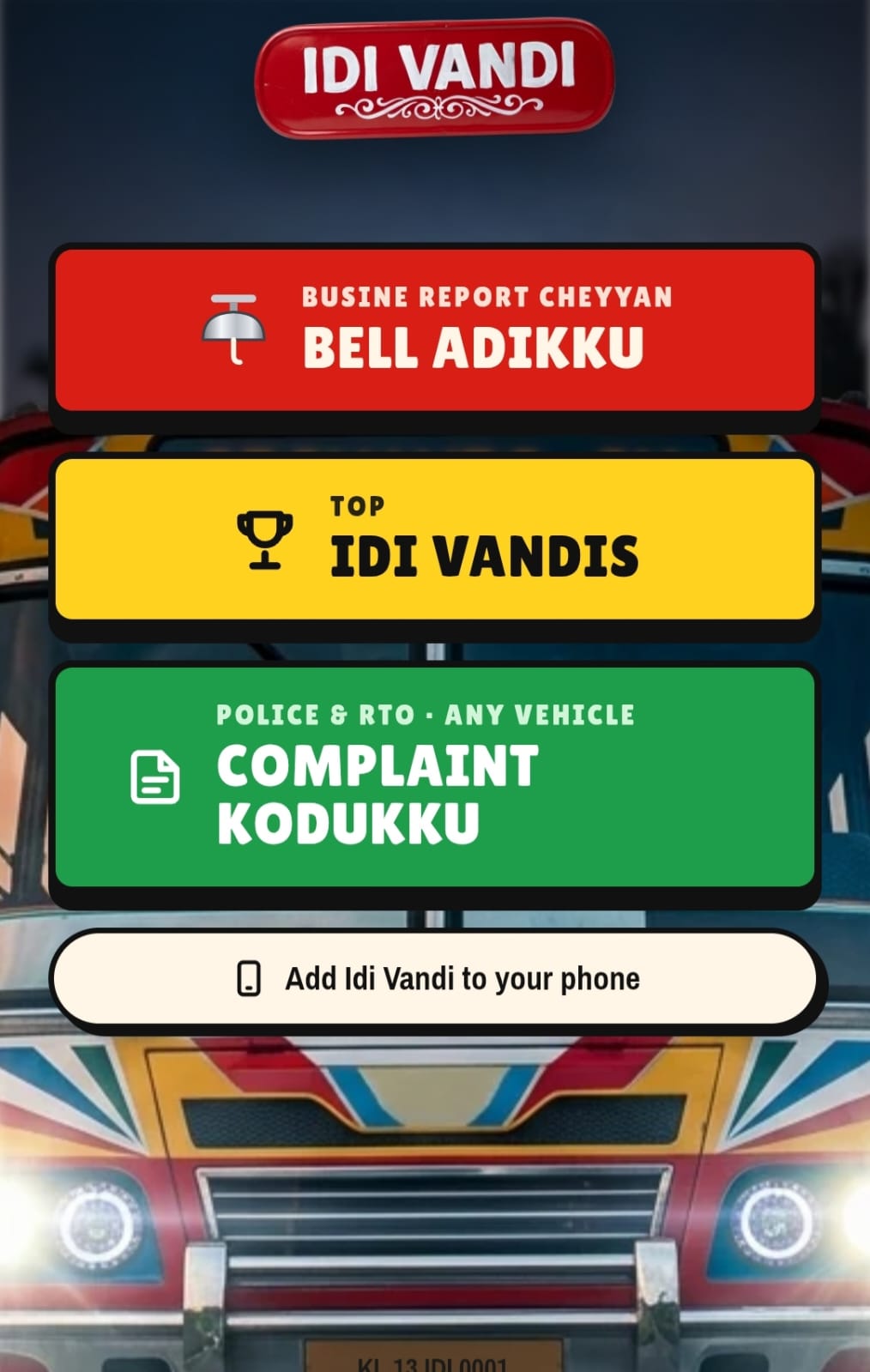
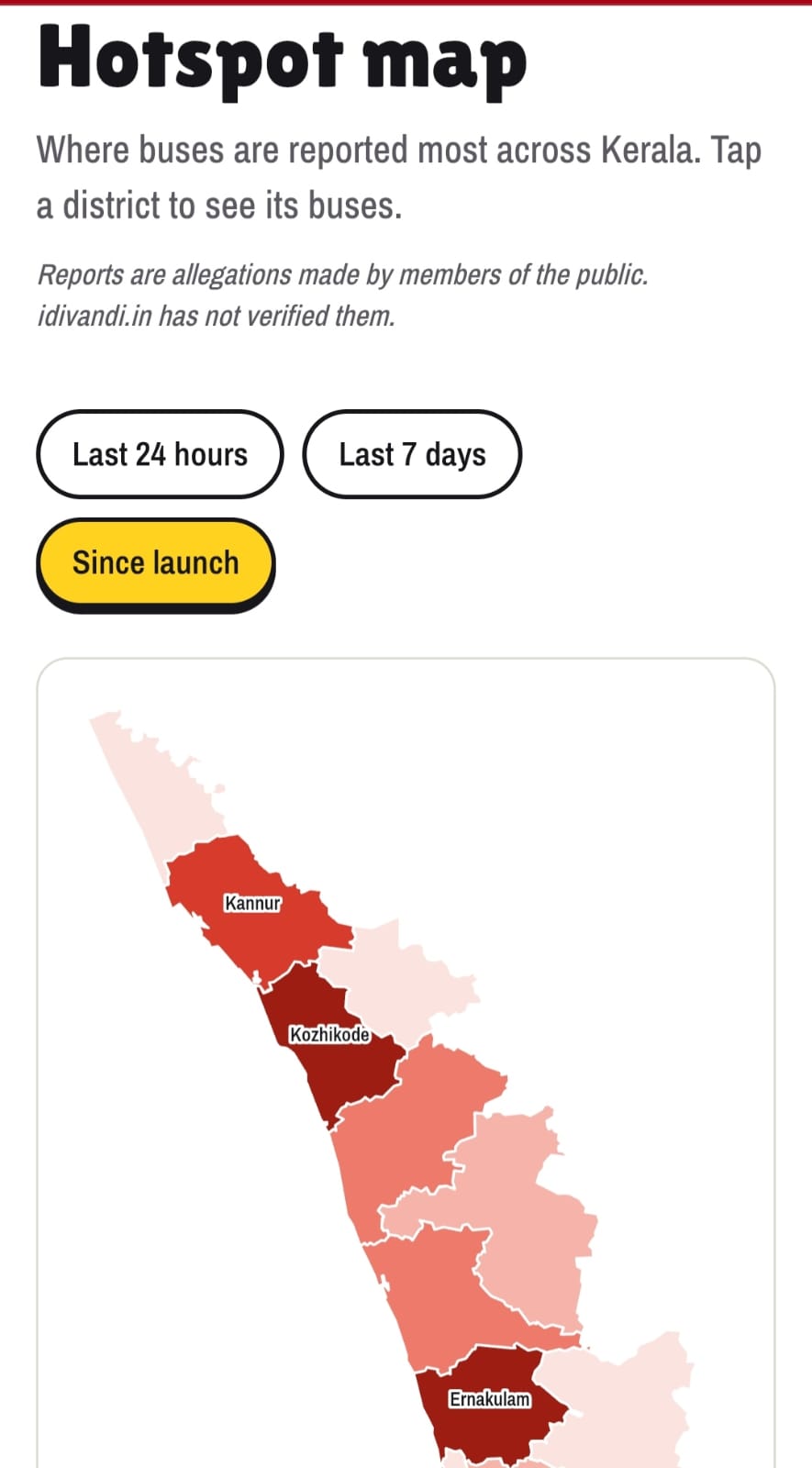
Screengrab of the platform. (Supplied)
There was little sense of accountability at the scene. The bus owner was absent, while the staff who were present showed no inclination to apologise or take responsibility for the damage.
Instead, the response was dismissive, with the expense of repairing an expensive vehicle seemingly being treated as the car owner’s problem.
His attempt to pursue the matter through the police also proved frustrating.
At the local station, he was left with the choice of registering a formal complaint and keeping his new vehicle there, or settling the dispute privately.
The response gave him little confidence that a complaint would be pursued with any urgency.
The incident brought into focus a larger fear he had developed while driving in Keralam.
For him, the problem was not simply the damage to his car, but the apparent lack of accountability surrounding reckless driving by some private buses.
According to Hrishikesh, the idea of creating a public record of offending buses took shape in April.
Inspired by public offender registries in Western countries, Hrishikesh wanted a platform where commuters could identify buses with a history of dangerous conduct rather than allowing each incident to disappear as an isolated complaint.
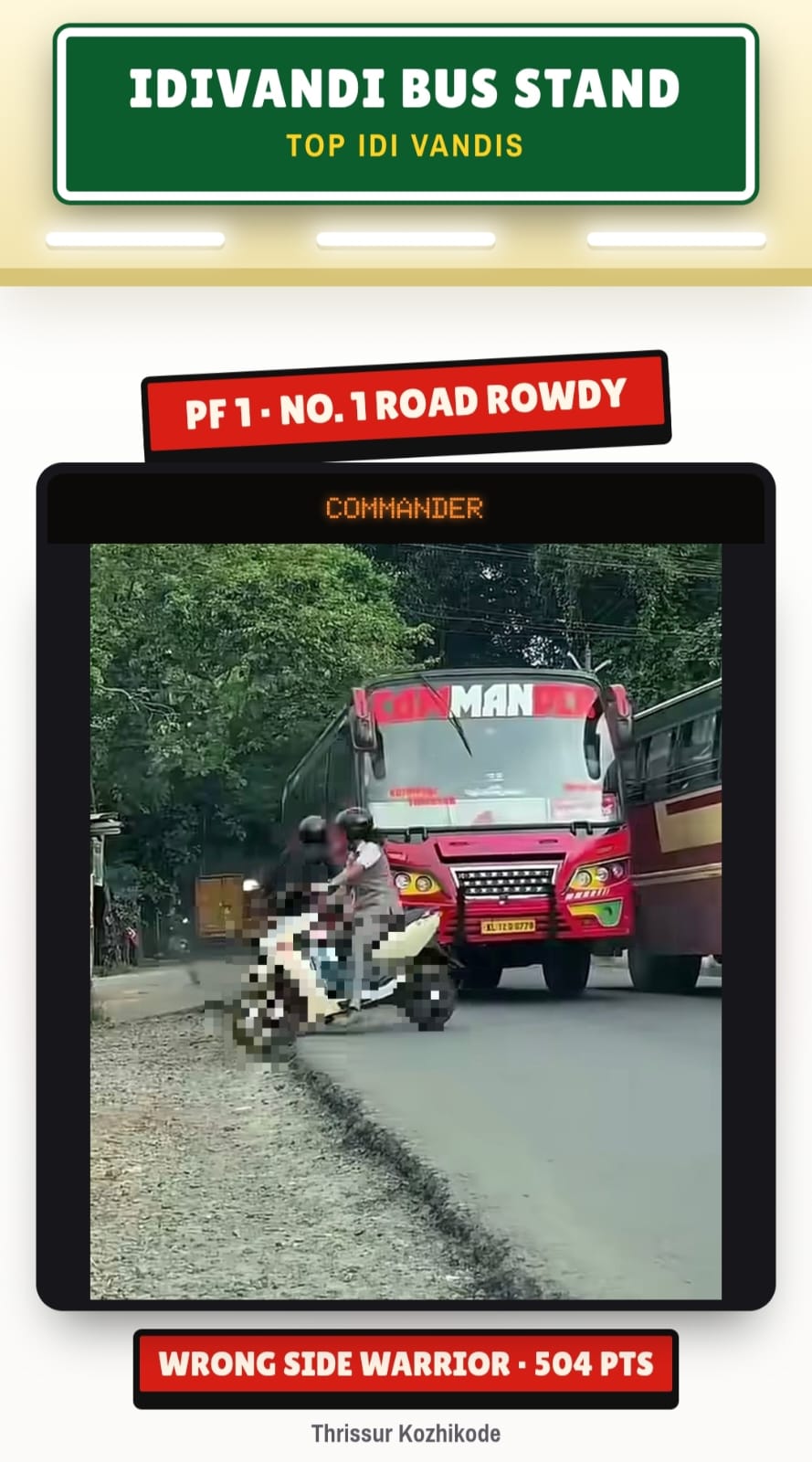
Screenshot of the complaint
He added that a series of fatal accidents in Keralam later gave the idea greater urgency.
On September 19, 52-year-old Anitha K.C. of Pullazhi in Thrissur was killed at Chettupuzha when a speeding private bus travelling from Kanjani allegedly attempted to overtake her scooter, knocked her down and ran over her.
Anitha, who cared for her bedridden mother, died at the scene.
Another fatal accident followed on November 4. Akshara A., an IT professional in her late twenties from Thrissur, was walking back from a gym along the Kakkanad-Infopark Road in Kochi when a speeding private bus named ‘Malayil’ hit her and ran over her.
The bus was subsequently found to have a record of previous violations.
A Facebook post by Akshara’s husband, Varun Sunil, further drew Hrishikesh’s attention to the case.
The combination of these tragedies, the alleged history of the bus involved and his own experience convinced him that the project should no longer remain an idea.
He built the website independently and launched Idivandi. com on November 9.
The name draws on the Malayalam slang ‘Idivandi’, used to describe buses notorious for rash driving and aggressive behaviour on the road.
Meanwhile, the term is also colloquially associated with police vans and buses, reflecting the perception that those taken into custody in them are often subjected to beatings.
The website, however, focuses on recording complaints against both private buses and KSRTC services.
Also Read: Promises, posts and political pressure: UDF struggles to share the spoils
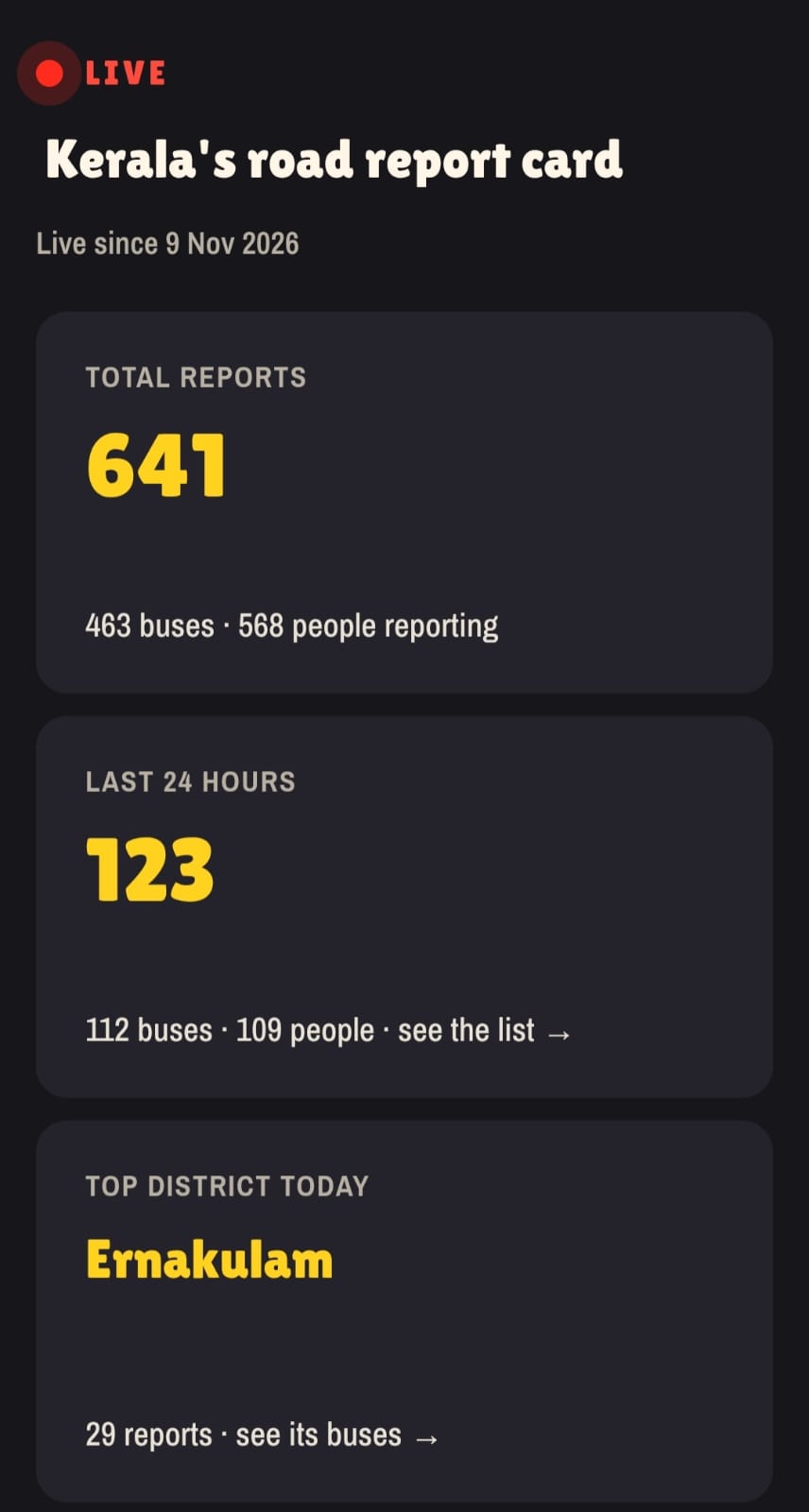
Keralam’s road report card. (Supplied)
Idivandi. com allows commuters to submit complaints and builds a cumulative record of violations against individual buses.
Each complaint attracts points according to the nature and seriousness of the alleged offence.
Rude behaviour, for instance, carries one point, while an accident resulting in physical injury or death attracts 10 points.
The scores are added up, with buses accumulating the highest number of violation points appearing at the top of the website’s ranking.
The bus with the highest score earns the dubious distinction of being listed as the number one ‘Idivandi’.
But the platform is not intended to be merely a public shaming list.
Its central objective is to turn complaints into documented cases that can be taken up with the Motor Vehicles Department (MVD).
Hrishikesh said the website has a verification process to prevent unsubstantiated allegations from being forwarded to authorities.
A witness account or a screenshot of a social media post is not sufficient for an official complaint.
 Submissions must come from the person directly affected and include a clear photograph as supporting evidence.
Once a bus attracts more than two valid, first-hand complaints backed by photographic proof, the system automatically emails the evidence to the concerned district office of the Kerala MVD.
The authorities are given 30 days to examine the complaint and respond.
If there is no reply, the platform sends three successive follow-up emails, each at an interval of 30 days.
If the department still fails to respond, a physical Right to Information (RTI) application is filed to establish what action, if any, has been taken.
According to Hrishikesh the larger purpose of having such a platform is to establish patterns of repeated violations and ensure that those responsible are held accountable.
Also Read: Over 15,600 social media posts taken down in six months of UDF rule
(Edited by Sumavarsha)



