

Published Oct 22, 2026 | 9:30 AM ⚊ Updated Oct 22, 2026 | 9:30 AM

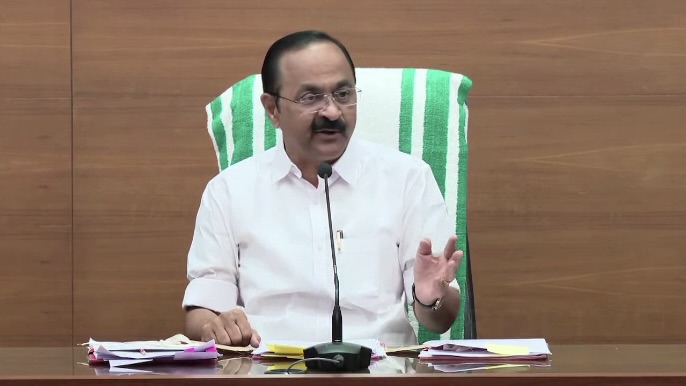
Keralam Chief Minister VD Satheesan.

Synopsis: Nearly a year after the Centre notified the four Labour Codes, Keralam is yet to frame its own rules. With trade unions raising concerns over minimum wages, job security, welfare funds and safeguards for migrant and contract workers, Chief Minister VD Satheesan is expected to resume talks with unions on 22 October to break the deadlock. Meanwhile, disputes over mass layoffs have brought the consequences of the new Codes into focus.
Keralam is yet to frame rules for the four Labour Codes that replaced 29 existing labour laws, leaving the State without a finalised framework for implementing the new provisions on wages, industrial relations, social security and working conditions.
The Code on Wages, 2019; the Industrial Relations Code, 2020; the Code on Social Security, 2020; and the Occupational Safety, Health and Working Conditions Code, 2020, were passed by Parliament in 2020 and notified in November 2025. Both the previous LDF government and the current UDF government in Keralam have opposed the codes.
Chief Minister VD Satheesan is expected to chair a meeting on the morning of Thursday, 22 October, to break the deadlock and reopen consultations with trade unions on framing the State’s rules. At its meeting on 29 July, the Cabinet had entrusted him with holding discussions with unions and arriving at a decision.
Satheesan has said the codes cannot simply be left unimplemented after the earlier laws were replaced. He has also assured trade unions that their concerns would be considered and workers’ rights protected.
The government will draw on the recommendations of an expert committee headed by retired Justice Gopala Gowda, which examined the changes required under the four codes.
The consultations will have to address several contentious issues, including the fixation of minimum wages, exemptions from building cess, occupational safety provisions, safeguards for migrant and contract workers, and provisions of the Industrial Relations Code.
Also Read: SC allows Pinarayi Vijayan to pursue appeal, stays CMRL-Exalogic probe for a week
The Keralam government has three proposed laws on the table to protect workers from the potential adverse effects of the Centre’s four Labour Codes, as it assesses the legal, administrative and socio-economic implications of the new labour framework for the State.
The proposed legislations are the Kerala Conferment of Permanent Status to Workmen Bill, the Informal Workers (Regulation of Employment and Conditions of Work) Bill, and the Kerala Sanitation and Housekeeping Workers (Recognition, Protection and Welfare) Bill.
The proposals stem from the recommendations of a committee constituted by the State government to examine the impact of the Labour Codes and suggest safeguards for workers. The committee, headed by retired Supreme Court Justice Gopala Gowda, submitted its report on 5 March.
Its members included Prof. KR Shyam Sundar and advocate Varkichan Pettah. Advocate Maitreyi Krishnan, Ravisankar Khandhi and advocate Gayathri Singh were co-opted members.
Constituted on 22 January 2026, the committee was tasked with identifying provisions in the Labour Codes that could adversely affect workers, employers and labour enforcement agencies in Keralam. It was also asked to recommend amendments to the codes and their rules, and propose new rules in conformity with the Constitution.
Also Read: ‘Labour laws a barrier to India’s development’, says Economic Survey
The committee compared existing labour laws with the new codes, examining provisions on wages, industrial relations, working hours, workplace safety, social security, fixed-term employment, gig and platform workers, migrant labourers and enforcement mechanisms.
Keralam’s opposition to the codes dates back to 2022, when the then LDF government convened a State-level workshop in Thiruvananthapuram on 2 July to discuss the draft rules. Trade unions, employers and legal experts took part. Elamaram Kareem, then a Rajya Sabha member and member of the Parliamentary Standing Committee on Labour, summarised the views expressed at the meeting.
Following concerns raised by trade unions over the possible consequences of implementing the new laws, the Labour Department took no further action at the time.
The discussions resumed with a National Labour Conclave organised by the Kerala Institute of Labour and Employment (KILE) in Thiruvananthapuram on 19 December 2025. Government representatives, trade unions, legal experts and officials discussed the challenges posed by the codes and possible responses.
The Centre brought the four Labour Codes into force on 21 November 2025, marking the transition to the new legal framework. The Union Ministry of Labour and Employment subsequently republished the Central Rules, 2026, for the four codes on 8 May 2026.
The Centre also directed States to re-notify draft rules published earlier and issue supplementary notifications required under the new framework.
Also Read: From Rs 6.2 lakh to Rs 15,900: A generic drug switch sparks safety debate in Keralam
A Labour Department assessment has flagged provisions in the new Codes that may not suit the State’s distinct labour conditions, recommending that the existing arrangements be continued in key areas.
The assessment also cited concerns that changes in wage fixation, welfare funding, migrant worker protection and job security could leave large sections of the workforce vulnerable.
On minimum wages, the State has expressed concern over replacing the existing system of scheduled employments with worker classifications based on skill levels — unskilled, semi-skilled, skilled and highly skilled.
Mapping individual jobs to these categories would be difficult in practice and could disrupt the existing wage structure, the assessment notes. The State favours retaining the scheduled employment system.
Labour Minister Bindu Krishna said 88 employment sectors in Keralam are included in the schedule under the Minimum Wages Act, 1948, with minimum wages fixed for 85 of them and revised periodically. With the enactment of the Central government’s Code on Wages, it is no longer possible to fix minimum wages for new sectors or revise existing rates in sectors already covered, she said.
Though the Central labour code has come into effect, the corresponding State rules are yet to be notified.
Until they are introduced, the existing wage structure, including minimum wages fixed or revised under the 1948 Act, will remain in force, the minister said.
Also Read: Kovalam spa case: TN Police probe alleged sexual exploitation of minor in Urapakkam
The proposed exemption from building cess for residential buildings costing ₹50 lakh or more is another concern.
The exemption could hit collections of the Construction Workers’ Welfare Fund Board and affect its financial stability, jeopardising pensions and other benefits for around 49,000 workers.
The State has also called for a wider definition of ‘worker’ under the Occupational Safety, Health and Working Conditions Code. It fears that charitable institutions, including hospitals, could use their status to escape statutory obligations if they are excluded from the law’s coverage.
The proposed wage ceiling of ₹18,000 for identifying inter-State migrant workers could leave most such workers in Keralam outside the registration framework, given the State’s relatively high wage levels. This, in turn, could weaken the reach of welfare and protection measures, the assessment says.
Keralam is also opposed to raising the threshold for contract labour licensing from 20 to 50 workers.
The change could leave workers in smaller establishments, including inter-State migrants, without adequate legal protection. The State wants the existing threshold of 20 to continue.
Job security is another major area of concern. Under the Industrial Relations Code, the threshold for applying standing orders would rise to 300 workers. Keralam, where the existing threshold is 50, fears that workers in smaller establishments would lose important safeguards.
The proposed increase to 300 workers in the threshold for requiring government approval for layoffs, retrenchment and closure of establishments could also weaken job security, the assessment warns.
It could create unequal levels of protection for workers depending on the size of their establishment.
The Labour Department’s assessment thus points to the need to preserve existing provisions in these areas, arguing that a uniform framework under the new Codes could overlook Keralam’s labour conditions and undermine protections built into the State’s existing system.
Also Read: Nedumbassery Mini Cooper crash fallout: Keralam mulls tougher drunk driving law
Amid the deadlock over the new rules, the Keralam Labour Department has intervened in disputes over mass layoffs at two companies.
At Corrohealth Infotech Ltd, the dispute over layoffs at its Ernakulam and Kozhikode branches was settled on 20 July, at a meeting chaired by the Labour Minister. The settlement provided for additional compensation equivalent to five months’ salary for the employees who lost their jobs.
In the case of Talrop Private Limited in Ernakulam, a meeting chaired by the Labour Commissioner on 4 August saw the management agree to pay the net salary due to all employees who had been laid off or had resigned from the company by 31 October. Employee representatives accepted the arrangement.
The government confirmed that the department had taken up the cases in response to reports of mass layoffs allegedly carried out under the pretext of the Labour Codes.
Meanwhile, the State has not taken a final decision on implementing the four Codes.
The UDF government’s position is that the Labour Codes cannot be kept out of force, as doing so could leave workers without legal protection following the replacement of existing labour laws.
Chief Minister VD Satheesan has called for their implementation in a way that safeguards Keralam’s labour sector and workers’ rights.
While the Congress has opposed certain provisions of the Codes, the State government wants to consult trade unions and address the clauses it considers anti-labour rather than leave the State in a legal vacuum.
(Edited by Dese Gowda)



