

Published Sep 04, 2026 | 11:56 AM ⚊ Updated Sep 04, 2026 | 11:56 AM

PAC

Synopsis: The first PAC meeting since the UDF returned to power has highlighted deepening organisational uncertainty, with key appointments and internal issues still unresolved. The discussions also appear to have exposed deeper divisions within the state Congress, signalling that the leadership crisis may take longer to resolve.
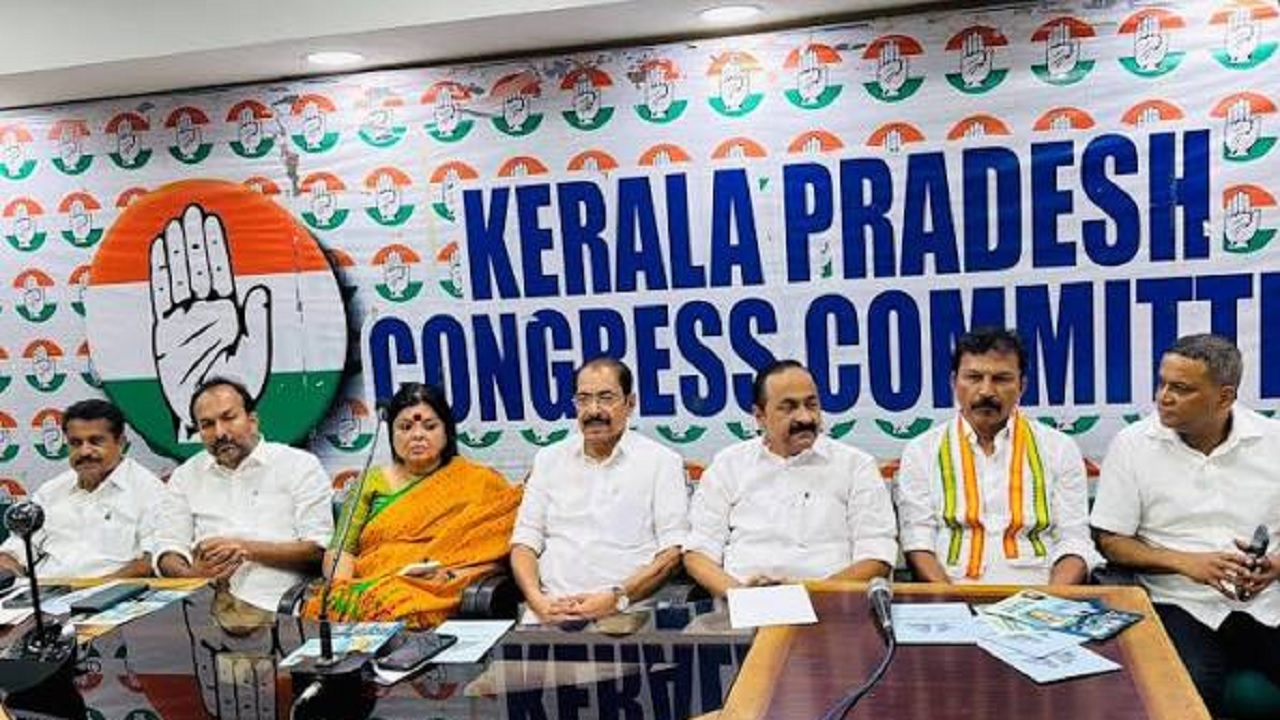
The first Political Affairs Committee (PAC) meeting of the Congress since the UDF returned to power, held at Indira Bhavan in Thiruvananthapuram on Thursday evening, offered fresh indications of the turmoil within the grand old party in Keralam.
The meeting came barely a week after the VD Satheesan-led UDF government completed 100 days in office, with its performance presenting a mixed picture. While the government has sought to project welfare delivery and fiscal transparency as its key achievements, questions over coordination between the Congress organisation and the government continue to persist.
At the same time, the government’s willingness to acknowledge mistakes, respond to criticism and even apologise has helped Satheesan project a more empathetic style of governance—something he also underlined while presenting the interim budget.
But the question remains: what about the Congress organisation?
Three months into power, there is growing criticism that the party’s organisational machinery has been left without lack of clarity. The problems are visible across levels—from local leadership to the District Congress Committees (DCCs) and the Keralam Pradesh Congress Committee (KPCC).
The appointment of a new KPCC president, for which there were fresh calls at the meeting, and Youth Congress chief, the long-pending DCC reshuffle, the internal crisis in the Mahila Congress, friction within the KSU and INTUC and pending appointments to boards and corporations have all added to the sense of drift within the organisation.
The PAC meeting initially raised expectations that the leadership would finally address at least some of these issues and offer a way forward.
However, according to South First sources who attended the meeting, the discussions appear to have deepened rather than eased the uncertainty within the state Congress.
Instead of signalling an immediate resolution, the meeting exposed how complicated the leadership crisis has become, with several organisational decisions still hanging in the balance and differences continuing to surface within the party. The PAC may have ended up making one thing clear—there will be no quick relief for the Congress in Keralam.

K C Venugopal with Rahul Gandhi
Speaking to South First, a senior leader who attended the meeting said it is increasingly visible that KC Venugopal is distancing himself from the state leadership.
“We expected him to be present today,” the leader said.
Although Venugopal does not hold an official executive post in the KPCC, his loyalists and factional allies occupy key positions within the state unit, giving him considerable influence over organisational appointments and major political decisions in Keralam.
“Without KC Venugopal, no major decision will come out of the Congress in Keralam. Sunny Joseph will continue as KPCC president for a few more months,” the leader told South First.
He also pointed out the challenges faced by Sunny Joseph, who is currently handling the Electricity portfolio in addition to his responsibilities as KPCC president. His ministerial position, the leader said, has been weakened following the controversy over the appointment of his brother-in-law, a senior Congress leader, to his ministerial team. The appointment was subsequently withdrawn amid opposition criticism over alleged nepotism.
“Sunny has lost some of his strength,” the leader said.
On the issue of organisational appointments, the leader said the party was now considering adopting a broad policy and clear criteria for filling key posts.
“Setting specific criteria is necessary, but it is not easy. Some positions, such as those in DCCs and other party units, can be filled based on seniority. But when it comes to important posts in boards and corporations, expertise also has to be considered,” he said.
The leader said the appointment process was likely to trigger considerable discontent within the party, particularly after the UDF’s return to power following a decade in opposition.
“Everyone is hoping for a position now. The party has come to power after ten years, and those who worked for the party will naturally expect something in return,” he said.
Another leader who attended the PAC meeting said organisational reorganisation and factional issues were not usually the primary focus of these discussions, which largely deal with policy matters. He said Venugopal appeared to be waiting for a clearer public assessment of the government and Chief Minister VD Satheesan before making any major political intervention.
“KC Venugopal and the national leadership are clearly waiting for a time when there is a clear public opinion about the Chief Minister and the government. That will take months. A 100-day assessment is not enough,” the leader told South First.
According to him, the top AICC leadership is also in no hurry to push through an organisational overhaul, preferring to first allow the government to establish itself.
“They have taken the position that the government should first deal with its merits and demerits. Neither the government nor the party can be handled single-handedly by one leader. It requires collective decision-making. Let them deal with the government first, then the party will take major decisions. No government can remain stable without a strong party base,” the leader said.
Meanwhile, some leaders also pointed out that KC Venugopal and the AICC leadership are currently focused on the upcoming Assembly elections in states such as Punjab, Manipur and Uttar Pradesh. They said that a reshuffle in state units, including Keralam, is likely to be made a priority only after these elections.
PM SHRI. (Supplied)
Several leaders at the Congress PAC meeting urged caution over the Centre’s PM SHRI education scheme, warning that the issue could create political complications for the UDF government. They pointed to the political fallout the controversy had caused the CPM and cautioned against the Congress becoming similarly embroiled.
Chief Minister VD Satheesan defended the government’s decision, saying a sub-committee would examine the issue and take a decision after consultations. KPCC president and Electricity Minister Sunny Joseph said the meeting had made it clear that Keralam’s secular character could not be compromised.
The PAC also reviewed the government’s first 100 days, with leaders praising the Onam celebrations, food distribution initiatives, Priyadarshini buses, Operation Toofan, flood relief efforts and vegetable kits distributed by the Agriculture Department.
The meeting also discussed the CPM’s electoral setback, with Sunny Joseph saying the opposition party’s central leadership had acknowledged administrative shortcomings and candidate selection as factors behind the defeat.
Senior leader PJ Kurien raised concerns over coordination between the party and government in the absence of a new KPCC president. Leaders cited Karnataka and Tamil Nadu, where changes in government were followed by changes in state Congress leadership. They said the Keralam unit would accept whatever decision the high command takes.
Kurien also called for consultations with party leaders before appointments to boards and corporations. Satheesan said the appointments would be completed by September 15.
According to sources, a KPCC executive meeting is expected soon.
Reimagining Keralam. (Supplied)
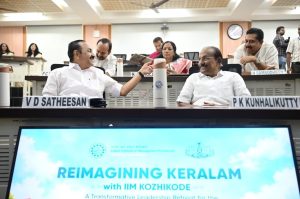
Meanwhile, the UDF government is moving ahead with Reimagining Keralam, a high-level strategic initiative aimed at preparing a long-term economic, social and technological roadmap for the state.
The two-day programme on September 4 and 5 brings together Chief Minister VD Satheesan, the Council of Ministers, faculty members from IIM Kozhikode and international experts to discuss policy beyond the demands of day-to-day governance.
It also focuses on equipping policymakers with data-driven approaches and exploring how artificial intelligence can improve public service delivery.
Satheesan, describing the experience on X as ”going to the classroom after years”, has signalled an openness to learning and adapting.
Yet, while the government is busy reimagining Keralam, the party that fought to bring it to power appears to be struggling to get its own house in order, with organisational tensions and factional differences only growing murkier.
Also Read:
‘Party is right, everybody else is wrong’: Can CPI(M)’s old formula still work in Keralam?
IUML turns the clock back as CPI, CPI(M) trade blows in public
A tip-off, a midnight flight and baby’s diaper: Kochi lead yields Rs 1 crore gold haul
(Edited by R Rajesh Kumar.)



