

Published May 06, 2026 | 10:17 AM ⚊ Updated May 06, 2026 | 10:17 AM

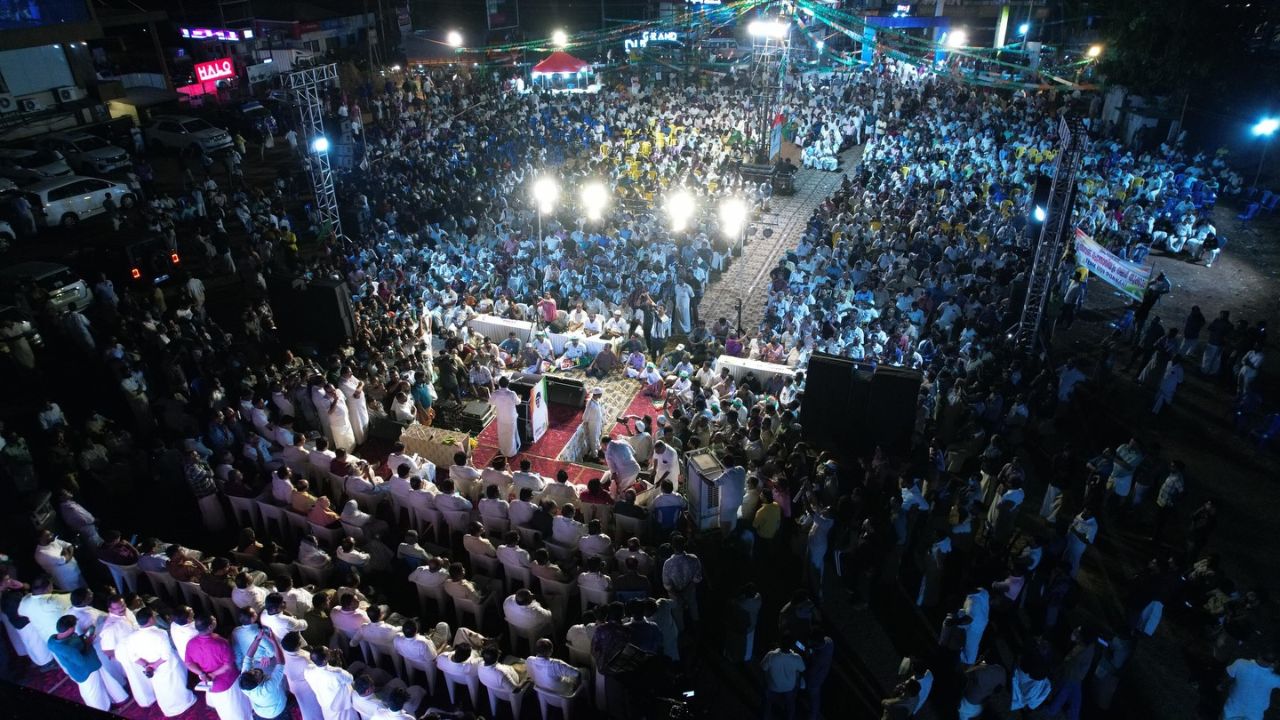
An election related public meeting in Kerala.

Synopsis: Kerala’s 2026 verdict has quietly reshuffled the pecking order among smaller parties, lifting a few back into relevance while pushing several others to the brink. As the UDF returns to power with stronger backing from its minor allies, the LDF and NDA are left grappling with the fallout of allies who failed to hold their ground.
Elections aren’t always about the heavyweights. In Kerala, it is often the smaller parties — tucked within alliances, negotiating from the margins — that end up tipping the balance.
The sweep by the major fronts has, for three elections running — 2016, 2021 and now 2026 — squeezed the space for smaller parties, keeping their role largely on the margins despite their presence in the fray.
However, the 2026 Assembly elections verdict has quietly redrawn the map for Kerala’s smaller and mid-tier players — some clawing their way back into relevance, others slipping further into the margins.
For some, the verdict has brought a measure of revival.
The Revolutionary Socialist Party (RSP) and the Kerala Congress faction led by PJ Joseph have emerged with renewed relevance within the UDF, converting a handful of contests into crucial wins and staging a comeback that had seemed unlikely not long ago.
For others, the outcome is far harsher. The Kerala Congress (M) finds itself confronting an existential slide, failing to open its account in any of the 12 seats it contested — a striking fall for a party that once held sway in its core regions.
Then there are Bharath Dharma Jana Sena (BDJS) and Twenty20, which, despite their attempts to position themselves as serious players, failed miserably, leaving no real imprint on the final tally.
Taken together, the verdict has not just picked winners and losers; it has reset the standing of Kerala’s smaller political players, leaving a few with fresh leverage and many searching for relevance in a political landscape which is as unpredictable as ever.
Also Read: Congress high command to meet in Delhi to untangle leadership knot
The LDF’s exit from power after 10 years has once again brought into focus the precarious position of its smaller allies when electoral winds shift. Their fortunes, often tied to the broader appeal of the front, tend to unravel quickly when that support weakens.
The experience of the Kerala Congress (M) starkly captures this slide.
From holding five seats in 2021 and contributing to the LDF’s breakthrough in Kottayam district, the party has now drawn a blank.
Contesting 12 constituencies, it failed to secure even a lead, an outcome that has triggered unease about its political footing. The scale of defeat has been striking.
Party chairman Jose K Mani was unseated in Pala by Mani C Kappan, marking another loss in what was once the party’s stronghold. Senior leader and minister Roshy Augustine suffered a heavy defeat in Idukki. Five sitting MLAs (N Jayaraj from Kanjirappally, Job Michael from Changanassery, Sebastian Kulathunkal from Poonjar, and Pramod Narayan from Ranni) fell behind, underlining the depth of the setback.
This outcome has reopened an internal debate that never quite faded. The decision to align with the LDF had faced quiet resistance within sections of the party. Roshy Augustine had been among the most vocal proponents of staying the course, while voices around Jose K Mani had hinted at revisiting ties with the UDF.
Warning signs had emerged earlier. The 2025 local body elections saw the UDF claw back ground across the state, including in Kottayam, eroding the gains KC(M) had helped deliver to the Left. That shift has now played out fully, especially in central Travancore, where expectations of consolidating sections of the Christian vote have not materialised.
For KC(M), the verdict leaves little room for comfort. Its campaign, centred on agrarian concerns, failed to resonate enough to counter the broader mood. The party now finds itself squeezed — weakened internally and with no clear pathway forward, as the UDF shows little inclination to reopen doors.
There is more to this sweeping erosion.
In 2021, these smaller parties and independents, other than KC(M), together accounted for 14 MLAs within the LDF.
It was a broad, if uneven, support base: two seats each for Janata Dal (Secular) and Nationalist Congress Party (Sharadchandra Pawar), and single-seat representations for Congress (Secular), Kerala Congress (B), Rashtriya Janata Dal, Janadhipathya Kerala Congress, Indian National League and National Secular Conference.
Alongside them stood four independents who had aligned with the front.
Five years later, that layer has all but disappeared.
The Janata Dal (Secular), now rebranded as the Indian Socialist Janata Dal, entered the 2026 polls carrying two sitting seats. Both slipped away — Chittur and Thiruvalla — leaving the party without representation. The NCP faction met a similar fate. Its sitting constituencies, Elathur and Kuttanad, were both lost.
For others, the outcome was even starker.
Congress (Secular), Kerala Congress (B) and the Indian National League each failed to defend their lone seats — Kannur, Pathanapuram and Kozhikode South, respectively. None managed to find a way back.
The National Secular Conference attempted a shift in strategy. After winning Tanur in 2021, it moved to Tirur in 2026. The gamble did not pay off. The party lost, and Tanur itself slipped out of the LDF’s hands, going to the IUML.
The Janadhipathya Kerala Congress had already been weakened before the election. Its sole MLA, Antony Raju, who represented Thiruvananthapuram, was disqualified. He did not contest in 2026, and the party failed to field a replacement candidate.
The only exception to this broader collapse came from the Rashtriya Janata Dal, which managed to hold on to Kuthuparamba, retaining its solitary foothold.
The independents who once bolstered the front have also vanished from the picture. In 2021, Thavanur, Kunnamangalam, Kunnathoor and Chavara were represented by KT Jaleel, PTA Rahim, Kovoor Kunjumon and Sujith Vijayanpillai. All four seats are now gone from the LDF column.
Also Read: Kerala verdict hits LDF where it hurts most
After a decade in the Opposition, the UDF is heading back to the treasury benches with a noticeably altered internal balance.
While the Congress remains at the helm, backed by the Indian Union Muslim League, the performance of smaller allies also strengthens the coalition’s power equations.
In 2021, the UDF’s supporting cast — Kerala Congress factions, the Revolutionary Marxist Party of India (RMP), and independents like Mani C Kappen — offered limited legislative strength.
Five years later, the picture looks very different.
The existing ones have been joined by the Communist Marxist Party (CMP) and the Revolutionary Socialist Party (RSP), along with a strengthened group of independents, four altogether, have added heft where it mattered.
The standout story comes from the Kerala Congress (Joseph faction) led by PJ Joseph.
Once pushed to the margins, the party has scripted a remarkable return, winning seven of the eight seats it contested. Its only loss came in Kanhangad.
The results carry added weight as Joseph himself stayed away from the fray, leaving the field open for a new generation. The victory of his son, Apu John Joseph, underlines that transition. Apu won from Thodupuzha with a majority of 44,291 votes.
The party’s resurgence is not just numerical.
It now claims the position of the third-largest bloc within the UDF and is already staking its claim for two Cabinet berths and the Chief Whip post. With Mons Joseph chosen as parliamentary party leader, the faction appears keen to convert electoral gains into administrative influence.
The RSP has staged an equally striking comeback, particularly in Kollam.
After a decade without Assembly representation, it swept all its seats — Chavara, Kunnathur and Eravipuram — reclaiming old strongholds.
Shibu Baby John’s victory in Chavara, after consecutive defeats, restores both personal credibility and party morale. In Kunnathur, Ullas Kovoor ended Kovoor Kunjumon’s long run, while newcomer Vishnu Mohan’s upset win over M Naushad in Eravipuram signals a generational shift.
While RMP and Kerala Congress (Jacob) won one seat each (at Vadakara and Piravom respectively), the same as that of 2021, the CMP marks its presence this time with one seat also, at Thiruvananthapuram.
Together, these gains have given the UDF more than just numbers. They have introduced new centres of influence within the front — voices that will expect to be heard when portfolios are decided and policies shaped.
The UDF, when it enters the 16th Kerala Legislative Assembly, will have 102 members — Congress (63), IUML (22), Kerala Congress (7), RSP (3), RMP, Kerala Congress (Jacob) and CMP one each and four independents. In 2021, the front’s strength in the Opposition was just 41.
Also Read: Ground beneath them shifted — Kerala’s leaders pay the price
The BJP-led NDA may point to three BJP wins as a breakthrough in the 2026 Kerala Assembly polls, but beyond that, there is little to celebrate.
Its allies — Bharath Dharma Jana Sena (BDJS) and Twenty20 — failed to open their accounts, exposing the fragility of the coalition’s expansion strategy.
The much-hyped tie-up with Sabu M Jacob’s Twenty20 was expected to shift equations in central Kerala.
Instead, it triggered a visible erosion of the party’s existing support.
In Kunnathunad, its strongest base, candidate Babu Divakaran polled 40,221 votes — lower than the party’s standalone tally in 2021, despite the BJP’s addition. Across constituencies such as Kochi, Vypin and Muvattupuzha, the alliance’s combined vote share shrank sharply, undercutting the very premise of the partnership.
The decline was not confined to one pocket. From Kodungallur to Pathanapuram, numbers dipped compared to previous BJP or Twenty20 performances.
Even high-decibel campaigns featuring social media personalities failed to translate into votes. In Thrikkakara, influencer-driven outreach fell flat, while in Tripunithura, local cadre discontent after seat-sharing decisions appeared to blunt momentum.
For BDJS, the picture looked bleaker. Apart from PS Jyothis managing a distant third in Aroor, its candidates barely registered an impact, reinforcing concerns about its limited organisational reach.
The alliance’s experiment seems to have cost Twenty20 its earlier “apolitical” appeal, pushing sections of its support base — particularly among minority voters — back to traditional fronts like the UDF. Grassroots unease within the BJP ranks over seat allocations further compounded the problem.
What was projected as a strategic expansion has instead exposed structural weaknesses. Strip away the BJP’s three seats, and the NDA’s Kerala story reads less like a breakthrough and more like a cautionary tale.
(Edited by Muhammed Fazil.)



