

Published Aug 02, 2026 | 9:00 AM ⚊ Updated Aug 10, 2026 | 11:24 AM

NEET

Synopsis: While the nation continues to debate NEET paper leaks and examination irregularities, a far less visible crisis persists within coaching centres. In Kerala, the entrance coaching ecosystem is characterised by relentless academic pressure, unequal access, commercialisation and limited regulatory oversight. The experiences of MBBS student Shilpa Shaji, JEE aspirant Alami and the family of Aija R Mahesh reveal the emotional, financial and psychological toll of a system in which success often comes at a heavy personal cost.
Shilpa Shaji sat quietly on the train from Ernakulam to her hometown, Kollam. For the first time in weeks, she allowed herself to think about sleep. A proper night’s rest, followed by her favourite home-cooked meal, that was all she was looking forward to.
For the past two weeks, she had slept barely two hours a day.
The sacrifice was part of her journey towards earning the title “Dr” that she would one day place before her name. Shilpa is a final-year MBBS student at Sree Narayana Institute of Medical Sciences (SNIMS), Ernakulam.
On the day she finished her final MBBS examination, she said most of her classmates had managed only one or two hours of sleep beforehand, something they had come to accept as normal.
While the nation continues to debate NEET paper leaks and examination irregularities, Shilpa believes a far less visible crisis remains overlooked. Beyond the examination hall lies the world of coaching centres, where relentless pressure, questionable practices and the absence of meaningful government oversight trap thousands of aspirants in what she describes as a “loop”, a cycle of exhaustion, anxiety and self-doubt.
Some eventually make it through. Many others do not.
Shilpa, who guides thousands of NEET aspirants through her Instagram page, where she addresses their doubts and anxieties, knows the pressure of the entrance exam firsthand. Having undergone coaching at Brilliant Study Centre in Pala, Kottayam, she says the journey was stressful but manageable because she had prepared herself mentally and had a backup plan.
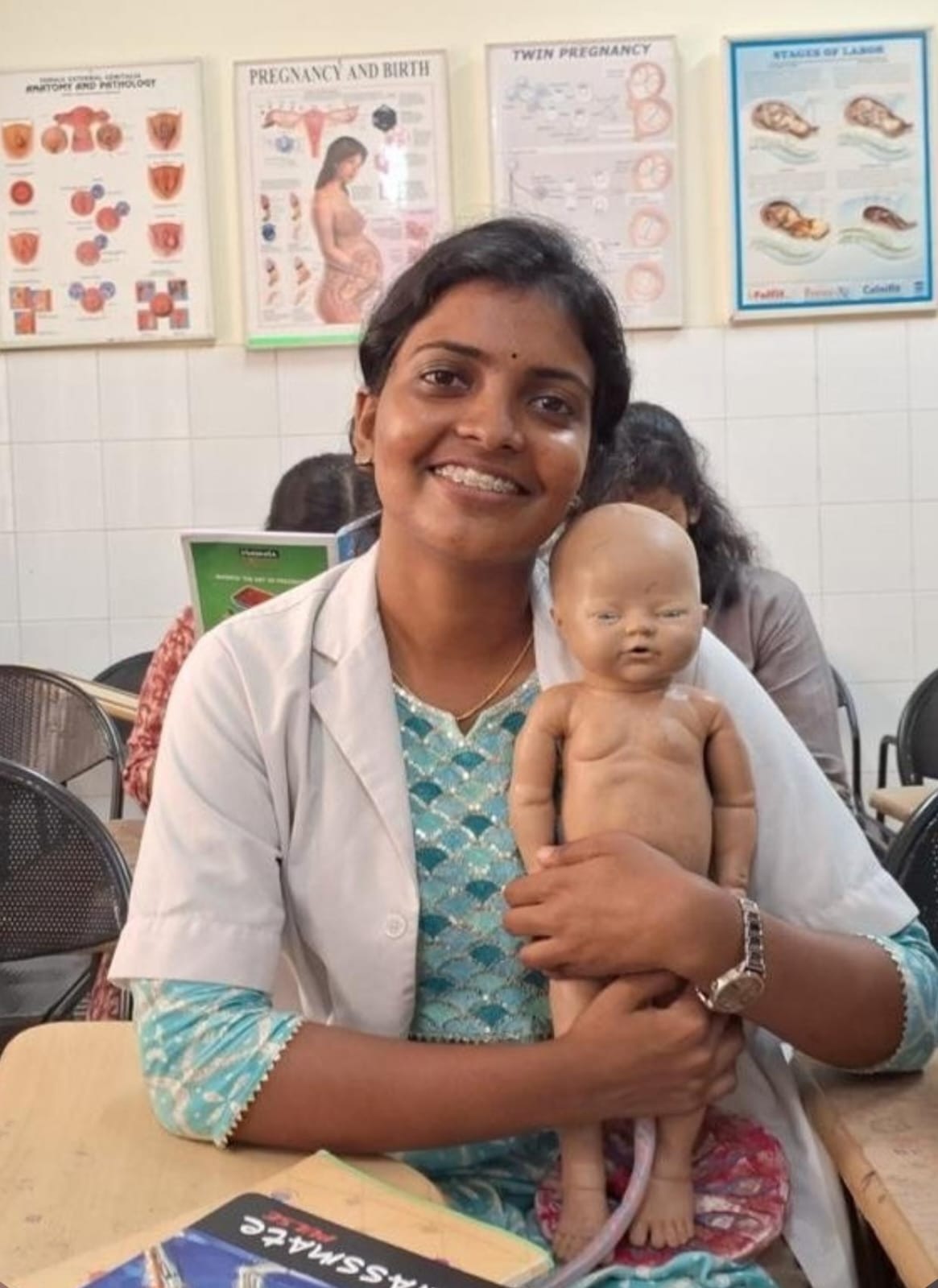
Shilpa Shaji
Speaking to South First, she said, “After Plus Two, I attempted NEET and scored only 459 marks. But I had already joined a BSc Chemistry course. While continuing the degree, I prepared again and secured 530 marks in my second attempt.”
According to Shilpa, one of the reasons she attempted NEET again was the constant questions from juniors. “People kept asking why I couldn’t crack NEET despite scoring well in Plus Two. Peer pressure is a major factor affecting students,” she said.
She added that many aspirants spend years repeating the exam. “I personally know people who have been trying to crack NEET for five or six years. They remain stuck in a loop because of self-doubt, family expectations, societal pressure and comparisons with peers. Many also hesitate to join a degree course because they don’t want to study alongside juniors.”
While she could cope with the competitive environment at Brilliant, she stressed that not everyone has the same mental resilience. “Being determined is good, but why put yourself in a pressure cooker in the name of determination? The coaching atmosphere was bearable for me, but everyone doesn’t have the same mental strength,” she said.
Shilpa also pointed to the strict routine followed at Prof PC Thomas Classes in Thrissur, where students reportedly wake up at 4 am and follow a demanding schedule until lights out at 10 pm.
“When I spoke about it on Instagram, many students echoed similar concerns, after which the academy came out with an explanation,” she said.
Also Read: UDF coalition endorses Kerala govt’s decision to continue with PM SHRI; LDF threatens protests
Alami’s name has a story of its own. She was born when her father, Aneesh, was reporting from Sabarimala as a television journalist. Having long wished for a daughter, he named her Alami by reversing “Sabarimala.”
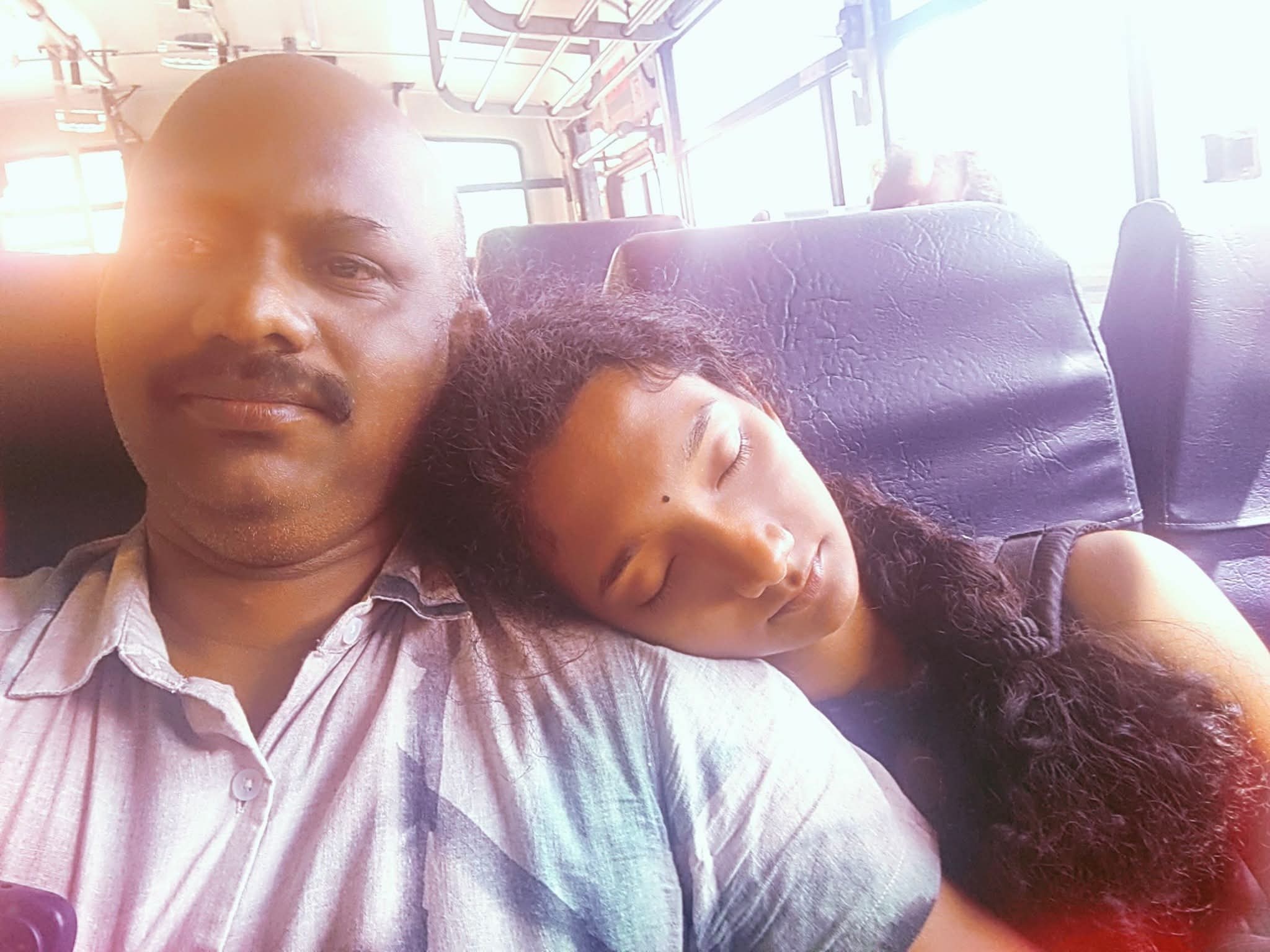
MS Anish Kumar with his daughter Alami
A bright student, Alami scored 98 percent in her Class 12 examinations and dreamt of cracking the JEE. Like thousands of aspirants from Kerala, the Kottayam native joined Brilliant Study Centre in Pala.
Ten months later, when Aneesh picked her up after she completed the course, he hardly recognised the cheerful girl he had dropped off. She looked exhausted, frail and drained by the relentless coaching routine. He posted a photograph of her on social media, capturing what he described as the hidden cost of Kerala’s entrance coaching culture.
“Even the air and water in Pala carry the smell of competitive exams,” Aneesh told South First.
“We never forced Alami to crack JEE. She is an ambitious child and was willing to sacrifice everything for her dream. There came a point when we became worried. She skipped every family function, had no leisure time and lived entirely inside the competitive world,” he said.
Aneesh also criticised what he called an unfair system within many entrance coaching centres.
“Most institutes admit students with over 80 percent marks in Plus Two. But after admission, they conduct another internal test and divide students based on performance. Only the ‘creamy layer’ receives the best faculty, special mentoring and focused training because they are the ones expected to secure top ranks and feature in advertisements. The remaining students, despite paying the same fees, do not receive the same attention,” he said.
According to Aneesh, the family spent nearly ₹3.5 lakh on coaching alone, including tuition, hostel and study materials.
“Today, Alami has secured admission to CUSAT, where the entire course fee is around ₹2.5 lakh. Imagine that—the coaching cost more than the engineering degree itself,” he said.
“I can afford it, but not every parent can. Some institutes offer concessions for economically weaker students, but many children hesitate to seek them because they do not want to feel different from their classmates.”
Calling for reforms, Aneesh said the government should establish more affordable coaching facilities and reduce students’ dependence on private institutes.
“Plus-Two marks should also carry greater weight in entrance admissions. Today, NEET and JEE have largely become examinations for students who undergo expensive coaching. Those who crack them without coaching are exceptions. That has to change,” he said.
Also Read: Western Ghats draft ESA map returns after 13 years with new boundaries, old questions
At the Kadambari house in Pallikkara, Kasaragod, the lingering smell of agarbatti hangs in the air. It is the home of 19-year-old Aija R Mahesh, the only student from Kerala who died by suicide after the NEET examination controversy.

Aija
Her family alleges that the mental trauma following the cancellation of the NEET examination pushed her into despair.
Speaking to South First, Aija’s mother, Radhika, recalled how hopeful her daughter was after the first examination.
“Aija came home overjoyed after writing NEET. She was confident she had done well. But the cancellation shattered her. On 29 May, she returned to her entrance coaching centre to prepare for the re-examination,” she said.
While the Union government has assured the CJP that compensation of ₹1 crore will be provided to the affected families, Radhika has only one question: “How can anyone compensate for a child’s life and her parents’ dreams?”
What makes the tragedy even more painful is that Aija, like Alami and Shilpa, had studied at the Brilliant Study Centre in Pala.
Shilpa endured the pressure because she entered coaching mentally prepared for the stress and kept a backup plan. Alami survived, but only after immense struggle, sacrificing her health and peace of mind. Aija, however, did not survive the race.
These three stories expose the two faces of Kerala’s entrance coaching culture.
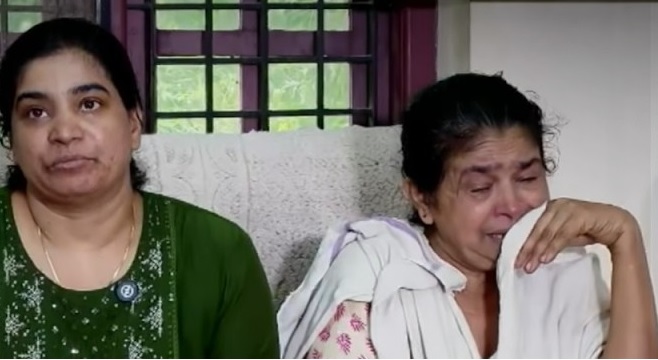
Aija’s mother and grandmother
The public sees smiling rank holders on giant billboards and newspaper advertisements. Hidden behind those success stories are thousands of students battling anxiety, sleep deprivation, isolation, self-doubt and relentless pressure, many of whose stories are never told.
The success of a few cannot overshadow the suffering of many.
Kerala urgently needs clear government guidelines to regulate entrance coaching institutes, ensure transparent and fair fee structures, limit unhealthy academic pressure and make qualified psychological counselling and mental health support mandatory. No student’s dream of becoming a doctor or engineer should come at the cost of their life.



