

Published Jul 31, 2026 | 3:09 PM ⚊ Updated Jul 31, 2026 | 3:09 PM


Police violence after the Muthanga tribal agitation in Wayanad, Kerala (Supplied)

Synopsis: The long-running Muthanga case ended with all surviving accused cleared of constable K.V. Vinod’s murder, with the court saying the prosecution failed to prove the case. Four people, however, were convicted and sentenced to five years in prison for the abduction, assault and attempted murder of two prosecution witnesses. The case is far from over, as Vinod’s family has rejected the verdict and plans to challenge it.
More than two decades after the 2003 Muthanga land agitation and the subsequent police violence that ended in bloodshed inside the Wayanad Wildlife Sanctuary, a court on Friday acquitted all the accused in the murder case of police constable K.V. Vinod.
However, the court held four guilty on charges of attempt to murder, abduction and assault of two prosecution witnesses.
The judgment, delivered by the Principal District and Sessions Court Judge Ayoob Khan in Kalpetta, brings to a close the main criminal trial arising out of the February 2003 confrontation between police and tribal protesters that claimed the lives of constable Vinod and tribal protester Jogi. The violence also left hundreds injured.
As many as 57 people were named as accused in the murder case and other cases related to the protests investigated by the Central Bureau of Investigation (CBI). However, 13 persons died during the course of the trial.
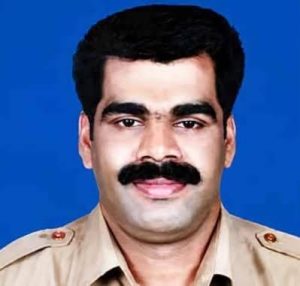
K V Vinod of Kerala Armed Police IV Battalion (Kannur)
The court on Friday held that the prosecution had failed to prove either a criminal conspiracy or the involvement of the surviving accused in the killing of Kerala Armed Police IV Battalion constable Vinod.
The court, however, convicted four accused in the connected attempt-to-murder case involving prosecution witnesses Abdul Salam and Sasidharan.
Adivasi Gothra Mahasabha leader M. Geethanandan (first accused), Binu (third accused), Rameshan Koyalipura (fifth accused) and Anilkumar (11th accused) were sentenced to five years of rigorous imprisonment after being found guilty on 16 charges, including kidnapping, attempt to murder and criminal conspiracy.
In its findings on Vinod’s death, the court observed that the evidence established that second accused Ashokan, who died during the pendency of the trial, inflicted the fatal stab injury that led to the constable’s death.
Since Ashokan is no longer alive, no sentence can be imposed on him, the court said.
It also ruled that the prosecution had failed to establish the guilt of the remaining accused in the murder or prove the allegation of a criminal conspiracy behind the killing.
Abdul Salam, the 29th prosecution witness, had suffered serious injuries in the attack. The court held Geethanandan, Binu, Rameshan Koyalipura and Anilkumar guilty of offences connected with the abduction and assault of Abdul Salam and Sasidharan, the 30th prosecution witness.
While the court awarded cumulative sentences amounting to 19 years of rigorous imprisonment, seven months of imprisonment and fines under various sections of law, it ordered that all the sentences run concurrently.
As a result, the effective sentence for each of the four convicts will be five years of rigorous imprisonment.
The court also directed the District Legal Services Authority (DLSA) to award compensation under the Victim Compensation Scheme.
It ordered ₹7 lakh for the family of slain constable K.V. Vinod, ₹3 lakh for injured witness Abdul Salam and ₹2 lakh for injured witness Sasidharan.
The trial in the long-pending case commenced in 2018, nearly 15 years after the 2003 Muthanga incident.
Also Read: UDF draws curtain on LDF-era probe against CM Satheesan, says probe was politically driven
The family of Constable Vinod, who was killed while on duty, has expressed deep disappointment over the court’s verdict, saying it has failed to deliver justice more than two decades after his death.
Speaking to the media after the judgment, Vinod’s brother, K.V. Babu, said he received the verdict “with a heavy heart” and described the family’s long wait for justice as heartbreaking.
“If this is the treatment a police officer who died in the line of duty receives, what hope can ordinary people have in the justice system?” he asked.
Babu also alleged that Vinod was denied the service benefits he was entitled to, forcing the family to endure years of hardship following his death.
Calling the verdict deeply disappointing, he said the family was “not at all satisfied” with the outcome and would explore further legal options. After waiting for more than 23 years, he added, it was now for society to decide whether justice had truly been served.
The case stemmed from the violent police operation launched inside the Muthanga Wildlife Sanctuary to remove hundreds of landless Adivasi families who had occupied the forest land under the banner of the Adivasi Gothra Maha Sabha (AGMS) in protest against the delay in implementation of long-promised land distribution.
Led by tribal rights activists C.K. Janu and M. Geethanandan, the protests had continued for 47 days.
On 19 February, 2003, police and forest officials entered the Gowdanvayal-Thakarappadi area to forcefully remove the protesters leading to to one of the most violent crackdowns in Kerala’s recent history.
During the operation, police opened fire killing tribal protester Jogi, while scores of others and several police personnel also suffered injuries.
According to the prosecution, during the clashes, protesters took constable K V Vinod and a forest official hostage. Vinod was allegedly dragged into a temporary shed, where he sustained fatal injuries. Though police later rescued him, he succumbed to a deep neck injury.
The CBI, which later took over the investigation, alleged that Vinod’s killing was part of a criminal conspiracy and charged the accused under provisions relating to murder, attempt to murder, kidnapping, unlawful assembly, rioting and criminal conspiracy.
Also Read: Western Ghats draft ESA map returns after 13 years with new boundaries, old questions
The defence consistently maintained that the prosecution had failed to conclusively establish who caused Vinod’s fatal injuries.
Appearing for the accused, defence counsel T.M. Rasheed argued that none of the witnesses had an unobstructed view of the alleged assault inside the makeshift shed where Vinod was confined. Journalists, police personnel and other eyewitnesses, he submitted, were positioned well over 50 metres away and their view was blocked by dense smoke, tear gas and continuous firing during the operation.
The defence pointed to contradictions in the statements of senior police officers and other prosecution witnesses regarding the sequence of events, the exact location of the shed and the circumstances under which Vinod sustained his injuries.
It also questioned the prosecution’s reconstruction of the incident, suggesting that Vinod’s sharp injuries could have been caused during the rescue operation itself — either by fragments from police stinger grenades or by bayonet-fitted rifles carried by policemen entering the shed.
The defence also highlighted the differences between the original Kerala Police investigation and the subsequent CBI probe. They argued that the two investigations differed on crucial aspects and those inconsistencies had never been satisfactorily explained before the court.
The defence further accused the prosecution of withholding statements recorded during the initial investigation by the Kerala Police and Crime Branch before the CBI took over the case.
It also relied on testimony from journalists who witnessed the violence and referred to observations made by forensic expert Dr. Shirley Vasu in her memoir on the nature of the injuries and weapons allegedly used during the operation. Questions were also raised about the Executive Magistrate’s authorisation for police firing, with the defence arguing that official records contained inconsistencies.
The defence additionally highlighted witness testimony claiming that the assailant fled into the forest after attacking Vinod, contending that this version conflicted with other prosecution evidence.
The Muthanga episode generated multiple criminal cases. After taking over the case, the CBI filed three separate chargesheets.
The murder case, which culminated in Friday’s verdict, was tried before the Kalpetta Sessions Court. A second case was filed related to rioting, unlawful assembly, taking public servants hostage and offences allegedly committed during the confrontation. A third chargesheet, filed before a court in Ernakulam, dealt with allegations including arson, forest fires and destruction of property arising from the wider agitation.
Apart from these, six forest offence cases were tried separately before the Judicial First Class Magistrate Court at Sulthan Bathery, where all the accused were acquitted.
Also Read: Planning for the unknown: Kerala aims to stay ahead of epidemics and pandemics, but gaps remain
The Muthanga struggle of 2003 remains one of Kerala’s most defining Adivasi land rights movements. Its roots lay in the historic kudilketti samaram (hut protest) of August 2001, when hundreds of landless Adivasi families erected makeshift huts outside the State Secretariat in Thiruvananthapuram after reports of starvation deaths in tribal hamlets of Attappady and Wayanad.
The 48-day agitation ended with a government agreement promising land for landless Adivasis. However, the assurance was never fully implemented, deepening frustration among tribal communities.
In January 2003, under the banner of the Adivasi Gothra Maha Sabha (AGMS), protesters occupied forest land inside the Muthanga reserve in the Wayanad Wildlife Sanctuary, asserting what they considered their traditional right to land and livelihood.
The occupation continued for weeks before tensions escalated over allegations of forest fires and the brief detention of officials by protesters.
Citing a breakdown of law and order, the government launched an eviction operation on February 19.
What followed remains fiercely disputed.
Protesters accused the police of using excessive force against men, women and children, while the government maintained that officers were attacked by armed agitators.
The violence that followed, cemented Muthanga as a lasting symbol of Kerala’s unresolved struggle over Adivasi land rights.
(Edited by Fayisa CA)



