

Published Aug 05, 2026 | 9:00 AM ⚊ Updated Aug 10, 2026 | 11:23 AM

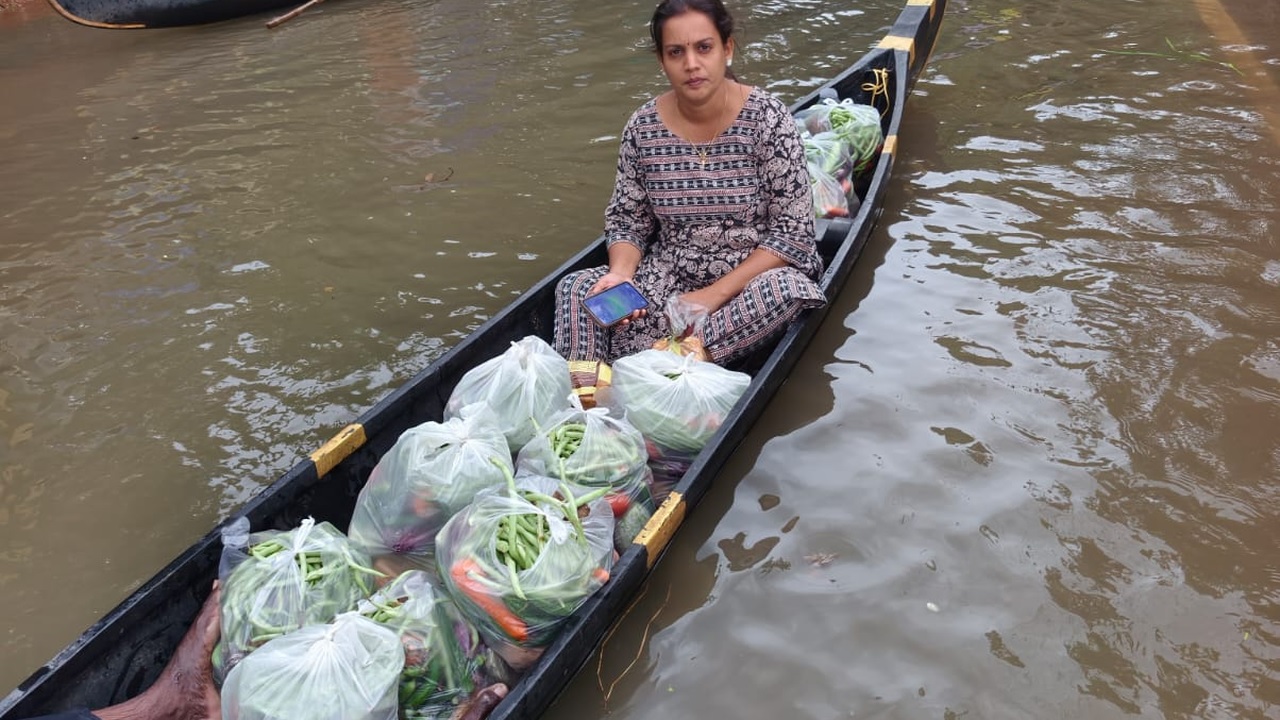
Pathanamthitta witnessed intense rainfall from 1 to 3 August, triggering flooding in several parts of the district.

Synopsis: As floods continue to batter Pathanamthitta in Kerala, rescue volunteers say caste prejudice has become an unexpected barrier to relief, with some privileged-caste families refusing to move to camps or share food and facilities with Dalits. Meanwhile, fishermen have once again left the start of the fishing season behind to rescue families stranded in villages cut off by floodwaters.
As heavy rain continues to batter parts of Kerala, Pathanamthitta in the south has been among the worst affected.
The state government has opened 133 relief camps to house more than 6,400 affected people in the district, even as rescue and relief operations continue across the flood-ravaged region.
But rescue workers have been facing an unexpected hurdle in getting affected families to move to the relief camps.
“They won’t eat the food we provide. They won’t come to relief camps. They would rather risk their lives than give up their caste pride,” Aju, one of the volunteers involved in the relief work, told South First.
Despite repeated appeals from authorities, including Chief Minister VD Satheesan during his visit to the affected areas on Tuesday, some residents have chosen to remain in their homes, risking their lives rather than move to relief camps.
Rescue volunteers and local residents say that in some areas, privileged-caste families are unwilling to share food, shelter and common facilities with Dalits because of enduring notions of untouchability.
Also Read: Death toll in Kerala rains rises to 15, CM convenes emergency meeting amid criticism
Within Pathanamthitta, Pandanad panchayat in Chengannur is among the worst-hit areas, along with Ranni, Konni and Aranmula.
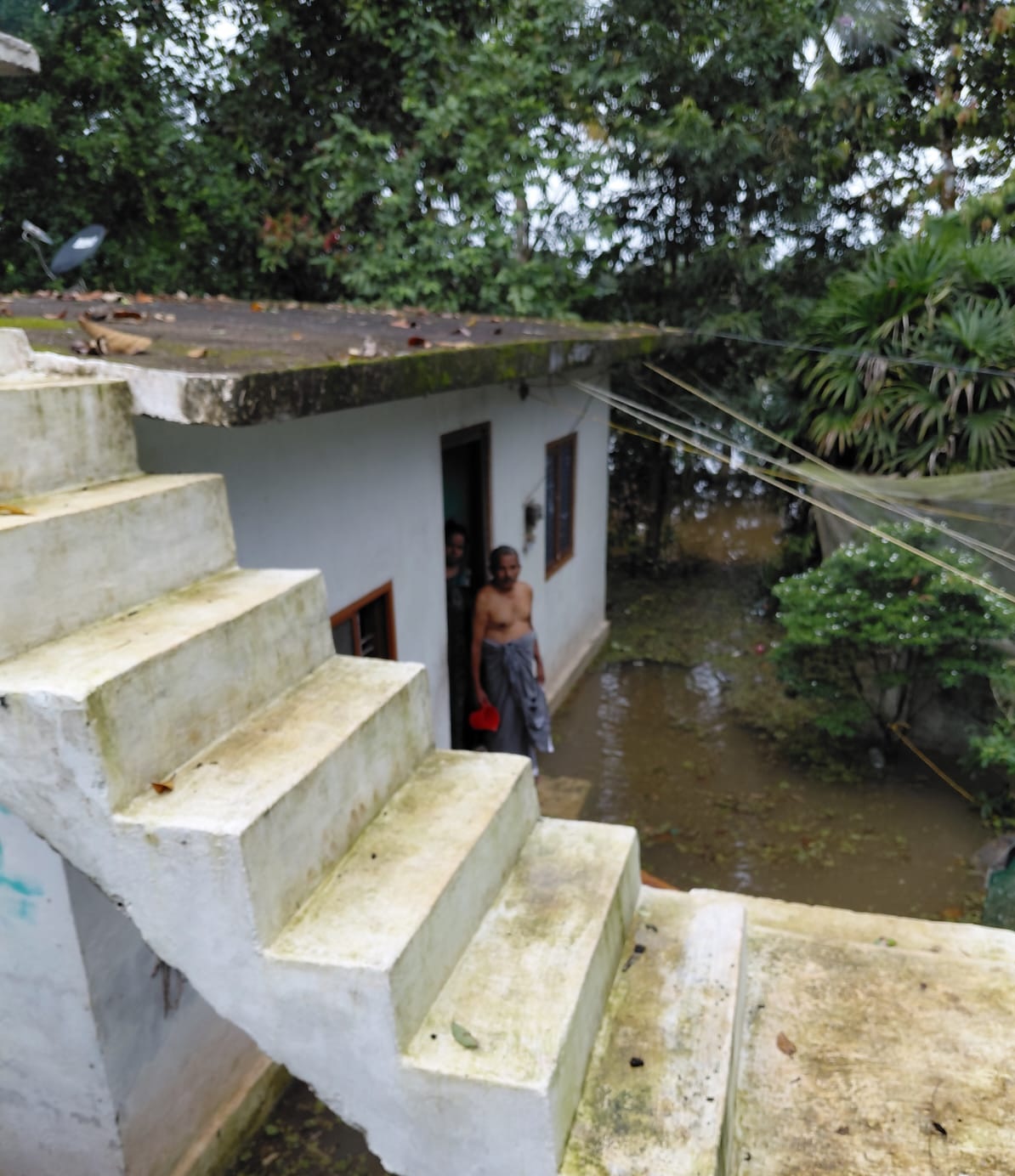
A resident stands in front of a house in flood-affected Pathanamthitta.
During the 2018 floods, Aju and his team tried to relocate many privileged-caste families to relief camps. Instead, many chose to remain on the first floors or terraces of their flooded homes, believing they were safer there.
“There was no electricity, no food or drinking water. Yet they wouldn’t come to the relief camps. When we provided food, some asked who had cooked it. It was shocking,” Aju said.
According to him, some community groups later set up separate community kitchens so that food would be prepared by members of their own community.
“But no one can survive like that during a disaster. Only after the floodwaters reached the upper floors did distress calls start coming from Aranmula, Maramon, Chengannur and Kozhencherry,” he said.
“People may think they avoided relief camps because of poor facilities, but untouchability and caste practices were also reasons. Sharing food and resources in a common shelter was unthinkable for some.”
Mubeena H, a former journalist from the district, said the issue is rarely spoken about openly but remains a harsh reality.
“This exists only in some areas, but it is real. We can ask people to maintain hygiene in relief camps, but how is it possible to practise untouchability when hundreds are sharing the same space?” she said.
Also Read: Kerala poll debacle makes CPI(M) rethink how it speaks, organises and fights
Ezhikkad Unnathi in Aranmula is the second-largest Scheduled Caste settlement in Asia. The ongoing floods have crippled key infrastructure in the settlement. Residents have been without electricity for the past six days and are also facing an acute shortage of drinking water.
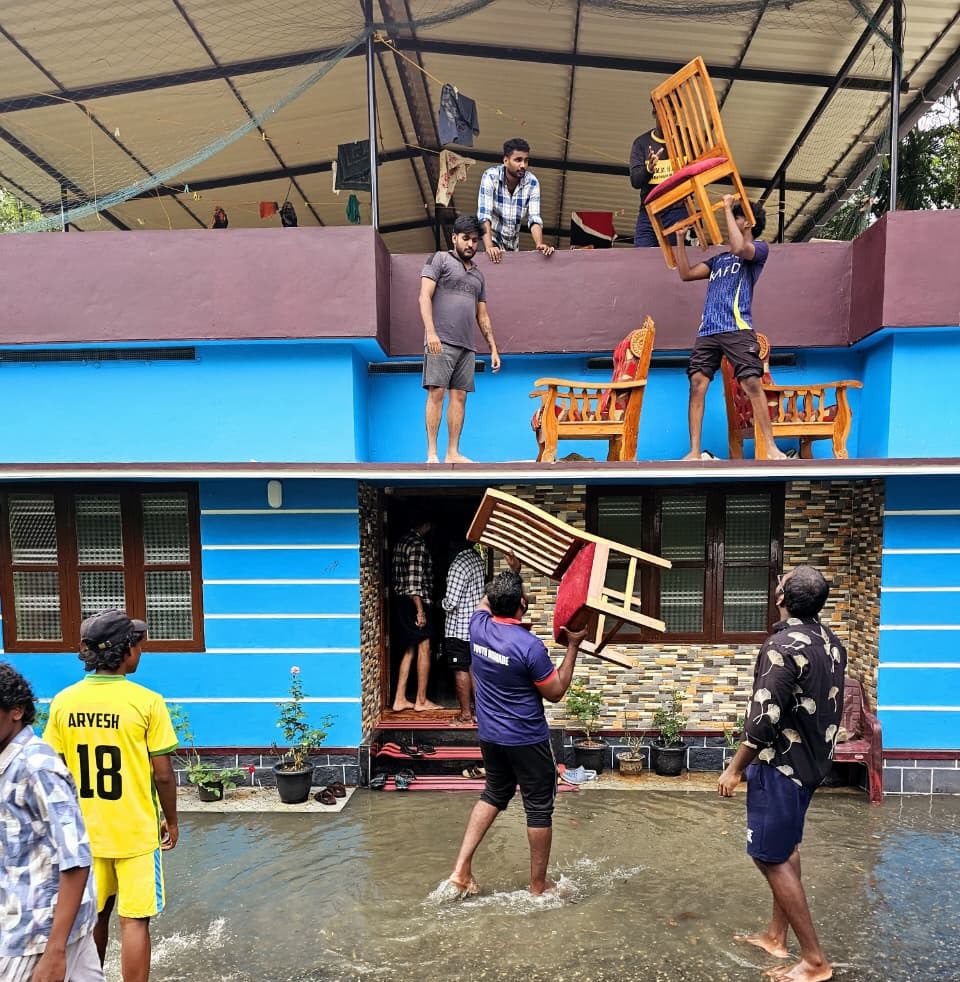
Volunteers move household items to the rooftop to keep them safe from floodwaters.
R Sudheesh Babu, a local DYFI leader from Ezhikkad, said volunteers have been collecting residents’ electronic devices by boat and taking them to places with electricity to recharge them.
“We have been living in complete darkness for six days. We collect residents’ mobile phones, power banks and other rechargeable devices, take them by raft or boat to places where electricity is available, charge them there and bring them back by evening,” he told South First.
“At night, those flashlights are the only source of light for many families.”
The flood-hit settlement is also facing the looming threat of a possible Shigella outbreak.
“A few weeks before the floods, Shigella cases were reported in Ezhikkad. Two cases were confirmed, while the status of a third suspected case remains unclear,” Babu said.
“We will know more only after the floodwaters recede, but we cannot ignore the possibility of an outbreak.”
Aswathy, a ward member from Kanjiraveli in Mallappuzhassery panchayat in the Aranmula region, told South First that around 90 people are currently housed at a nearby relief camp.
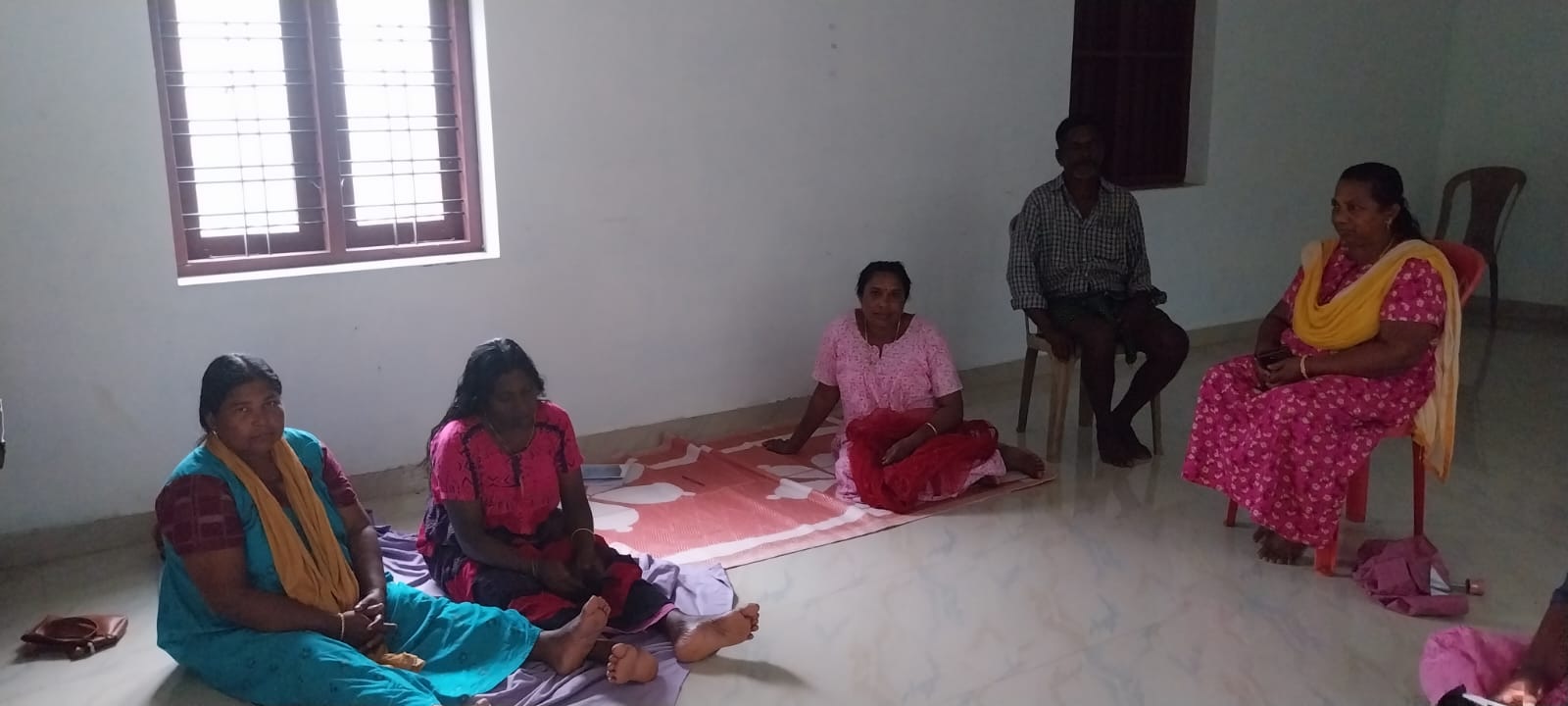
A relief camp in Aranmula.
“On the first day, we faced difficulties in arranging food and drinking water at the relief camp. Now, those issues have been resolved. In my ward, there is a 90-year-old paralysed woman,” she told South First while caring for the elderly woman as her team unloaded relief materials.
“We could not shift her to the camp because she remains unconscious most of the time and has difficulty controlling her bladder and bowel movements. So, we rented a separate house near the camp and shifted her there to ensure she receives proper care,” she said.
Aswathy said the residents staying at the camp were preparing their own meals, but a lack of coordination was hampering relief operations.
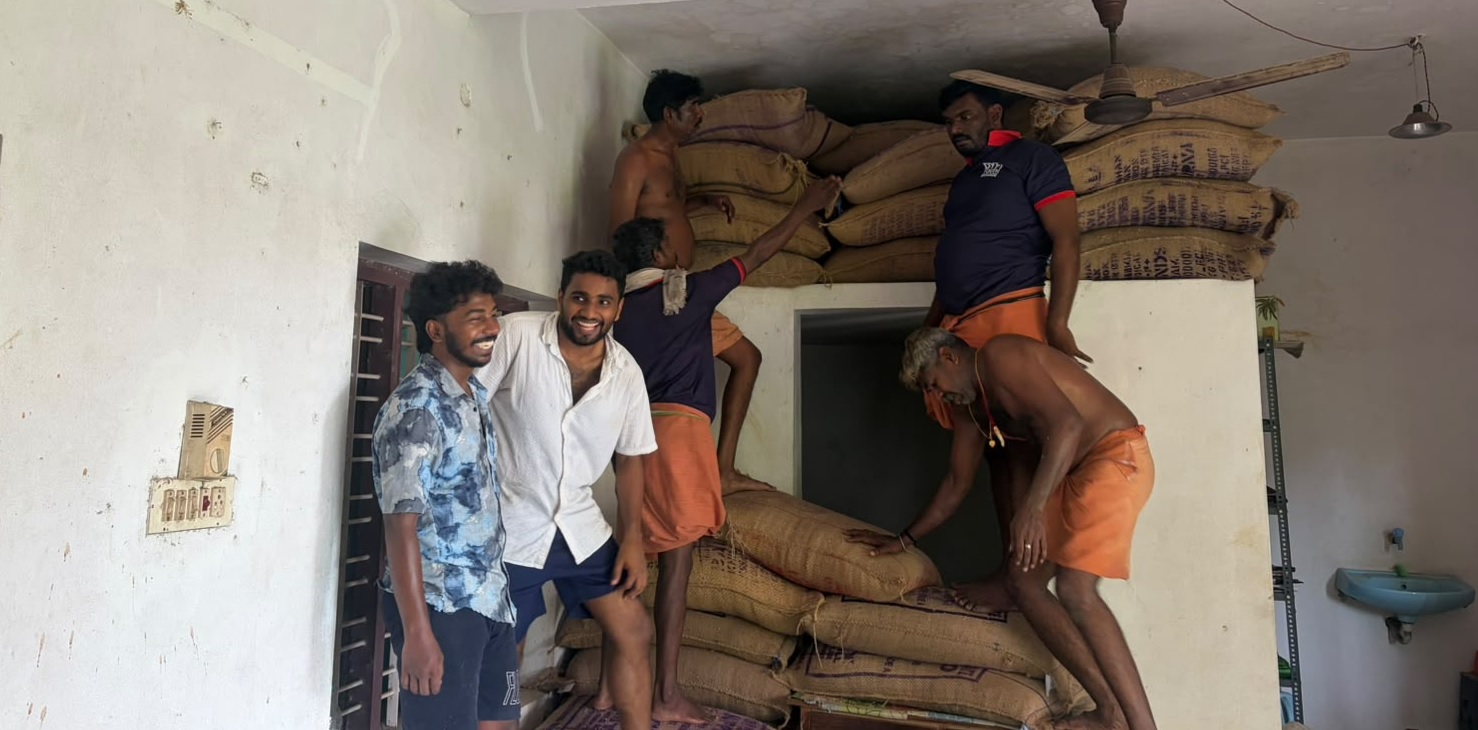
Volunteers store food items for relief camps.
“As ward members, we know the situation of every household and every resident in our area,” she said.
“Teams coming from outside are helping with the relief work, but if they are deployed based on political preferences without coordinating with local ward members, it may lead to uneven or biased distribution of resources. It would be much better if the outside teams coordinated with us.”
Also Read: Inside Kerala’s NEET coaching economy and the human cost of chasing a medical seat
Sajith P Anand, a CPI(M) area committee member, said several flood-hit places, including Edasserimala and Thuruthimala, have virtually become islands.
“The houses there may not be submerged, but they are completely isolated. More than 250 families are stranded, with no road access. The MLA, the minister and officials are doing everything they can, but what if no one can physically reach these places? We are trying our best to supply essential items to those stranded,” he said.
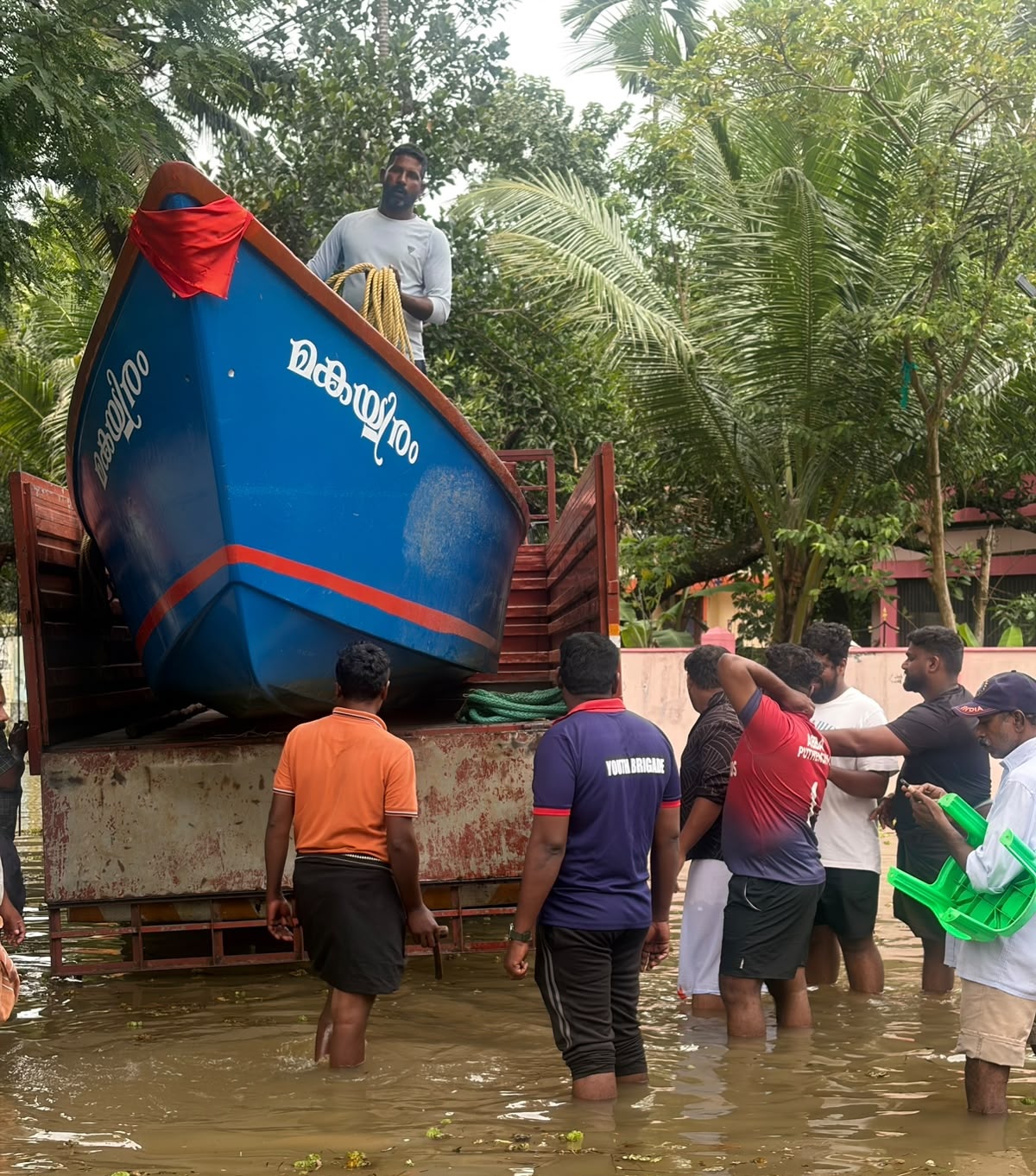
Lorries and cranes transport boats for flood rescue operations.
To reach such areas, a team of 40 fishermen with 10 fishing boats from Kollam has been deployed across Ranni, Aranmula and Thiruvalla. More boats from Kayamkulam, Alappad and other coastal regions are expected to join the rescue mission.
The deployment followed an urgent request from Pathanamthitta’s in-charge Minister, PC Vishnunadh, to Fisheries Minister Bindu Krishna. Lorries and cranes were arranged to transport the boats, which were then deployed to locations identified by district authorities.
The rescue mission has forced the fishermen to step away from the peak fishing season, coming just days after the 52-day trawling ban ended on 31 July.
During the 2018 floods, many of these same fishermen rescued thousands across Kerala. Many returned home with boats worth lakhs of rupees badly damaged, while others struggled for years to secure adequate government compensation. Yet, eight years later, they are back in the floodwaters.
(Edited by Dese Gowda)



