

Published Aug 03, 2026 | 8:00 AM ⚊ Updated Aug 03, 2026 | 8:00 AM

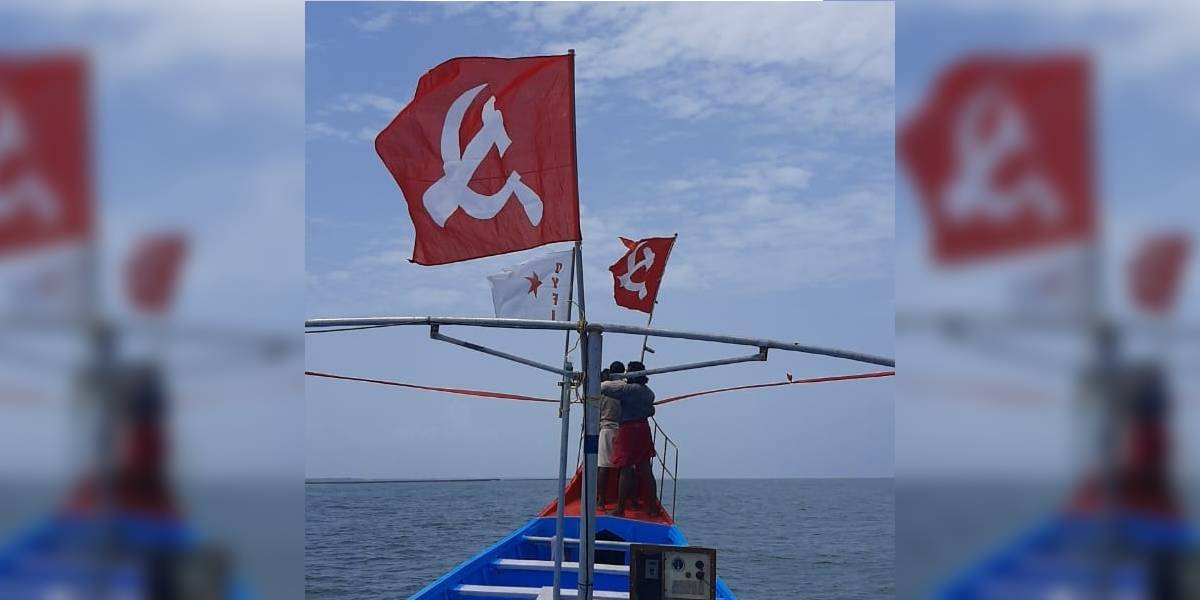
The CPI(M) has realised that it no longer has enough cadres capable of effectively taking its politics to the public.

Synopsis: Following its worst electoral setback in four decades, the CPI(M) has launched a sweeping internal overhaul, admitting serious weaknesses in communication, cadre training and grassroots outreach. It also unveiled plans to groom a new generation of spokespersons. The party has also resolved to intensify its presence in temple committees and other religious spaces, saying it must counter the RSS’s growing organisational influence and reconnect with the public.
After a bruising defeat in the 2026 Assembly election that ended CPI(M)’s decade in power, the party has now turned inward to examine what had gone wrong.
The party’s internal review threw up an uncomfortable admission: it no longer has enough cadres capable of effectively taking its politics to the public.
With its vote share plummeting to 21.77 per cent—the lowest in four decades—and its tally crashing from 64 Assembly seats and three party-backed Independents in 2021 to just 26 seats, the CPI(M) has now decided that rebuilding its organisational strength must begin with reconditioning its public voice.
As part of its course correction, the party has resolved to launch a time-bound programme to train young cadres for television debates, social media engagement and other public platforms through the EMS Academy, the AKG Centre for Research in Thiruvananthapuram, and similar institutions across Kerala.
Besides, the CPI(M) has decided to confront another reality: the growing influence of the RSS through temple committees and places of worship. Acknowledging that earlier directives were not implemented effectively, the party has called for immediate organisational measures to reclaim those spaces and strengthen its outreach, particularly among women.
Also Read: CPI(M)’s account of its electoral collapse
The CPI(M) has acknowledged that avoidable public remarks by some of its leaders gave opponents and what it described as the “anti-Left media” an opportunity to mount negative campaigns. It also admitted that the party has been struggling to communicate its political line to the public effectively.
The observations were part of the Review of Assembly Election Results, adopted at the party’s Central Committee meeting held from 11 to 13 July 2026.
The report said some leaders have not exercised sufficient caution while speaking at public meetings or interacting with the media.
It noted that every public statement was now being recorded and widely circulated, making careless remarks vulnerable to being “used, misused or distorted” to damage the party’s image.
“Certain avoidable responses of leading comrades on a few occasions provided the opportunity for the anti-Left media and their political masters to carry out a negative campaign,” the report noted.
The Central Committee also found fault with the party’s style of conducting public meetings, describing them as one of its key political tools.
But it observed that such meetings have increasingly suffered from long-winded speeches, lack of focus and insufficient political sharpness in taking on opponents over issues.
It added that the weakness was also reflected in poorly conducted sympathisers’ general body meetings, and called for better discipline in organising meetings along with a more balanced approach to the duration and style of communication.
The report further said that both the leadership and the cadre must remain politically sharp while confronting what it called “the reactionary ruling classes who have ganged up against us.”
The concerns echoed findings in the Kerala state review report, which points to a decline in the number of party members capable of effectively presenting the CPI(M)’s political perspective before the public.
It also noted that class and mass organisations were not generating adequate political awareness despite repeated campaigns.
“Even though we have conducted many classes against communalism, we have been unable to convert it into a public consciousness,” the state review report said.
The report called for training a team of young cadres capable of effectively participating in public discussions, including television debates. It called for preparing a time-bound programme immediately.
Also Read: Curious case of CPI(M)’s ‘You-Know-Who’ and a delayed weekend edition
It has been learnt that the CPI(M)’s internal discussions on organisational reform appeared to be extending beyond structural changes to a rethink of how the party communicates with the public.
While the Central Committee (CC) review report called for an immediate, time-bound programme to improve the political calibre of party members, leaders said the broad contours of such an exercise were already under consideration.
Among the key ideas being discussed was a shift from lengthy, jargon-heavy speeches towards concise, issue-driven political messaging.
Within the party, there has been a growing recognition that marathon speeches steeped in ideological terminology no longer resonated with large sections of the public, particularly younger audiences.
The view gaining ground was that political communication must become clearer, sharper and more accessible without diluting the party’s ideological position.
As part of this effort, the party might develop short-term training modules for its leaders and spokespersons.
The proposed sessions would cover television debates, interaction with digital media, crisis communication and methods to prevent remarks from being selectively clipped or taken out of context by political opponents or on social media.
Another area under discussion was simplifying the presentation of Marxist-Leninist ideas.
Instead of relying on dense theoretical explanations, leaders were expected to be trained to relate ideological positions to everyday economic and social concerns in language that ordinary people could easily understand.
The party was also considering structured training in public speaking to address persistent complaints about uninspiring and excessively long speeches by local and even some state leaders.
The emphasis, according to those familiar with the discussions, would be on clarity, brevity and persuasive communication rather than rhetorical flourish.
Also Read: In CPI(M), are some families more equal than others?
At the same time, sections of the younger cadre felt that the changes could not stop at training programmes alone. They argued that leadership must set the standard.
According to several young party workers, the functioning of some senior leaders had increasingly revolved around individual authority rather than collective leadership.
They contend that traits such as an overbearing public demeanour, long and convoluted explanations, and avoidable confrontational remarks had not only frustrated party workers but also weakened the party’s public image and contributed to electoral setbacks in Kerala.
One young cadre member, speaking candidly, singled out state secretary MV Govindan as an example.
“Take the case of our party secretary MV Govindan. What is the point of speaking in such a convoluted manner? A political message should be crisp and easy to understand. Otherwise, it feels like beating around the bush. You end up testing the patience of listeners,” the member said.
“The leaders must show the way for the young cadre. If the leadership changes its style of communication, others will naturally follow,” the worker added.
Also Read: Semi-fascism, fascism, neo-fascism and travails of CPI(M)
As the party moves to overhaul its communication strategy to reconnect with the public, it is simultaneously preparing a fresh organisational push to counter what it sees as the Sangh Parivar’s growing influence in Kerala’s religious sphere.
Alongside sharpening its political messaging, the party has identified intervention in temple committees and other places of worship as a priority, arguing that such spaces have increasingly become centres for the RSS’s ideological and organisational expansion.
The CC review report said the party had identified the Sangh Parivar’s growing presence in temple committees and religious spaces as a major organisational and political challenge.
It also admitted that an earlier strategy to counter the trend was not carried out effectively.
The report said the party had, at its previous state conference, resolved to intervene more actively in temple committees to check what it described as the RSS-BJP’s efforts to spread communal politics. The assessment, however, acknowledged that the direction remained largely on paper and had not translated into sustained organisational work.
According to the report, networks were being used to draw women into the Sangh Parivar’s fold through sustained engagement. In contrast, young women were being identified for organisational responsibilities and women-centric programmes and rallies were being conducted to widen the outreach.
The review argued that the party could no longer afford to treat the issue as a peripheral concern.
It said the organisational vacuum in several temple committees enabled communal forces to establish a stronger foothold, making religious institutions an important arena for ideological mobilisation.
As a countermeasure, the report called for renewed intervention by the party at the local level, particularly in temple committees and other places of worship.
The objective, it said, was to prevent such institutions from becoming platforms for communal mobilisation and social polarisation.
Stressing that the issue required immediate attention, the report asked the organisation to develop practical mechanisms to resist what it saw as the steady expansion of the Sangh Parivar’s influence in religious spaces while strengthening secular engagement at the grassroots.
(Edited by Majnu Babu).



