

Published Jul 12, 2026 | 2:52 PM ⚊ Updated Jul 12, 2026 | 2:52 PM

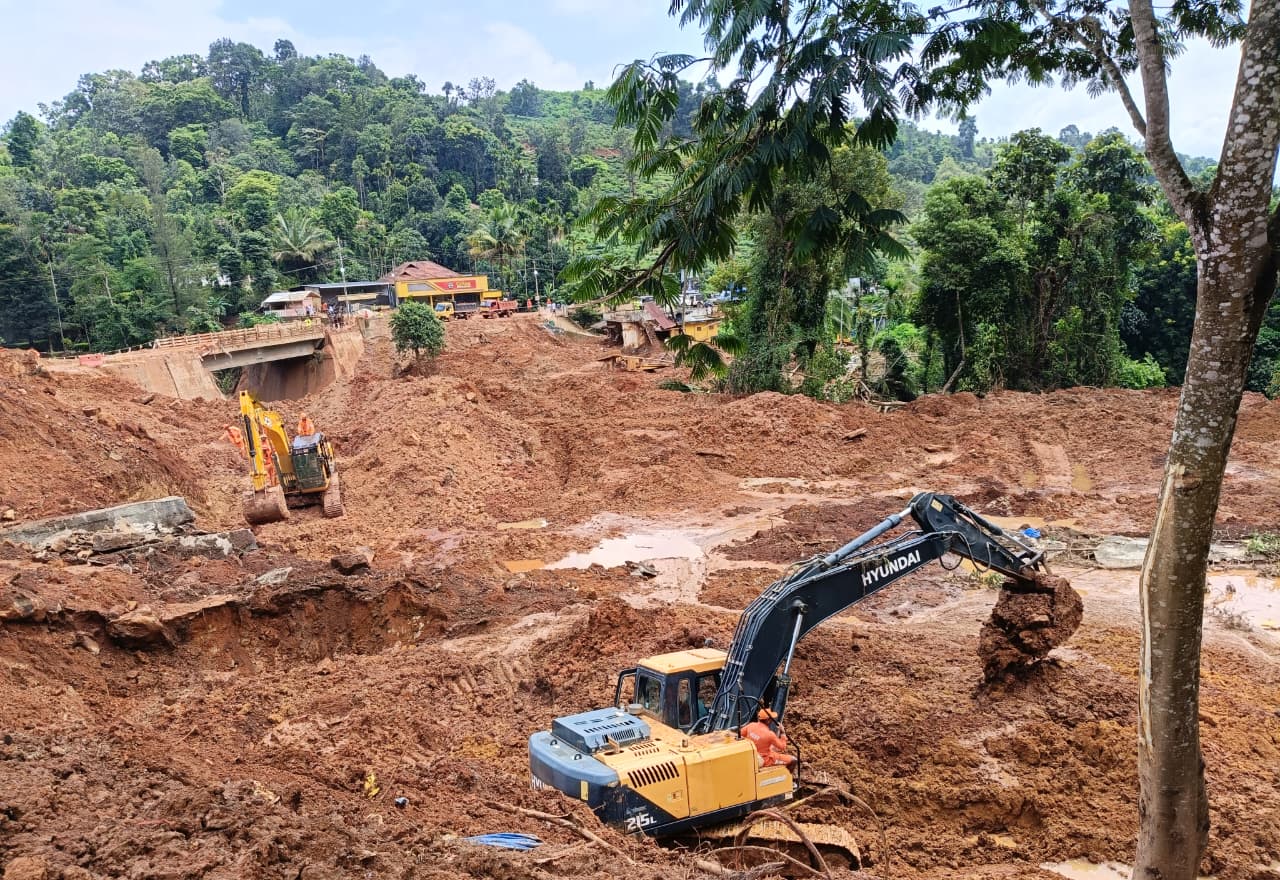
The debris collapse site at Kalladi in Wayanad

Synopsis: The Kerala government has constituted a high-level expert committee to unravel the circumstances behind the debris collapse that claimed seven lives, with construction on the Anakkampoyil–Kalladi–Meppadi Twin Tube Tunnel project remaining suspended until its findings are submitted. The panel’s month-long probe will examine the cause of the accident, possible contractor lapses and compliance with environmental and forest clearances, making its report crucial to the future of the ambitious project.
The state government has constituted a high-level expert committee to investigate the fatal debris collapse at the Kalladi Phase-3 tunnel face in Wayanad. The panel has been given a month to identify the cause of the accident and submit its report.
The committee will examine whether the contractor had violated contractual or environmental conditions and submit its findings before construction resumes on the ambitious Anakkampoyil–Kalladi–Meppadi Twin Tube Tunnel Road Project.
The committee’s report is expected to shape the future course of one of Kerala’s most controversial road infrastructure projects, which was temporarily halted following the 7 July accident that claimed seven lives.
Also Read: How development priorities failed Wayanad again
The committee will be headed by a panel comprising geologist Dr CP Rajendran, ecologist Dr Vishnudas, Chief Wildlife Warden Dr P Pugazhendi, Public Works Secretary Dr Adeela Abdulla, and Revenue and Disaster Management Secretary Jeevan Babu, who will serve as the convener.
Meenakshi Bridge after the accident on 7 July
The government has also authorised the convener to co-opt additional experts if required.
The panel will identify the precise cause of the debris collapse, examine whether the contractor had violated the terms of the construction contract, scrutinise the environmental clearances granted by both the state and central governments, and review the forest clearance issued by the Union Ministry of Environment, Forests and Climate Change (MoEF&CC).
The government has also ordered a halt to the tunnel construction activities until the expert committee submits its report.
Also Read: Problematic tunnel, red flags, disputes, deaths and concerns
The committee’s constitution follows an 8 July Cabinet decision to suspend all construction activities on the Anakkampoyil–Kalladi–Meppadi Twin Tube Tunnel Road Project in the aftermath of the mishap.
The debris collapse site at Kalladi in Wayanad
Announcing the Cabinet decision, Chief Minister VD Satheesan had said the government would undertake a comprehensive techno-legal examination before allowing work to restart.
The first inquiry will establish the exact cause of the accident, including whether a soil slip triggered the collapse and whether the large quantity of excavated earth stockpiled near the site worsened the impact.
The second inquiry will examine the contractor’s role, including compliance with contractual obligations and environmental safeguards stipulated while executing the project.
Authorities will verify whether all MoEF&CC conditions for granting environmental clearance have been met.
The chief minister also stated that government agencies had earlier instructed the contractor to remove the accumulated excavated soil from the site, but those directions were allegedly ignored. Investigators will examine whether that failure had contributed to the tragedy.
The government maintained that work on the strategically important tunnel project will remain suspended until the investigations are completed, the findings are assessed, and the techno-legal study establishes the circumstances leading to the accident.
A police case has also been registered in connection with the incident.
Also Read: Will Wayanad tunnel road spell doom?
The accident occurred on 7 July forenoon at the Kalladi tunnel construction site.
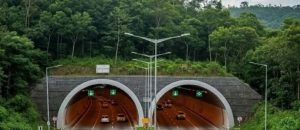
Representative image of the proposed twin tunnel.
A total of 18 workers were involved in the accident. While seven workers lost their lives, one worker, Bikram Singh Rana, from Himachal Pradesh, is still missing. Efforts are on to locate him.
Others suffered injuries and are recovering.
The government has sanctioned financial assistance from the Chief Minister’s Distress Relief Fund (CMDRF) for those affected by the tragedy.
Dependents of each of the deceased will receive ₹5 lakh, while injured workers will be provided medical assistance of up to ₹2 lakh, depending on the nature and severity of their injuries.
Also Read: A Kerala tunnel road project at a crossroads
Meanwhile, the relief camp functioning at the Meppadi Government Polytechnic College has been closed after weather conditions had improved.
A total of 132 people from 49 families, who had been shifted from the Kalladi debris slip zone and other vulnerable areas of Meppadi Grama Panchayat, returned to their homes under the joint supervision of the Revenue and Local Self-Government departments.
Also Read: Elephants sans passage, people without peace
With the India Meteorological Department issuing a green alert for Wayanad from 11 to 14 July, District Collector DR Meghasree withdrew restrictions on trekking, resorts, homestays and adventure tourism activities across most parts of the district.
However, restrictions will continue in wards 8, 9, 10, 11, 12 and 13 of Meppadi Grama Panchayat, Edakkal Tourism Centre in Ambalavayal Grama Panchayat, and Muneeswaramkunnu and Kuruva Dweep tourism centres in Mananthavady taluk.
The ban on quarry operations and the use of mechanical earthmoving equipment will remain in force. Violations would invite penal action under Sections 51 and 55 of the Disaster Management Act, 2005.
Meanwhile, the state government on 10 July constituted a three-member expert committee to provide technical guidance for the safe removal and disposal of debris accumulated at key locations connected to the Wayanad rehabilitation projects.
The decision follows a request from the Wayanad District Collector seeking technical assistance for the Public Works Department (PWD) and the Project Implementation Unit (PIU) of the Township Project to safely remove and dispose of debris that has accumulated in front of Kalladi Tunnel Face 3 and at Elston Estate.
The committee comprises Dr Santhosh G Thampi, Professor at NIT Calicut; Dr Jude Emmanuel, Environmental Scientist at the Directorate of Environmental and Climate Change, who will serve as the convener; and a representative nominated by the Director of the National Centre for Earth Science Studies (NCESS).
The committee has been tasked with visiting the project sites and providing technical guidance to the District Disaster Management Authority (DDMA) for the safe removal of debris to disposal sites identified by the PWD in the case of the Twin Tunnel Project and by the PIU for the Township Project.
Additionally, the panel will prepare a concise action plan incorporating adequate environmental and safety safeguards for the debris removal process.
The government has directed the PWD and PIU to strictly follow the action plan during the execution of the works.
Meanwhile, a section of environmental organisations has demanded that the inquiry should go far beyond examining technical lapses.
In a joint petition to the chief minister, the Wayanad Nature Conservation Committee and Coexistence Collective-Kerala, a network of environmental groups and scientists, welcomed the government’s decision to suspend tunnel construction until the committee submits its report.
However, they argued that merely investigating violations of environmental clearance conditions would be inadequate.
The organisations urged the government to empower the panel to examine the circumstances under which statutory clearances were obtained, alleging that the then LDF government, the PWD and certain officials exerted undue pressure on departments to secure approvals.
They also called for an investigation into reports submitted to the MoEF&CC, claiming crucial facts, including the area’s classification as a disaster-prone red zone, were deliberately concealed.
The petition further alleged that both the environmental and social impact assessments were flawed and sought a detailed probe into the agencies that prepared the studies. It also demanded an inquiry into alleged irregularities within the PWD.
The organisations insisted that the proposed panel should include independent environmental scientists, geologists, technical experts and social researchers, replacing the existing appraisal mechanism. They maintained that a fresh and credible environmental and social impact assessment must be completed before any decision is taken on resuming tunnel construction.
(Edited by Majnu Babu).



