

Published Jul 10, 2026 | 2:00 PM ⚊ Updated Jul 10, 2026 | 2:00 PM

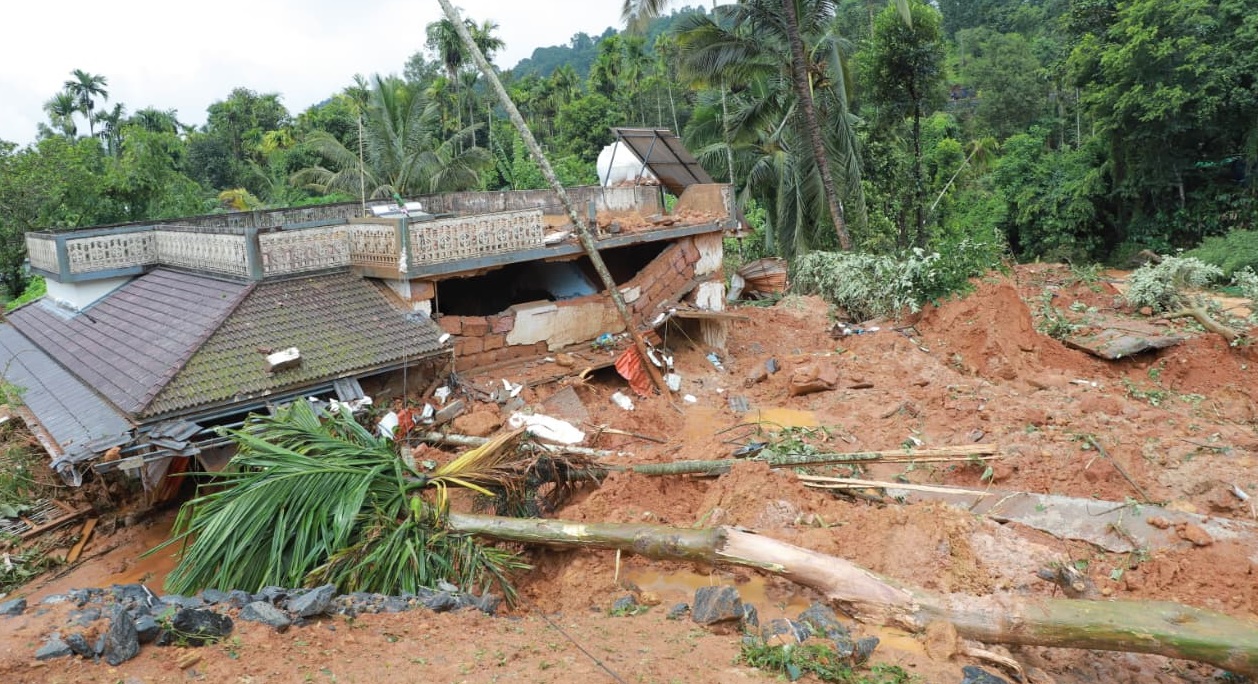
The recent landslide in Wayanad occurred just five kilometres from the site of the catastrophic 2024 landslides.

Synopsis: The Kalladi event was not an unpredictable natural calamity but a foreseeable outcome of ignored warnings and neglected precautions. It was largely preventable and highlights a recurring pattern of natural disasters in Kerala. While the local and state administrative response to the crisis was functional, the failure to heed prior warnings and enforce ecological safeguards points to deeper negligence.
For nearly two decades, the state of Kerala has been increasingly haunted by the consequences of global climate change. The reality of how vulnerable we are as a society in confronting natural calamities is being starkly revealed by every climate-related event.
The high death toll in these extreme weather events clearly indicates that neither our governance systems nor we as a community have prepared ourselves to heed scientific warnings with the seriousness they deserve. Whether it was the 2018 floods or the 2024 Mundakkai-Chooralmala landslide, the truth is that we remain significantly behind in establishing effective disaster response mechanisms.
The recent Kalladi landslide in Wayanad occurred just five kilometres from the site of the catastrophic 2024 Mundakkai-Chooralmala landslides, highlighting the persistent vulnerability of the region.
It is crucial to recognise and assess how both ongoing and proposed development projects in ecologically sensitive regions, including the Western Ghats, particularly Wayanad, and other vulnerable areas of Kerala, will impact local ecosystems and the social fabric.
Since climate-induced natural disasters have now become an undeniable reality, it is vitally important that we develop the capacity both to adapt, that is, to live in harmony with these changes, and to mitigate the impacts of disasters.
The recent disaster in Wayanad represents a classic case of regulatory compromise in ecologically sensitive areas, acknowledging risks on paper while approving projects under developmental pressure. It reflects systemic complacency, unfolding through a cycle of inaction, risk normalisation and negligence by government authorities at different stages of the Wayanad tunnel project.
Also Read: One more body recovered from Wayanad twin-tunnel collapse site; death toll rises to seven
The Kalladi event was not an unpredictable natural calamity but a foreseeable outcome of ignored warnings and neglected precautions. It was largely preventable and highlights a recurring pattern of natural disasters in Kerala.
While the local and state administrative response to the crisis was functional, the failure to heed prior warnings and enforce ecological safeguards points to deeper negligence.
Hence, the Kalladi incident fits the “Grey Rhino” framework almost perfectly, especially regarding the neglect of early warnings and the failure to take necessary precautionary measures. The disaster site showed many signs of highly visible and predictable threats.
The area is part of the ecologically fragile Western Ghats, which has been repeatedly hit by landslides. The Landslide Susceptibility Study Report of Wayanad (2023) indicates that the Meppadi Panchayat, where the disaster occurred, is categorised as a “Very High Risk Zone”.
Considering its unique and sensitive ecology, Vythiri Taluk, in which Meppadi Panchayat is located, has been categorised by the Western Ghats Ecology Expert Panel (WGEEP) report as an area of the highest ecological sensitivity (Ecologically Sensitive Area Zone 1 (ESAZ1)).
The report recommends the strictest environmental conditions for land use change, development projects, waste generation and biodiversity conservation in ESAZ1 areas.
The Report of the High Level Working Group on the Western Ghats (HLWG), a follow-up to the WGEEP report, also categorises 46 percent of Vythiri Taluk’s 619 sq km area across seven villages as ecologically sensitive.
The recommendations made by both the WGEEP and HLWG committees to protect Vythiri Taluk were not followed by the state or Union governments. Instead, land use changes and further development were permitted, contributing to repeated landslides and disasters in the region.
In the last 70 years, significant land use changes and infrastructure development have taken place in Wayanad district. By 2018, two-thirds of the 1,812 sq km of forest area that existed in 1950 had been converted into plantations. A 2022 study revealed that 62 percent of the district’s forest cover disappeared between 1950 and 2018, while the extent of plantations increased by an astonishing 1,800 percent.
As forest cover declines, soil becomes looser and more prone to erosion and landslides. Notably, 59 percent of Kerala’s landslides occur in plantation areas.
Heavy monsoon rains are seasonal and predictable in Wayanad. On the day of the incident, the region received around 226 mm of rain in 24 hours, with a red alert already in place. The trigger was not a sudden natural collapse but the failure of a massive, artificially piled heap of excavated tunnel debris, a highly visible, man-made hazard.
In the previous Mundakkai-Chooralmala landslide, similar inaction and negligence on the part of the government led to the loss of more than 400 lives and the complete destruction of three villages.
In the current disaster, there were clear indications of a very high probability of disaster in the area. Despite specific early warnings, these were ignored by the relevant authorities. Basic precautions, such as proper debris removal, scientific slope stabilisation and the temporary suspension of work during high-risk monsoon periods, were not adequately implemented.
The project continued in a known high-risk landslide zone without sufficient enforcement of safety protocols, even after the 2024 tragedy exposed the region’s extreme vulnerability. This reflects classic Grey Rhino behaviour, in which short-term project priorities outweighed known long-term risks.
Also Read: Train services hit after century-old Clock Tower collapses at Kozhikode Railway Station in Kerala
There were significant criticisms regarding diluted or inadequately enforced recommendations in the environmental clearance (EC) process for the Anakkampoyil-Kalladi-Meppadi twin-tube unidirectional tunnel road project. The clearance is widely viewed as flawed by environmentalists, and the Kalladi debris slip on 7 July 2026 intensified scrutiny of its weaknesses.
The State Expert Appraisal Committee (SEAC) recommended EC in March 2025 with 25 specific conditions. The Union Ministry of Environment, Forest and Climate Change (MoEF&CC) granted final clearance in early 2026.
Many of these conditions were described as routine, generic, vague or poorly enforced. Experts noted that the project proponent could claim compliance without addressing core risks such as slope destabilisation from excavated debris or blasting vibrations.
While the clearance document invoked the Precautionary Principle because of the area’s ecologically sensitive status, the final decision to approve the project despite documented risks was seen as a dilution in practice.
The clearance process did not adequately account for the cumulative effects of tunnelling, including blasting, vibration, groundwater disruption and slope cutting in a region already experiencing intensified rainfall due to climate change.
India’s EIA framework has undergone significant dilutions in the last decade aimed at accelerating development. These include post facto clearances, exemptions from public hearings, extended validity periods and faster routes for strategic projects. These reforms have made environmental clearances easier to obtain, often at the cost of rigorous impact assessment and long-term ecological safeguards.
Early warning systems in Kerala have advanced on the forecasting side but remain critically weak in enforcement, site-specific application and last-mile delivery. Warnings often remain top-down and bureaucratic.
Migrant workers at the tunnel site may not have received timely, understandable alerts in their languages or through trusted channels. At least three people were killed and at least seven were reported missing after the Kalladi landslide.
True resilience requires moving from merely “issuing warnings” to “ensuring safety” through accountable governance, stricter regulation of development in fragile zones and community-centred systems.
Post-2024 studies highlight the need for greater community participation in risk reduction and disaster resilience. Hence, it is important to involve community groups in risk reduction, capacity building and disaster resilience discussions.
Also Read: The long road from Hormuz to Kerala: How a global crisis deepened the state’s pothole problem
Tunnel projects across India frequently face accidents due to fragile geology, seismic activity, heavy rainfall and poor environmental planning. The Kalladi 2026 event is not an isolated accident but part of a national pattern. Sustainable development in fragile regions requires stricter, science-based environmental clearances, real-time monitoring, genuine community involvement and adherence to the Precautionary Principle.
Multiple collapses and flooding occurred during the construction of the Srisailam Left Bank Canal Tunnel in Andhra Pradesh due to unexpected geological faults and water ingress.
The Atal Tunnel, Rohtang, in Himachal Pradesh also faced multiple face collapses, water ingress and rock bursts during construction. Critics highlighted environmental damage, including deforestation and disruption of the fragile Himalayan ecology.
Tunnelling and associated road cutting often intersect weak rock zones, fault lines and aquifers. Blasting and excavation increase slope instability, leading to landslides and debris flows. In the Western Ghats and the Himalayas, this has amplified the frequency of disasters.
Given the rising frequency of natural calamities in Kerala, development in ecologically sensitive areas such as Wayanad must shift from conventional large-scale infrastructure to climate-resilient, ecologically compatible and community-centric models. The suitable path forward is regenerative and protective rather than extractive.
Land use and planning policies must recognise the Western Ghats not merely as a resource for economic development but as an integral component of Kerala’s ecological framework. The recurrent nature of natural disasters and climate crises signals the unsustainability of current economic development paradigms.
The core issue in Kerala’s recurrent landslide disasters is not a lack of scientific understanding but the failure to translate that knowledge into strict land use regulations and decisive governance.
Despite clear warnings and available scientific data, why did the Wayanad district administration not enact strict land use regulations to prevent such disasters from recurring?
And why has the Kerala government been negligent in upholding the constitutional guarantees of the fundamental rights to life and personal liberty?



