

Published May 13, 2026 | 8:00 AM ⚊ Updated May 13, 2026 | 8:00 AM

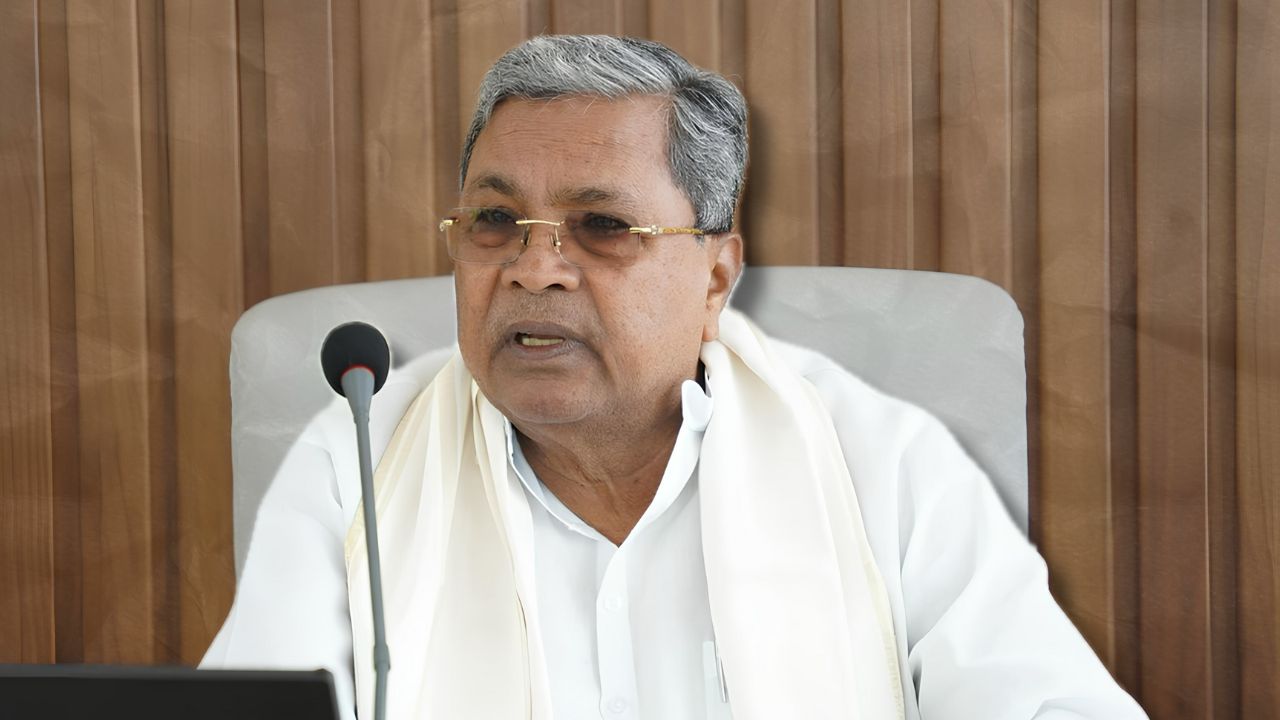
Siddaramaiah thanked the people of Karnataka for their “love, trust, and companionship”.

Synopsis: As the Congress government in Karnataka nears three years in office, several key promises—including ‘firm’ action against those spreading communal hatred, release of the socio-economic caste survey, and a new State Education Policy—made ahead of the 2023 Assembly polls remain incomplete, delayed or caught in controversy, even as its handling of other issues has drawn fire from experts, minority communities and the opposition.
In a little over a week, the Congress government in Karnataka will complete three years in power—a tenure marked as much by governance as by persistent internal strains, recurring speculation over a leadership change, and unkept promises.
Sworn in on 20 May 2023, the Siddaramaiah-led government enters the final stretch of its term after a much-needed victory in recent bypolls to two Assembly seats.
Attention has now shifted to the party leadership, with key decisions pending on a possible cabinet reshuffle and changes within the party organisation. But a closer look at the party’s manifesto ahead of the 2023 Assembly polls shows several significant commitments remain incomplete, delayed, or mired in controversy three years into its term.
Also Read: Karnataka to approach Supreme Court to continue implementation of MGNREGA
A promise of “firm and decisive action against individuals and organisations spreading hatred amongst communities on grounds of caste or religion” was a prominent feature in the manifesto.
“We believe that law and Constitution are sacrosanct and cannot be violated by individuals and organisations like Bajrang Dal, PFI or others promoting enmity or hatred, whether among majority or minority communities,” it said, adding that the party would take “decisive” action under the law, including imposing a ban on such organisations.
The promise had riled the then ruling BJP, with Prime Minister Narendra Modi accusing the Congress of attempting to “lock up Lord Hanuman, just as it had locked up Lord Sri Rama earlier”.
“First they [Congress] locked up Lord Rama and now they have vowed to lock up those who chant ‘Jai Bajrang Bali’,” Modi said at a 2023 campaign rally in Vijayanagara. He ended several election speeches with chants of “Jai Bajrang Bali”.
Then Chief Minister Basavaraj Bommai said any move to ban the Bajrang Dal would prove “costly” for the Congress and that the party would be ousted from the country if devotees of Lord Hanuman revolted.
Soon after, Congress leader and former Chief Minister M Veerappa Moily clarified that the party had no proposal to ban the Bajrang Dal. Moily said banning organisations falls within the domain of the Central government, not state governments.
Over the last two years, police have charged and arrested several Bajrang Dal activists in cases linked to moral policing. In one such incident in 2023, three boys were beaten for being with female friends from another faith at Someshwara beach in Mangaluru.
Police arrested several Bajrang Dal activists in connection with the incident. Around the same time, Home Minister G Parameshwara told reporters that the party had said “Bajrang Dal will be banned only if it disrupts peace”.
Also Read: Why is Bengaluru not hosting IPL finals? BCCI blames KSCA’s ‘huge’ complimentary ticket ask
The Congress had also promised to release the “socio-economic caste census” originally carried out under the first Siddaramaiah government in 2015 and “accord justice accordingly”. But after coming to power, it declined to accept the first survey and initiated a fresh survey in September 2025.
The report is yet to be submitted to the government. In December 2025, Backward Classes Minister Shivaraj Tangadagi told the Assembly the report was still being prepared, in response to a question from BJP member V Sunil Kumar.
Under its broader social justice plank, the government also promised to raise the reservation ceiling from 50 percent to 75 percent to accommodate the “hopes and aspirations” of SC/ST/OBC and minority communities. The promise has since run into legal trouble.
Further, the government’s recent decision on internal reservation within the Scheduled Caste quota has triggered criticism from some communities. Under the revised matrix, 5.25 percent has been reserved for SC Left communities, 5.25 percent for SC Right communities, and 4.5 percent for others, including nomadic communities.
Representatives of nomadic communities argue grouping them with relatively more advanced communities such as Lambani, Bhovi, Korma and Korcha leaves them at a disadvantage and further limits their opportunities.
Dedicated hawker zones in all district headquarters and a one-time financial assistance of ₹20,000 to street vendors to set up shops in these zones was among the Congress’s promises in the manifesto.
The promise resurfaced in March 2026, when Deputy Chief Minister DK Shivakumar said the state government was framing a policy to ban street vending on arterial and sub-arterial roads.
But the move has drawn opposition from street vendor associations, which said the Street Vendors (Protection of Livelihood and Regulation of Street Vending) Act, 2014 explicitly permits vending on streets and mandates that decisions on vending zones and regulation must be taken by Town Vending Committees (TVCs).
The terms of the TVCs in the erstwhile Bruhat Bengaluru Mahanagara Palike (BBMP) expired in 2020 along with the BBMP council. Fresh committees have not been constituted because civic elections have not been held.
Rejecting the controversial National Education Policy (NEP) was another key Congress manifesto promise. In its place, the party promised to frame a State Education Policy (SEP). Although the state government submitted the SEP report in August 2025, there is still no clarity on when it will be implemented as the 2026–27 academic year approaches.
At the same time, some of the government’s decisions in the education sector have raised concerns over similarities with the NEP framework it had pledged to oppose. In 2025, the government decided to merge select government schools on a pilot basis as part of a larger proposal to upgrade 800 government schools into Karnataka Public Schools (KPS) with better facilities at a cost of about ₹3,000 crore.
Experts warned at the time that the proposal mirrors the NEP 2020’s push for the “rationalisation” of schools. The policy aims to ensure every school has enough counsellors or trained social workers, enough teachers to cover all subjects, whether shared or otherwise, and sufficient resources.
The government promised to put in place a strict timeline to ensure regular local body elections and effective representation.
But elections to the Greater Bengaluru Authority (GBA) continue to face delays. On Friday, State Election Commissioner GS Sangreshi said polls would be held between 14 June and 24 June, ruling out postponement because a compliance report has to be filed before the Supreme Court-mandated deadline of 30 June.
Even so, the GBA is expected to seek the state government’s intervention to urge the SEC to move the Supreme Court again for a postponement until September, citing administrative constraints.
(Edited by Dese Gowda)



