

Published Nov 16, 2026 | 11:01 AM ⚊ Updated Nov 16, 2026 | 11:01 AM

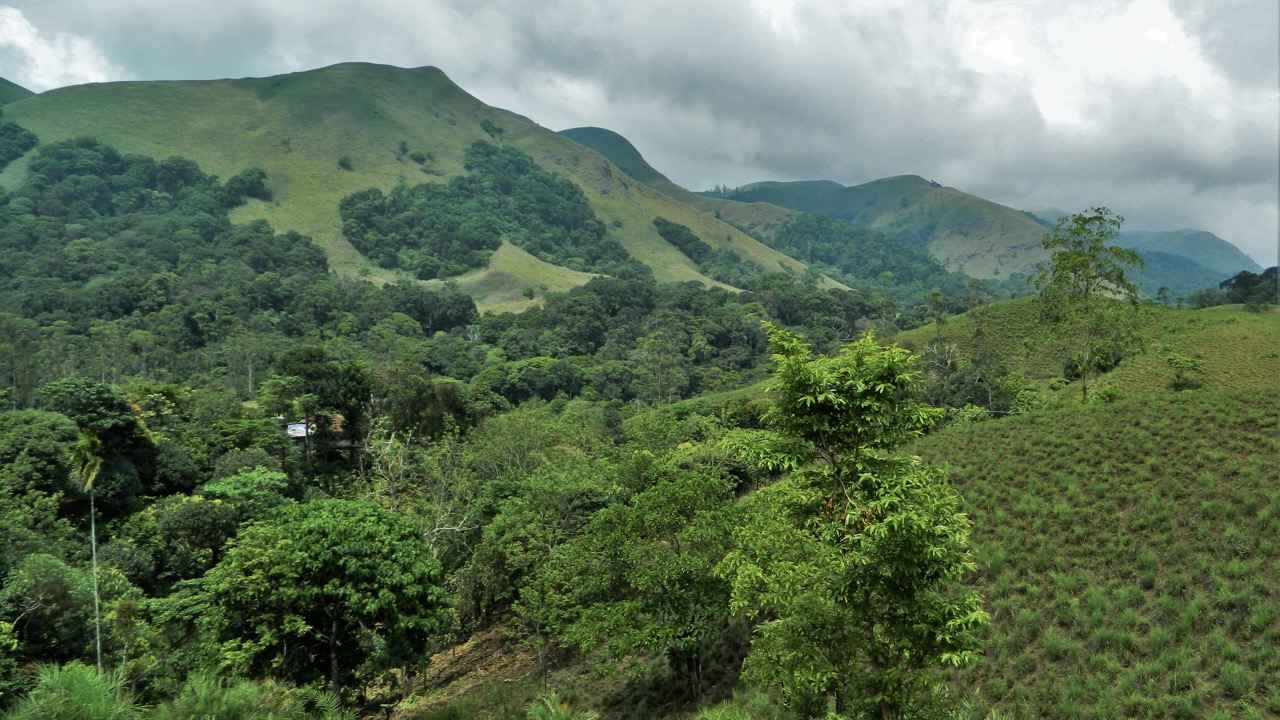
In Karnataka, the Western Ghats extend across parts of 10 districts.

Synopsis: A member of the Karnataka State Policy and Planning Commission, S Mohanadass Hegde, has urged the Union government to grant special constitutional status to the Western Ghats and adjoining coastal regions through a proposed Article 371K. His proposal includes a seven-point development framework for 2027–2037, covering ecological protection, livelihood security, regional development and a Karnataka-specific review of Western Ghats Ecologically Sensitive Area and Coastal Regulation Zone regulations.
A member of the Karnataka State Policy and Planning Commission has sought special constitutional status for the State’s Western Ghats and adjoining coastal regions through the insertion of a proposed Article 371K in the Constitution, alongside a 10-year framework for ecological protection, livelihood security and regional development.
In a collective representation dated 10 November 2026, addressed to Prime Minister Narendra Modi, S Mohanadass Hegde sought the initiation of the constitutional amendment process and the preparation of the necessary legal provisions. He called for the Centre to pursue the proposal as a substantive constitutional initiative rather than restrict it to an exploratory study or preliminary feasibility exercise.
The proposed Article 371K would provide a dedicated constitutional and institutional framework for ecological protection, balanced regional development, livelihood security, community participation and coordinated governance of the Western Ghats and coastal regions of Karnataka.
Hegde’s representation also seeks a Karnataka-specific review of the implementation of Western Ghats Ecologically Sensitive Area (ESA) and Coastal Regulation Zone (CRZ) regulations. The review would cover ecological sensitivity, village boundaries, established settlements, agriculture, plantations, traditional fishing communities, essential infrastructure and livelihood requirements, while retaining necessary environmental safeguards.
The representation says the Western Ghats, recognised as a UNESCO World Heritage site, are among India’s most important ecological landscapes. Together with the coastal regions, they sustain forests, wildlife, rivers, watersheds, agriculture, plantations, fisheries, traditional occupations and cultural heritage. Their ecological importance extends beyond Karnataka and contributes to the country’s environmental security and natural wealth.
In Karnataka, the Western Ghats extend across parts of 10 districts and remain closely connected with the adjoining coastal regions. Communities in these areas face challenges involving infrastructure, connectivity, education, healthcare, employment, livelihood security and disaster resilience, the representation says.
It maintains that ecological protection and human development must advance together, with communities that have traditionally inhabited and protected these landscapes becoming active participants and beneficiaries of conservation and economic development.
Also Read: Sharavathi project: Experts question NIAS report, warn of ecological risks in Western Ghats
The proposed package has seven interconnected initiatives, with 2027–2037 as its implementation period.
Besides the proposed Article 371K and the Karnataka-specific ESA and CRZ review, it envisages a Karnataka Western Ghats and Coastal Regional Development Policy covering ecological conservation, agriculture, horticulture, fisheries, tribal and rural development, infrastructure, education, healthcare, skills, employment, sustainable tourism and climate resilience.
A Regional Development and Economic Transformation Mission would oversee district-wise, taluk-wise and village-level development. The Planning Department of the Karnataka Government would serve as the proposed State-level coordinating department, with responsibilities assigned to the concerned departments and local governments.
The proposal also seeks a Western Ghats Regional Development and Ecological Board for integrated regional planning, conservation, interdepartmental coordination and performance monitoring, without duplicating existing statutory institutions.
Two initiatives are proposed under ecological investment and green economic development: WGEISAM 2027–2037 (Western Ghats Ecological Investment and Sustainable Asset Management), aimed at protecting and restoring natural assets, and WG-AGIDAM 2027–2037 (Western Ghats Green Industry and Development Initiative), aimed at promoting clean technologies, environmentally suitable industries, sustainable enterprises, innovation and local employment in legally permitted locations.
The seventh initiative envisages bringing together eligible Central and State government schemes and suitable long-term financial mechanisms to fund ecological restoration, essential infrastructure, human development, livelihood enhancement and sustainable economic transformation.
The proposed framework divides implementation into four phases: preparation in 2027–2028, initial implementation in 2029–2031, expansion in 2032–2034 and consolidation in 2035–2037.
Scientific assessments, district-level development plans, public consultations, institutional coordination and measurable ecological, social and economic indicators would form the basis of implementation. It also proposes a transparent regional dashboard and independent performance evaluation to track progress.
Hegde has sought the Prime Minister’s intervention to initiate the constitutional process, prepare the necessary amendment provisions and supporting legal material, and constitute an independent multidisciplinary expert committee.
The proposed committee would include constitutional and legal experts, environmental scientists, geographers, economists, regional planning and public finance specialists, along with representatives of affected communities.
The representation also seeks a comprehensive scientific and legal review of the State-specific ESA and CRZ requirements, examination of the proposed regional development policy and mission, and consideration of the proposed regional board.
It calls for appropriate financial mechanisms, convergence of eligible government programmes and coordinated action by the concerned Union Ministries and the Karnataka Government for time-bound examination and follow-up.
Also Read: Western Ghats’ deforestation, climate change may have taken monkey fever beyond Karnataka
The proposed framework seeks to bring farmers, plantation workers, fishing communities, tribal communities, rural households, youth, women and local entrepreneurs into the regional development process as equal stakeholders.
“The people of Karnataka’s Western Ghats and Coastal regions should not have to choose between protecting their natural heritage and securing their developmental future,” the representation says.
It sets out the principle that conservation must respect community dignity, development must respect ecological limits, and constitutional protection must create opportunities for both nature and people to prosper.
The proposal also envisages the initiative as a model for addressing the developmental needs of other ecologically significant regions while respecting their environmental responsibilities.
Hegde has urged the Prime Minister to issue directions to the concerned authorities for constitutional, legal, scientific and administrative examination of the proposal.
(Edited by Dese Gowda)



