

Published Oct 21, 2026 | 7:45 PM ⚊ Updated Oct 21, 2026 | 7:45 PM

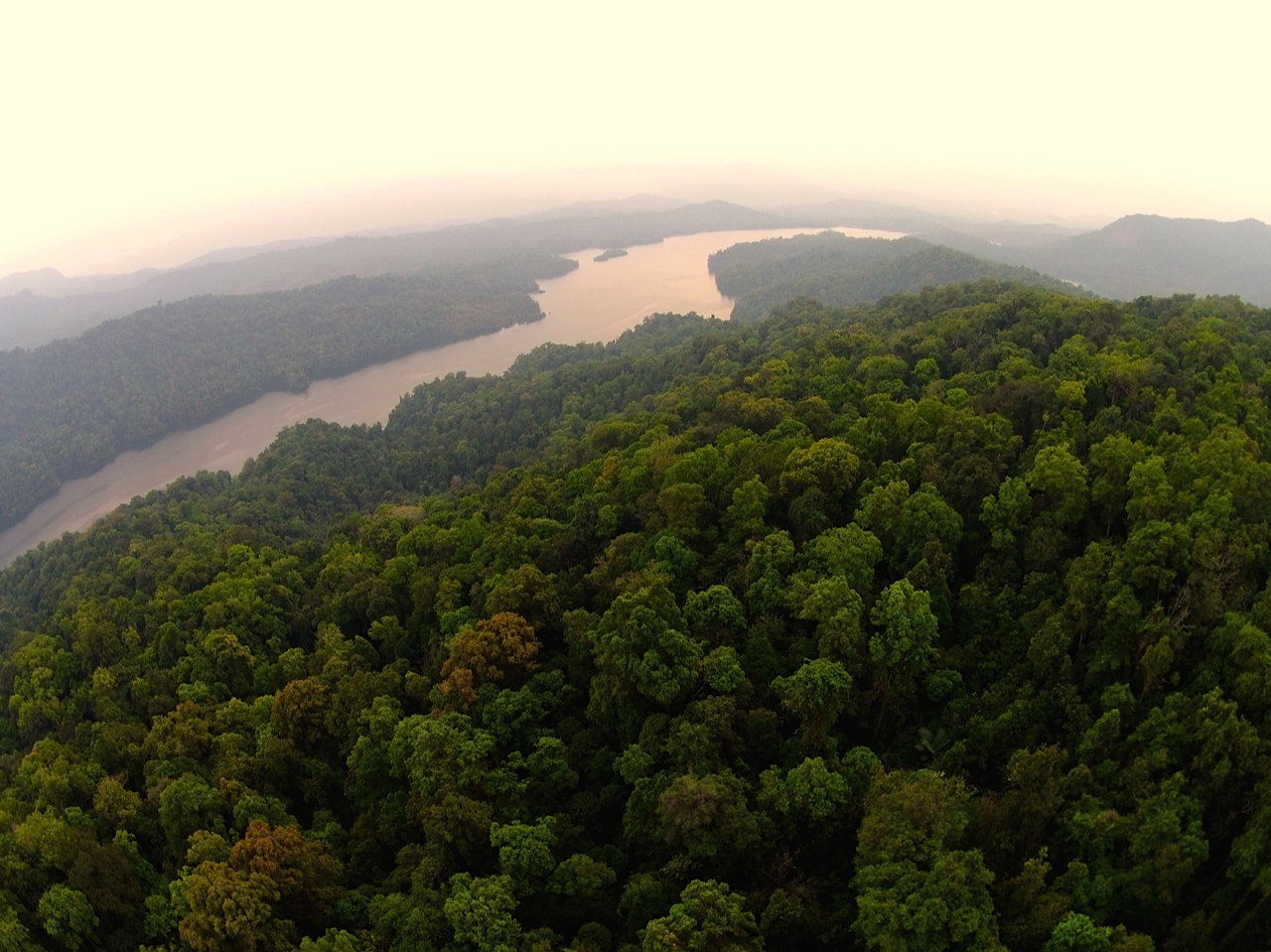
Sharavathi Valley is one of the largest protected forest areas in the Western Ghats. (Prakashmatada/Creative Commons).

Synopsis: A review of the proposed 2,000-MW pumped-storage project in Karnataka’s Western Ghats alleges that its environmental risks have not been adequately assessed. It questioned whether the need for electricity storage justified the environmental risks of locating major infrastructure in a sensitive ecosystem, such as the Sharavathi valley.
A proposed 2,000-megawatt (MW) pumped-storage hydroelectric project in Karnataka’s Western Ghats has come under renewed scrutiny after experts challenged a report by the National Institute of Advanced Studies (NIAS), arguing that it does not adequately account for the ecological consequences of building inside a protected area.
The 60-page “People’s Review of the NIAS Report on the Sharavathi Pumped Storage Project“, dated 12 October 2026, questioned the scientific basis of the NIAS assessment. It called for a comprehensive appraisal of environmental risks and alternatives.
The Karnataka Power Corporation Limited (KPCL)-proposed project is estimated to cost ₹10,240 crore. It is located within the Sharavathi Lion-Tailed Macaque Wildlife Sanctuary and its eco-sensitive zone, across parts of Shivamogga and Uttara Kannada districts.
The central question raised was whether the need for electricity storage justified the environmental risks of locating major infrastructure in a sensitive ecosystem.
Also Read: Ecological damage, corruption allegations mar Sharavathi Hydroelectric Project
The review traced the scrutiny to a three-member committee comprising Dr HS Singh and Professor Raman Sukumar, members of the National Board for Wildlife, and an official of the National Tiger Conservation Authority.
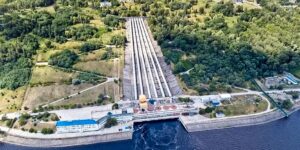
Sharavathi Pumped Storage Project representative image. (MEIL)
The committee inspected the site from 27 to 30 December 2025 and submitted its report in February 2026. It did not recommend the project, stating that it lacked “compelling technical merit, environmental sustainability, or alignment with public interest”.
Wildlife clearance was granted on 17 July 2025. The proposal underwent further scrutiny after members of the Standing Committee of the National Board for Wildlife (SC-NBWL) raised concerns. The proposal was then put up for further scrutiny, and NIAS was asked to comment. The review said its assessment, led by Professor R Srikanth, followed a site visit and discussions with KPCL officials in April 2026.
The People’s Review alleged that NIAS gave greater weight to the project’s energy benefits than to earlier ecological concerns, and did not adequately examine key project documents or independently assess proposed design changes.
The report said NIAS had argued that the project would help Karnataka manage surplus electricity, integrate renewable energy and reduce dependence on battery storage amid concerns over critical-mineral supplies.
It also cited India’s 2070 net-zero target and the reduction in proposed forest diversion from 54.16 hectares to 38.98 hectares.
NIAS recommended SC-NBWL’s approval and urged the Environment Ministry to consider an exception to restrictions on major hydroelectric projects in the eco-sensitive zone.
NIAS director Shailesh Nayank did not respond to South First.
Also Read: A water battery at the cost of a forest
Ecologist M Subash Chandran, associated with the Indian Institute of Science, Bengaluru, said the assessment should consider the cumulative effects of infrastructure on the entire Sharavathi river system, rather than focus on individual structures or the number of trees felled.
“The NIAS report does not consider anything about the environment. It is only about how to reduce the number of trees,” he said.
“If you look at the whole river comprehensively, the river is getting destroyed,” Chandran said.
Expressing concerns about downstream water flows, Chandran warned that altered freshwater flows could allow salinity to move further upstream, potentially affecting wells, farms and drinking-water supplies around Honnavar.
“The entire rural economy of Honnavar will get impacted,” he said.
Chandran also highlighted the Sharavathi estuary’s role as a breeding and nursery area for marine fish, arguing that the effects of existing hydropower infrastructure must be considered alongside those of the proposed project.
Also Read: Environmentalists urge authorities to halt Karnataka’s Sharavathi Pumped Storage Project
Environmentalist Bharat Shetturu warned that excavation and related infrastructure could affect biodiversity beyond the immediate construction site.

The lion-tailed macaque is endemic to the Western Ghats and is on IUCN’s Endangered list. (NA Nazeer/Creative Commons)
“Because of the excavation, not only the dam area gets affected, but it will also affect the nearby biodiversity and ecology of the region,” he said.
Shetturu highlighted the sanctuary’s threatened wildlife, including the lion-tailed macaque, and the ecological benefits of its semi-evergreen and evergreen forests. He also questioned the need for another major project when renewable-energy alternatives were available.
The International Union for Conservation of Nature (IUCN) has included the lion-tailed macaque (Macaca silenus), also called the wanderloo, on its ‘Endangered’ list.
“Why do they want to construct one more dam? We have solar energy, we have wind energy available,” he said.
He suggested lake restoration and groundwater recharge as alternatives for improving local water security.
The project’s design changes reportedly reduce the forest area required from 54.16 hectares to 38.98 hectares.
The People’s Review argued that the NIAS failed to account for the fact that while the above-ground area may have decreased, the increase in the underground construction footprint would be equally damaging to the environment.
Former Indian Forest Service officer and panel member Brij Kishore Singh warned that underground construction could still damage forests and questioned whether compensatory afforestation could replace mature forest ecosystems.
“Show me one case on earth where compensatory afforestation of 200 floral species that have been lost is successful. Not even one,” he said.
Explaining the potential impact on rainfall, Singh said, “Coastal forests help carry moisture-laden air from the sea to inland areas and influence rainfall patterns. Destroying these forests could create rain shadow areas in parts of peninsular India.”
The People’s Review called for an integrated environmental assessment, independent geological and hydrogeological studies, and consideration of alternatives such as battery storage and other project locations.
It cited the 1,600-MW Saundatti pumped-storage project in Belagavi district, saying only 700 MW of its capacity has been contracted.
A separate legal challenge has reached the Karnataka High Court. On 10 March 2026, the court directed that no on-ground activities about the project be undertaken without further orders. This interim direction does not determine the project’s final clearance status.
For the experts raising concerns, reducing the number of trees marked for felling was not enough.
They argued that the decision must account for the interconnected river, forests and communities, and weigh the project’s energy benefits against its environmental costs through a comprehensive, independent assessment.
(Edited by Majnu Babu).



