

Published Nov 17, 2026 | 12:50 PM ⚊ Updated Nov 17, 2026 | 12:51 PM

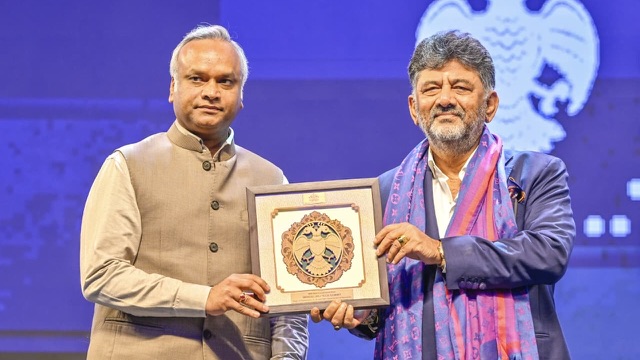
Chief Minister DK Shivakumar and IT-BT Minister Priyank Kharge.

Synopsis: Karnataka Chief Minister DK Shivakumar on Tuesday inaugurated the 29th Bengaluru Tech Summit and said the State was positioning itself as a global hub for artificial intelligence, deep technology, semiconductor manufacturing and biotechnology. He highlighted Karnataka’s contribution to India’s technology exports, foreign investment and startup ecosystem, and announced funding and procurement support for startups, along with initiatives in AI, robotics and advanced manufacturing.
Karnataka Chief Minister DK Shivakumar has said the State has consistently been at the forefront of technological advancement and is positioning itself as a global hub for artificial intelligence, deep technology, semiconductor manufacturing and biotechnology, citing its progressive policies, strong research institutions, thriving startup ecosystem and skilled human resources.
“Karnataka laid the foundations of modern industry and technology through institutions of learning and research, strong public sector enterprises and the trust of global companies. Some of India’s most ambitious scientific and engineering projects have found a home here,” he said while inaugurating the 29th edition of the Bengaluru Tech Summit on Tuesday, 17 November.
More than 75 countries were participating this year, compared with 57 last year. The number of exhibitors had nearly doubled, while business visitor participation was expected to increase by nearly a third.
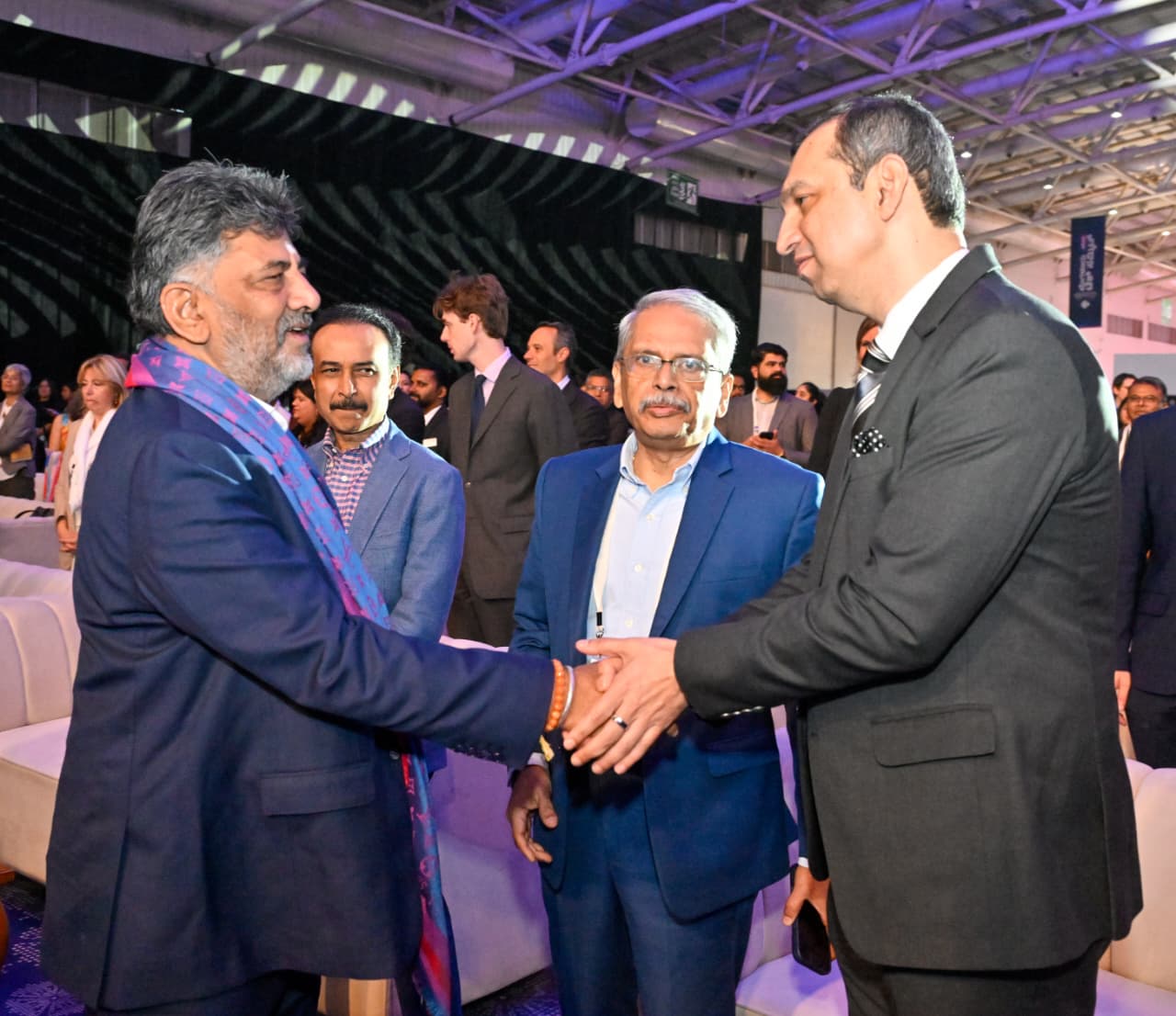
The Chief Minister said Karnataka was home to more than 24,000 recognised startups.
“We will bring the talent, the policies and the partnership. You bring your ambition. What lies beyond AI, we want to build here, with you,” he said.
Shivakumar said Karnataka accounted for two out of every five dollars earned by India through software and services exports, amounting to approximately $173 billion in 2025.
Karnataka had received $9.4 billion in FDI equity inflows in the first half of FY 2025-26, accounting for 26.7 percent of India’s total inflows during the period, he said.
More than 1,000 Global Capability Centres (GCCs) had chosen Bengaluru as their base, while over 30 new GCCs brought investments exceeding $1 billion into the State in 2025 alone.
He cited Chandrayaan-3, the digital identity platform developed at IIIT-Bengaluru, Biocon’s global pharmaceutical reach and Bengaluru-based Sarvam’s role in developing India’s own AI model as examples of Karnataka’s contributions to India’s scientific and technological advances.
Bengaluru Tech Summit 2026 begins today at BIEC.
Over 50,000+ innovators
3,000+ startups
450+ global speakers & delegations from 40+ countries, all under one roof.Welcome to the epicenter of global innovation.
Together, let’s build the tech for tomorrow. https://t.co/LP9SfDOikA
— Priyank Kharge / ಪ್ರಿಯಾಂಕ್ ಖರ್ಗೆ (@PriyankKharge) November 17, 2026
Also Read: Parched fields, farmer distress, rising food prices as Karnataka faces its worst drought in decades
The Chief Minister said Karnataka was home to more than 24,000 recognised startups, with nearly two out of every five Indian unicorns originating from the State. Bengaluru ranked eighth among the world’s startup ecosystems and second in Asia for AI-native startups, he added.
Bengaluru attracted $4.4 billion in technology funding, nearly matching the combined $4.8 billion raised by the next five Indian cities. Karnataka startups had collectively raised approximately $79 billion, while women founders in Bengaluru had secured $13.4 billion in funding, he added.
Under the ELEVATE initiative, the government had supported nearly 1,500 startups through equity-free grants amounting to $41 million over a decade.
Shivakumar said the government was extending targeted support to startups working on advanced scientific and industrial solutions.
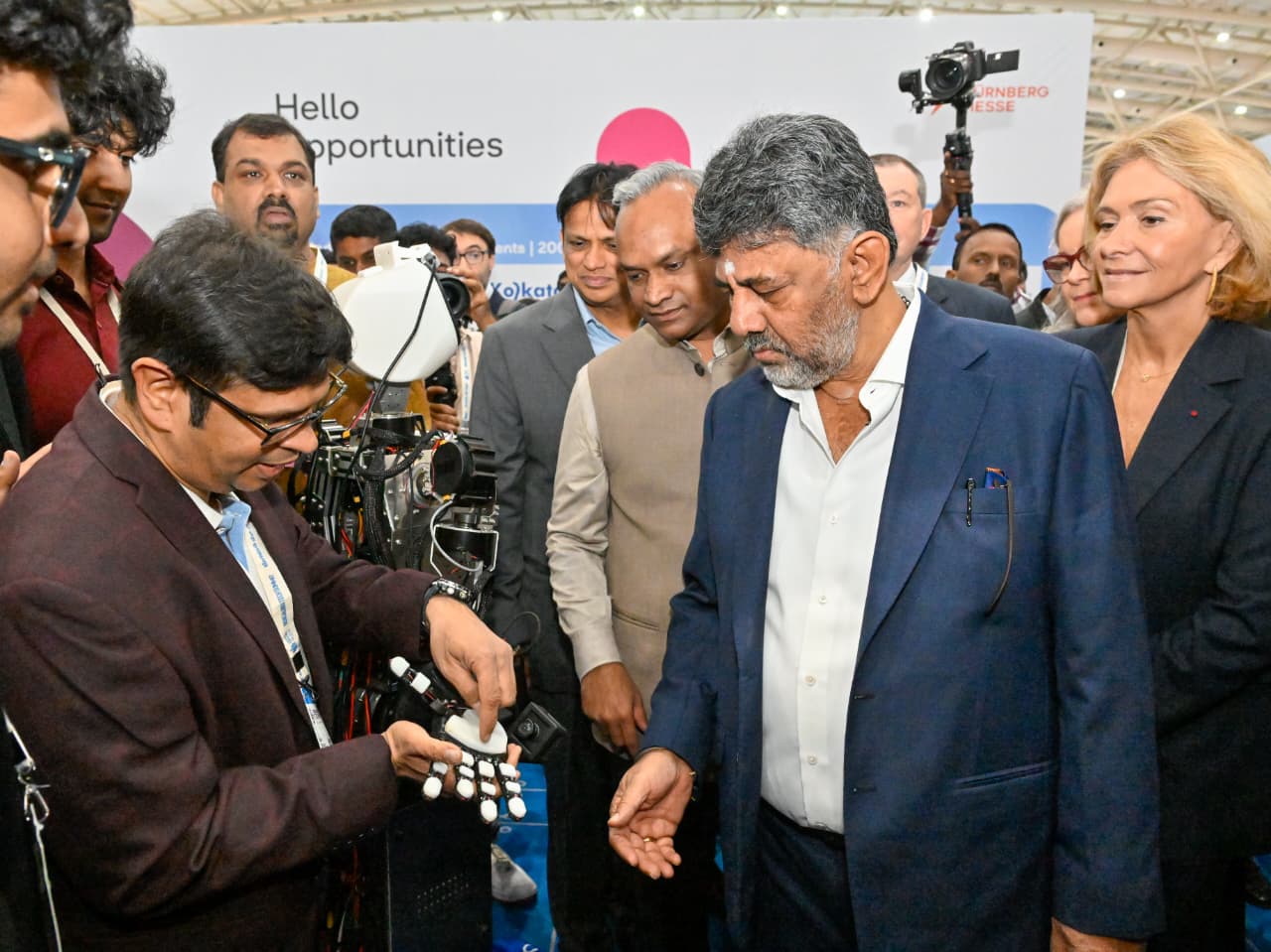
Under the ELEVATE initiative, the government had supported nearly 1,500 startups.
Through ELEVATE NxT, the State was offering grants of ₹1 crore to deep-tech startups. Since last year, 33 such startups had received equity-free funding of ₹30 crore.
He also announced that the government’s deep-tech accelerator, Innoverse, would support 35 growth-stage ventures over the next five years, helping them transition from product development to industrial-scale operations.
Under the Government First initiative, the government would become the first customer for startups, with a dedicated allocation of ₹25 crore to procure innovative solutions developed by them, he said.
Also Read: Math of 7.5-km line that PM will inaugurate: BJP vs Congress dispute over who pays for Namma Metro
Shivakumar said artificial intelligence was the foundation of Karnataka’s next phase of technological development. Bengaluru accounted for nearly 50 percent of India’s AI and machine-learning talent, he added.
The government was building India’s first government-driven AI University, with an AI Hub at its centre to bring startups, researchers and industry together.
An additional Centre of Excellence at IIIT Raichur would extend AI applications to the 13 districts of North Karnataka, with solutions for agriculture, healthcare, education and small businesses, he added.
He also highlighted the proposed BRAINZ (Bengaluru Robotics and AI Innovation Zone), which would create an ecosystem for artificial intelligence and robotics research, prototyping and manufacturing.
Under the ₹300-crore Nipuna Karnataka reskilling mission, the government was preparing the State’s workforce for emerging technology requirements, Shivakumar said. More than 33,000 people, including women returning to the workforce after career breaks, had already become industry-ready through partnerships with leading global technology companies.
Also Read: Karnataka households feel the squeeze as milk and bus fare hikes add to rising living costs
Shivakumar said Karnataka was home to more than 100 fabless chip companies, while three out of every five engineers working in India’s semiconductor capability centres were based in Bengaluru.
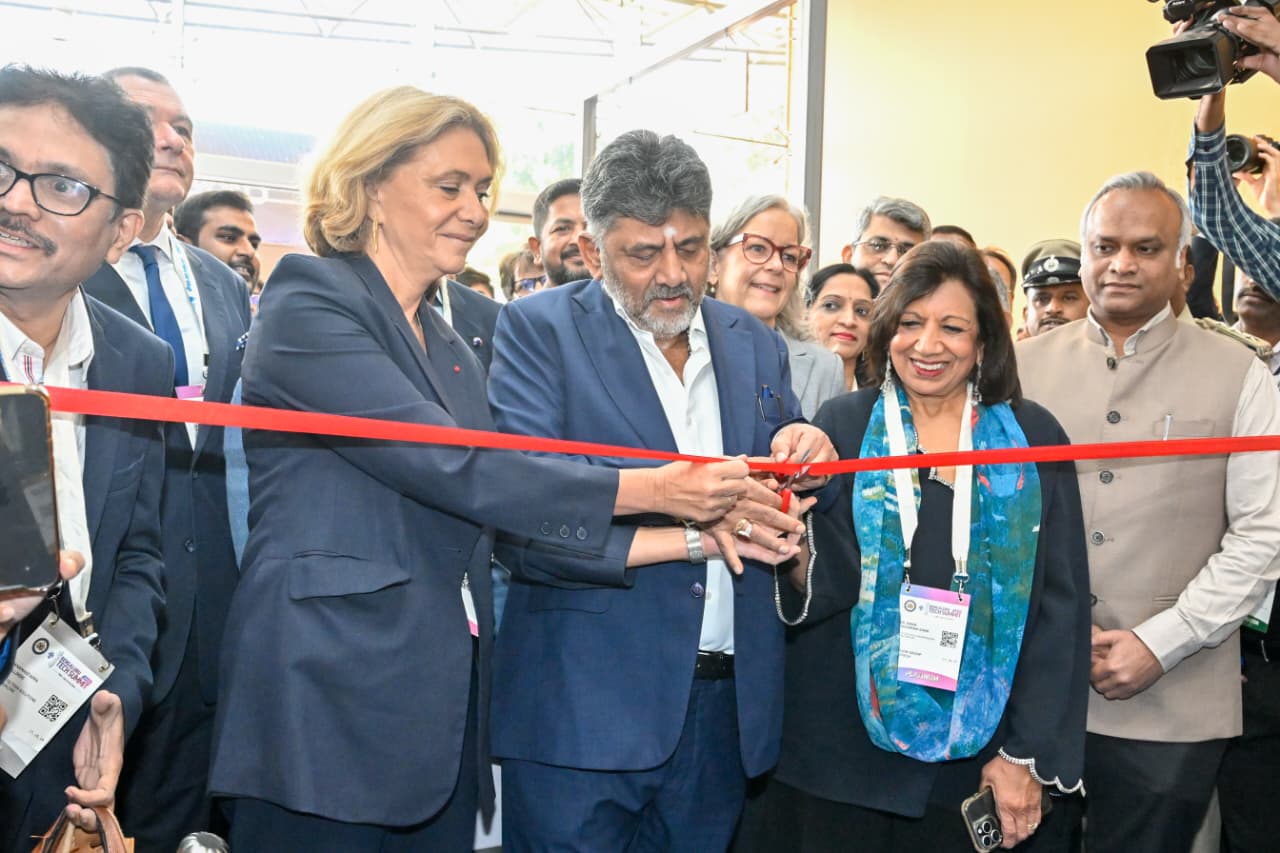
Shivakumar said artificial intelligence was the foundation of Karnataka’s next phase of technological development.
The State accounted for one-fifth of India’s electronics exports and was now moving from semiconductor design towards manufacturing, he said.
Global companies were investing more than ₹23,000 crore in semiconductor research and manufacturing facilities in Bengaluru and Mysuru, he said.
Four electronics manufacturing clusters, stretching from Dharwad to Mysuru, would provide ready infrastructure, land, power and skilled talent, supported by incentives under the Electronic System Design and Manufacturing (ESDM) Policy.
He also highlighted the role of SFAL, the fabless semiconductor accelerator, the 2D Innovation Hub at IISc and Infifab, proposed as India’s first microfabrication translation centre, in strengthening semiconductor research, innovation and manufacturing capabilities.
The Chief Minister said Karnataka accounted for one-fifth of India’s bioeconomy, valued at $39.2 billion last year and contributing more than a tenth of the State’s economy.
The government was expanding biotechnology into marine resources, agriculture and healthcare through initiatives such as the Marine Biotechnology Policy, Karnataka Institute of Marine Biotechnology and Blue Economy, Agri Innovation Park and Krishikalpa Centre of Excellence for Agriculture.
He also referred to plans for a new institute for genome editing and gene therapy, the Charaka Centre of Excellence for health and medical technology, and a Centre of Excellence for AI in Biotechnology. Eleven new incubators would help translate research into commercial ventures.
(Edited by Dese Gowda)



