

Published Nov 12, 2026 | 5:59 PM ⚊ Updated Nov 12, 2026 | 6:10 PM

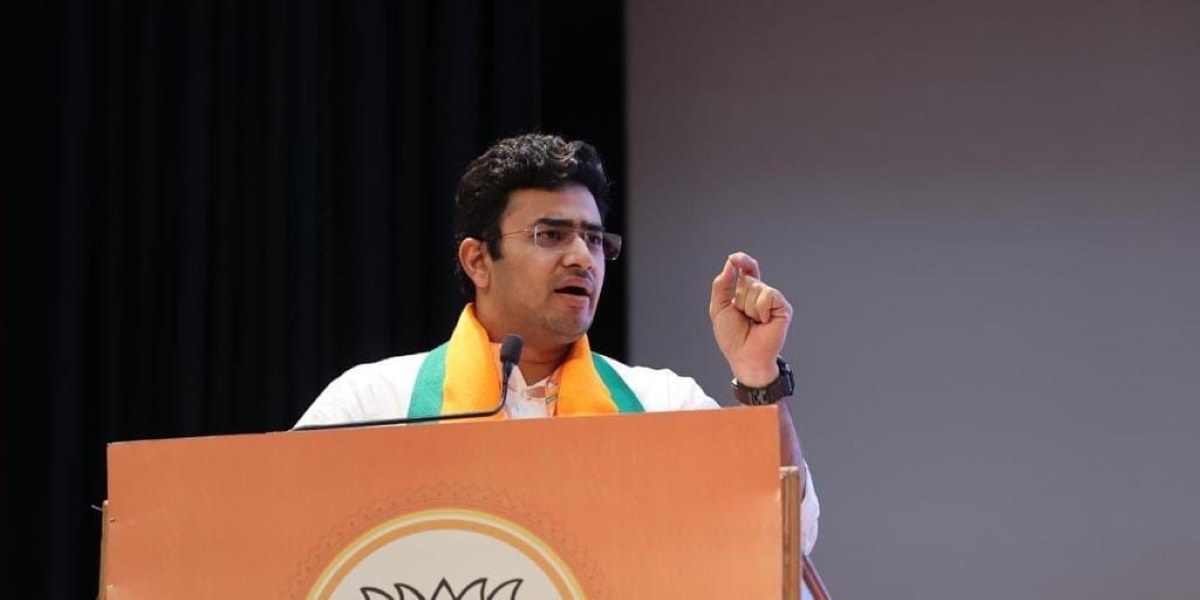
BJP MP Tejasvi Surya.

Synopsis: BJP MP Tejasvi Surya challenged the state’s accounting of Metro expenditure, questioned loan repayment claims and blamed project delays on planning lapses. The exchange between the Congress government in Karnataka and the BJP has turned Namma Metro’s funding and execution into another political flashpoint, with both sides trading charges over financial responsibility, delays and accountability. While the Congress government is seeking a greater share of the funding burden from the Centre, the BJP has questioned the state’s accounting of expenditure and its handling of project implementation.
A war of words has erupted between the Congress government in Karnataka and the BJP over the Centre’s contribution to Namma Metro, with the state accusing the Union government of shouldering a disproportionately small share of the project’s costs, and BJP MP Tejasvi Surya challenging its accounting.
The exchange comes ahead of Prime Minister Narendra Modi’s visit to Bengaluru on Friday, 13 November, to inaugurate the Pink Line, a 7.5-km elevated stretch between Kalena Agrahara and Tavarekere at a cost of around ₹3,470 crore.
Surya on Thursday, 12 November, challenged the Karnataka government’s claim that the state bears 84% of the expenditure on Bengaluru’s Namma Metro network, arguing that the figures were intended to cause ‘mischief’.
Greater Bengaluru Development Minister Krishna Byre Gowda had said on Wednesday, 11 November, that the state would seek a larger share in funding for the Namma Metro. He said the burden was ₹65,291 crore, including ₹9,164 crore in equity, ₹14,404 crore towards land acquisition, ₹28,958 crore in foreign loan repayments, ₹3,915 crore in state taxes, ₹4,818 crore in grants and value capture, and ₹761 crore in construction-period interest. This was against the Centre’s expenditure, amounting to ₹12,600 crore.
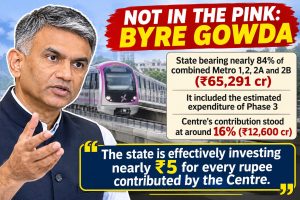
What Minister Krishna Byre Gowda said on Wednesday. (AI generated)
Namma Metro follows a 20:20:60 funding model, with the state and central governments each contributing 20% of the project cost and the remaining 60% financed through loans.
However, the Congress government in Karnataka and the BJP have turned the issue of funding and project execution into another political flashpoint. While the Congress government claimed responsibility for the ₹28,958 crore loan burden, Surya sought to credit the government of India for securing these loans.
The loan repayment also fell under the metro corporation, not the government of Karnataka, the BJP MP said. “When this government is unable to repay the ticket costs and has suspended old-age pension payments, who will provide loans for this ‘pauper’ sarkar?” he asked.
Surya argued that the state government could not claim loan repayment costs, since loans for Phases 2, 2A, 2B and 3 were yet to mature and the repayment schedule was yet to start. “If the BMRCL is not able to pay the loan for Phase 1, it is because the state government has not implemented non-fare income and due to delays there may have been an increase in costs,” he said.
Citing a 2026 Comptroller and Auditor General (CAG) report, Surya said that only 1.39% to 8.21% of income was generated, compared to the 10% floor in the Memorandum of Understanding. Around 2.23 lakh sq ft of property was vacant in the stations, signalling the potential to generate more income. The BMRCL reported a book loss of ₹1,710 crore in 2025-26 despite generating revenues of ₹1,625 crore. Interest payments, depreciation and debt-related expenses largely drove the deficit.
He highlighted that the 2026 CAG report also included a rise in estimated land costs due to acquisition delays and inaccurate estimates.
Also Read: What’s in store for Southern states in 2026
In response to Gowda’s charge that the Centre’s approval of the Red Line delayed the project’s commencement, Surya cited the Orange Line, where multiple design revisions delayed work.
“The plan was revised three times in November 2022, 2023 and in August 2024, though the project was approved within 100 days of the Modi government coming into power,” he said.
As for the Red Line, or Phase 3A, the government had budgeted ₹28,405 crore, about ₹776 crore per km. Calling it the ‘costliest metro’, Surya said the government of India exercised due diligence by asking for a third-party investigation into the costs.
“Because of this, the revised estimate came down to ₹25,999 crore. Now, the revised plan is in front of the board for approval,” he said.
However, he said approval may be delayed due to “whimsical planning” by the state government. “The Hebbal short tunnel and the elevated road have been planned along the same stretch, in the same alignment.” In these plans, he claimed that the veterinary college station was dropped.
“The Karnataka government is responsible for ensuring that public transport projects are aligned with the Comprehensive Mobility Plan and the Integrated Master Plan,” he added. Without such planning, international financing institutions would not extend loans for the project.
Meanwhile, Minister Gowda on Thursday said his speech was dropped from the Metro’s Pink Line programme, a day after he demanded Karnataka’s “rightful share” in central funding.
ಕರ್ನಾಟಕ ರಾಜ್ಯಕ್ಕೆ ನ್ಯಾಯ ಕೇಳಿದ್ದಕ್ಕೆ ಸಿಕ್ಕ ಬಹುಮಾನ – ನನ್ನ ಭಾಷಣ ಕಟ್!
ಬೆಂಗಳೂರು ಅಭಿವೃದ್ಧಿ ಸಚಿವನಿಗೆ ಮೆಟ್ರೋ ಉದ್ಘಾಟನೆಯಲ್ಲಿ ಮಾತನಾಡಲು ಇಲ್ಲ ಅವಕಾಶ.
ಸಭಾ ಕಾರ್ಯಕ್ರಮದ ಡ್ರಾಫ್ಟ್ ನಲ್ಲಿ ನನ್ನ ಮಾತಿಗೆ ಅವಕಾಶ ನಿಗದಿಯಾಗಿತ್ತು. ನಿನ್ನೆ ರಾತ್ರಿ ಬಂದ ಅಂತಿಮ ಪಟ್ಟಿಯಲ್ಲಿ ಬೆಂಗಳೂರು ಅಭಿವೃದ್ಧಿ ಸಚಿವರ ಮಾತನ್ನು ಕಟ್ ಮಾಡಲಾಗಿದೆ.
ಬಹುತೇಕ ಬಂಡವಾಳ ಖರ್ಚು ನಮ್ಮದು. ಕರ್ನಾಟಕಕ್ಕೆ ನ್ಯಾಯಯುತ ಪಾಲು ಕೇಳಿದರೆ ಈ ರೀತಿ ಶಿಕ್ಷೆ.
ಪರವಾಗಿಲ್ಲ, ನೀವು ನನ್ನ ಮಾತನ್ನು ಕಟ್ ಮಾಡಬಹುದು. ಆದರೆ ಬೆಂಗಳೂರಿನ ಅಭಿವೃದ್ಧಿಗೆ ಕೆಲಸ ಮಾಡೋದನ್ನ ನಿಲ್ಲಿಸಲಿಕ್ಕೆ ಆಗೋದಿಲ್ಲ. ಇನ್ನೂ ಹೆಚ್ಚಿನ ಪರಿಶ್ರಮದಿಂದ ಕೆಲಸ ಮಾಡುತ್ತೇವೆ.
— Krishna Byre Gowda (@krishnabgowda) November 12, 2026
(Edited by Majnu Babu).



