

Published Jun 08, 2026 | 2:57 PM ⚊ Updated Jun 08, 2026 | 2:57 PM


Synopsis: Before his death from liver-related complications, actor Salim Kumar had publicly recounted how fear of a liver transplant led him to spend years pursuing unproven treatments from traditional healers, delaying effective care for liver cirrhosis. His account highlights how promises of easy cures can exploit vulnerable patients and delay treatment for serious illness, often with grave consequences.
Actor Salim Kumar passed away on the night of 6 June, aged 56, following liver-related complications. He was on ventilator support at Amrita Hospital, Edapally, when the end came at around 10.45 pm.
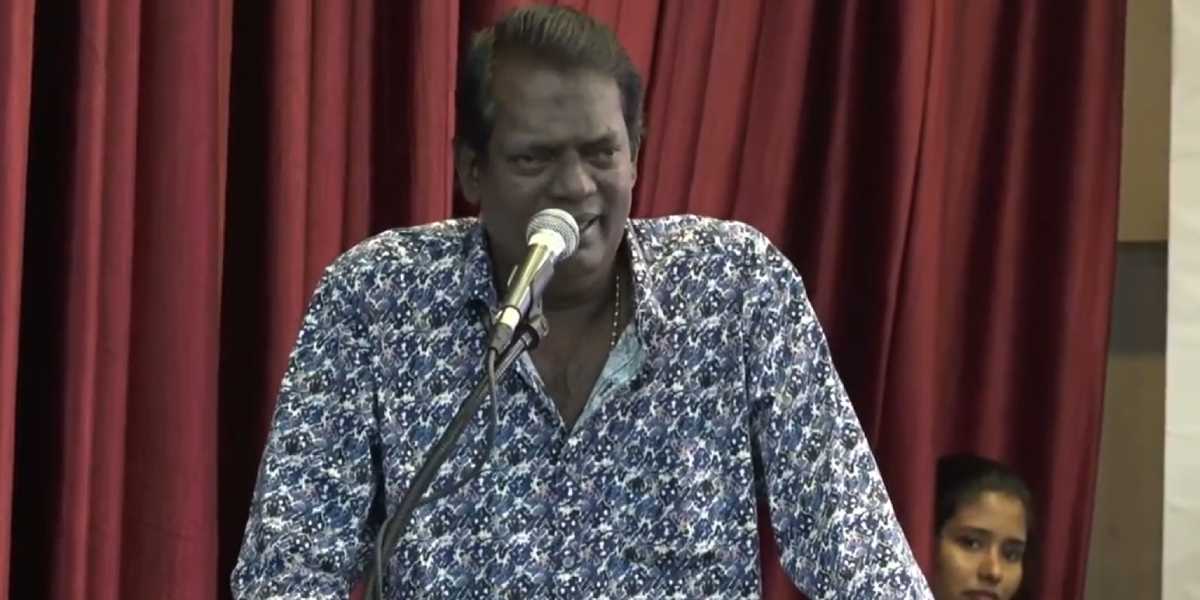
In 2023, he had stood in the same hospital’s auditorium and delivered a detailed, first-person account of how he spent years avoiding proper treatment for liver cirrhosis, moving from one traditional healer to the next, as his condition quietly worsened.
He survived that period. But the years lost to ineffective and, at times, actively harmful treatments extracted a cost that medicine could only partially repair.
His account was a clinical map of exactly how traditional healers operate, what they say, what they charge, and what happens to patients who believe them.
After he was diagnosed with liver cirrhosis, Kumar researched the condition and found that a transplant was the only medically established treatment. He then chose not to pursue it.
“I thought, surely there must be some other remedy,” he recalled in the account.
That decision cost him years.
He identified precisely where this pattern begins for most patients.
“Usually, it starts with jaundice. If someone says, ‘I have jaundice,’ people in our villages immediately respond, ‘There is a traditional healer in that place. He will give you a medicinal powder, and the jaundice will disappear’,” he said.
The reason this belief persists, he explained, is straightforward and worth understanding.
“The type of jaundice that appears to be cured by a healer would often have gone away even if no medicine had been taken at all. Ordinary people do not understand this. They do not realise that there are many kinds of jaundice and that some are beyond the capabilities of traditional healers,” he added.
By the time the distinction becomes clear, he said, the healer has already done damage.
“By the time the healer has finished damaging the liver, they simply say, ‘Whatever God wills will happen’,” he said.
A friend directed him to a healer in Ottapalam named Nirmalananda Giri, described as someone who could cure even cancer. The healer’s offer was precise.
“He told me, ‘I will cure your liver cirrhosis within 51 days.’ He prescribed a medicine called Nilamparanda and instructed me to mix it with rice gruel and drink it for 51 days,” he added.
Salim Kumar took it for 10 times that duration. “Not only 51 days, I took it for 501 days, and still nothing changed,” he said.
When he called the healer to report this, he learned that the man had stage-four cancer and was himself undergoing treatment at Vellore. The healer, Salim Kumar noted, had been treating his own cancer through traditional medicine until that point.
The 501 days were gone. The liver cirrhosis had not waited.
The same friend then suggested Mohanan Vaidyar in Cherthala. The healer’s opening position was unambiguous.
“He told me, ‘There is no medicine for this in English medicine’,” he said.
He prescribed multiple remedies, required the purchase of organically grown produce from his own farm, and included in the treatment plan something Salim Kumar described: “He gave me a kind of grass that cows normally eat.”
The consequences were direct. “After taking those medicines, I was vomiting blood. The blood would gush out in large quantities.”
His son called the healer. The explanation offered was that the medicine was flushing out blood that had accumulated inside the body. That this was the treatment working. The calls were then left unanswered.
“My son said, ‘Dad, he is not answering the phone’,” he said.
When contact was finally made, the instruction was to go to a hospital immediately. Salim Kumar noted the significance of that moment plainly.
“If he had stood by his treatment, I probably would not have gone to the hospital,” he said.
A patient vomiting blood is what it took for the referral to happen.
Also Read: Cancer care hit across India as shortage of key chemotherapy drugs disrupts treatment schedules
A third healer in Malayattoor prescribed a preparation made from the water of 500 coconuts, boiled repeatedly into a thick paste. His wife prepared it daily.
His body rejected it. When she informed the healer, the response was immediate.
“The healer replied, ‘Oh, his body is rejecting it. Don’t throw it away. Apply it to the skin. If it burns, let it burn. That means the medicine for liver cirrhosis is working’,” he said.
A preparation prescribed for liver cirrhosis was repurposed, mid-treatment, as a topical ointment for burns. No explanation was offered. No accountability was sought. The healer moved on.
Salim Kumar’s experience was not exceptional. It was, as Kerala’s own medical research has documented, a pattern.
A study conducted by clinician-scientists at Rajagiri Hospital in Aluva, published in the journal Medicine, examined what happened to chronic liver disease patients in Kerala who turned to complementary and alternative medicine during the Covid-19 pandemic. The findings were stark.
Of 1,022 patients with cirrhosis screened between April 2020 and May 2021, 178 had consumed complementary and alternative medicines. Nineteen of those patients developed severe complications directly associated with so-called immune-boosting supplements within three months. Eight died within 180 days. The study found that 42 percent of chronic liver disease patients in the cohort who used these supplements died as a result.
The most commonly used preparations were Ayurvedic, followed by homoeopathy. The agents identified as causing severe liver injury included giloy, ashwagandha, turmeric, neem, amla, tulsi and arsenic trioxide, all widely marketed as safe and natural. When researchers analysed the products, they found detectable levels of arsenic, lead and mercury, alongside hepatotoxic plant chemicals, insecticides, pesticides and industrial solvents.
The study also found that liver biopsies of affected patients showed large areas of tissue damage, severe inflammatory injury and cell death across an already weakened organ. These were not minor side effects. These were patients whose livers, already compromised by cirrhosis, were being pushed towards total failure by preparations promoted as beneficial.
Researchers have pointed out that patients with chronic disease are easily tricked into using short-cuts to boost their health in the presence of growing science denialism.
This is precisely the environment Salim Kumar described from personal experience. The language of immune boosting, natural remedies and ancient wisdom creates a permission structure for delay. For a patient with liver cirrhosis, delay is not a neutral choice. It is a medical event in itself.
Also Read: Ballots and Bengaluru: Why local democracy matters for public health
Salim Kumar was precise about who he was and was not criticising.
“I am not talking about qualified BAMS doctors who have studied and earned a Bachelor of Ayurvedic Medicine and Surgery degree. I am talking about so-called traditional healers,” he said.
He also named the supplements industry directly. Practitioners selling products at ₹10,000 to ₹30,000 a month, removing labels, writing no prescriptions, answering to nobody.
“These people are completely reckless. They will treat any disease that comes to them,” he said.
The through-line across every account he gave was not the healers. It was the structural gap they fill. Patients with serious diagnoses, frightened of surgery or the implications of their condition, encounter practitioners who offer certainty, timelines and something to do. The medical system, by contrast, offers difficult truths.
“I went everywhere where there was a promise of a cure,” Salim Kumar said. “Because I was afraid.”
That fear is not irrational. But it is exploitable. And the people who exploit it, he made clear, operate without consequence.
He eventually had a liver transplant. He recovered. He spoke publicly about what delayed him from reaching that point. Last weekend, he died of liver-related complications.



