

Published Jun 07, 2026 | 5:00 PM ⚊ Updated Jun 08, 2026 | 11:51 AM

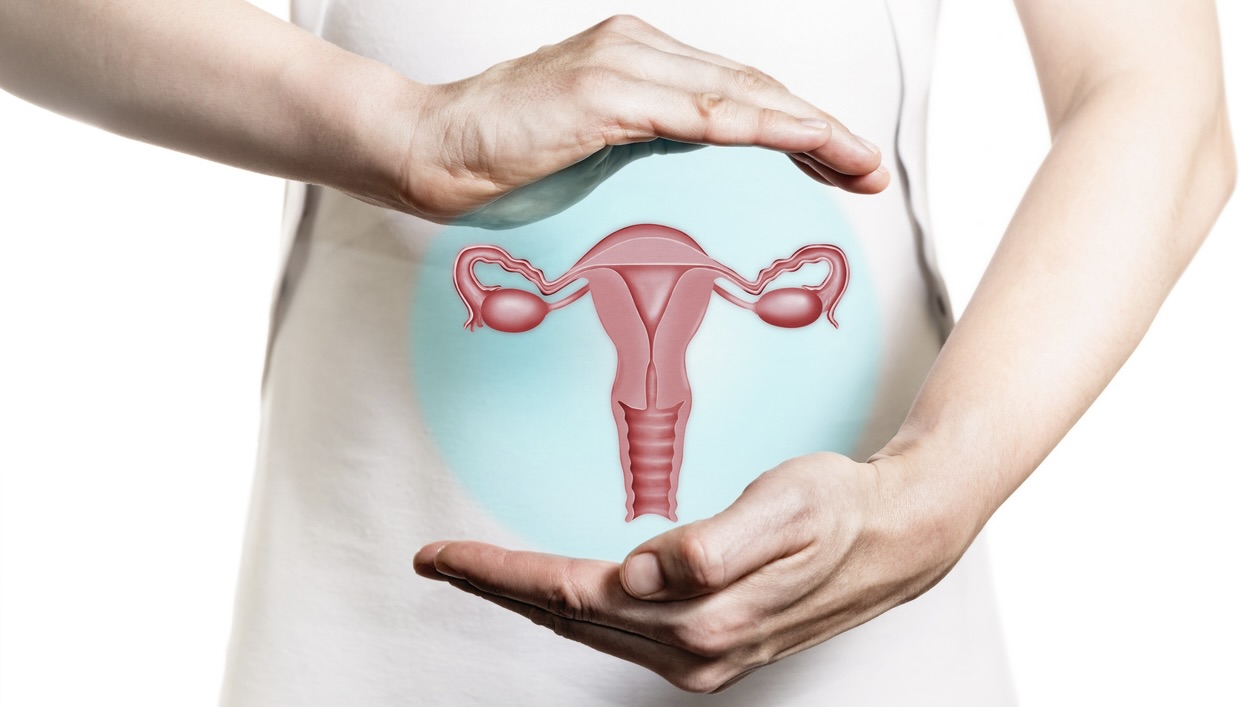
Andhra Pradesh has the highest female sterilisation rate in the country.

Synopsis: For decades, Andhra Pradesh relied on female sterilisation as the centrepiece of its population policy, recording some of the highest sterilisation rates in India. Experts say the programme, combined with women’s own efforts to escape repeated childbearing, helped create a lasting small-family norm. Today, with nearly 70 percent of married women sterilised and fertility below replacement level, the state is encouraging larger families, raising questions about whether demographic behaviour shaped over generations can be reversed.
Andhra Pradesh has the highest female sterilisation rate in the country. According to NFHS-6, 69.5 percent of currently married women in the state have undergone sterilisation. The national average stands at 36.3 percent.
Telangana, carved out of Andhra Pradesh in 2014, carries the same demographic legacy. Its female sterilisation rate stands at 62.5 percent, the second highest in the country. Both states emerged from the same administrative history, the same policy machinery and the same four decades of sterilisation promotion.
Male sterilisation in Andhra Pradesh sits at 0.8 percent. In Telangana, it stands at 3.6 percent, the highest in the country and one of only two states that recorded growth between NFHS-5 and NFHS-6. Even so, Telangana’s 3.6 percent remains marginal against its 62.5 percent female sterilisation rate.
Together, these figures highlight the dominant role female sterilisation has played in Andhra Pradesh’s fertility transition.
Now Andhra Pradesh Chief Minister N Chandrababu Naidu wants women in the state to have more children. In March, he announced cash incentives of Rs 30,000 for the birth of a third child and Rs 40,000 for a fourth, citing a fertility rate that has fallen well below the replacement level of 2.1.
Experts say the policy raises questions about whether financial incentives alone can influence fertility decisions in a state where the infrastructure around reproductive choice, childcare, affordable delivery and spacing methods has remained limited for decades.
Also Read: Are herbal cigarettes harmless? An Indian study suggests otherwise
To understand what the policy confronts, it helps to understand what built the situation Naidu now describes as a demographic concern. That history begins in the 1990s, runs through one of the most aggressive but also interesting sterilisation drives any Indian state has ever conducted, and ends with a social transformation so complete that experts say it cannot simply be reversed by announcement.
When Naidu first came to power in 1995, Andhra Pradesh witnessed one of the strongest sterilisation pushes in the country’s history. Dr M Prakasamma, Executive Director of Academy for Nursing Studies and Women’s Empowerment Research Studies (ANSWERS) and former Professor and Head of the Department of Reproductive Health Studies at the Indian Institute of Health and Family Welfare, worked within the government system during that period as both a public health specialist and a reproductive rights activist. She did not observe this history from a distance. She was inside it.
“For nearly four consecutive years, Andhra Pradesh recorded the highest number of sterilisations in the country, more than eight lakh procedures annually in the late 1990s,” she told South First. “The state government was extremely proud of this achievement and highlighted its position as the leader in female sterilisation.”
She said the machinery mobilised around sterilisation during this period extended well beyond the health department. Revenue officials, education departments and local government functionaries all participated in pursuing sterilisation targets.
Incentives and disincentives moved through every channel the state could reach. “See, beyond cash, they were even given land pattas, house pattas. In some cases, the officials went local and started giving gold chains, vessels for the home, all sorts of things. Because I was part of the government, I know all these,” she said.
The message was clear and the infrastructure behind it was extensive.
When the 2001 Census data arrived, Andhra Pradesh stood out sharply from the rest of the country. The state was showing a fertility decline that had moved faster than even Kerala and Tamil Nadu, states that had begun demographic transition earlier and under very different social conditions.
The development attracted national attention. Policymakers in Delhi wanted to understand whether Andhra Pradesh had discovered a model that could be replicated elsewhere. Some officials viewed the state’s sterilisation programme as the primary explanation and explored whether similar approaches could be transplanted to states such as Bihar, Madhya Pradesh and Rajasthan.
That led to a large community-based study titled Demographic Transition in Andhra Pradesh, funded by the Population Foundation of India and published in 2005. Prakasamma was among those involved in the research.
What the study found complicated the simple narrative of state-driven sterilisation.
The government’s push had played a role. But according to Prakasamma, the greater role belonged to women themselves.
“When we sat with women and conducted in-depth interviews, many expressed a strong desire to stop repeated pregnancies,” she said. “They would tell us, ‘How long can we keep having children?’ Some women said that even if their husbands did not agree, they would still undergo sterilisation. In some cases, women went for sterilisation without their husbands’ knowledge.”
Also Read: In South India, more women are widowed, divorced or separated than the national average
According to Prakasamma, the reasons women gave were not abstract. They were exhausted by repeated pregnancies. Anaemia was widespread. The burden of childcare fell almost entirely on them. Many lived in poverty with no dependable income. When family planning services expanded and sterilisation became accessible, many women embraced it because it aligned with something they already wanted: greater control over their reproductive lives.
“So this was not simply a story of government pressure,” Prakasamma said. “It was also a story of women’s agency and aspirations.”
That finding forced researchers to look beyond sterilisation targets and government incentives. If demographic change could not be explained solely through state action, then broader social transformations had to be part of the answer.
According to Prakasamma, one of the most important conclusions of the study was that Andhra Pradesh’s fertility transition was unfolding alongside an unusual process of women’s mobilisation.
The first was the anti-arrack movement of 1992-93. Women across Andhra Pradesh organised collectively and led a statewide campaign against alcohol abuse, beginning in Nellore and spreading rapidly. It became one of the most significant examples of collective action by rural women anywhere in India.
The second was the Development of Women and Children in Rural Areas (DWCRA) movement. These self-help groups began as thrift and savings collectives but evolved into spaces where women exchanged information, discussed problems, accessed government programmes and built collective confidence. The government supported them through loans and income-generation activities.
“They became, in effect, a grassroots network through which women in Andhra Pradesh connected with one another in ways that had no parallel elsewhere in India at that time,” she said.
Together, these developments created forms of empowerment that conventional demographic indicators often failed to capture. Literacy remained relatively low and marriage continued to occur early, but women were increasingly organised, connected and capable of acting collectively.
“Andhra Pradesh presented a very unusual situation,” Prakasamma said. “On the one hand, female literacy levels were still relatively low and women continued to marry early. On the other hand, a powerful process of women’s empowerment was taking place through self-help groups, social mobilisation, NGOs, folk theatre and community campaigns. Nowhere else in India was this happening on the same scale.”
That combination, the government’s aggressive sterilisation infrastructure meeting women who were already mobilised and already seeking reproductive control, produced the demographic outcome that the 2001 Census eventually recorded.
Also Read: India thinks Ayurveda and other traditional medicines are cheap. The numbers say otherwise
Yet Andhra Pradesh’s demographic transition contained another apparent contradiction.
The same state that was witnessing rising women’s mobilisation and falling fertility continued to record high levels of early marriage. NFHS-6 records that 25.1 percent of women aged 20-24 in Andhra Pradesh were married before turning 18. In rural Andhra Pradesh, the figure rises to 28.9 percent.
Rather than slowing fertility decline, experts argue that this pattern may have accelerated it.
If Prakasamma’s work explains how fertility decline emerged at the population level, Poonam Muttreja, Executive Director of the Population Foundation of India, argues that the mechanism was often visible at the individual level.
“One reason Andhra Pradesh’s fertility went down is because women had two children. They got married at 18, had two children very quickly, and the state did not coerce them. But the programme, the way it was designed in Andhra Pradesh, meant that the average woman underwent sterilisation between the ages of 22 and 24,” she said to South First.
The national median age at sterilisation stands at 25.7 years, unchanged across both NFHS-4 and NFHS-5. According to Muttreja, Andhra Pradesh’s average of 22 to 24 years sits three to four years below the national figure.
Many women in Andhra Pradesh therefore completed childbearing and underwent sterilisation before the age of 25.
But the speed with which women moved from marriage to childbearing and then to permanent contraception raises another question that continues to shape debates around Andhra Pradesh’s family-planning legacy: how informed were those decisions?
NFHS data suggests significant gaps in counselling and informed consent accompanied this pattern. According to NFHS-5, barely 28.8 percent of women in Andhra Pradesh reported being told about side effects before sterilisation. That figure has barely moved across survey rounds. Nationally, the same indicator rose from 46.5 percent in NFHS-4 to 62.1 percent in NFHS-5.
Nationally, 77 percent of women who undergo sterilisation have never used a temporary contraceptive method before the procedure.
Muttreja connects this directly to how family planning programmes were designed.
“The woman goes through multiple pregnancies because we don’t give her temporary methods. And then at the end, she goes through not only multiple abortions, but she goes through multiple morbidity,” she said. “Why do you think we have so much sterilisation in India? We do it at the end, after women have had the number of children they want, or they have had more children than they want.”
The significance of the 1990s extends beyond the number of procedures performed. The sterilisation campaign helped establish a reproductive norm that outlived the campaign itself.
What followed was not a temporary decline in fertility but a lasting transformation in how families thought about family size.
Female sterilisation became culturally embedded. Prakasamma argues that this is the critical factor explaining why NFHS-6 still records female sterilisation at nearly 70 percent in Andhra Pradesh today, decades after the government campaigns that drove the initial surge have largely disappeared.
“Female sterilisation has become deeply embedded in society,” she said. “Men have not only accepted it but, in many cases, come to regard it as the normal method of family planning.”
Today’s low fertility in Andhra Pradesh, she argues, is no longer primarily driven by government targets or incentive programmes. Women themselves are making these choices in a social environment where sterilisation after one or two children has become the expected and accepted pattern across communities.
The durability of that transformation can be seen most clearly in the districts that moved through demographic transition first.
According to Prakasamma, Krishna, Guntur, East Godavari, West Godavari and Nellore began moving towards a one-child norm during the 1990s and early 2000s. The young women Andhra Pradesh now wants to incentivise are often the daughters of that generation. They grew up in households where small-family norms had already become established.
“Therefore, even if they are not employed, not in formal education or not in training programmes, many still prefer to have only one or two children,” Prakasamma said. “The fertility decline we see today did not begin yesterday. Its roots go back to social changes that took place in the 1990s.”
These social changes unfolded alongside an increasingly ambitious state population programme. Andhra Pradesh was not merely implementing national family-planning policy. It was helping shape it. The state became the first in India to adopt a formal population policy in 1997, three years before the Government of India introduced the National Population Policy in 2000.
The fertility decline that followed was substantial. But it arrived alongside informed-consent scores that remain among the weakest in the country, and a male sterilisation rate that has never crossed one percent.
Also Read: India gets new valve procedure for high-risk heart patients, but it’s yet to reach many
Prakasamma argues that the reasons behind AP’s low fertility are structural and unlikely to shift in response to cash incentives.
According to Prakasamma, fertility decisions are influenced more by long-term social and economic conditions than by one-time cash transfers. “No country in the world has successfully reversed fertility decline, not even China. Countries across Europe, East Asia and elsewhere have spent enormous amounts of money on pronatalist policies. They have introduced childcare subsidies, maternity benefits, paternity leave, parental leave, housing support and cash transfers. Yet fertility rates have remained low.”
Shantha Sinha, former Chairperson of the National Commission for Protection of Child Rights, places the current policy within a longer pattern of how demographic objectives interact with women’s rights.
“It is unfair to reduce women to child-bearing instruments,” she told South First. “Policies that encourage higher birth rates by offering financial incentives undermine women’s dignity and agency. Women should never be viewed simply as producers of babies.”
She also questions the broader objectives of pronatalist policies.
“If there is concern about declining fertility rates, the first question should be: why do we want more young people? Do we have a clear policy for today’s youth? Are they educated? Are they employed? Are school dropouts being supported? First invest in the young people we already have,” she said.
Prakasamma makes the same argument from the perspective of someone who participated in AP’s population policy from its earliest stages. AP was the first state in India to adopt a formal population policy in 1997, three years before the Government of India introduced the National Population Policy in 2000.
“Thirty years ago, women were being encouraged to stop childbearing. Today they are being encouraged to increase childbearing. The direction may have changed, but the underlying concern remains when governments attempt to influence personal reproductive choices without adequately addressing women’s rights, autonomy and consent,” she said.
She adds a dimension that receives limited attention in the current policy debate.
“We keep talking about demographic dividend and young populations, but southern states are simultaneously experiencing rapid population ageing. Many villages already have large numbers of elderly people living alone while their children work elsewhere,” she said. “The real challenge for the future is not simply how many children are born. The challenge is how we create a society that supports children, women, working families and older people at the same time.”
Also Read: India is talking about mental health more than ever, but is it understanding it?
All experts point towards a similar set of priorities: investment in quality public education, affordable and safe childbirth services, childcare infrastructure, expansion of midwifery, support systems that allow women to participate in employment without choosing between work and motherhood, and attention to population ageing alongside fertility.
Muttreja states the condition she considers fundamental.
“If Andhra Pradesh wants to see some balance in fertility, it first has to create a balance for women,” she said.
Prakasamma frames it as a lesson from the state’s own policy history.
“Governments cannot manage reproduction, but they can create conditions in which people are healthy, secure and able to make informed choices about their lives,” she said.
Andhra Pradesh’s fertility transition was shaped largely through female sterilisation, a pattern that remains evident in NFHS-6 data. As the state considers policies aimed at encouraging larger families, experts say the discussion extends beyond fertility rates to issues of reproductive choice, healthcare costs, childcare, employment opportunities and population ageing.



