

Published Sep 26, 2026 | 5:00 PM ⚊ Updated Sep 26, 2026 | 5:00 PM

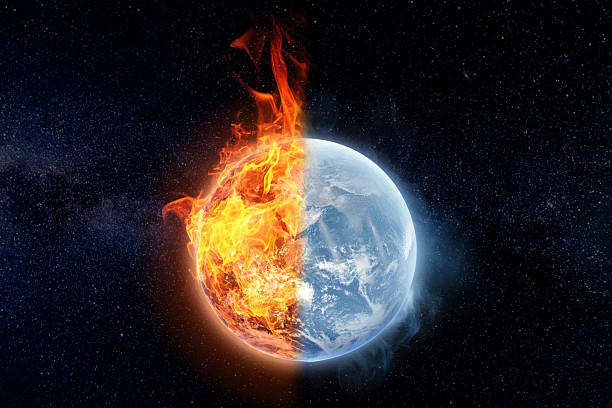
Researchers described the current El Niño event as a preview of conditions climate change might usher in within 20 years. (iStock)

Synopsis: A Climate Impact Lab projection estimates 15,800 additional heat-related deaths in India from September 2026 to February 2027 during the Super El Niño period. Four of the six states with the highest projected deaths are in South India, with Maharashtra topping the state-wise estimates and Karnataka ranking second.
A study has painted a gloomy picture, predicting India will witness an additional 15,800 heat-related deaths between September 2026 and February 2027 due to the Super El Niño event.
Super El Niño event—or very strong El Niño event—is a climatic phenomenon in which average sea surface temperatures in parts of the Pacific Ocean rise by 2° Celsius or more. They could cause floods, droughts, extreme heat, and crop losses worldwide.
Climate Impact Lab’s report, 451,000 at Risk, predicted that Karnataka could record 1,870 additional heat-related deaths over the next six months, the highest toll among South India’s states.
Andhra Pradesh and Keralam followed closely, with 1,680 projected deaths each, as the ongoing Super El Niño event pushed global temperatures to levels not expected to become the norm for another two decades.
The figures were part of a wider national projection of 15,800 excess heat deaths across 14 Indian states between September 2026 and February 2027.
Five southern states, Karnataka, Tamil Nadu, Keralam, Andhra Pradesh and Telangana, together would account for 7,992 of the total additional deaths, just under half the country’s projected toll.
The findings formed part of a larger global analysis released this week, which estimated that 4,51,000 people worldwide could die from extreme heat during the first nine months of the El Niño event, running from June 2026 to February 2027.
Nationally, Maharashtra topped the list with 2,640 projected deaths, driven by a sharp spike of 970 in October alone. Karnataka’s 1,870 placed it second nationally.
Andhra Pradesh and Keralam were tied at 1,680 deaths each. Tamil Nadu came close with 1,640. Telangana, at 1,122, ranked above states including Odisha, Punjab, Rajasthan and Madhya Pradesh.
Four of India’s five worst-affected states were in the South. Only Maharashtra broke the pattern at the top of the table.
The report also showed that deaths in these southern states would follow a plateaued trajectory across the six months. Predicted numbers were high in September and October, which dipped during November and December, and then climbed sharply in January and February.
The study predicted February as the cruellest month in the entire forecast. Nationally, the report estimated 4,167 deaths that month, the highest of any month in the six-month window. Of those, 2,970 deaths, or 71%, were expected in the five southern states alone.
Karnataka’s February toll of 740 would be the worst among the affected months. More than half its projected total deaths for the entire six months would be in February. Estimated deaths in Tamil Nadu, Keralam and Andhra Pradesh would be 610 each in February.
Also Read: Can a non-existent Varuna stop El Niño, Mr Chief Minister?
Researchers described the current El Niño event, which began in June 2026 and would persist through the northern hemisphere spring, as a preview of conditions climate change might usher in within 20 years.
Global land temperatures have been projected to run 1.2°C above normal in the coming months, a level of warming the report said closely resembled longer-term climate projections. It could produce 44% more extremely hot days than a typical year.
Michael Greenstone, co-founder of the Climate Impact Lab and the Milton Friedman Distinguished Service Professor in Economics at the University of Chicago, said the findings put a human face on the numbers.
“We have long been able to predict the impacts of temperatures on crops, and now we can predict their impact on the worst outcome, death,” Greenstone said.
“The result is that we now can estimate that 451,000 people may die in the coming months due to El Niño. This is such a large number that it can be numbing, but it is made up of parents and children, grandparents and neighbours, people going to work, caring for families, and living their lives,” he stated.
He said the report was designed to guide action rather than simply document risk.
“This report allows decision-makers to see exactly where emergency actions can be taken now to save tens of thousands of lives in the coming months,” Greenstone said.
Also Read: Telangana power crisis deepens amid Super El Niño strain
The report’s projections ran only to February 2027, a cut-off set by the limits of current seasonal forecasting data rather than the expected end of the danger.
Researchers expected the anomalously warm conditions to persist into mid-2027, meaning heat deaths in India and Pakistan might keep rising into their summer months, beyond the current forecast period.
With Karnataka, Andhra Pradesh and Keralam already predicted to record their steepest monthly deaths in February, the toll could climb further as summer data are added.
Tamma Carleton, faculty head of research at the Climate Impact Lab and an assistant professor at the University of California, Berkeley, said the response required would go beyond this year’s emergency measures.
“Increasing emergency response and better targeting our efforts can save many lives this year,” Carleton said. “But 20 years from now, once today’s extreme temperatures become the new normal, we don’t want to be in a constant state of emergency. We need to mobilise resources now to design, deploy, and evaluate the preparation and planning tools that will save lives in the years ahead.”
Also Read: Why Telangana has reasons to fear
The report pointed to a set of interventions its accompanying Adaptation Inventory identified as effective in reducing heat mortality. They include early heat warning systems, targeted health outreach to vulnerable populations, cooling centres and hydration stations, protections for outdoor workers, and expanded capacity within local health systems.
Officials in Karnataka, Andhra Pradesh, Keralam and Tamil Nadu would face a narrower timeline than most other states, researchers said, because their death tolls would still climb even after the current forecast window. This would contrast with states such as Punjab and West Bengal, where most of the projected toll has already occurred earlier in the period, in September and October.
The report noted that heat action plans allowing health officials to identify at-risk neighbourhoods, expand water access and track heat-related symptoms were already in use in parts of India. Wider access to cooling technology and more accurate short-term forecasting were described as longer-term priorities still being evaluated across different regions.
Also Read: Why climate change is not just a stranded polar bear on Arctic floe
The Climate Impact Lab’s global analysis identified similar risk concentrations elsewhere. It said Nigeria could account for nearly half of the projected heat deaths across the Sahel region. It predicted Indonesia and the Philippines to see the largest tolls in Southeast Asia.
India’s projected total of 15,800 additional deaths over the next six months placed it among the most heavily affected countries globally, alongside Brazil, which could see 13,300 additional deaths over the same period.
Researchers said the current super El Niño event should be understood as more than a temporary weather event. The conditions much of South India might experience this year, they said, closely resemble what climate models project would become routine within two decades—without further adaptation investment.
(Edited by Majnu Babu).



