

Published Jul 16, 2026 | 7:00 AM ⚊ Updated Jul 16, 2026 | 11:40 AM

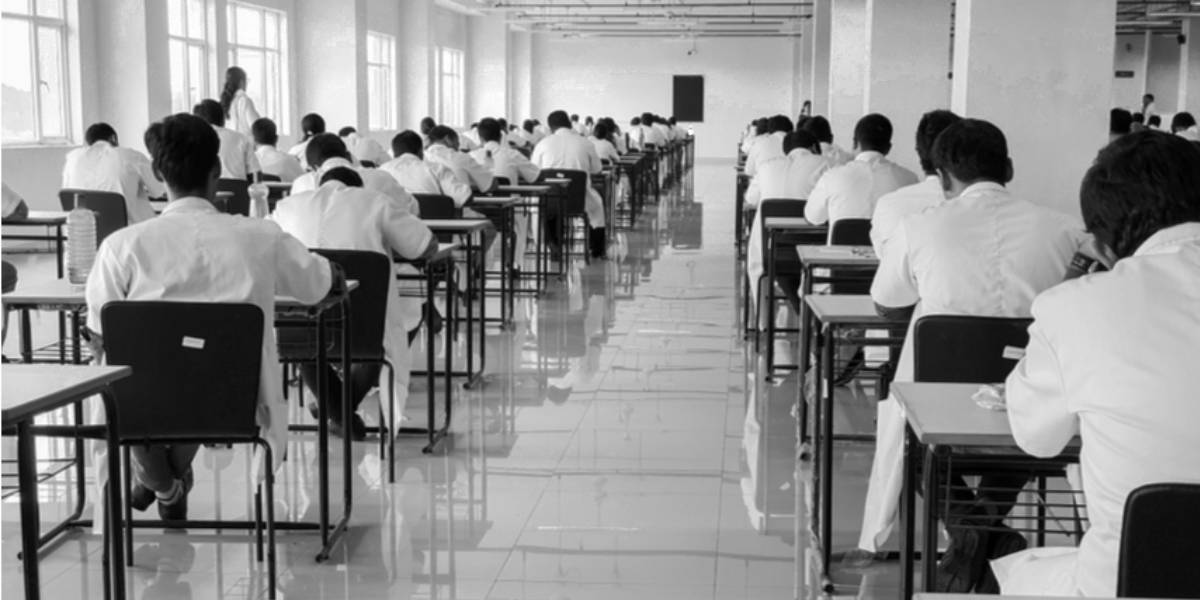
Karnataka has been allotted 1,300 additional MBBS seats.

Synopsis: The National Medical Commission has approved 9,911 additional MBBS seats for the 2026-27 academic year, taking India’s total undergraduate medical education capacity to 136,939 seats across 823 medical colleges. The five southern states received 3,685 of the new seats, with Karnataka alone accounting for 1,300 seats.
The National Medical Commission (NMC) has approved nearly 10,000 additional MBBS seats for the 2026-27 academic year, taking India’s undergraduate medical education capacity to 136,939 seats across 823 medical colleges.
The seat matrix, released by the Medical Assessment and Rating Board (MARB) of the NMC on 14 July, approves 9,911 new MBBS seats, increasing the national total from 127,028 to 136,939. Of these additional seats, 3,685 have been allocated to five southern states—Andhra Pradesh, Karnataka, Kerala, Tamil Nadu and Telangana—accounting for 37.2 percent of all new seats approved this year.
These five states together account for only 18.65 percent of India’s projected 2026 population – 27.53 crore out of the country’s projected 147.66 crore. Yet they continue to receive nearly double that share of new medical seats.
The latest approvals also show that this imbalance is not a one-year phenomenon. Even before this expansion, the five southern states already accounted for 38.6 percent of all MBBS seats in India.
Also Read: From farm to shelf, gaps in India’s spice supply chain create preventable food safety risks
Among the southern states, Karnataka is by far the biggest beneficiary.
The state has been allotted 1,300 additional MBBS seats, accounting for more than one-third of the southern expansion and just over 13 percent of all new MBBS seats approved in India for 2026-27.
Much of Karnataka’s growth comes from the private sector.
The seat matrix shows higher intake approvals across several existing private colleges while also approving entirely new medical colleges.
Among the notable additions are Alva’s Institute of Medical Sciences and Research Centre in Moodbidri, sanctioned with 150 seats as a new establishment, and the Chettinad Institute of Medical Education and Research, another new college approved with 100 seats. Existing institutions such as BGS Global Institute of Medical Sciences have also received approval for higher intake.
Of Karnataka’s 1,300 additional seats, 1,150 are in private medical colleges, underlining the state’s continued reliance on private investment to expand medical education. Following the latest approvals, Karnataka now has 15,395 MBBS seats, of which 10,995 are in private medical colleges and 4,400 are in government medical colleges, making it the state with the largest MBBS capacity in India.
Tamil Nadu receives the second-largest increase among the southern states, with 950 new MBBS seats, comprising 800 seats in private colleges and 150 in government institutions.
The expansion includes a new medical college, APS Medical College Hospital and Research Institute, approved with 150 seats. Existing institutions receiving additional intake include Dhanalakshmi Srinivasan Institute of Medical Sciences and Hospital, the Faculty of Medicine at Sri Lalithambigai Medical College and Hospital, Government Medical College, Namakkal, and Government Medical College, Chengalpattu.
The state now has 13,999 MBBS seats, comprising 8,650 private seats and 5,349 government seats, making it the second-largest hub for undergraduate medical education in the country.
Telangana adds 810 MBBS seats, taking the state’s total MBBS capacity to 10,250 seats.
Private colleges account for 700 of the new seats, while government colleges contribute 110.
The increase is driven by higher intake at institutions including Bhaskar Medical College, CMR Institute of Medical Sciences, Chalmeda Anand Rao Institute of Medical Sciences, Dr Patnam Mahender Reddy Institute of Medical Sciences, and several other private colleges. Government institutions, including Government Medical College, Mahabubnagar, and Government Medical College, Nizamabad, have also received additional seats.
Of the state’s 10,250 MBBS seats, 5,850 are in private colleges and 4,400 are in government institutions.
Andhra Pradesh receives 375 additional MBBS seats, increasing the state’s total MBBS capacity to 7,465 seats.
Government colleges account for 225 of the new seats, while private colleges add 150.
The state gains Anna Gowri Medical College and Hospital, a newly approved private medical college with 150 seats. Existing government institutions such as ACSR Government Medical College and Government Medical College, Kadapa, have also received approval for higher intake.
Following the latest approvals, Andhra Pradesh has 7,465 MBBS seats, including 3,950 private seats and 3,515 government seats.
Also Read: ‘Body nearing dangerous phase’, doctors warn as Sonam Wangchuk’s fast enters Day 16
Among the five southern states, Kerala records the smallest expansion, adding 250 MBBS seats, all in private medical colleges.
Unlike the other southern states, Kerala does not receive approval for a new medical college this year. Instead, the increase comes through higher intake at existing institutions such as Dr Moopen Medical College, Dr Somervel Memorial CSI Hospital & Medical College, Azeezia Institute of Medical Science, and Dr ND Desai Faculty of Medical Science and Research.
Kerala now has 5,704 MBBS seats, comprising 3,849 private seats and 1,855 government seats.
While southern India accounted for the largest share of new MBBS seats, several other states also witnessed sizeable expansion.
Uttar Pradesh, the country’s most populous state, received 800 additional seats, all in private medical colleges, taking its total MBBS capacity to 14,000 seats, including 8,300 private and 5,700 government seats.
Maharashtra added 400 seats, including 350 in private colleges and 50 in government institutions, taking its total MBBS capacity to 13,099 seats, comprising 7,099 private and 6,000 government seats.
Rajasthan approved 900 new seats, all in private medical colleges, increasing its MBBS capacity to 8,080 seats, comprising 4,480 government and 3,600 private seats.
Gujarat added 200 seats, all in private medical colleges, taking the state’s total MBBS capacity to 7,750 seats, comprising 4,250 government and 3,500 private seats.
West Bengal received 825 additional seats, including 325 in government colleges and 500 in private institutions, raising its total MBBS capacity to 7,200 seats.
Among the eastern and central states, Bihar added 740 seats, Madhya Pradesh 420, Odisha 50, Punjab 50, Haryana 250, Jharkhand 370, and Jammu and Kashmir 100.
Several smaller states and Union Territories also recorded modest increases. Goa added 50 government seats, Chandigarh 50, Tripura 50, Sikkim 100, Meghalaya 250, Manipur 25, and Chhattisgarh 195. Meanwhile, Arunachal Pradesh, Mizoram, Nagaland, the Andaman and Nicobar Islands, Assam, and Delhi saw no increase in MBBS seats this year.
Also Read: How drone transport spared TB patients long journeys and steep diagnostic costs in rural Telangana
The latest seat matrix highlights another continuing trend: India’s MBBS expansion is increasingly driven by private medical colleges.
Across the five southern states, private institutions account for 2,875 of the 3,685 new seats, representing nearly 78 percent of the regional increase.
Government colleges account for the remaining 810 seats, led by Andhra Pradesh’s 225-seat increase, followed by Tamil Nadu’s 150 and Telangana’s 110.
The national figures reflect the same pattern.
Of the 9,911 seats approved this year, 7,800 have gone to private medical colleges, while government colleges account for 2,111.
The figures indicate that much of India’s expansion in undergraduate medical education continues to depend on private-sector investment rather than publicly funded medical colleges.
Along with publishing the seat matrix, the Medical Assessment and Rating Board has imposed several conditions that colleges must meet before they can begin admissions.
Private medical colleges receiving approval for either a new institution or an increased intake have been directed to furnish an Electronic Bank Guarantee (E-Bank Guarantee) to the Director of MARB within seven days of the public notice. The Letter of Permission required to admit students will be issued only after the guarantee has been received and accepted.
The commission has also clarified that the published seat matrix is not final and may be revised, if required, following decisions of the Appeal Committee or any other competent authority. Counselling committees have been instructed to refer any discrepancy in seat allocation to MARB before admissions begin.
The notice further directs all medical colleges to admit students strictly within their approved intake capacity, warning that admissions beyond the sanctioned number of seats would amount to a violation of the National Medical Commission Act, 2019, and could invite regulatory and penal action against the institution.



