

Published Jul 15, 2026 | 7:00 AM ⚊ Updated Jul 15, 2026 | 7:00 AM

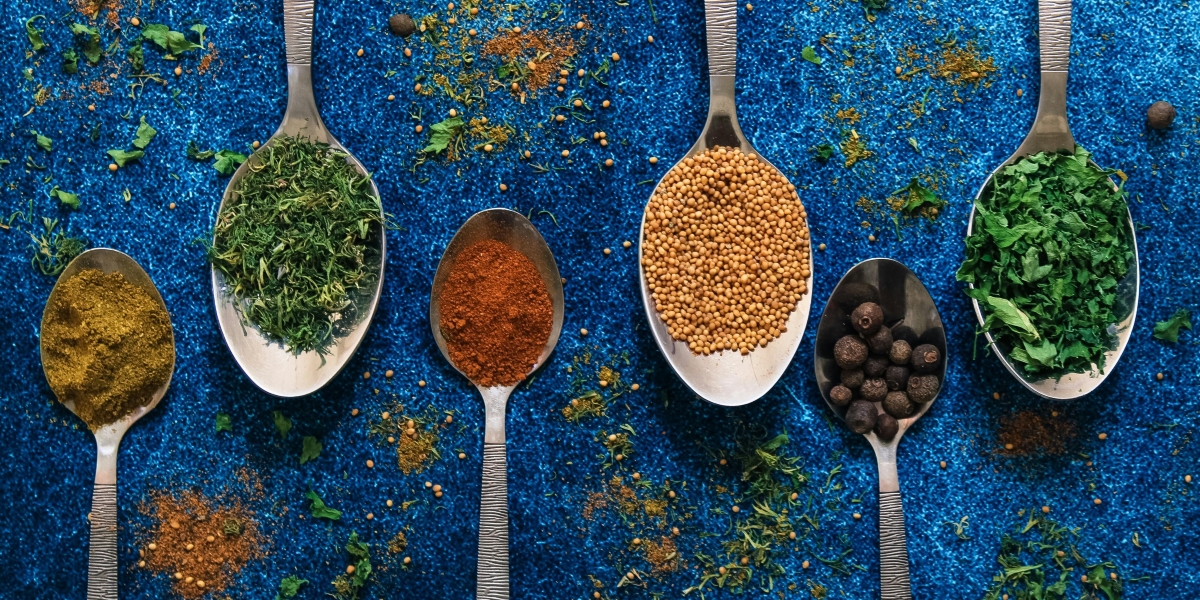
Indian spices. (Creative Commons)

Synopsis: A study noted that, in India, spices could be contaminated at any stage, from the farm where they are grown to the retail shelf where they are sold, because the chain lacks traceability and accountability. The authors argued that these gaps stemmed from weaknesses in regulation, monitoring and traceability.
Millions of Indian households use spices that move through one of the country’s most fragmented food supply chains. A policy brief from the Indian Council for Research on International Economic Relations (ICRIER) warns that contamination can enter at any stage, from the farm where spices are grown to the retail shelf where they are sold, because the chain lacks traceability and accountability.
“Product contamination and food safety issues can happen in different parts of the supply chain, from farm to retail, because there is no traceability and little accountability, which leads to adverse public health effects,” the brief states. The authors argued that these gaps are not inevitable. They stem from weaknesses in regulation, monitoring and traceability that can be addressed through policy reforms.
The study, titled Streamlining the Indian Spices Market: Issues and Way Forward, was done by Arpita Mukherjee, Eshana Mukherjee and Samriddhi Dube. India produced 12.99 million tonnes of spices in 2024-25, with nearly four-fifths consumed domestically, linking food safety lapses directly to Indian households rather than only to export consignments.
Spices go into nearly every Indian meal, turning gaps in food safety oversight into an everyday public health issue rather than a narrow regulatory concern. The authors said these risks are largely preventable and pointed to better traceability, stronger testing and improved farm-level practices as the fix.
South India carries particular weight in this picture. Andhra Pradesh produces the largest share of India’s red chilli, and Karnataka and Telangana also rank among the top five chilli-producing states. Tamil Nadu and Andhra Pradesh feature among the top five turmeric producers as well, which places much of the brief’s findings on chilli and turmeric supply chains close to home for consumers and growers across the region.
Also Read: Only 1 in 8 clear FMGE as candidates question exam pattern
The ICRIER study identified India’s fragmented spice supply chain as the central reason contamination is difficult to prevent and trace. Small and marginal farmers, most farming under 1.1 hectares, sell to aggregators, middlemen and local traders rather than through regulated markets.
Only 20 percent of surveyed turmeric farmers used regulated channels such as e-NAM or APMC mandis, the authors note, citing their own survey of 262 turmeric farmers across six states.
This structure leaves the bulk of the market outside formal oversight. “Around 60 to 80 percent of the market is informal and consists of players who do not pay taxes, may sell loose, unbranded products, and may not follow food safety and standards requirements,” the brief stated. No single agency tracks a batch of spice from field to shop, which makes it hard to trace contamination back to its source.
The report found “spice contamination may happen in two ways.” One involves deliberate adulteration, where non-permitted artificial colours or bulking material are added to improve appearance or increase weight. The other stems from poor agricultural and post-harvest practices arising from knowledge gaps or human error rather than intent.
Pesticide use sits at the centre of the second category. A government study cited in the brief found that out of 1,242 spice samples tested for pesticide residue in 2017-18, around 150 exceeded the maximum residue limit set by FSSAI. Soil quality compounds the problem: Nearly 82 percent of samples tested under the Soil Health Card scheme in 2025-26 recorded organic carbon below the desired range, which the authors link to weaker crop resilience and heavier reliance on chemical inputs.
Awareness gaps run through the farming community. The authors’ survey of turmeric farmers found that “although most farmers claim awareness of GAP, only six percent were aware of soil testing needs and only two percent were aware of correct pest and disease management.” Good Agricultural Practices, referred to as GAP in the brief, cover soil testing, water quality checks and correct pesticide and fertiliser use.
Storage adds a further gap. Farmers dry and store spices without cold storage or pest-proof facilities in many regions, which raises the risk of aflatoxin contamination, a toxin the study flags as a health hazard. Coriander seeds stored at farms or in farmers’ homes can pick up contamination from rodent droppings, according to stakeholder consultations cited in the brief.
The brief named specific contaminants tied to documented health effects. Sudan red dye, described in the report as a carcinogen, turns up as a common contaminant in red chilli powder, added to make the spice look brighter. Lead and sawdust, mixed into turmeric, chilli and coriander powder as bulking or colouring agents, may cause digestive and gastrointestinal problems, the authors write.
Export rejection data gives these hazards a paper trail. Citing the EU’s Rapid Alert System for Food and Feed, the brief records 31 Indian herb and spice consignments rejected by the European Union between October 2025 and April 2026. The listed causes include aflatoxin B1 in chilli flakes, ethylene oxide residue in biryani masala, chlorpyrifos in masala spice and in whole coriander seeds, Salmonella in turmeric powder, and Bacillus cereus in turmeric powder shipped through the Netherlands.
The authors treated this rejection record as a signal rather than a full accounting of the problem. Since domestic testing does not screen for the same hazards consistently, contaminants that trigger a border rejection abroad may reach an Indian kitchen unflagged.
Also Read: When spices that heal start hurting — Can we trust what’s in our kitchen?
India already has a food safety framework for spices. FSSAI has set mandatory standards for 45 spices under the Food Safety and Standards Regulation, 2011, and BIS maintains voluntary standards for 16 spices that cover both safety and quality traits.
That framework carries a structural gap. “The food safety standards set by the FSSAI apply from the post-production stage,” the brief states, and FSSAI “does not have regulatory authority over farmers.” In effect, food safety begins only after farming ends. Pesticide use, soil quality, and harvesting practices determine the risk of contamination, yet FSSAI’s authority begins only once produce leaves the farm.
Regulators also overlap and leave gaps between them. FSSAI lacks standards for some commercially important spices, including tamarind, vanilla and kokum, while BIS sets some safety limits that FSSAI does not, such as a cap on aflatoxin B1. Stakeholders consulted for the study said businesses struggle to meet requirements that differ across agencies, which the authors argue adds compliance costs without necessarily improving safety.
State-level testing infrastructure adds a further constraint. FSSAI recognises 232 primary food laboratories, of which about 169 can test spices, and nearly two-thirds of these sit in just seven states. The northeast has only four such laboratories, with none in Arunachal Pradesh or Sikkim, forcing food businesses there to send samples to other states, increasing testing costs and delaying food safety clearance.
These regulatory gaps show up most clearly when spices reach consumers. The brief cited a 2024 study in Barabanki, Uttar Pradesh, which tested packaged and unpackaged spice samples for contamination. One of five unpackaged turmeric powder samples tested positive, along with one of five unpackaged red chilli powder samples and four of five unpackaged coriander powder samples. None of the packaged samples showed contamination.
Consumers appear to recognise these risks. The study noted that “the demand for good quality, clean and packaged spices is rising because of increased consumer awareness of the effects of pesticide residues and chemical contamination,” and that packaged spices held 67 percent of the organised market in 2025. Yet loose, unpackaged spices still make up close to 37 percent of all spice sales, which places a large share of household consumption outside any assured quality check.
The authors stopped short of estimating disease burden or specific health outcomes tied to spice contamination. They framed the risk through exposure pathways documented in existing studies, including the pesticide residues, heavy metals and microbial contamination named above, and note that the absence of traceability makes it hard to establish how far these risks extend once a product leaves the farm.
The brief called for “a single agency monitoring the entire spice supply chain,” arguing that multiple overlapping bodies currently share responsibility without full coverage. It recommended extending food safety oversight to the farm level, so that FSSAI or an equivalent body can address pesticide use, soil quality and storage practices before produce enters the formal supply chain.
Other recommendations included uniform testing standards across FSSAI and BIS laboratories, a public database of accredited laboratories, and technology-based traceability systems similar to APEDA’s TraceNet, currently used for organic spices. The authors also called for expanded GAP training, stronger storage infrastructure, and support for farmer producer organisations and MSMEs to move into the formal, branded segment.
The report argued that farm-to-fork traceability, stronger testing and better agricultural practices are not simply measures to modernise India’s spice industry. They are public health measures intended to ensure that the spices reaching millions of Indian kitchens are safe to consume.
(Edited by Muhammed Fazil.)



