

Published Jul 18, 2026 | 7:00 AM ⚊ Updated Jul 18, 2026 | 7:00 AM

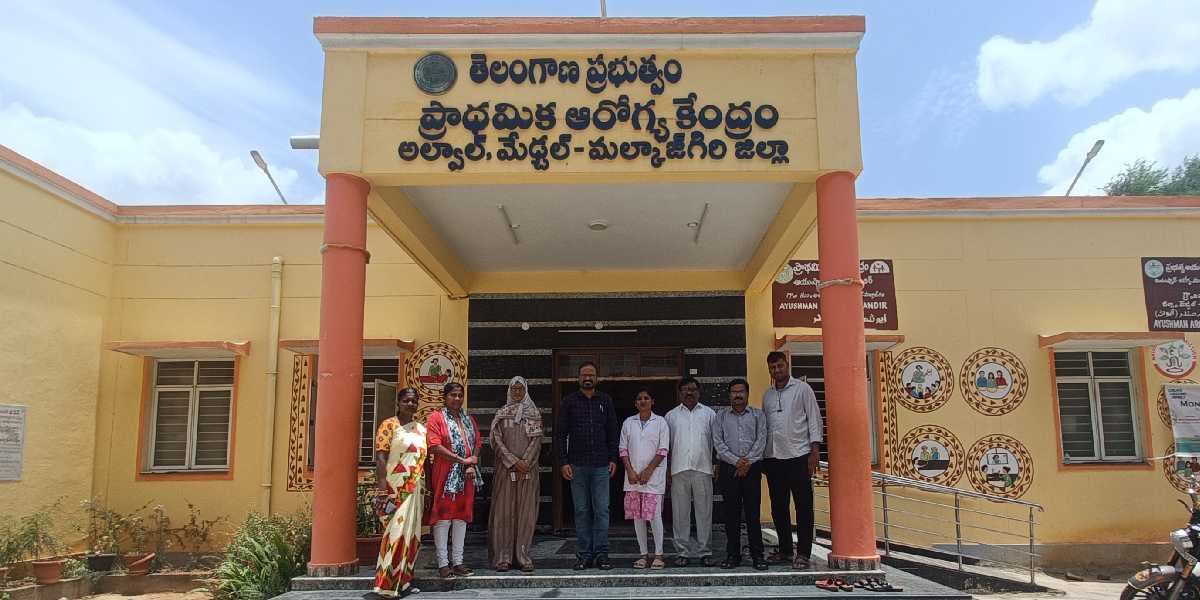
Alwal PHC staffs who handles AI detection for Breast and Cervical cancer (Sumit Jha/South First)

Synopsis: At two government Primary Health Centres in Telangana’s Medchal–Malkajgiri, nurses are using artificial intelligence-assisted handheld devices to screen women for breast and cervical cancer, expanding early detection amid continued reluctance among women to undergo early screening for the two diseases. The devices are designed to identify women who need further investigation rather than diagnose cancer and are non-invasive, quick and painless.
It is a little after 10 am at Alwal Primary Health Centre on the outskirts of Hyderabad’s Medchal–Malkajgiri district, and the outpatient department is already crowded.
A pregnant woman waits outside the antenatal clinic with her mother-in-law. An elderly man clutches a strip of blood pressure tablets while waiting to see the doctor. Nurses move briskly between consultation rooms.
The setting resembles thousands of government Primary Health Centres across India – the first point of contact with the public health system. It is as far away from a high-tech hospital as one could get.
Like its counterparts across the country, the Alwal PHC has no robotic operating theatres or CT scanners.
Staff Nurse Pranay Sheela takes a small handheld scanner and pairs it with a smartphone via Bluetooth. She asks a woman patient to lie down on the examination bed and begins scanning gently across the patient’s chest.
Within minutes, a dedicated application on the phone produces a report. If the software detects suspicious changes in tissue, the woman is referred to a higher centre for mammography, biopsy or specialist consultation. If the screening is normal, she returns home reassured.
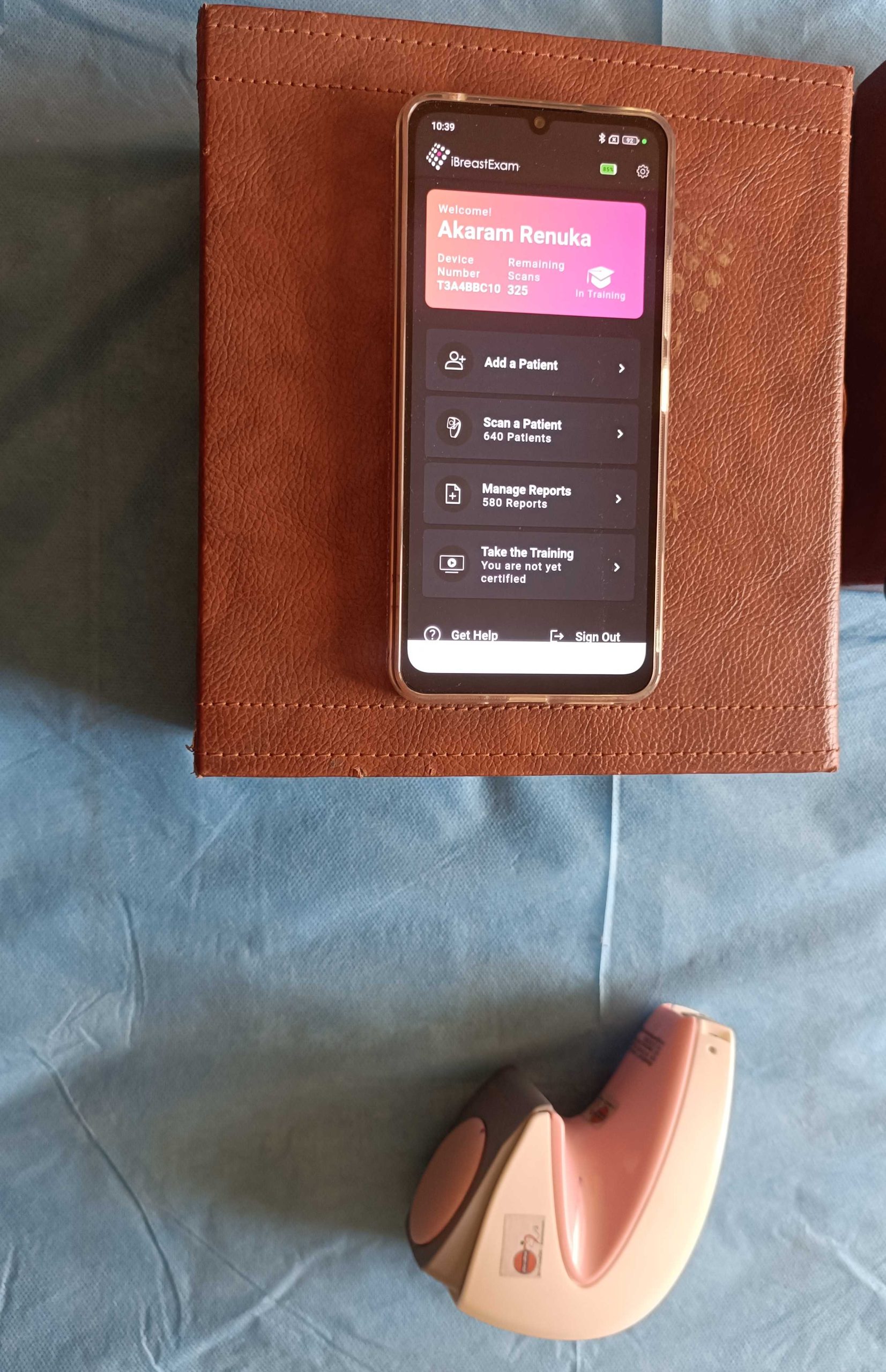
Handheld device with connected with mobile through bluetooth
The small device cannot detect cancer, but it can flag signs that may indicate the disease. Mammography machines are expensive, require dedicated infrastructure and trained radiographers. Women often delay seeking care because of cost, distance, lack of awareness or stigma, allowing the disease to progress.
The new handheld devices attempt to address those issues by saving an unnecessary trip to a cancer hospital, district hospital or specialised oncology centre.
The breast screening device is powered by artificial intelligence (AI), developed by UE LifeSciences, and has been deployed over the past few months under a programme implemented by Mahita Foundation with support from Indian Oil Corporation’s Corporate Social Responsibility (CSR) initiative.
Dubbed iBreastExam, the technology, alongside smartphone-based cervical screening devices called cervAIcal, has been provided to the Alwal and Kushaiguda PHCs.
After installation and training, the equipment was handed over to Telangana’s Health Department, where nurses, auxiliary nurse midwives (ANMs) and medical officers now conduct screenings as part of routine care.
Also Read: Centre proposes nationwide paraquat ban after years of poisoning deaths
Shahnaz Begum has spent nearly two decades working as an Auxiliary Nurse Midwife (ANM) at Alwal Primary Health Centre. She spends her days counselling pregnant women, monitoring immunisation and encouraging mothers to seek timely care.
Before the screening programme was opened to the public, Mahita Foundation chose to run it through the PHC’s own staff first – nurses, ANMs and ASHA workers.
“We first screened ASHA workers and ANMs,” Balchander, who oversees the programme’s implementation, told South First.
“We wanted frontline health workers to understand how the devices work and build confidence in the screening process.” The choice was deliberate for another reason. “They visit households regularly, and when they themselves undergo screening and understand how the devices work, they are better able to explain the process to women in their communities and encourage them to come forward.”
Shahnaz was among them. When it came to her own health, however, she had postponed action for years. She had first noticed a small lump in her right breast nearly 15 years earlier.
“I actually had a small lump for nearly 15 years, but it never increased in size, so I did not pay much attention to it. About eight months ago, I noticed that the lump had grown and become raised. That made me suspicious,” she recalled.
“When the device was introduced at our PHC, all the staff members, including ASHA workers and ANMs, underwent screening first. I also got myself screened. During the examination, the device detected a lump in my right breast.”
The screening identified an abnormality, but diagnosis still required a biopsy. A private hospital quoted between ₹15,000 and ₹20,000 for further investigations – well beyond her means.
“Later, through people I knew, I was referred to another hospital where I was able to undergo surgery free of cost,” she said.
The diagnosis confirmed Grade I breast cancer. Because it was detected early, she underwent surgery followed by three months of treatment. She now returns for a follow-up every six months and has resumed work at the PHC.
“We never expected that such a small handheld device at a Primary Health Centre could help detect something like this,” she said.
“When we tell women that we have undergone the same screening ourselves, they become much more comfortable. Sometimes I even tell them my own story. That gives them confidence.”
The examination room contains a couch beside a desk holding a smartphone, a small white handheld device, a printer and a charging cable.
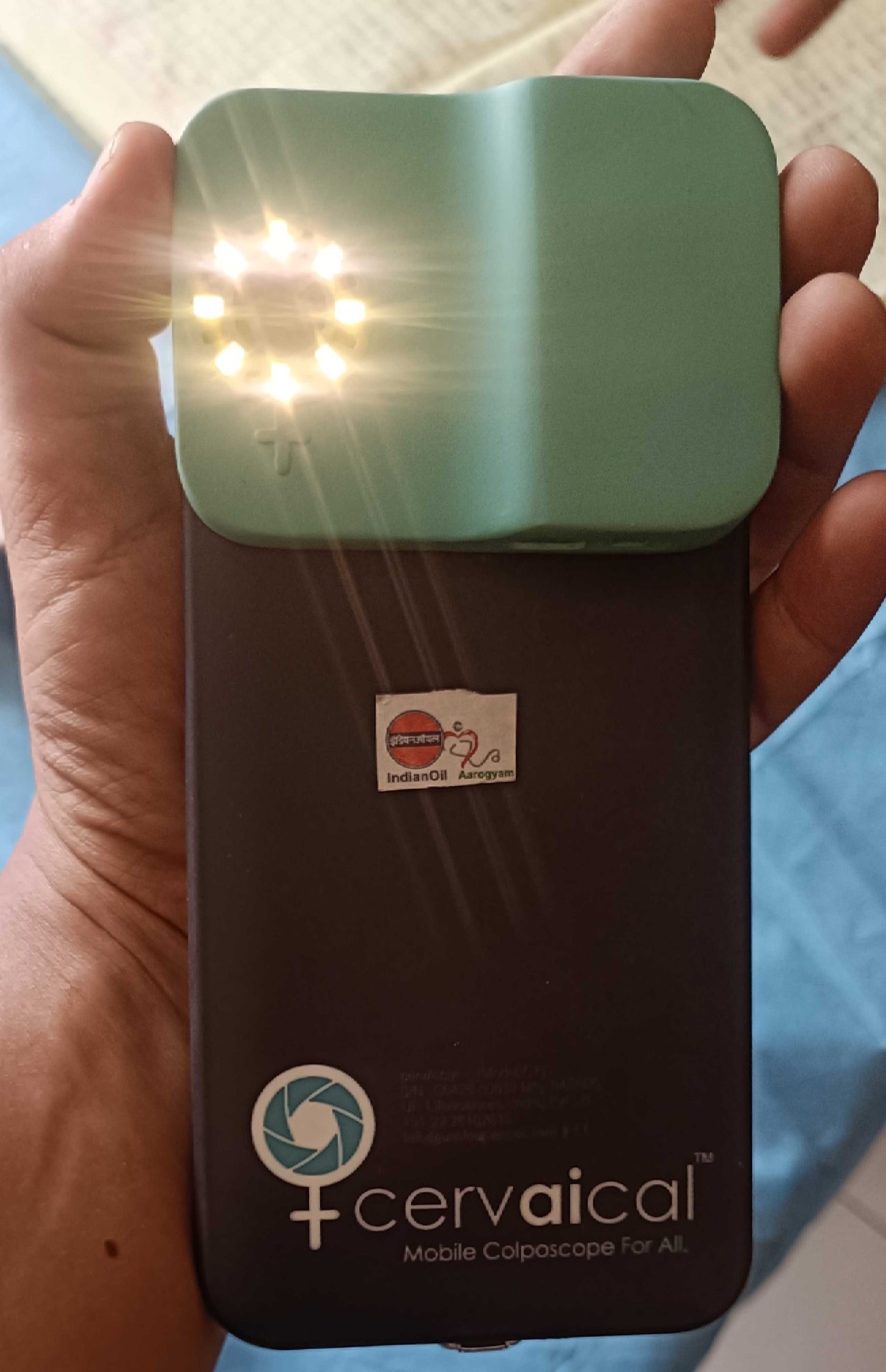
Cervical cancer detection device
The device pairs with a smartphone over Bluetooth and runs on a battery that lasts a full day of screenings after roughly six hours of charging.
“The device works completely offline,” Sheela told South First. “We connect it to the mobile phone through Bluetooth. Once it is fully charged, we can use it throughout the day.”
Before the examination, the nurse registers the patient, entering her name, age and contact details into the mobile application. The size and shape of the breast are then entered into the application, which uses the information to create a digital grid of nine, 16 or 25 sections. Each section is scanned individually. The examination takes between five and 10 minutes.
“The scanning is done block by block. The application guides us throughout the examination,” Sheela said. “Compared with a mammogram, this examination is painless and involves no radiation exposure.”
According to UE LifeSciences, iBreastExam has 648 capacitive pressure sensors that record differences in tissue elasticity roughly 20 times a second.
Healthy and abnormal tissue respond differently to gentle pressure. The sensors convert those differences into digital signals, which the software processes to flag patterns that diverge from normal tissue. Every scan is stored, and every report follows a standard format.
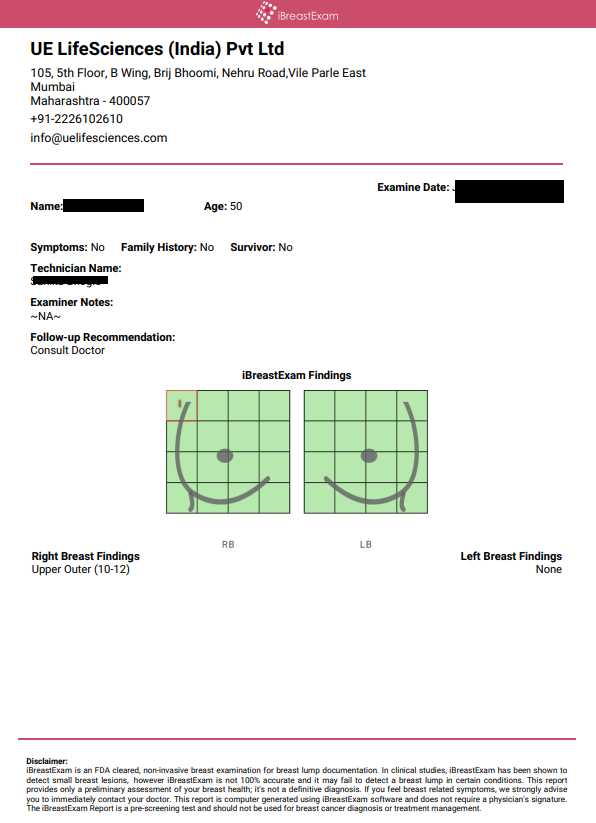
A sample report generated after the breast examination
The second device on the table, cervAIcal, is a portable digital colposcope that clips onto a smartphone.
“We first clean the cervix with normal saline and capture an initial image,” Sheela said. “After that, we apply acetic acid and wait for about one to two minutes before taking another photograph. If there is any abnormality, the colour of the tissue changes.”
Both devices are designed to identify potential signs of disease, but they cannot diagnose breast or cervical cancer.
“The device can identify whether there is any abnormal tissue or suspicious lesion. But it cannot determine the stage of cancer or specify whether the abnormality is benign or malignant. We cannot say from this device alone what type of tumour it is or whether it is cancer,” Sheela said.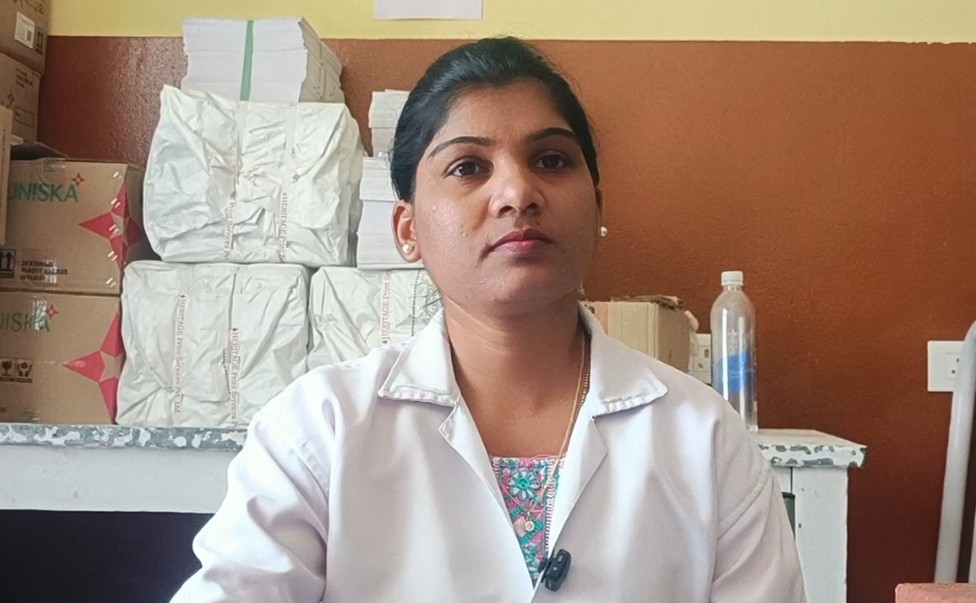
“We do not make the diagnosis ourselves. If the report shows any abnormal findings, we inform the doctor.”
Women requiring further evaluation are referred to Malkajgiri Area Hospital, which has mammography and chemotherapy facilities, or to Gandhi Hospital.
“When we tell a woman that the screening has shown an abnormality, we also explain that this does not necessarily mean cancer,” Dr Srikath, a medical officer at the PHC, said. “It simply means further evaluation is required.”
Published validation data from UE LifeSciences, drawn from clinical studies benchmarked against mammography, ultrasound and clinical breast examination, show sensitivity ranging from 74 to 88 percent and specificity ranging from 50 to 94 percent, depending on the study.
Also Read: From farm to shelf, gaps in India’s spice supply chain create preventable food safety risks
The hardest part of the screening is not the examination itself, but convincing women to undergo it, according to Dr Srikath.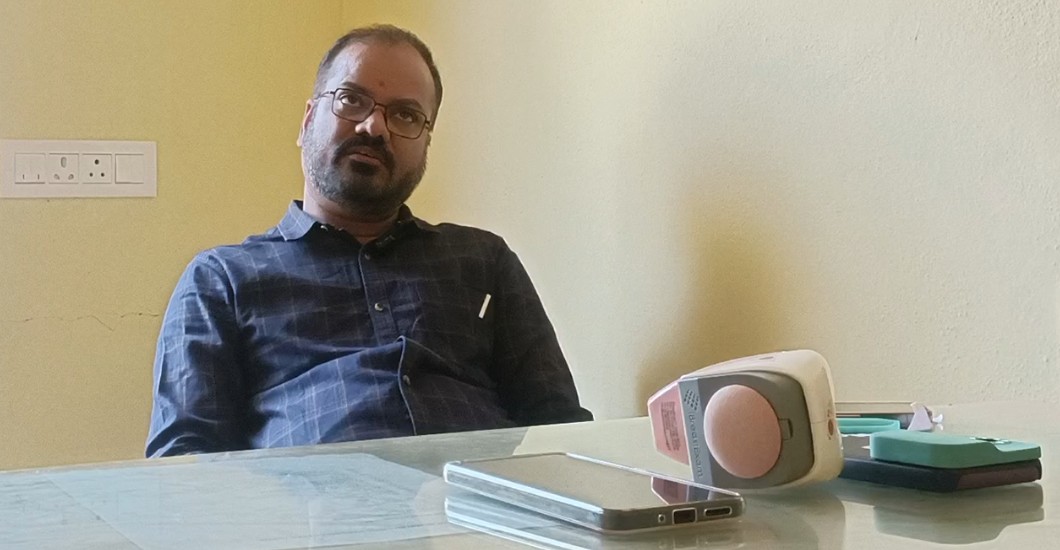
Women arrive at the PHC for antenatal check-ups, menstrual disorders, polycystic ovarian disease (PCOD), hypertension and diabetes, but rarely for breast or cervical cancer screening.
“Many women are not aware of these diseases, the importance of early screening, or the fact that screening facilities are available at this Primary Health Centre,” he told South First. “People generally assume that such equipment is available only in larger hospitals and not at a PHC.”
He compares the challenge to India’s Universal Immunisation Programme, where decades of consistent messaging helped make vaccination a routine part of healthcare.
“We need to build a similar level of awareness for breast and cervical cancer screening,” he said. “Today, many women do not know that these services are available at the PHC. At the same time, stigma prevents many of them from volunteering for screening.”
Dr Srikath also noted that women are often less comfortable discussing these conditions with a male doctor. “Many women still hesitate to discuss breast or gynaecological problems with a male doctor. Because of that hesitation, some problems can be missed,” he added.
Shahnaz Begum says her own experience helps overcome some of that hesitation.
“I tell them my own story,” she said. “They realise I have gone through the same thing.”
According to UE LifeSciences, screening under the programme since 2023 has covered 1,521 women through Mahita Foundation, 74 through Sun Charitable Trust at RIMS Hospital in Adilabad, about 14,000 through the YouWeCan Project in Khammam, 3,273 through Mahatma Gandhi Cancer Hospital & Research Institute in Visakhapatnam, another 14,000 through the YouWeCan Project’s Visakhapatnam site, and more than 500 through corporate camps run by Aurae Health.
In total, more than 33,000 women have been screened across Telangana and Andhra Pradesh.



