
Published Aug 20, 2026 | 6:27 PM ⚊ Updated Aug 20, 2026 | 6:27 PM

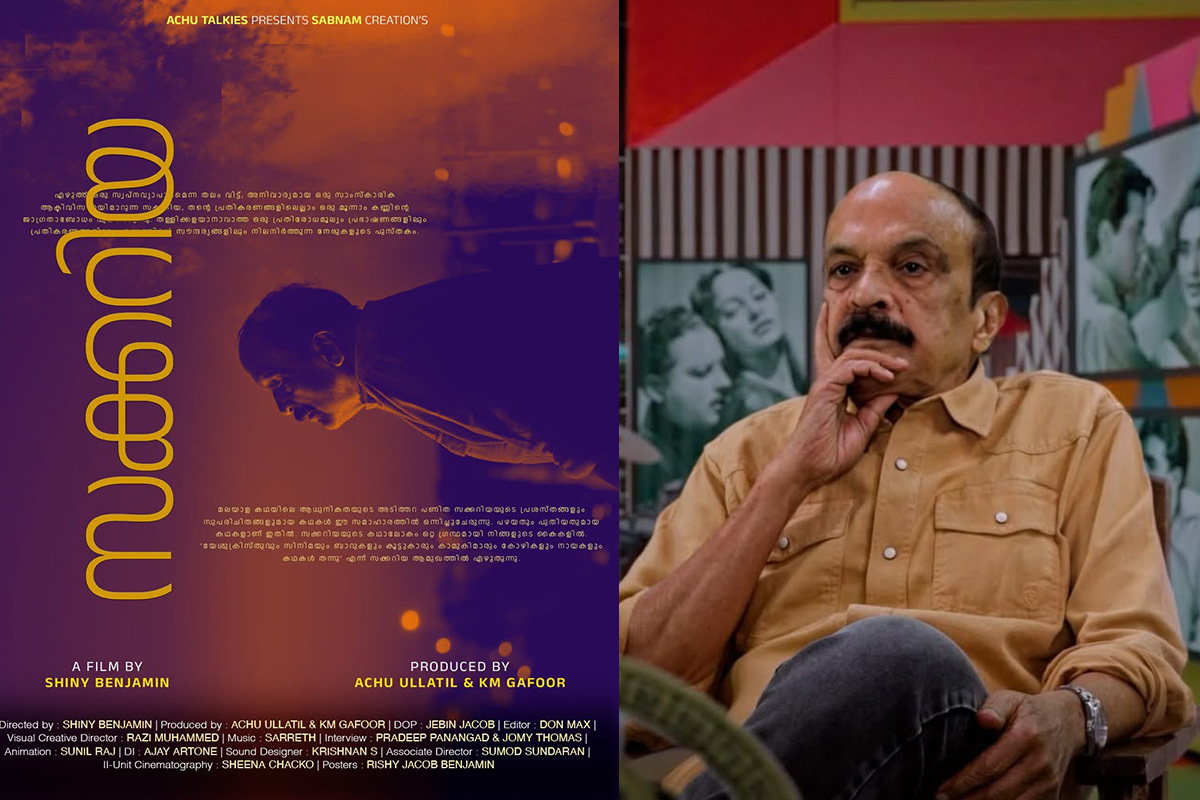
Rooted in his native village of Urulikkunnam in Kottayam district, the film grounds Zacharia within his geographical and cultural heartland.

Synopsis: Shiny Benjamin’s 60-minute biopic traces 80-year-old Paul Zacharia’s evolution as a distinctive literary voice known for his intellectual honesty, unorthodox views and singular prose. The enjoyable portrait premiered to an audience that included Adoor Gopalakrishnan, who directed a movie based on a Zacharia story.
For a long time, the Malayalam cinema and documentary space have lacked a biographical film executed with professional rigour—one that remains tightly edited, refrains from pandering to the gallery, and delivers a fluid, comprehensive narrative within a short runtime.
National Award-winning director Shiny Benjamin achieves this feat with ease in her 60-minute biopic on Paul Zacharia, one of India’s distinctive literary voices.
Rooted in his native village of Urulikkunnam in Kottayam district, the film grounds Zacharia within his geographical and cultural heartland. Kottayam—often characterised as the land of “latex, liquor, and letters”—can boast of an extraordinary spectrum of writers, ranging from Vaikom Muhammad Basheer and Arundhati Roy to Kottayam Pushpanath, a general reader’s favourite, dubbed Malayalam’s Arthur Conan Doyle.
Zacharia is unequivocally a product of this ecosystem, even as his education in Mysore and Bengaluru broadened his horizons. His worldview, thinking and style therefore have a distinct crossover quality. He straddles distances and differences, harmonising these strands in his own distinctive manner.
The documentary captures how Zacharia forged a prose style that is un-literary, austere and attuned to his milieu. His storytelling merges modern sensibilities with fable-like imagery, satire, sharp counterpoints, and even the philosophical detachment of a yogi. The camera captures the dispassionate visage of the now-80-year-old writer, betraying a subtle undercurrent of scepticism. His stoic face carries the fine lines of age, but his gaze remains unwithered.
Shiny is well-regarded as a documentarian. In this biopic, she adopts a clear, chronological structure that maintains total narrative focus on Zacharia. The film enriches its central portrait by judiciously integrating snippets from interviews by Pradeep Panangad, alongside perceptive voiceovers from the likes of novelist M Mukundan and critic KC Narayanan.
Through candid reflections, the writer himself elucidates the key influences that shaped his worldview. He speaks warmly of his father, a well-read Communist sympathiser, and pays tribute to Kerala’s legendary network of rural libraries—institutions that introduced global literature to young, curious minds long before Independence.
Zacharia fondly recalls Raveendran, his local librarian, who guided him through a diverse literary landscape (including the classic Rathi Samrajyam of Nalappat). Equally pivotal was the influence of his elder brother, Joseph, who preceded him to Karnataka. Abraham, a mathematics teacher and colleague, also profoundly influenced his reading choices.
The narrative naturally extends to his transformative years in Delhi, highlighting his associations with OV Vijayan, filmmaker G Aravindan, and the vibrant intellectual ecosystem of the Kerala Club. We can sense the evolution of Zacharia’s psyche—always in it, but not of it.
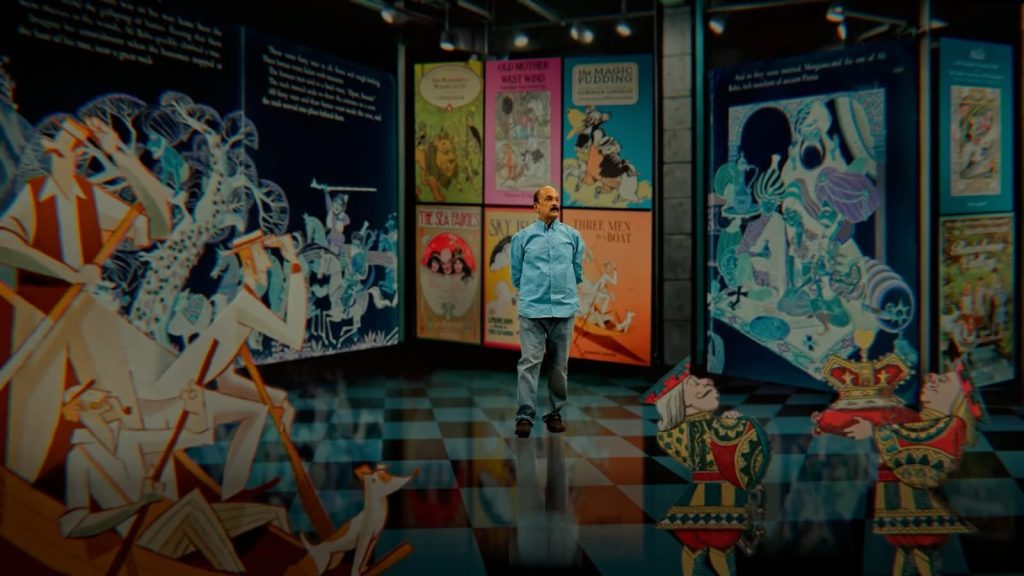
The primary triumph of Shiny’s biopic lies in its delineation of the author’s creative philosophy and sharp political critique. Zacharia pulls no punches in diagnosing contemporary society, warning against a lingering “atmosphere of totalitarianism and growing intolerance”, which he traces back to the Emergency and its political aftermath.
The broader question of whether the established narrative of those times brazenly excluded one spectrum altogether, leading to the backlash being felt now, remains unanswered in Zacharia’s soliloquy towards the end of the film.
Admittedly, Zacharia’s defining trait has been his overall intellectual honesty. His critiques of political and religious extremism remain uncoloured by partisan blinders, which cannot be said of so many of his contemporaries in the trade.
As former Deccan Chronicle editor John Mary told me following the screening, Zacharia’s stature remains singular and unassailable precisely because he refused to align himself with any dominant ideological constellation in Keralam, most of which were tethered to the Communist left. So even as global developments since the collapse of the Soviet Union diminished the influence of most of these ideologues, Zacharia continuously reinvented himself. Perhaps his secure poise and assured grace also stem from his privileged childhood in a home where freedom of choice was valued.
Produced by Achu Ullattil and KM Gafoor, Zacharia premiered to a full house in Thiruvananthapuram, cementing Shiny Benjamin’s reputation in her art.
The audience included Adoor Gopalakrishnan, global auteur, who directed Vidheyan based on a Zacharia story. But if the audience had young heads, they were not very visible. Where else to look for “paattaas” (cockroaches) than in a theatre? This in no way detracts from the biopic, an enjoyable portrait of a writer who hits us hard with unorthodox perspectives.
Also Read:
From Being There to Wag the Dog: When cinema gets political without saying so
Review | The Sunday Book Bazaar: When the pavement became a library
Let us abolish this executioner’s system: Varavara Rao makes the case as only he can
Withdrawing consent: Gene Sharp and the Cockroach uprising



