

Published Oct 13, 2026 | 5:59 PM ⚊ Updated Oct 13, 2026 | 6:36 PM

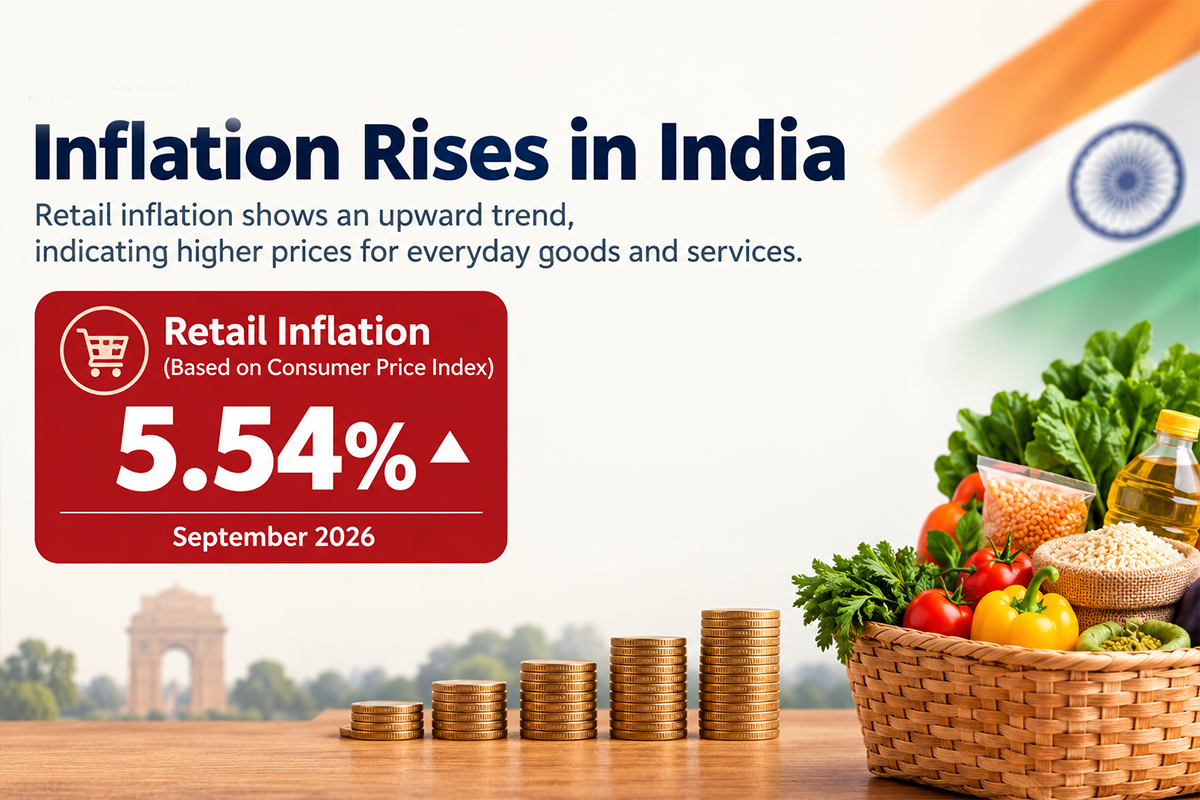

How broken is our economy at a time when those in power are basking in predictions of India being the world’s fastest-growing economy?
Earlier in 2026, the State of Working India report found that nearly 40% of those between the ages of 15 and 25 and 20% of those between 25 and 29 were unemployed.
Now, a Times of India report says the retail prices of 41 of 42 essential commodities have risen over the last year.
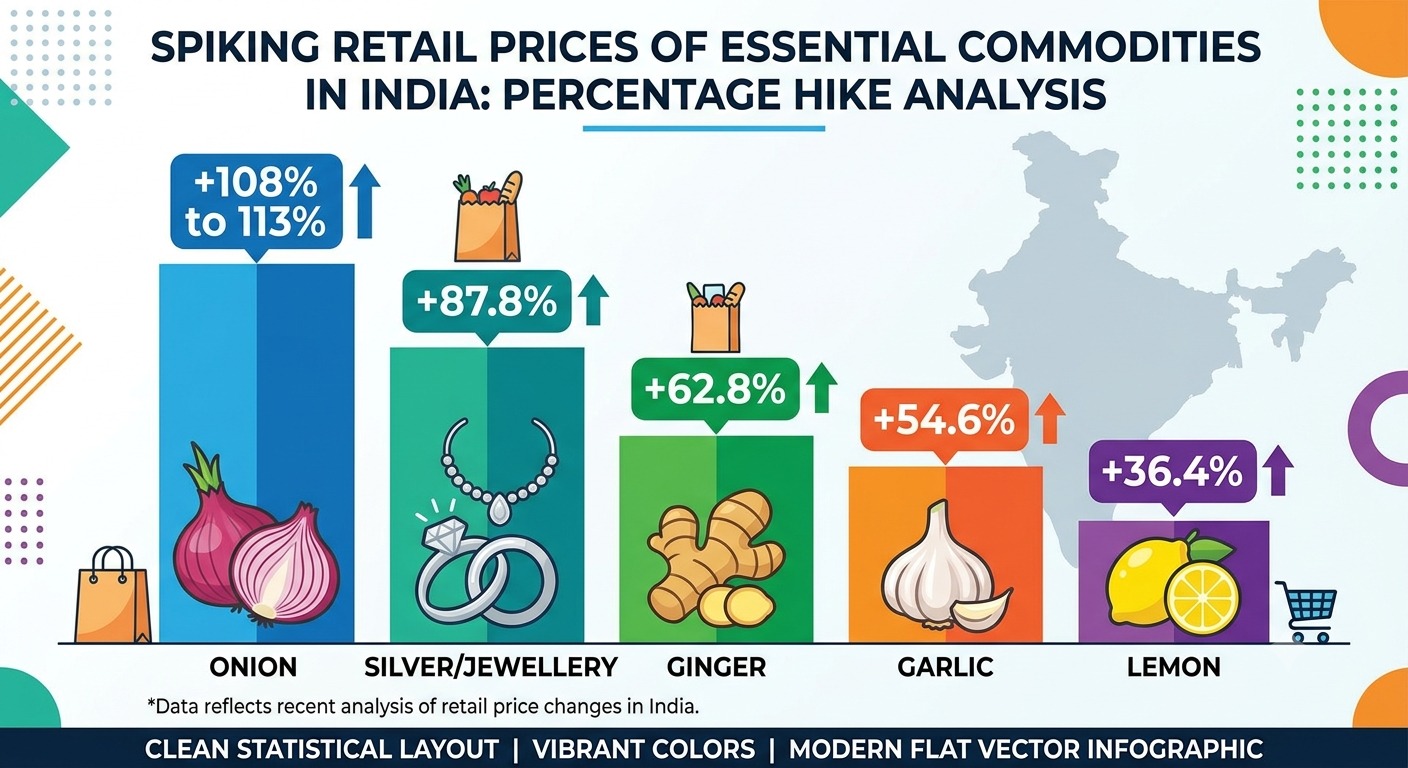
Onions, a vegetable whose price rise was once feared to bring down governments, shot up by about 113%, sugar turned dearer by almost 22%, and another staple, sunflower oil, by close to 18%. The average price of regular rice, another essential commodity, has also risen by 47%, according to the report.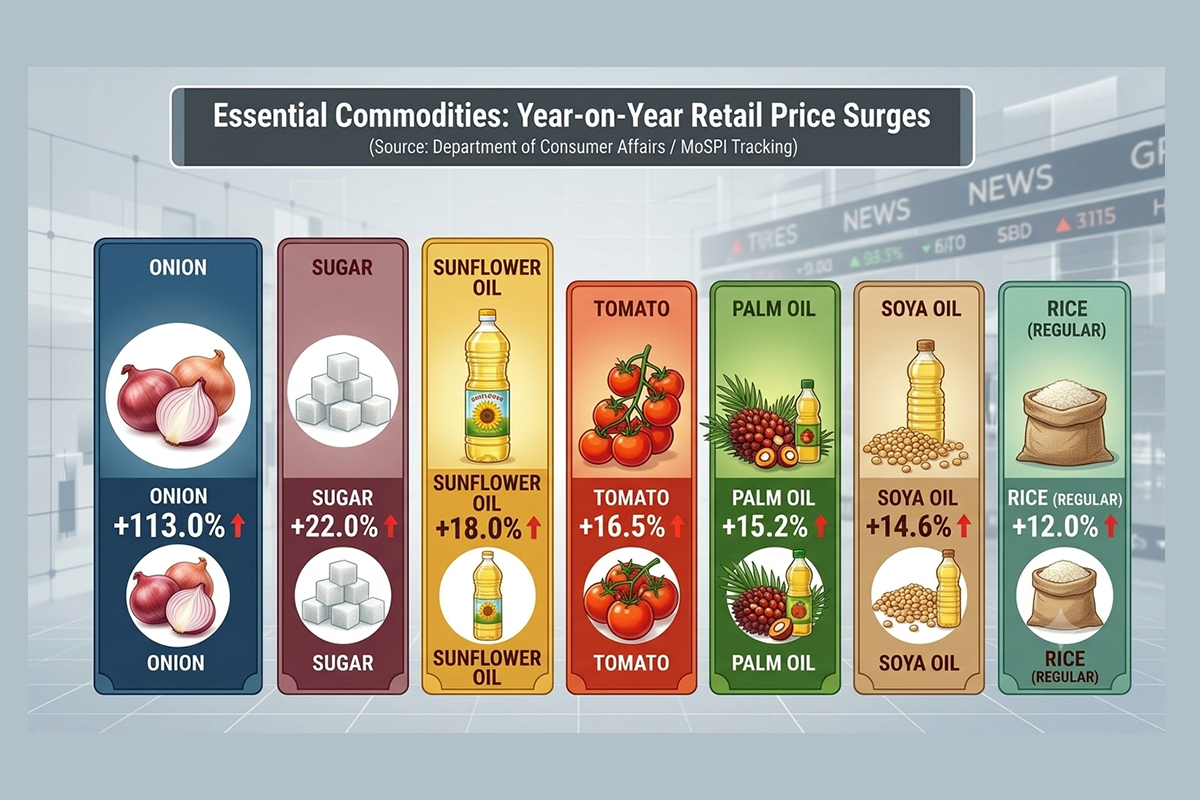
The government’s own press release had pegged the year-on-year rise in onion prices slightly lower — at 108.09%. Silver, ginger, garlic and lemon were other commodities that had turned significantly pricier.
Jairam Ramesh, the Congress general secretary in charge of communications, reacted to the numbers by observing that “back-breaking inflation is the reality”.
“The impact of inflation isn’t confined to just the dinner plate. Essentials like transportation, education, clothing, and household goods are all getting more expensive,” he noted.
“The poor are losing their daily bread from their plates, the middle class is seeing their savings vanish from their pockets, and the burden of debt keeps growing, but the Prime Minister is drowned in arrogance, paying no attention to the people’s troubles,” he went on to add.
Three southern states — Tamil Nadu (10.62%), Andhra Pradesh (10.18%) and Karnataka (9%) — were among the five states that saw the worst food inflation. Odisha (9.58%) and Maharashtra (8.91%) were the other two on the list.
Tamil Nadu, with a 6.81% rise, also led the states in the overall spike in inflation. Telangana, which recorded a 6.64% rise, and Andhra Pradesh, which recorded a 6.29% rise, followed not too far behind.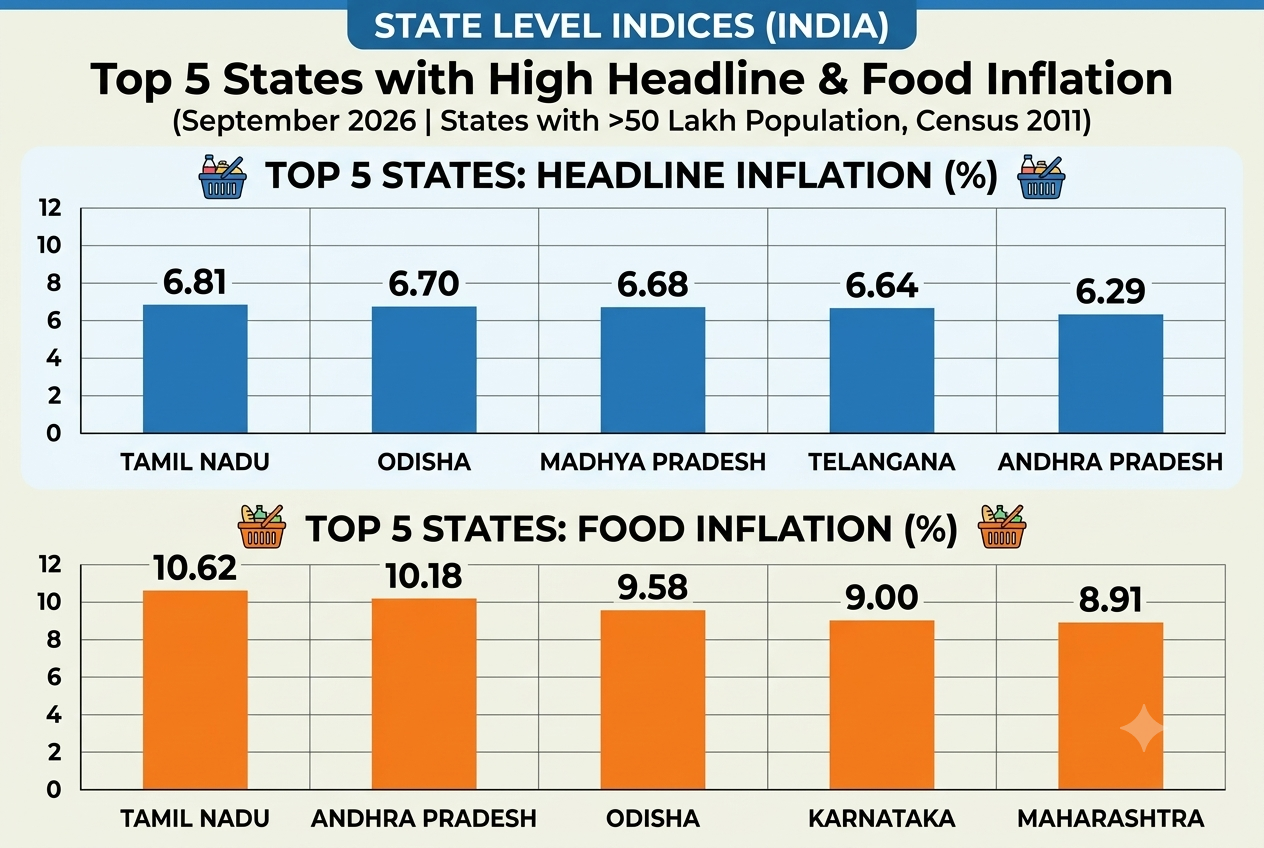
The numbers came on a day when Robert E Hall (Stanford University) and Michael Woodford (Columbia University) were awarded the Nobel Prize in Economics for their work that demonstrated “how economic models could be reconstructed to revitalise stabilisation policy”.
The Nobel Committee observed that the duo’s work had “laid the foundation of the New Keynesian paradigm, in which models are built upon microfoundations, which means from the bottom up”.
The paradigm rests on the understanding that “economic outcomes are the result of millions of decisions made at the microlevel by households and businesses”.
“Authorities shouldn’t view stabilisation of the economy as an exercise that is simply conducted by people pulling levers to control the economy independently of what people in the economy understand about this,” Woodford said, while summing up his work.
In simpler English, that translates to engaging with people and taking them along. Is the government listening?
Also Read:
7.8% GDP growth, 3% smaller economy: Does PM Modi’s ‘herculean feat’ add up?
India in 2050: The world’s second-largest economy—and its hundredth-poorest nation
In cold numbers: What brought the youth to Jantar Mantar and the streets of India
(Edited by R Rajesh Kumar.)



