

Published Sep 08, 2026 | 3:16 PM ⚊ Updated Sep 08, 2026 | 3:58 PM

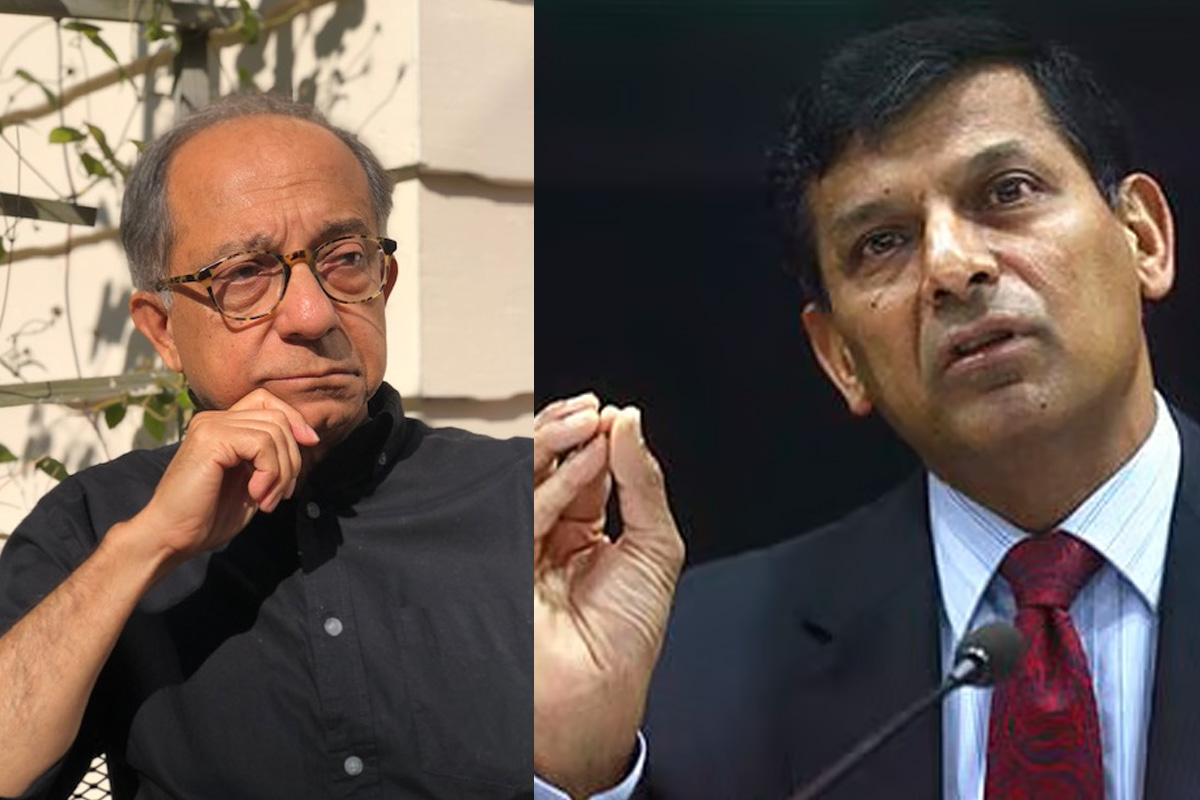
Former Chief Economic Adviser Kaushik Basu (Left) and Economist Raghuram Rajan (Right), both have questioned FDI.

First came the social media backlash after the government tom-tommed the latest GDP figures that recorded a ‘better-than-expected’ 7.8% growth.
Former Finance Secretary Subhash Chandra Garg famously called the ‘better-than-expected numbers’ into question. He posted on X, “that GDP growth in Q1 2026-27 in current prices is 2.6% and in real terms close to zero. There are still messier distortions in sectoral performance, with manufacturing and consumption witnessing negative growth”.
Garg drew attention to the buoyancy that he claimed had been created by revising the Q1 FY2025-26 GDP figures from 7.8% to 6.9%. The revision helped add 6 trillion rupees to the current GDP calculation and led to it going up “by about 10.3 per cent”, he noted.
Economist Professor Anil K Sood, who dived into the debate for South First, felt Garg should not have compared the current and the old series, calling it an apples-to-oranges comparison. The government officials and the Ministry of Statistics and Programme Implementation also put forth the same defence, claiming that direct comparisons between the old 2011–12 series baseline and the new 2022–23 base-year series did not pass muster technically.
But Professor Sood agreed that the larger question Garg posed was legitimate. According to him, the new series showed that the estimated size of the Indian economy was 3% smaller than under the old series across all the years.
“If we put it in absolute numbers, the size of the Indian economy with the new series is smaller by ₹43.86 lakh crore (than under the old series) for four years put together, with annual numbers ranging between ₹8.2 lakh crore and ₹12.6 lakh crore,” Professor Sood said while puncturing the hype balloon with his calculations.
Now, another aspect of India’s growth narrative is being called into question.
Kaushik Basu, former Chief Economic Adviser of the Government of India and former Chief Economist of the World Bank, has drawn attention to the declining share of Foreign Direct Investment (FDI) in India’s GDP.
“Foreign direct investment as a percentage of GDP into India was: 3.6% in 2008; 2.1% in 2015; 1.5% in 2022; and 1% in 2025,” Basu noted in a post on September 9.
“India has a lot of talent, and global confidence in India used to be high. We must ask what’s causing the decline and take corrective action,” he concluded on a sobering note.
The World Bank, in a report titled India: Becoming a high-income economy in a generation, had flagged the need to attract more FDI into the country. It had observed that the average FDI flow into India over the last two decades was at 1.6 per cent of GDP. This was lower than the FDI flow into immediate competitors such as Vietnam (nearly 5 per cent), Malaysia (3.3 per cent), China (3.1 per cent), and the OECD members (2.8 per cent).
“India is among the top-10 global FDI destinations, but the share of net FDI in GDP has remained subdued despite substantial liberalisation,” the report had noted.
Economist Raghuram Rajan had earlier questioned India’s failure to attract more FDI if growth was indeed taking off as the government was claiming.
“FDI is down significantly. They’re not bringing in money to build factories in India. Portfolio investors have been selling and getting out. That’s consistent with a lack of confidence in the Indian economy,” he told India Today TV.
Rajan had also told the Frontline magazine in an interview that a “$4 trillion economy is good, but $4 trillion for 1.4 billion people is not good”.
The former RBI governor went on to say that the policymakers need to see what needs to be done to create “the kind of ecosystem where everyone can flourish rather than picking a few winners.”
Is the government listening?
Also Read:
In cold numbers: What brought the youth to Jantar Mantar and the streets of India
India in 2050: The world’s second-largest economy—and its hundredth-poorest nation
(Edited by R Rajesh Kumar.)



