

Published Jul 05, 2026 | 3:24 PM ⚊ Updated Jul 05, 2026 | 3:24 PM

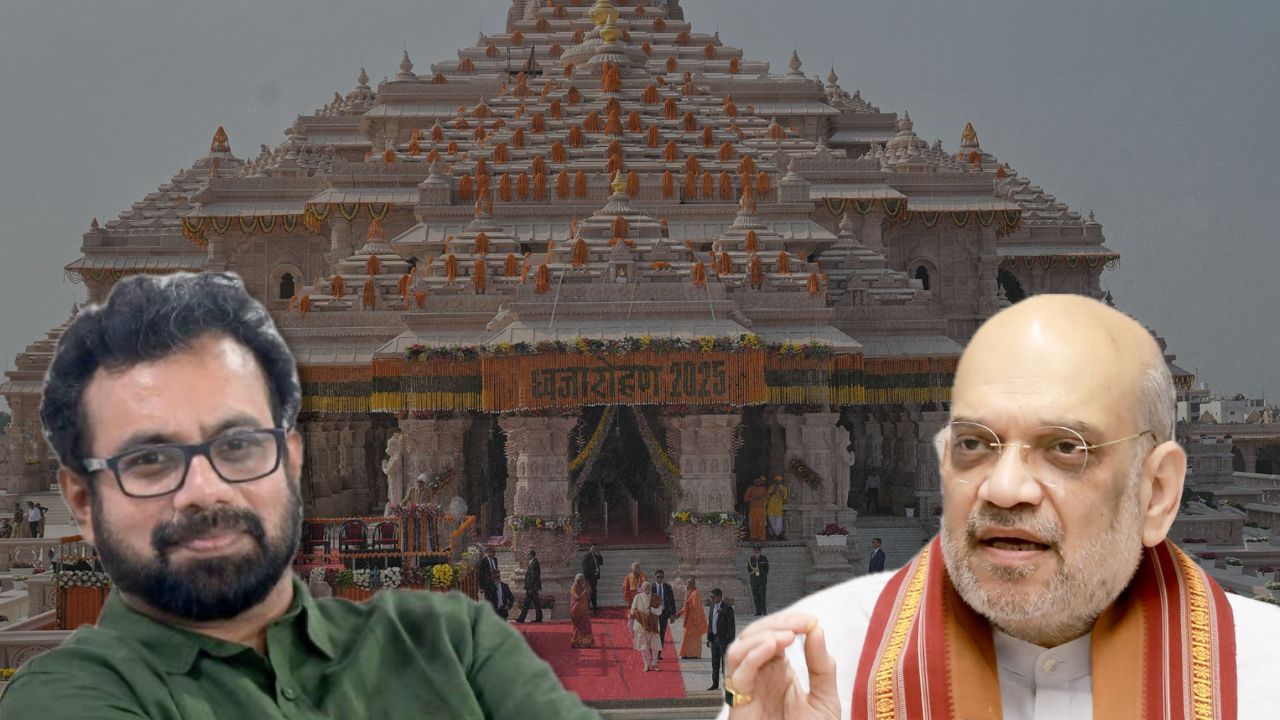
Brittas contended that the Trust's legal existence was inseparable from government action.

Synopsis: CPI(M) Rajya Sabha MP John Brittas has written to Union Home Minister Amit Shah, urging the Union Government to reconsider its stand that the Shri Ram Janmbhoomi Teerth Kshetra Trust does not come under the RTI Act, saying its creation and functioning involve significant government action. The letter follows a Central Information Commission finding that the Trust is not a public authority because it functions independently of the government and is neither government-funded nor under its administrative control.
CPI(M) Rajya Sabha MP John Brittas has written to Union Home Minister Amit Shah, urging the Union Government to reconsider its position that the Shri Ram Janmbhoomi Teerth Kshetra Trust does not fall within the ambit of the Right to Information (RTI) Act, 2005.
In a letter dated 4 July, Brittas referred to the Central Information Commission’s 6 June 2025 decision holding that the Trust was not a “public authority” under Section 2(h) of the RTI Act.
Brittas said the Centre could not simultaneously constitute the Trust through a government-approved scheme, vest it with land acquired under a Parliamentary law, nominate serving IAS officers to its governing framework, and then maintain that it had no role in the Trust or that the Trust fell outside the purview of the RTI Act.
“Transparency could not become a casualty merely because the Government chooses to describe a Trust as ‘autonomous’,” he wrote in a post on X.
He further maintained that compliance with the Supreme Court’s judgment did not alter the legal character of a government notification. He said he had urged the Home Minister to revisit its position so that “the crucial question of the Trust’s accountability under the RTI Act receives an authoritative judicial determination.”
“Trusts that enjoy unparalleled public faith must also uphold the highest standards of public transparency and accountability,” he said, adding that, since the Commission had relied substantially on the Ministry of Home Affairs’ submissions, the Ministry should undertake a fresh examination of its position in the light of the statutory framework of the RTI Act and the constitutional principles of transparency and public accountability.
The Modi Government cannot have it both ways.
It constituted the Shri Ram Janmbhoomi Teerth Kshetra Trust through a Government-approved Scheme, vested in it land acquired under a Parliamentary law, nominated serving IAS officers as Government representatives to its governing… pic.twitter.com/oahq9laWNI
— John Brittas (@JohnBrittas) July 5, 2026
The Trust’s operations have come under intense public scrutiny since June following allegations of financial irregularities and the theft of devotees’ offerings.
However, the issue has been under judicial scrutiny since early 2024, when RTI applicant Neeraj Sharma approached the Delhi High Court after the Ministry of Home Affairs declined to furnish details of the public information officers of the Shri Ram Janmbhoomi Teerth Kshetra Trust.
Acting on the High Court’s directions, the Central Information Commission (CIC) examined whether the Trust could be treated as a public authority under the RTI Act.
Before the Commission, the Ministry maintained that the Trust, which oversees the Ram temple complex, functions independently of both the Union and Uttar Pradesh governments, with its affairs administered exclusively by its permanent trustees.
Accepting this position, the CIC held that the Trust, constituted pursuant to the Supreme Court’s Ayodhya verdict, neither receives government funding nor functions under government administrative control and therefore does not qualify as a public authority under the RTI Act.
Also Read: Big sharks likely behind Ayodhya Ram temple fund theft, Priyanka says in Wayanad
Brittas contended that the Trust administers one of the country’s most revered religious institutions, manages land acquired under a Parliamentary enactment and vested in it through a government notification, and receives contributions from tens of lakhs of devotees in India and abroad.
He said the Trust’s legal existence was inseparable from government action. He noted that, following the Supreme Court’s 9 November 2019 judgment, the Union Government framed the scheme governing the Trust under the Acquisition of Certain Area at Ayodhya Act, 1993, constituted the Trust, vested the acquired land in it through a Gazette notification, and determined its initial composition, with 12 of its 15 members nominated by the Centre.
Referring to the Ministry’s contention that the Trust was not established by a government notification because the notification had been issued in compliance with the Supreme Court’s directions, Brittas argued that Section 2(h)(d) of the RTI Act did not distinguish between notifications issued pursuant to judicial directions and those issued independently by the Government.
The source of the obligation to issue the notification, according to Brittas, did not alter its legal character.
He also highlighted that the government-approved scheme provides for representation by serving IAS officers nominated by both the Centre and the Uttar Pradesh Government, in addition to the District Magistrate of Ayodhya.
Though these representatives may not have voting rights, he said that their inclusion reflected the Trust’s public character and the Government’s continuing role in its administration.



