

Published Jun 22, 2026 | 1:22 PM ⚊ Updated Jun 22, 2026 | 1:22 PM

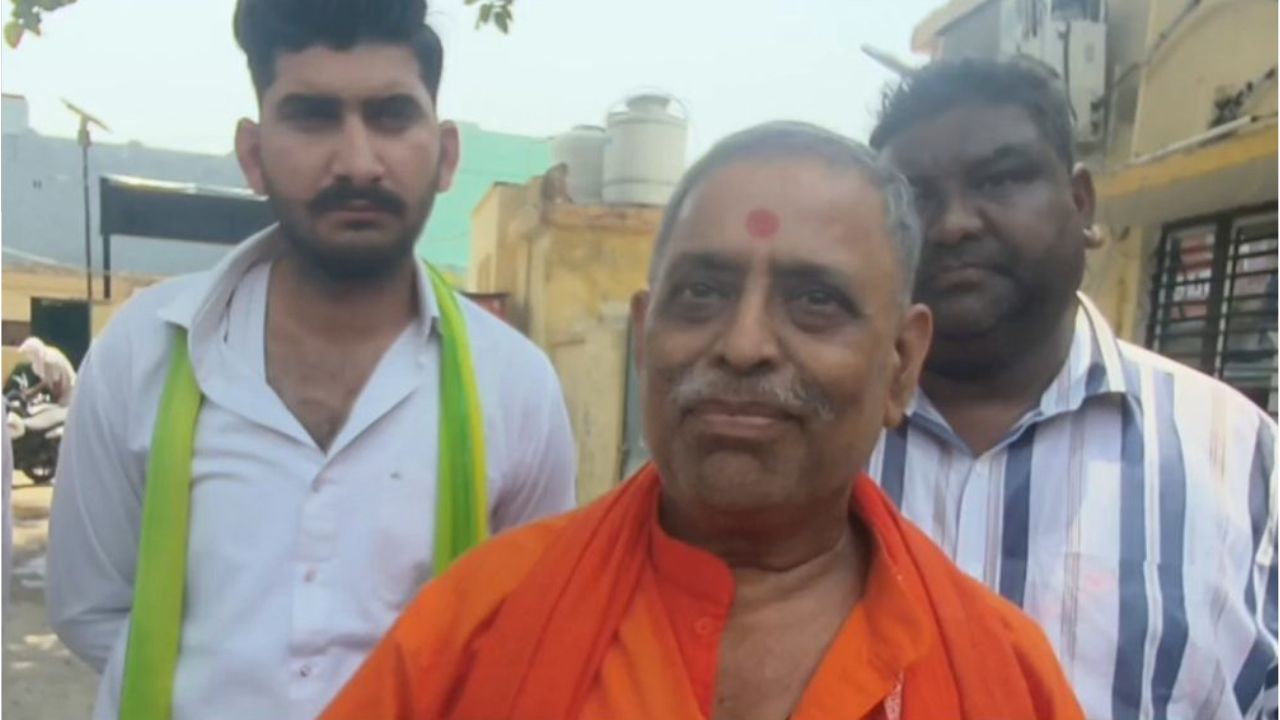
Former kar sevak Santosh Dubey, who has filed a complaint alleging embezzlement Ram Temple funds. (By arrangement/The Wire)

Synopsis: Even days after a former kar sevak submitted a complaint to the Ram Janmbhoomi Police Station in Ayodhya regarding the alleged embezzlement of funds at the temple, no concrete action has been taken. There also exists evidence regarding land procurement at highly inflated prices.
It has been four days since Santosh Dubey, a former kar sevak who joined the Ram Janmbhoomi movement in the late 1980s, submitted a complaint to the Ram Janmbhoomi Police Station in Ayodhya regarding the alleged embezzlement of funds at the temple.
Shri Ram Janmbhoomi Teerth Kshetra Trust has been at the centre of a controversy for over two weeks now owing to allegations related to the embezzlement of funds and theft of valuable offerings from within the temple premises:
Kar sevaks (people who volunteer for a religious cause) were volunteers associated with the Rashtriya Swayamsevak Sangh (RSS), who, after being mobilised by the Bharatiya Janata Party (BJP) and Vishwa Hindu Parishad (VHP), had congregated at the Babri mosque on 6 December 1992 and subsequently demolished it.
Nearly 34 years after the demolition of the mosque, and two years after Prime Minister Narendra Modi presided over the consecration ceremony of the Ram temple in January 2024, former kar sevak Dubey says that he is worried about whether Lord Ram is “safe” in this country.
He doesn’t mince words when talking about those involved in the alleged fund embezzlement in the Ram temple, even comparing them with Babur and Mahmud of Ghazni – historical figures who are routinely portrayed as invaders by the Sangh Parivar and BJP.
“Babur, Ghazni and Ghori looted temples and went away. These people [referring to those allegedly involved in fund embezzlement in the temple] are looting the treasures of the temple. They are looting the people of their faith and trust. Is [Lord] Ram also not safe in this country?” asked Dubey.
Dubey was responding to a question about how he feels regarding the recent allegations of misappropriation of funds belonging to the Shri Ram Janmbhoomi Teerth Kshetra Trust, given that he had been, in his own words, among those who paved the way for the temple after “demolishing the Babri Mosque in a planned manner using sabbal (crowbar), hammer, trishul and sword.”
What comes as a surprise is the fact that the people whom Dubey – a lifelong follower of the Hindutva ideology – has accused in his complaint of misappropriating funds from the temple include Champat Rai, a top functionary of the Vishwa Hindu Parishad (VHP), a right-wing Hindu organisation, which is an offshoot of the RSS.
Dubey’s proximity to the Sangh Parivar and the Ram Janmbhoomi movement could be gauged from the fact that he was a co-accused along with former deputy prime minister and veteran BJP leader Lal Krishna Advani and 30 others in the Babri Demolition case probed by the Central Bureau of Investigation (CBI). All accused in the case were acquitted in 2020 owing to a lack of sufficient evidence.
“Yes, I have been accused; what’s wrong with that? There was just one way for the mukti (release) of Ram Janmbhoomi: the Babri structure should be pulled down, so we did just that. Kya gunah kiya (what is the crime committed here?)” proclaims Dubey, the complainant in the Shri Ram Janmbhoomi Teerth Kshetra trust funds case.
While Dubey has no remorse over the demolition of the mosque, he says he is pained that the Ram Temple is “in the hands of thieves.”
“I am feeling very guilty; this is no small remorse; there is an inner conflict going on about whether Ayodhya will always remain in the hands of thieves”, said Dubey, while speaking to The Wire.
Dubey sounded angry and disgruntled at what he alleges were years of mismanagement of cash and other valuables donated to the Ram temple in Ayodhya, beginning sometime in 2003-04.
On 17 June, when this reporter called Dubey, he was preparing to leave for the banks of Sarayu, as a symbolic gesture of submitting his complaint to the river, which is revered as a goddess.
Also Read: Report flags weakness in Kerala’s tax enforcement amid fiscal strain
Dubey is among those complainants who have formally approached the UP Police. The day Dubey submitted his complaint (on 16 June), Ayodhya-based Indian Youth Congress leader Sharad Shukla, too, wrote a complaint to the Ram Janmbhoomi Police Station requesting that an FIR be registered in connection with the misappropriation of temple funds.
By 18 June, the total number of complainants who had submitted letters at the Ram Janmbhoomi Police Station had risen to three, including Dubey and Shukla. A third complaint was sent the same day on behalf of Aam Aadmi Party (AAP) leader and Rajya Sabha MP, Sanjay Singh.
However, no First Information Report (FIR) has been registered yet by the police of the BJP-ruled Uttar Pradesh. Meanwhile, an SIT, constituted by the office of Chief Minister Yogi Adityanath on 13 June, carries on with its probe.
The New Indian Express has reported, citing sources, that SIT has identified around 150 suspects, with nearly 25 individuals likely to face action.
The Wire spoke with two complainants – Dubey and Shukla – to understand the nature of their allegations against the Trust, which was formed after the Union cabinet led by Prime Minister Narendra Modi gave its approval in February 2020. The announcement came following a Supreme Court judgment in 2019 when the apex court had said that the rightful claimant of the disputed 2.77 acres of land in Ayodhya was Deity Ram Lalla, thereby accepting the claim of the Hindu parties.
The Wire also went through documents related to the land deals involving Shri Ram Janmbhoomi Teerth Kshetra Trust general secretary Champat Rai – who is also the international vice president of the VHP – which are now under the scanner owing to allegations of inflated valuations of properties purchased on behalf of the Trust.
In a one-page complaint, Dubey, who runs an outfit called Dharam Sena Bharat, has named four persons associated with the Trust who were allegedly responsible for siphoning off temple funds.
The complaint, a copy of which has been seen by The Wire, states: “More than ₹1 crore in donations comprising cash, coins made of gold and silver, and ornaments are received from Ram Bhakts in donation boxes on a daily basis, which is managed and taken care of by the members of the Ram Janmbhoomi Trust. Primarily, the Secretary of the Trust, Champat Rai Bansal, Anil Mishra, Gopal Rao and Ramashankar Yadav alias Tinnu, who happens to be the driver of Champat Rai, have colluded with the appointed workers and siphoned off a substantial amount of such donations, amounting to more than ₹200 crore, as part of a conspiracy.”
“It is important in the interest of religion that in order to recover such donations in the form of cash and jewellery, an FIR be filed against concerned persons and as part of investigation they [accused] should be subjected to a polygraph test. The entire Hindu society including myself have been hurt by such a misdeed”, Dubey’s complaint further added.
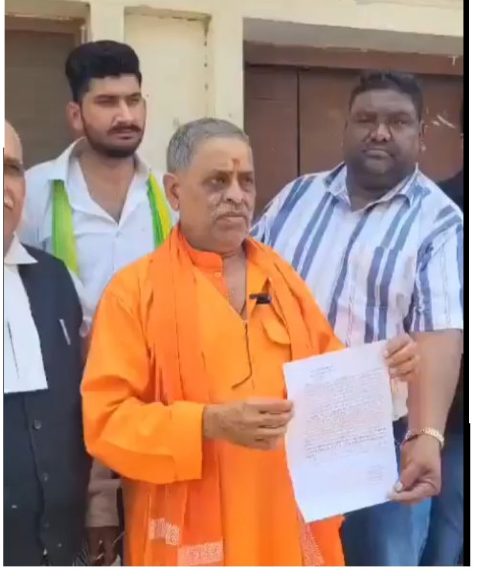
Former kar sevak Santosh Dubey at the Ram Janmbhoomi Police Station, where he filed the complaint against alleged embezzlement of temple funds.
Questions about the functioning of the Trust were first raised publicly when, on 7 June 2026, Samajwadi Party president and former Uttar Pradesh chief minister Akhilesh Yadav took to X and wrote about donation money allegedly going missing, while also urging the courts to take suo motu cognisance of the matter. This was soon followed by a flurry of allegations against the Trust.
As first reported by Dainik Bhaskar, temple employee Luvkush Mishra, a member of the counting team, was arrested after police allegedly recovered ₹10 lakh from his house, hidden inside cow dung cakes. In an interview with the YouTube channel Top Secret, Mahipal Singh, a former accounts officer of the Trust, told senior journalist Abhishek Upadhyay that there was no record-keeping of the ornaments donated to the Trust. He also alleged that temple staff had, on one occasion, allegedly deleted CCTV footage spanning eight months.
“I haven’t had a cup of tea [at someone else’s place] in the name of Ram to date. And these people call themselves Ram ke Pyare (beloved of Lord Ram). But I’m telling you they are, in fact, girahkat (pickpockets) and Rehman”, said Dubey, insisting that this reporter does make a note of the words he’s using for those entrusted with managing the temple funds.
By Rehman, Dubey refers to Pakistani gangster Rehman Dakait, who has been portrayed as the villain of the Bollywood movie Dhurandhar.
Dubey’s angst also stems from the fact that while he continues to depend on agriculture as his sole source of income after having spent a year between 1994-95, and several months in 1987 and 1988, in jail under the National Security Act (NSA) during his stint as a kar sevak involved in the Ram temple movement, those who now form part of the temple coterie enjoy a lavish lifestyle.
“Why is Bulldozer Baba (UP CM Adityanath) not taking any action in this case? This also raises questions about Modi’s ED (Enforcement Directorate). Those who have looted money belonging to Ram, what action has been taken? There isn’t any response,” Dubey told The Wire.
Speaking to The Wire over the phone, Dubey also claimed that in an earlier complaint submitted at the Kotwali police station in Ayodhya, he had alerted the authorities when Ram Shilas began to go missing between 2002 and 2003.
“In 1989, the Ram Shilas [referring to bricks used in temple construction] had come from various villages and were pran pratishthit (consecrated) as part of the ‘Mandir wahin banayenge’ campaign. There were 1,250 such Ram Shilas, made of gold and silver and studded with diamonds, which went missing after 2002,” said Dubey.
According to Dubey, he had even sent “a complaint letter to a former UP Director General of Police (DGP), Prashant Kumar, who was then posted as Senior Superintendent of Police (SSP) Faizabad, but there was no action”. He further claimed that a similar complaint regarding the missing Ram Shilas was submitted between 2002 and 2003 at Ayodhya’s Kotwali police station by Mahant Ramchandra Das Paramhans, a leader of the Ayodhya temple movement and president of the VHP-led Ram Janmbhoomi Nyas, but that too didn’t elicit any response. The Wire could not independently verify these claims.
“If the police ask me for evidence, I will surely provide it, and it will implicate those sitting in the highest offices in this country. Let them stand in the Sarayu river; I will hold water and say they have looted. They can deny it while holding the water themselves,” Dubey told the reporter when asked if he has any documentary evidence to back his latest complaint.
The second complainant is Sharad Shukla, vice president of the Indian Youth Congress and a resident of Ayodhya. Shukla made six requests in a letter addressed to the Station House Officer (SHO) of the Shri Ram Janmbhoomi police station.
“This is not just any financial irregularity but something which is connected with the faith, trust and religious feelings of crores of devotees. Every single penny donated to the temple does not belong to an individual rather it’s an expression of one’s devotion towards Lord Ram”, Shukla wrote in his complaint dated 16 June 2026, a copy of which has been seen by The Wire.
Shukla’s six requests to the police included a thorough investigation into donations and offerings made to the Ram Mandir, registration of an FIR with immediate effect if the probe reveals a cognisable offence, preservation of evidence such as records related to donations, accounting registers, bank statements and CCTV footage, probe be conducted without any undue influence, pressure or interference, strict action be taken as per law against those found accused and transparency be maintained throughout the investigation in order to restore trust among general public and devotees.
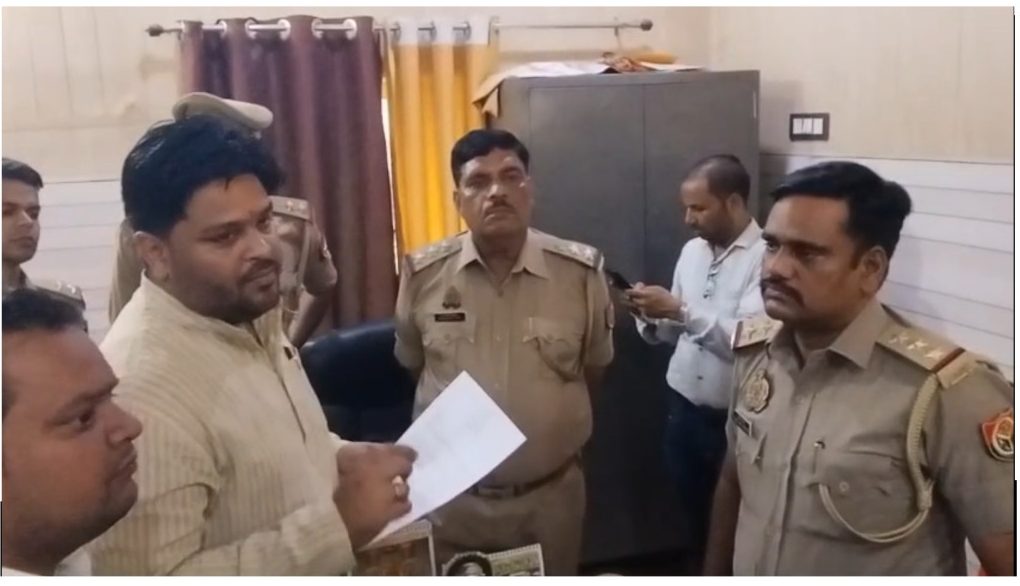
Indian Youth Congress leader Sharad Shukla submitting his complaint at Ram Janmbhoomi police station. (By arrangement)
Speaking to The Wire over the phone, Shukla said, “There was a buzz doing the rounds for quite some time, but it was also being managed by the temple, which works like a syndicate. Publicly, we couldn’t say anything without proof; otherwise, they [temple authorities] would label us as Pakistanis since we are associated with the Congress.”
In his two press conferences held in Ayodhya last week, based on news reports and documents related to land acquisition, Shukla has now waged a full-throttle campaign against the Shri Ram Janmbhoomi Teerth Kshetra Trust. He had earlier approached the Supreme Court in connection with land acquisition by the Trust.
“For the last two years, audit reports related to the Trust haven’t been made public. Since the Trust had been constituted by the Centre, why has there been no accountant or auditor from the central government?” said Shukla.
Some financial disclosures pertaining to the Trust are, however, available in the public domain.
According to a report by the Times of India, as of 21 June 2022, the Ram Temple Trust had received over ₹3,400 crore in donations for the purpose of construction. This was revealed in an audit report released by the VHP.
In February 2024, as reported by the Press Trust of India, the Ram Temple Trust received donations to the tune of ₹25 crore and 25 Kg gold in a month after the much publicised consecration ceremony a month ago that witnessed the attendance of the likes of prime minister Narendra Modi, RSS chief Mohan Bhagwat, UP CM Adityanath and celebrities like Amitabh Bachchan, Vicky Kaushal, Ranbir Kapoor and Alia Bhatt among others.
Among other financial declarations in the public domain, in September 2025, the Trust recorded an annual income of ₹327 crore in the financial year 2024-25, with the contribution through donations amounting to ₹153 crore. There is, however, no clarity in terms of donations received through cash and via offerings in the form of ornaments and gold/silver coins.
“Who is Gopal Rao? Why is there so much interference from Tinnu Yadav? He used to have so much clout in terms of deciding who will park his or her vehicle at which spot and would move around the temple premises with a walkie talkie”, Shukla added in an angry tone. Both Rao and Tinnu, or Ramashankar Yadav, have been named by former Trust accountant Mahipal Singh in his interview with Dainik Bhaskar as among those allegedly involved in the embezzlement of funds.
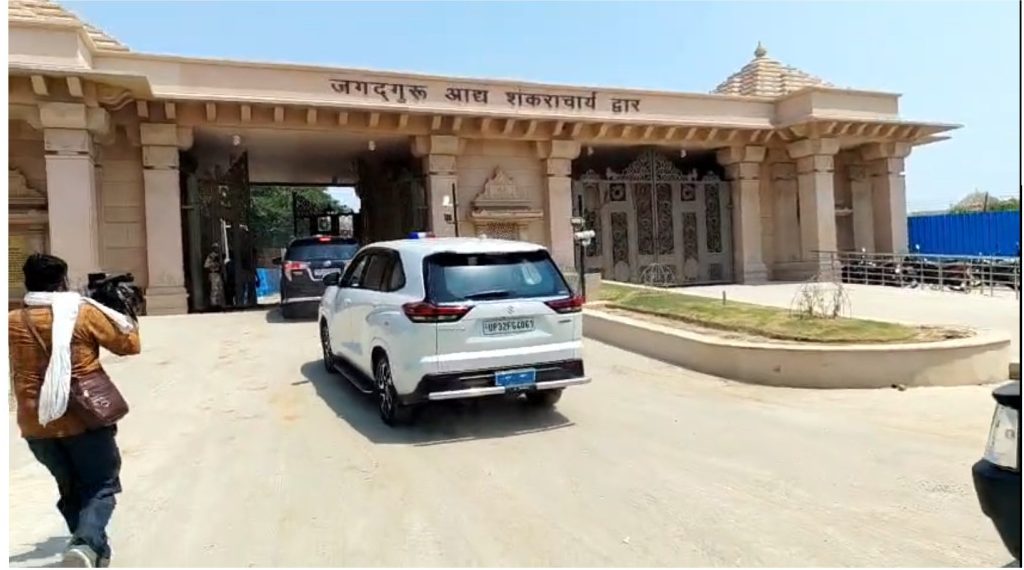
The special investigation team (SIT) entering inside the Ram temple premises. (By arrangement)
The counting process of donations was such that the proceeds from donation boxes within the temple premises would be taken to a hall for segregation. Then wads of cash would be sorted further depending on the denomination of note. As reported by the Indian Express, there are ‘35-odd donation boxes fixed across the shrine premises’ with daily collection ‘estimated to be between ₹8 and ₹13 lakh.’
An official bank account on behalf of the Shri Ram Janmbhoomi Teerth Kshetra Trust was opened with the State Bank of India (SBI) branch in Ayodhya in March 2020. According to a report in The New Indian Express, so far as the counting of the donated money was concerned, “The amount collected so far would be counted in the presence of the trustees and the SBI officials before being deposited in the account. Earlier, the donation money used to be counted in the presence of the duty magistrate, revenue officials and the assistant account officer of the treasury.”
The Trust had signed a Memorandum of Understanding (MoU) with the SBI. An official trustee of the temple has also been quoted in a PTI report as saying that “for the valuation of gold and silver jewellery received as a gift to Ram Lalla, their melting and maintenance was handed over to the Government of India Mint.”
There are four such mints located in Mumbai, Kolkata, Hyderabad and Noida which supply coins to the Reserve Bank of India and come under the purview of the Union Ministry of Finance.
“Some employees had also been appointed on behalf of the bank whose duty was to make a note of the cash bundles and deposit them at the Naya Ghat branch of SBI. It’s being suspected that some of them may also be involved, with the modus operandi being to not reveal the exact number of cash bundles, so for example, money is worth 12 bundles, but they would say only 10. So that’s how sangathit (systematic) loot took place,” Shukla further elaborated.
In addition to manual workers deployed by the Trust in two shifts a day for counting donations, SBI had also installed four automatic counting machines at the temple complex.
But was there any audit system in place?
“If you loot someone’s house, that itself is a crime, but if someone is looting God, then it’s maha-apradh (bigger crime)”, said Shukla, who hasn’t visited the temple for quite some time owing to his disillusionment with the way things were being managed there.
Also Read: Walking through Kadalundi 25 years after the rail disaster
On 19 June 2026, UP CM Adityanath, while speaking at a programme in Ayodhya, said: “The SIT will do doodh ka doodh and paani ka paani (truth will come out) … my appeal to all the Ram Bhakts will be we’ve struggled for 500 years to take over the place belonging to Lord Ram, wait for another 15 days.”
Earlier, the same day, local newspapers carried an advertisement on behalf of the Information and Public Relations Department, UP. The tagline of the advertorial went something like this – “Vikas ki Gati Apaar, Double Engine Sarkar” – featuring photos of Adityanath alongside Prime Minister Modi. The ad further informed the readers that “On the holy land of Maryada Purushottam Bhagwan Shri Ram… inauguration/foundation stone laying of 126 development projects worth ₹378 crore would be carried out by the chief minister.”
The Ram Temple has been intrinsic to the BJP’s politics, which has regularly featured on the party’s poll manifesto since November 1989. The Babri Masjid demolition took place in Ayodhya on 6 December 1992, at the hands of a crowd comprising around 1,50,000 people who stormed the mosque, pulled down its dome amidst speeches by leaders of the BJP and VHP. VHP is an offshoot of the RSS, the parent body of the BJP.
The events of 6 December 1992 would reshape India’s political landscape in the decades that followed.
At a time when the sight of a bulldozer razing homes and mazars has become a common sight in BJP-ruled states, the singular act of the Babri Mosque demolition in a post-economic liberalisation era of India heralded a period of communal politics that worked in favour of the BJP. As filmmaker and author, Saeed Akhtar Mirza, wrote in his 2008 memoir ‘Ammi: Letter to A Democratic Mother’, while recollecting the horror of the 1993 Bombay riots, which took place in the aftermath of the Babri demolition: “The Bharatiya Janata Party grew into a formidable force in India. …It was the new hope for a large number of people in India for traders, businessmen, priests and a burgeoning middle class. The party had one more claim to fame; it had fine-tuned the rhetoric of hate.”
Despite the central role of the Ram temple in the BJP’s politics, nearly 15 days since the controversy surrounding alleged theft of temple funds broke out, there has still been no official response from the Ram Janmbhoomi Teerth Kshetra Trust.
While one of the members of the Trust, Mahant Dinendra Das was quoted in a news report as saying, “if anybody has committed any wrong act, then Lord Ram will himself punish that person”, in an interview to The Print, Nripendra Misra, chairperson of the Ram Mandir construction committee and a trustee suggested that “the temple should be managed by a Chief Executive Officer (CEO) who knows Uttar Pradesh.”
As of 19 June 2026, the website of Shri Ram Janmbhoomi Teerth Kshetra Trust mentions the body has 15 members, of which 12 were nominated by the Government of India while three were selected.
Curiously, while the text on the website mentions the Trust has 15 members, the photo catalogue of members below lists only 14 members. This includes General Secretary Champat Rai and Member Dr Anil Mishra named in the complaint by former kar sevak Santosh Dubey.
On 18 June 2026, in a photo slider on the homepage of the Trust’s website, photo panel displayed with respect to three members – DM Ayodhya (Ex-officio member), Gyanesh Kumar, IAS (Above Joint Secretary designation in Central government and Ex-officio member), and Awanish Awasthi, IAS (Secretary and above designation in State Government and Ex-officio member) – appeared blank, with no photographs visible.
Notably, Gyanesh Kumar is the present Chief Election Commissioner (CEC) of India.
By 19 June 2026, the same photo slider had been, it seemed, revamped with three new additions now reflecting on the home page – DM Ayodhya Shashank Tripathi; Sanjay Prasad, IAS (Representative of Uttar Pradesh govt and ex-officio member); and Prashant Lokhande, IAS (Representative of Union government and ex-officio member).
Meanwhile, Tinnu, also known as Ramashankar Yadav, released a video statement claiming that his sources of income included flats rented out to L&T GeoStructure as well as a side business operating auto-rickshaws.
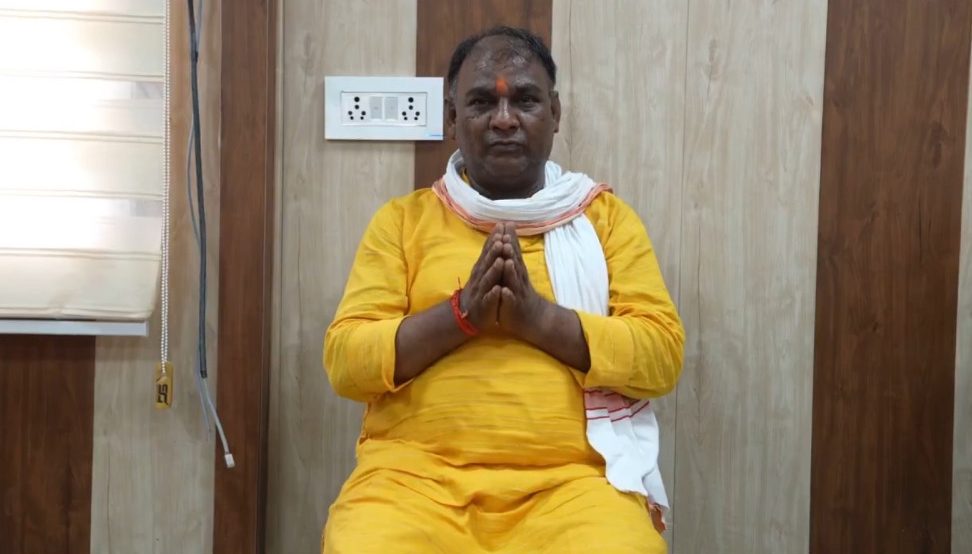
Ramashankar Yadav alias Tinnu issued a video statement. (Screengrab from video)
This reporter tried calling Tinnu Yadav and Dr Anil Mishra. Our calls went unanswered.
The Wire also contacted the Trust on its official phone number in Ayodhya but received no response. The Wire has sent a questionnaire to the official email ID of the Shri Ram Janmbhoomi Teerth Kshetra Trust and will update this story as and when a response is received.
The current imbroglio has also cast a shadow on some land deals involving the secretary of the temple Trust, Champat Rai.
On 18 June 2026, AAP leader Sanjay Singh emerged as the third complainant to have formally sent a letter to the Ram Janmbhoomi police station.
“In Kot Ramchandra village, plot no. 247 was sold by Mahant Murali Das to the Secretary of Trust, Champat Rai. While the cost of land is estimated to be ₹2,92,86,000 (around ₹3 crore), it was purchased by Champat Rai at ₹23 crore and 61 lakh. Primarily, this is a case related to embezzlement of funds amounting to ₹21 crore”, AAP leader Singh wrote in his letter, a copy of which has been seen by The Wire.
“While on one hand, such incidents amount to hurting the faith of crores of Hindus, no action being taken against those who are corrupt also raises several questions. Does the reason lie in the fact that Gyanesh Kumar and several influential persons are among members of the Trust”, stated Singh in his letter, demanding that an FIR be registered against Rai and others.
The land deal, AAP leader was referring to here, is a transaction that took place on 2 April 2024 between Mahant Murali Das and Shri Ram Janmbhoomi Teerth Kshetra Trust represented by Rai. The sale deed, a document signed off by the sub-registrar in the State Registration Department, shows the transaction between the two parties of land with an area of 6,450 square metres.
The sale deed, which has signatures of both Mahant Murali Das as well as Champat Rai, with their photos also present on the document, had an estimated value of ₹2,92,86,000 (Rupees two crore ninety-two lakh and eighty-six thousand) as per the circle rate fixed by the state government. However, the same document goes further to state that the price at which this property had been purchased was ₹23,61,00,000 (Rupees twenty-three crore and sixty-one lakh).
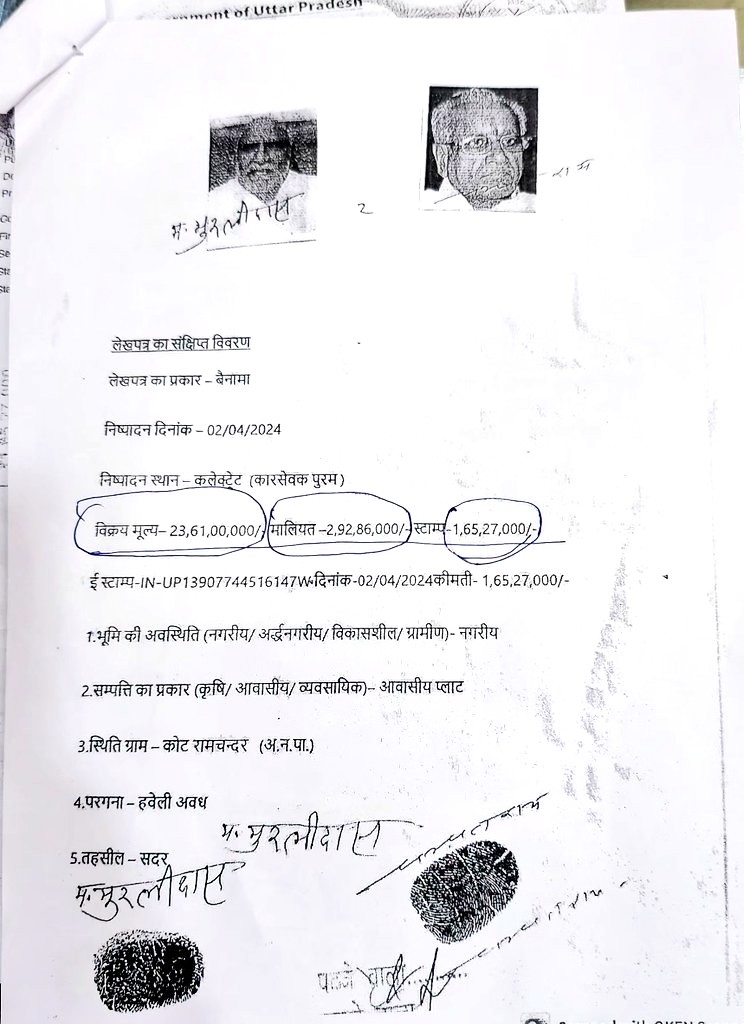
Sale deed between Mahant Murali Das and Champat Rai dated April 2024. (By arrangement.)
“This is a huge scam, the Nazul land with estimated valuation of Rs 3 crore was purchased by Champat Rai for Rs 24 crore, a loot of 800%. Why hasn’t the ED party arrested such thieves?”, Singh took to X, in a bid to take a dig at the ruling BJP.
A damning piece of evidence, as per Singh’s claims, related to this property purchase is a document dated 30 June 2023, signed by the lekhpal (lekhpal is an accountant in the state revenue department) who has issued a clarification on the exact status of Plot no. 247.
“With respect to this case, an order has been issued by the court of sub divisional magistrate stating that the land with an area of 6, 450 square metre has been Nazul land since the years between 1426-1429, hence name of Mahant Murali Das is struck off”, stated the SDM order, a copy of which has been examined by The Wire. Nazul land refers to land which is not private and instead belongs to the government.
This reporter spoke with two legal experts in order to understand the nature of impropriety in this case.
“This SDM order dated June 2023 is basically referring to a case of correction in title under Sections 31 and 32 of the Registration Act. It states that this land, since 1426-1429, has been registered as Nazul land hence, the name of Mahant Murali Das is struck off, and this property is registered under Nazul land belonging to the government. This document establishes that Mahant Murali Das falsely claimed ownership over this land”, said a senior lawyer, who is familiar with revenue-related matters at the Civil Court in Prayagraj and didn’t want to be named.
As per a new law brought in by the UP government in March 2024, known as the Uttar Pradesh Nazul Properties (Management and Utilisation for Public Purposes) Bill, “Nazul lands located in Uttar Pradesh shall not be converted to freehold in favour of a private person or private entity after commencement of this Act.”
“Mahant Murali Das didn’t have the right to sell this property, so the sale deed [between Das and Champat Rai] would essentially be seen as null and void. And Murali Das, who forged an entry in land records in 2023, sold the same land in 2024, which means that the sale deed was signed with a person who didn’t have rightful ownership over the land”, the senior lawyer added.
On the issue of highly priced land deals, advocate Ashutosh Kumar Tiwari, who practices at the Allahabad High Court and is secretary, All India Lawyers’ Union, told The Wire, “The purchaser of this property is the Ram Janmbhoomi Trust, so it can be construed that loss has been caused to the Trust through this transaction. Market rates are also usually not so high compared to the circle rate, so there are elements of corruption in this deal.”
“In case of this transaction with such unreasonably high costs, as per Section 92 of the, Indian Trusts Act, 1882 it can amount to an action since money has gone from a public religious Trust resulting in loss”, advocate Tiwari further told this reporter.
This is not the first instance of land-related impropriety allegedly committed by the temple Trust. In 2021, AAP’s Singh and Samajwadi Party leader Pawan Pandey, as confirmed by various media reports, alleged that a plot of land in Ayodhya was bought by independent individuals for ₹2 crore and then sold to the Ram Temple Trust just five to ten minutes later for a staggering ₹18.5 crore.
Indian Youth Congress’s vice president Sharad Shukla, the second complainant in the funds embezzlement case, has also raised red flags regarding another such land deal in the Majha Shahnewazpur village of Ayodhya.
In a sale deed dated 16 November 2023, a transaction took place between the Shri Ram Janmbhoomi Teerth Kshetra Trust, represented by Champat Rai and Tanvi Bansal, regarding the sale of Plot no. 25, having an area of 7,880 square meters. While the sale deed mentions the estimated value of the property, as per the circle rate to be ₹1,73,13,000 (Rupees one crore, seventy-three lakh and thirteen thousand), the land was purchased by the Trust at ₹29,67,60,800 (Rupees twenty-nine crore sixty-seven lakh, sixty thousand and eight hundred).
“The Trust needs to issue a clarification on why this land has been purchased at such a high valuation. Even when the government acquires land, compensation is given at 3–4 times the estimated valuation as per the circle rate; here the same valuation is touching 900 percent, so this does raise suspicion”, Shukla told The Wire.
“Does the temple Trust realise that the money being spent on such transactions is not some private individual’s wealth? This money belongs to the Ram Bhakts. And if this money had gone into the construction of a hospital or college, it would’ve been fine. Is there really no discussion on such land deals within the 15-member Trust Committee of the temple?” Shukla further questioned.
(This article was originally published by The Wire on 21 June 2026 and has been republished with permission.)



