

Published Nov 20, 2026 | 9:01 AM ⚊ Updated Nov 20, 2026 | 9:01 AM

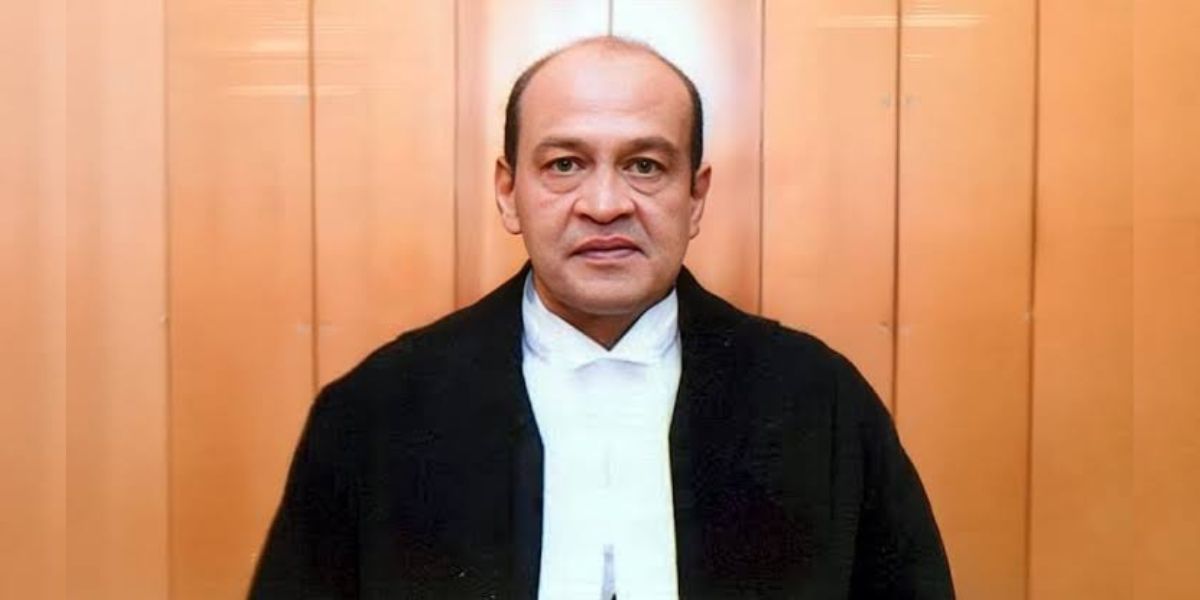
Justice Yashwant Varma resigned in April 2026.

Synopsis: Justice Yashwant Varma, indicted on all three charges by the Judges Inquiry Committee (JIC) over the discovery of unaccounted cash at his official residence, has refused to respond to its findings, maintaining that his resignation on 9 April ended the constitutional basis for proceedings to remove him. In his 10 September letter to the Lok Sabha Secretary-General, he maintained that he was innocent and that the Constitution did not permit Parliament to continue removal proceedings against a former judge.
Justice Yashwant Varma, former judge of the Allahabad High Court, who was indicted on all charges in an inquiry into the unaccounted cash found at his official residence, has refused to respond to the findings of the Judges Inquiry Committee (JIC), maintaining that his resignation from the post on 9 April 2026 ended the constitutional basis for proceedings to remove him from office.
The JIC, comprising Supreme Court Justice Aravind Kumar, then Bombay High Court Chief Justice Shree Chandrashekhar and senior advocate BV Acharya, found Justice Varma guilty on all three charges.
These concerned the discovery of substantial unexplained ₹500 currency notes in the storeroom, disturbance of the scene before its lawful inspection and sealing, and the subsequent non-availability of the currency. The committee also found his explanations evasive and unsatisfactory and lacking in candour and transparency.
The committee’s report was tabled in the Lok Sabha on 12 August.
In a letter dated 10 September 2026, addressed to Lok Sabha Secretary-General Utpal Kumar Singh, Justice Varma said he had ceased to be a High Court judge with immediate effect upon submitting his resignation to the President of India. The Lok Sabha Secretariat circulated his response to MPs on 19 November.
“With the greatest respect for the authority and dignity of the House, I wish to state that any process directed towards my removal from the office of a Judge of the Hon’ble High Court of Judicature at Allahabad is infructuous and would be without constitutional foundation,” he wrote.
Justice Varma also maintained that he was innocent of all allegations, including possession of the cash allegedly found in a storeroom at his official residence in Delhi, knowledge of its presence or involvement in its removal.
“I reiterate that I am innocent of the allegations levelled against me,” he said, denying that the currency belonged to him, was kept in the storeroom at his instance or was within his knowledge or control.
He cited Article 217(1)(a) of the Constitution, which allows a High Court judge to resign by addressing a written communication to the President. Citing the Supreme Court’s Constitution Bench judgment in Union of India v. Gopal Chandra Mishra (1978), he said such a resignation takes effect by its own force and does not require acceptance by any authority.
“Thus, upon tendering my resignation in writing with immediate effect, I ceased to hold the office of a Judge on 9 April 2026 itself, and my entire relationship with the office was severed,” he wrote.
He contended that Articles 124(4), 124(5) and 217 of the Constitution provided for the removal of a sitting judge and did not empower Parliament to continue removal proceedings against a former judge.
“Upon my resignation, proceedings directed towards my removal from office did not survive and cannot be continued,” he said.
Justice Varma also refused to comment on the committee’s findings and sought closure of the proceedings. He said he had neither drawn a salary nor received any allowance, facility or benefit attached to the office since his resignation.
Also Read: The COP has lost sight of nature: Managing our interference is not the same as preventing it
The proceedings arose from the discovery of what appeared to be bundles of currency in a storeroom at Justice Varma’s official residence at 30 Tughlaq Crescent, New Delhi, following a fire on the night of 14-15 March 2025.
Justice Varma was serving in the Delhi High Court when the incident occurred. He had been allotted the government residence in 2023. The fire broke out while he and his wife were away on a pre-planned vacation with friends from 12 March.
In his 9 April 2026 communication to the JIC, Justice Varma said he learnt about the fire only around 1.10-1.15 am on 15 March, after the fire had been brought under control and photographs and videos of the storeroom had been recorded. He returned to the residence that evening and was shown some of the photographs and videos on 17 March.
He maintained that the storeroom was a detached structure adjacent to the staff quarters, separated from the family living quarters and his office by boundary walls. It was accessible through a back gate that was not manned by security personnel and was regularly used by domestic staff, maintenance workers and others to store household articles and maintenance material.
The storeroom was usually unlocked, he said, adding that even when it was locked, its key was neither in his possession nor under his instructions. He had visited it only four or five times during his two years at the residence.
He also said CCTV footage from a camera facing the storeroom’s entrance, which was recorded on equipment outside his control, had not been provided despite repeated requests.
The controversy had prompted an in-house inquiry under then Chief Justice of India Sanjiv Khanna, who withdrew Justice Varma’s judicial work and transferred him from the Delhi High Court to the Allahabad High Court.
More than 140 Lok Sabha members had supported a motion seeking his removal before his resignation in April 2026. The in-house inquiry was conducted between 22 March and 4 May 2025.
In his 9 April communication, Justice Varma had alleged that the committee relied on material collected during an earlier in-house inquiry while denying him a fair opportunity to challenge it.
He said witnesses were examined in his absence and he was not given an opportunity to cross-examine them. He also cited the Supreme Court’s observations that the in-house inquiry was preliminary and confidential and that its report should not serve as evidence in subsequent proceedings.
The JIC was constituted in August 2025. Justice Varma received a notice in November 2025 on the articles of charge against him. He said the committee relied on the earlier inquiry report, its site inspection report and statements of witnesses who had appeared before the in-house panel.
He alleged that the committee excluded material favourable to him, including the statutory Fire Report, which made no mention of cash and recorded the presence of officials at the site until 1.56 am on 15 March. He also said 27 of the 54 witnesses who appeared before the in-house inquiry were dropped without explanation.
Of the 31 witnesses originally cited before the JIC, only nine were examined, he said. The remaining 22 were dropped after cross-examination exposed contradictions or weaknesses in the case against him.
He cited the dropping of senior Delhi Fire Services and Delhi Police officers after their examination revealed that decisions not to record or seize the alleged cash had been taken by senior officials by around 12.15 am on 15 March, before he had learnt of the fire.
He also alleged that three of his personal security officers were dropped after he sought their location data and Google Takeout records to verify their claims about their presence at the residence during the incident.
Justice Varma maintained that the inquiry had failed to establish that the cash belonged to him or that he had placed it in the storeroom, or that the premises were under his effective control at the relevant time.
He also denied interfering with the scene after the fire or misleading the inquiry about the discovery of cash. He said his 22 March 2025 response had stated that the cash did not belong to him or his family and that neither he nor his family knew of its presence.
(Edited by Dese Gowda)



