

Published Jul 09, 2026 | 4:33 PM ⚊ Updated Jul 09, 2026 | 9:20 PM

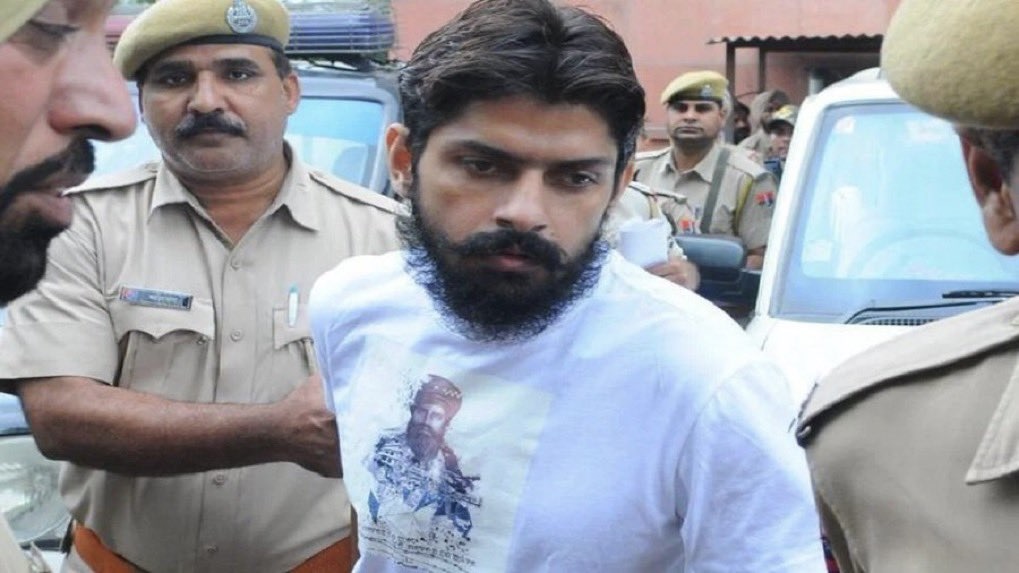
Lawrence Bishnoi. (X)

Synopsis: United States federal prosecutors have, in a newly unsealed indictment, accused jailed gangster Lawrence Bishnoi of controlling a transnational organised crime syndicate operating across several countries using contraband phones, trusted associates and a decentralised network. The Bishnoi Organised Crime Group is accused of carrying out targeted killings, extortion, drug trafficking and recruitment while using social media and public claims of responsibility for violent crimes to spread fear and expand its influence.
It has been over a decade since gangster Lawrence Bishnoi was jailed on a litany of charges, including attempted murder, trespassing, assault, robbery and more. Yet his infamy, and that of the organised crime network he allegedly controls, has only grown.
An alumnus of Panjab University, Bishnoi and his gang first gained national attention when a member of the gang allegedly threatened Bollywood actor Salman Khan in 2018.
Four years later, the gang was accused of assassinating acclaimed singer and rapper Sidhu Moose Wala. It was later accused of the killings of Khalistani activist Hardeep Singh Nijjar in Canada and former Maharashtra Minister Baba Siddique in 2024.
Throughout this period, Bishnoi was lodged at Sabarmati Central Jail in Gujarat and, since 2023, reportedly held in solitary confinement under constant CCTV surveillance.
Earlier this week, the United States Department of Justice unsealed a nine-count indictment accusing Bishnoi and his associates of running a global organised crime syndicate “that engage[s] in racketeering, targeted killings, shootings, extortion, the trafficking of bulk quantities of narcotics across international borders, and other crimes around the world whose impact is especially felt in the Indian diaspora.”
It follows Canada’s declaration of the Bishnoi gang as a terrorist group and stem from a years-long investigation across the United States, Canada and Europe. The investigation led to the arrest of 13 people in the United States—11 in California, one in Indiana and one in Georgia—as well as three in Canada and one in Spain.
In all, 37 people have been charged across three indictments. Seven other accused were already in custody, while 10 suspects remain at large, including two believed to be in India.
Also Read: Citizens aren’t slaves, police aren’t servants of CM or PM, reminds Bombay HC’s Justice Jamdar
The Lawrence Bishnoi Organised Crime Group (OCG), according to the indictment, grew out of the network of associates and followers Bishnoi built while enrolled at Punjab University in the early 2010s, where he fashioned himself as a student leader.
“Defendant Bishnoi soon thereafter traded campus politics for criminal activity, and refashioned his associates and followers into a criminal organization,” the indictment reads.
US prosecutors allege that despite Bishnoi’s arrest by Indian authorities in 2015 and his incarceration since, he continued to build the Bishnoi OCG into “a transnational criminal syndicate headquartered in India with members across the United States, Canada, the United Kingdom, Europe, Australia, and elsewhere.”
The indictment alleges that Bishnoi cultivated an image as a “patriot”, “nationalist” and “deeply religious individual” through, among other channels, social media posts and interviews with news organisations to recruit members and associates across countries where the Bishnoi OCG had a foothold.
“In private, defendant Bishnoi presided over a sweeping criminal enterprise that spanned multiple continents. Using contraband cellphones and other voice over internet protocol devices smuggled into his jail cell, defendant Bishnoi personally directed political assassinations, murders, shootings, extortions, kidnappings, drug trafficking, human smuggling, and other crimes committed by members and associates of the Bishnoi OCG worldwide,” the indictment alleges.
The indictment alleges that the organisation generated revenue through international narcotics trafficking as well as extortion. Prosecutors say members imported, exported and distributed cocaine, methamphetamine and heroin in the United States, while also providing transportation services to other drug trafficking organisations.
“Members and associates of the Bishnoi OCG stole, or ‘ripped,’ bulk quantities of cocaine and methamphetamine from other drug trafficking organizations, including by stealing loads of cocaine and methamphetamine being transported by the Bishnoi OCG for other drug trafficking organizations,” prosecutors allege.
According to the indictment, members and associates also accepted “murder-for-hire and extortion-for-hire” contracts around the world, carrying out killings and extortion in India, the United States, Canada and elsewhere for profit.
The indictment further alleges that profits from criminal activities were shared among members operating in different regions, with a portion directed back to members and associates in India.
Also Read: To SIR, with love: Why setting aside a holiday for the exercise might be a good idea
Using contraband cellphones, voice over internet protocol (VoIP) services and a decentralised command structure in which members of the Bishnoi OCG would ‘speak’ for him, Bishnoi controlled the organisation even while in jail, the indictment alleges.
He is accused of personally directing “political assassinations, murders, shootings, extortions, kidnappings, drug trafficking, human smuggling, and other crimes committed by members and associates of the Bishnoi OCG worldwide.”
The indictment identifies Satinderjeet Singh, also known as Goldy Brar, as the alleged head of the group’s North American operations and Rohit Godara as its alleged European leader. Prosecutors allege that the two men effectively spoke on Bishnoi’s behalf, directing targeted killings, shootings, kidnappings, assaults, extortion and narcotics trafficking within their respective regions and elsewhere.
Prosecutors also allege that the group primarily targeted “vulnerable, disadvantaged populations in India” through promotional videos and messages posted on social media.
According to the indictment, the Bishnoi OCG often recruited minors from impoverished areas of Punjab to reduce the potential legal consequences of violent crimes committed on the enterprise’s behalf. Recruitment coordinators allegedly enticed them with promises of money, notoriety and protection.
New recruits were then allegedly given “minimal compensation” for acts committed on behalf of the gang.
“The Bishnoi OCG sent loyal members to countries outside India, including the United States and Canada, on student visas and foreign worker visas—often containing fraudulent information—to assist the enterprise’s criminal operations in those countries,” the indictment reads.
The criminal syndicate was also deliberately structured as a decentralised organisation, according to the indictment. With the exception of its senior leadership, members and associates allegedly possessed only limited knowledge of one another’s identities or backgrounds.
“This decentralized structure created a level of separation between the Bishnoi OCG and the crimes committed by its members and associates. This decentralized structure also protected the enterprise and its members from criminal liability in the event a Bishnoi OCG member or associate was arrested for a crime and decided to cooperate with law enforcement,” the indictment reads.
The indictment further alleges that loyalty within the organisation was enforced through intimidation and surveillance.
Senior leaders allegedly used the group’s network and connections in India to gather information about members’ families. According to prosecutors, members understood that disloyalty could invite violence against them or their relatives, particularly those living in India.
Profits from criminal activities, prosecutors allege, were shared among members operating in different regions, with a portion routed back to associates in India.
Also Read: Government summons Meta over child sexual abuse ads on Instagram; ex-Judge says SC must act
The Bishnoi gang relied not only on acts of violence but also on publicising them to bolster its notoriety, attract recruits and intimidate potential victims, according to the indictment.
“The Bishnoi OCG used violence to cultivate a climate of fear, in particular in India and among Indian diaspora communities outside of India, that the Bishnoi OCG exploited to extort victims around the world. These acts of violence included political assassinations, murders, shootings, kidnappings, maimings, and assaults,” the indictment alleges.
Prosecutors allege that prominent cultural, political and business figures in India and among the Indian diaspora were repeatedly targeted, with members and associates often claiming responsibility through interviews, videos and online messages. Investigators contend that the resulting publicity was intended to foster the perception that the organisation was beyond the reach of law enforcement, creating a climate of fear that could later be exploited for financial gain.
The indictment cites several examples to illustrate the alleged strategy, including the organisation’s claimed responsibility for the killing of Sidhu Moose Wala in 2022 and repeated threats against actor Salman Khan.
Victims were then allegedly contacted through encrypted messaging applications and threatened with violence against themselves or their families while being reminded of the organisation’s earlier acts of violence.
“Members and associates of the Bishnoi OCG contacted extortion targets through encrypted applications and demanded payment. In these communications, Bishnoi OCG members and associates often threatened to kill or otherwise harm victims or their families, referenced prior acts of violence committed by the Bishnoi OCG, and/or offered victims protection from future acts of violence,” the indictment reads.



