
Published Jul 07, 2026 | 6:22 PM ⚊ Updated Jul 07, 2026 | 6:22 PM

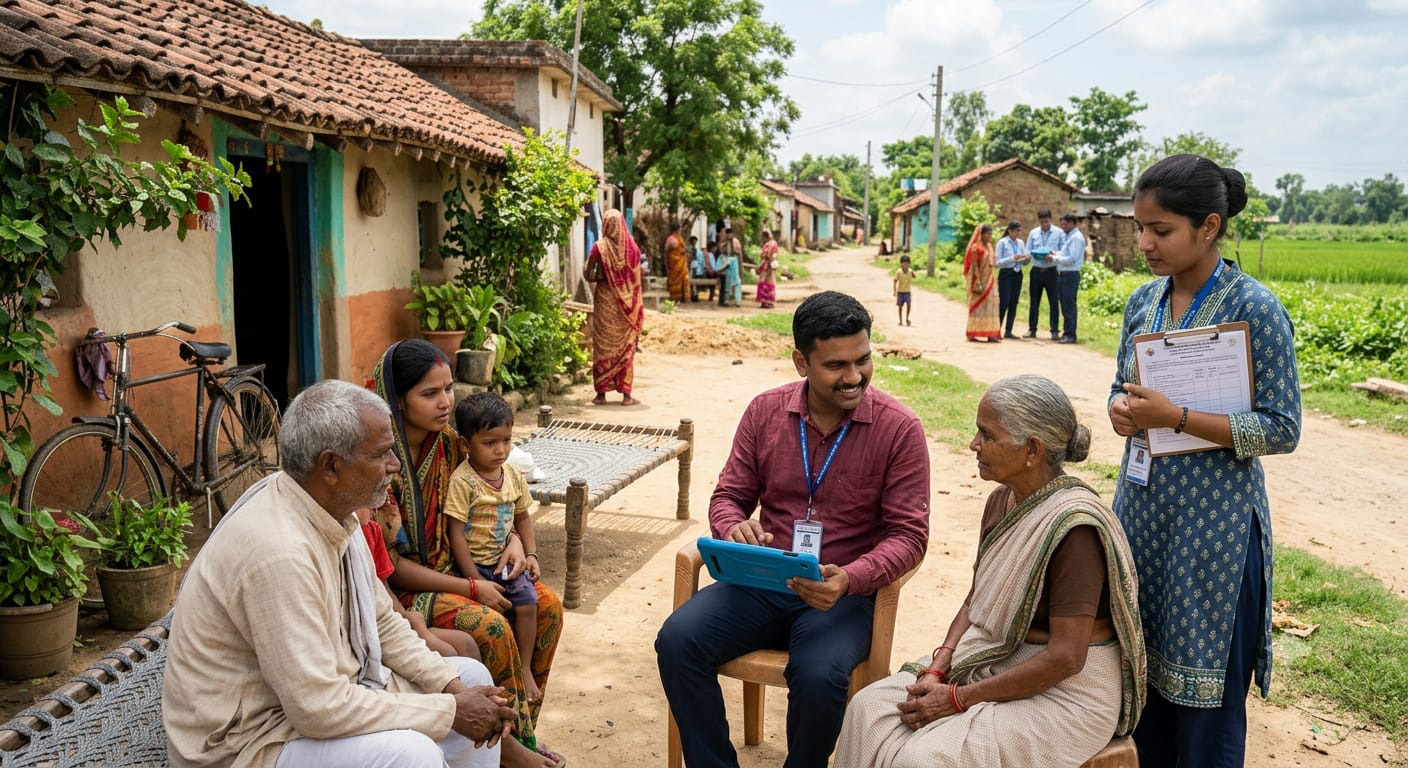
Image used for representational purpose.

Synopsis: Setting aside a day for the Special Intensive Revision has many advantages as a one-day enumeration exercise from the then newly-formed Telangana highlighted. And for critics who question whether it will even be possible, there is the example our elections have to offer.
Electoral rolls are the foundation of representative democracy. Every election, irrespective of its scale or significance, derives legitimacy from one fundamental assumption: that the voter list is accurate, inclusive and free from manipulation. Any exercise aimed at cleansing electoral rolls is therefore not only desirable but constitutionally necessary. Yet, the manner in which such an exercise is undertaken is equally important. Administrative efficiency cannot come at the cost of democratic confidence.
The ongoing debate over the Special Intensive Revision (SIR) of electoral rolls has once again exposed the perennial dilemma between ensuring accuracy and preserving inclusiveness. Allegations of omissions, duplication, procedural opacity and inconvenience to voters have transformed what should have been a routine administrative exercise into a politically contested issue. Irrespective of which side of the political spectrum one occupies, there is a larger question worth asking: is there a more efficient, transparent and citizen-friendly model for conducting such an extensive verification?
The answer may well lie in an experience that Telangana demonstrated more than a decade ago.
In 2014, the newly-formed state conducted the Samagra Kutumba Survey, an unprecedented one-day enumeration exercise that virtually brought the state administration to a standstill. Schools remained closed, government offices functioned with skeletal staff, and nearly the entire administrative machinery—from senior IAS officers to village-level employees—participated in collecting household information. Citizens were informed well in advance, remained available at their residences, and the survey achieved remarkable coverage within a single day.
The survey was not without criticism, but it demonstrated something invaluable: when government treats data collection as a statewide civic exercise rather than a routine bureaucratic formality, public participation increases dramatically.
The same philosophy deserves serious consideration for electoral verification.
Instead of stretching the SIR process over several weeks through Booth Level Officers making repeated visits to locked houses, incomplete addresses and migrating populations, why should the Union Government not declare a nationwide “SIR Day”?
On a pre-announced holiday, every eligible voter could remain at home with the required documents, while trained officials visit households for physical verification. Such an approach would significantly reduce repeated field visits, minimise logistical confusion and improve the accuracy of data collected.
Also Read | The silent test of Telangana’s democracy: How villages and cities are handling SIR
The advantages are difficult to ignore.
First, it would vastly improve coverage. One of the biggest challenges faced by electoral officials is the absence of residents during working days. Urban professionals, industrial workers, students and migrant labourers are often unavailable when verification teams arrive. A designated public holiday devoted to voter verification would ensure that families are present, thereby reducing the possibility of wrongful deletions or incomplete verification.
Second, it would strengthen transparency. A synchronised nationwide exercise would create a common reference point. Political parties, civil society organisations and observers could simultaneously monitor the process, reducing allegations of selective targeting or partisan implementation. Transparency is often less about intention than about visible uniformity.
Third, it would improve administrative efficiency. Instead of multiple rounds of verification spread over months—consuming manpower, travel expenses and supervisory resources—a concentrated operation could optimise government deployment. India’s administrative machinery has repeatedly demonstrated its capacity to execute massive one-day exercises, whether during national censuses, pulse polio campaigns, disaster relief operations or elections themselves.
Fourth, it would reduce litigation. A significant proportion of electoral disputes arise from procedural lapses rather than substantive disagreements. When verification occurs through direct interaction with residents on a common date, supported by digital documentation and acknowledgment receipts, disputes over omissions become easier to resolve.
Technology further strengthens the feasibility of such an idea. Today’s Booth Level Officers can use GPS-enabled mobile applications, biometric authentication where legally permissible, real-time document scanning and instant digital uploading. Artificial intelligence can identify duplicate records while maintaining human oversight. Digital acknowledgements can immediately inform citizens about the status of their verification. What required months a decade ago can now be completed with far greater efficiency.
Critics may argue that India’s size makes a single-day exercise impractical. Yet the world’s largest democracy has successfully conducted nationwide elections involving nearly one billion voters, implemented the COVID-19 vaccination programme at an unprecedented scale, and executed complex census operations across remote geographies. Administrative impossibility is often more a question of political will than institutional capacity.
Another concern would be the enormous logistical preparation required. But preparation is precisely what distinguishes successful governance. A carefully-planned SIR Day—preceded by extensive public awareness campaigns, multilingual outreach, training of verification staff and digital readiness—could transform electoral revision from a bureaucratic burden into a participatory democratic exercise.
Importantly, such a proposal does not advocate replacing continuous electoral roll revision. Citizens must continue to enjoy year-round opportunities to register, modify or delete entries. Rather, an SIR Day could serve as a periodic nationwide audit conducted once every several years before major electoral cycles, complementing—not substituting—the existing framework.
Democracy depends not merely on the right to vote but also on public confidence that every eligible citizen has been given a fair opportunity to remain on the electoral roll. Verification should therefore inspire trust rather than apprehension.
The Telangana experience demonstrated that citizens willingly cooperate when government communicates clearly, plans meticulously and treats them as partners rather than passive beneficiaries. Adapting that model for electoral verification would not only improve administrative outcomes but also reinforce democratic legitimacy.
In a country where elections are often described as the world’s largest democratic exercise, perhaps it is time to imagine the world’s largest democratic verification exercise as well. A nationally designated SIR Day could ensure that electoral integrity is pursued not through prolonged uncertainty but through collective participation, administrative transparency and constitutional fairness. Democracy deserves nothing less.
(Edited by R Rajesh Kumar.)



