

Published May 30, 2026 | 7:00 AM ⚊ Updated May 30, 2026 | 7:00 AM

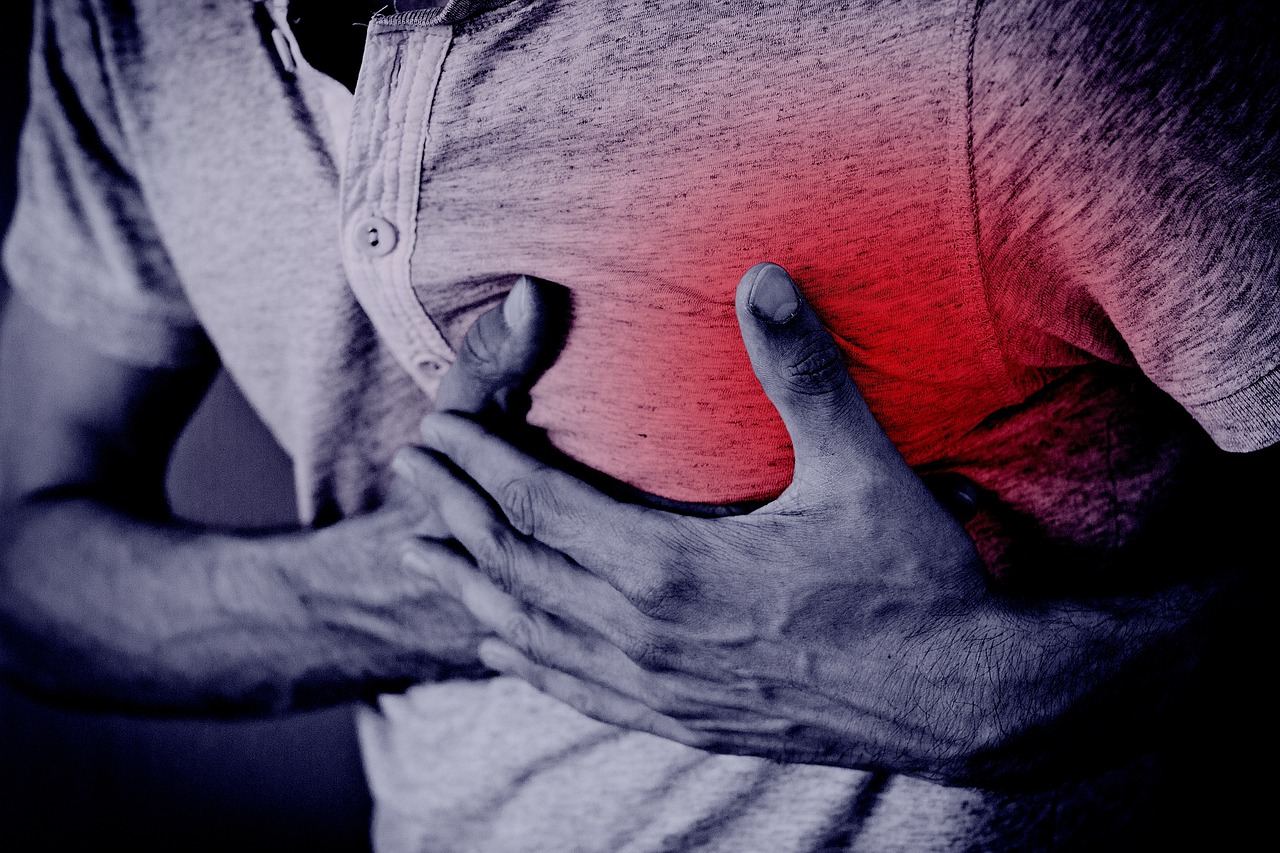
Representational image. Credit: iStock

Synopsis: India has performed its first advanced minimally invasive valve replacement for high-risk patients with severe heart valve leakage, offering hope to those unfit for open-heart surgery. But with treatment costs reaching nearly Rs 20 lakh and imported devices requiring special approval, the breakthrough remains accessible to only a small section of Indians who need it most.
Hori Pado Roy travelled from Bangladesh to Bengaluru because he was running out of options. At 69, he carried severe aortic regurgitation, a condition where the heart’s main valve fails to close fully and allows blood to leak back with every beat. He also carried significant lung disease. Together, those two conditions placed open-heart surgery beyond safe reach.
In May 2025, a team at Narayana Health City threaded a replacement valve through a small puncture in his thigh, guided it to his heart through a catheter, and fixed it in place without opening his chest.
The procedure took under an hour. He walked within eight hours. He went home within 48 hours, becoming India’s India’s first Transcatheter Aortic Valve Implantation (TAVI) .
The valve that made this possible cost Rs 15 lakh alone. Imported from China under special government approval, it is not yet commercially available in India. Total treatment ran between Rs 18 lakh and Rs 20 lakh.
Also Read: Brain, kidneys and heart: How prolonged heat exposure affects organ function
Doctors at Narayana Health City explained that the aortic valve acts like a gate at the heart’s main pumping chamber. It opens to let blood flow out of the heart and closes to stop blood from flowing backward.
As people age, this valve can develop two major problems. In aortic stenosis, the valve becomes narrow and stiff, making it harder for blood to pass through. In aortic regurgitation, the valve does not close properly, causing blood to leak backward into the heart. Both conditions become more common in older people and can turn life-threatening if not treated.
Over the last 15 years, doctors have increasingly used a less invasive procedure – TAVI – where a new valve is inserted through a thin tube instead of doing open-heart surgery. This worked well for aortic stenosis because the damaged valve usually develops calcium deposits, which help hold the new valve firmly in place.
But in pure aortic regurgitation, there is no calcium buildup. The valve leaks, but there is nothing hard for the replacement valve to grip onto. Because of this, earlier devices often slipped out of place, and success rates remained low.
“More than 2% of those over 70 have at least moderate AR (aortic regurgitation), and once symptoms develop, the prognosis deteriorates rapidly,” said Dr Suraj Narasimhan A, senior consultant cardiologist and structural heart intervention specialist at Narayana Health City.
For years, open-heart surgery remained the only reliable answer, regardless of whether a patient could safely survive it.
The HANCHOR valve system addresses the anchoring problem directly. Rather than relying on calcified tissue for fixation, it deploys mechanical anchors that grip the valve structure itself, allowing stable placement even without calcium.
Dedicated systems of this type have shifted procedural success rates from 67% to approximately 95%, with studies confirming lower rates of valve migration and reductions in 30-day and one-year mortality.
The valve uses bovine pericardial tissue and carries a functional lifespan of 10 to 15 years. Newer polymer-based versions currently in development are projected to last 25 to 30 years.
Narayana Health City obtained special government approval to import the device. Dr Suraj led a multidisciplinary team of nearly 20 specialists including cardiologists, cardiac surgeons, anaesthesiologists and catheterisation laboratory technicians.
The procedure leaves almost no visible scar, compared with the 15-centimetre incision associated with open-heart surgery. Both patients treated so far were awake within 30 minutes and walking within eight hours.
Also Read: Every 8 minutes, a family in India sells their assets to pay for heart failure treatment
The Rs 18 to 20 lakh price point places this procedure beyond the reach of the overwhelming majority of Indians who need it.
India’s per capita income sits below Rs 2 lakh annually. Average cardiovascular hospitalisation costs in private hospitals already reach nearly Rs 80,000 per case. The HANCHOR procedure costs roughly 20 times that average. Most public insurance schemes do not currently cover it.
Import dependency compounds the problem. Each device requires individual government clearance. Regulatory paperwork extends timelines. Supply remains unpredictable. These are not incidental obstacles.
Dr Suraj acknowledged the barrier. “The major barrier was access, and we have already broken through that.” The breakthrough applies to access in the procedural sense. The financial barrier remains intact.
While Hori Pado Roy’s journey from Bangladesh reflects a pattern of medical migration, in the same hospital, second patient tells a different story.
An 80-year-old man from Patna, Bihar, arrived carrying diabetes, hypertension, a weakened heart and severe valve leakage. He did not cross an international border. He crossed a few within India, travelling to a private hospital in Bengaluru because advanced cardiac care of this kind does not yet reach Bihar.
Both men received the procedure. Both recovered. The question the two cases raise together is not whether India can perform world-class minimally invasive cardiac surgery. It demonstrably can. The question is whether the geography and economics of that capability will ever align with the geography and economics of the patients who need it most.
Cardiovascular disease accounts for 32.1% of all deaths in India, according to the Sample Registration System Cause of Death Statistics 2022 to 2024. Among Indians aged 55 to 69, it accounts for 41.8% of deaths. In Southern states, non-communicable diseases drive 63.5% of all mortality.
According to the doctors, India does not yet manufacture dedicated transcatheter valves for pure aortic regurgitation. The HANCHOR device comes from China. Wider approval in India will require approximately 20 documented successful cases, after which the regulatory process may ease.
Domestic manufacturing, if it develops, could reduce costs significantly. India already produces components for other cardiac devices and carries the industrial capacity to support local valve production.
Dr Suraj described the procedure as opening a pathway. For patients facing a binary choice between high-risk open-heart surgery and no intervention at all, a third option now exists.
That is a genuine clinical advance. But a pathway accessible only to those who can raise Rs 20 lakh, navigate the private hospital system in a major city, and wait for a device that requires special import approval, is a narrow one.



