

Published May 29, 2026 | 9:49 AM ⚊ Updated May 29, 2026 | 9:49 AM

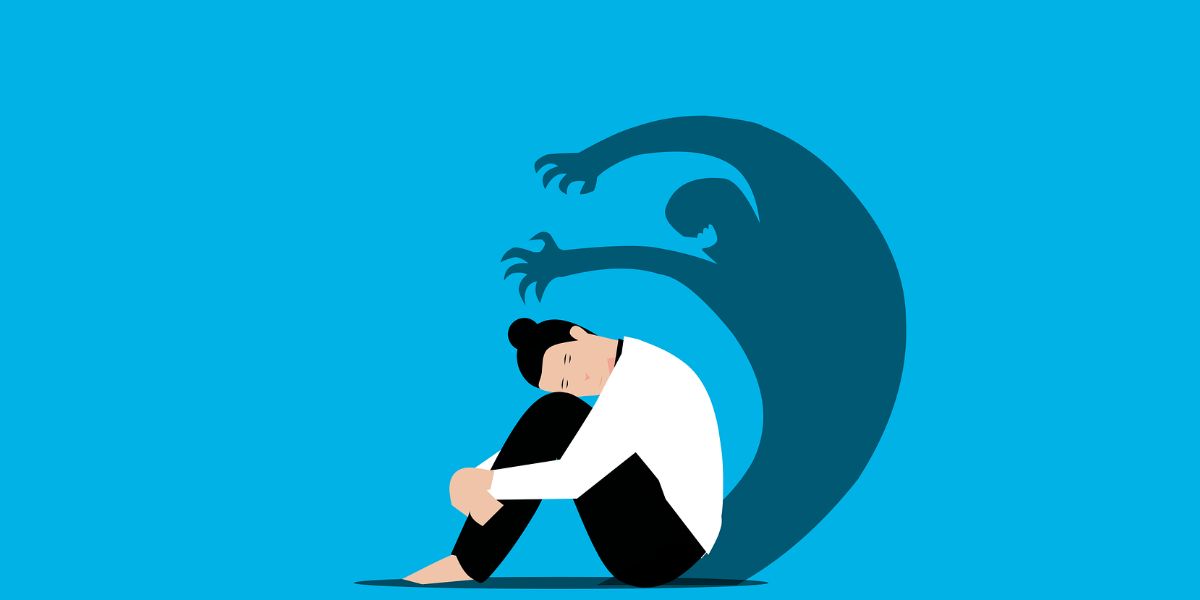
Representational image. Credit: iStock

Synopsis: India is speaking more openly about mental health than ever before, but awareness still remains uneven and misunderstood. Through conversations with workers, students, and mental health experts, the South First tried to explore how stigma, language barriers, class differences, and casual misuse of clinical terms continue to shape how Indians recognise, discuss, and respond to emotional distress.
The sun beats down as people crowd around a pani-puri stall, talking and wiping their faces in Bengaluru weather. An auto pulls up, leaving dust. The driver, Farzana, peers at the crowd, looks up at the sky, and mutters when asked if she knows what mental health is.
“What is mental health? I don’t know what that is. I have a headache. I have another ride,” she told South First, and then zoomed off.
Across the road, fruit seller Santoshi sits guarding her basket. She has no argument with the concept of mental distress.
She simply does not recognise the clinical framing around it. “Anxiety, depression etc are all a younger generation chatter. It’s about the mindset. If your mind is strong, nothing is wrong,” she puts it unabashedly.
The gap between those two responses tells the story. Farzana does not recognise the term at all. Santoshi recognises distress but dissolves it into will. Neither of the women are wrong about what they have experienced. Both are missing a vocabulary that would allow them to name it.
That gap, between the distress people carry and the language available to describe it, runs through every conversation about mental health in India today.
Also Read: Women, apps, and door-to-door care: How a trial in Indian slums rewrote mental healthcare
Dr Raghuveer Raju Boosa, assistant professor of psychiatry at the Institute of Mental Health, Hyderabad, describes mental health as a machine.
“Depending on the manufacturer, every machine will have one or the other manufacturing defect,” he told South First.
He further added that mental health, therefore functions as a well-oiled machine, adapting to multiple demands with efficiency. However, If the machine is constantly overworked, the defect may start to show or even hinder its functioning.
The problem, he argues, is not that people lack experience of mental distress. It is that the clinical vocabulary around that distress does not reach them. “A lot of people have experienced mental health issues. They just don’t know the vocabulary for it.”
When Rehana, a domestic helper, hears the words “mental health,” she stops scrubbing the floor, sets down her damp cloth, rubs hands on her pallu, and shakes her head. No.
Ask her about her “Mansik swasthya” and she nods immediately.
“Is it something to do with stress? Yes. I have a lot of work burden. I have debt. I am always ill,” she says.
That single exchange captures what both doctors spend years trying to explain. The distress exists. The clinical framing does not reach her, but the colloquial term does.
Dr Raghuveer draws the line plainly. “If you ask someone whether they feel restless, they may not understand. Use the word ‘ghabrahat’ and they will.”
Dr Pragya Rashmi, senior psychologist at Yashoda Hospital, extends the point beyond language. People who do not recognise the word hypertension will still identify with its symptoms when described directly.
“We have to make people understand that mental health issues like depression are also a disturbance of chemicals, much like diabetes. Only the target organ differs.”
The argument both doctors make is the same: reach the experience first, and the vocabulary can follow.
Also Read: Youngsters turn to AI for mental health — sometimes, chatbot itself directs them to helpline
Not every period of stress signals a clinical condition. Dr Raghuveer identifies two elements that must intersect: genetic predisposition and an environmental trigger of sufficient weight.
A person without the genetic vulnerability may carry significant stress and not develop an illness. A person with the predisposition, but with strong coping mechanisms or a low-stress environment, may also hold. “It is only when a person cannot cope with the trigger acting on their genetic predisposition that the illness develops. That explosion is what we call the onset.”
Shivani, a student said with a laugh “I constantly stress a lot before exams, so I did not think it was anything new. I pulled all-nighters, continued stressing and worrying, believing my mental health to be anything but fine.” She then looked around, lifted her eyebrows and said, “However, recently I noticed that I can’t focus at all, also it takes so much effort for me to even feel slightly happy and that is when I knew I’m supposed to be focusing more on my mental health.”
The distinction matters because collapsing all distress into illness, or dismissing all distress as ordinary stress, both cause harm. One over-medicalises. The other delays help.
The Covid-19 pandemic forced a public confrontation with distress that routine life had allowed people to avoid.
During that period, people watched others die. Financial structures collapsed. Uncertainty about food and survival became immediate. “People started experiencing a restlessness very similar to anxiety,” Dr Raghuveer recalls. “They understood what uncertainty is, what desperation is, what helplessness is.”
Many encountered these concepts for the first time, not through clinical terms but through lived experience in regional languages. The experience arrived before the vocabulary. In many cases, it made the vocabulary possible.
Awareness spreads, but it does not spread evenly.
Reia Nicole, a student, describes peer counselling sessions at her college and teachers trained to support students. Her institution actively works to close the vocabulary gap. “Mental health does not mean insanity. It means having an open mind to what an individual’s system is,” she says.
Joshua, a security guard, does not inhabit that environment. “I have to feed my family,” he says, without hostility. “I don’t have time to get diagnosed for some made-up thing.”
Mallesh, who works in domestic help, fingers the cross at his neck when the subject comes up. His brain is fine, he says. He has a little tension about his child’s education, but god is there. His eyes move left and right as he speaks, as though the conversation itself carries risk.
Dr Raghuveer does not read these responses as failure. He identifies them as structural. “The latest generation is very aware. But it is not spreading to every nook and corner.”
Jose Noyal, the Lead Auditor of HSE at CMIO gives a more elaborate answer. He states that he believes mental health to be the key to a happy and content life and that it has a direct effect on physical health as well.
In a moment of clarity he says, “Presently I feel mentally healthy. As a veteran air warrior and as a construction health, safety and environmental manager mental health was given top priority and various welfare measures were adopted. Stressors such as poor lighting and sound pollution can cause physical and mental health issues and in business it is very important to deal with such stressors seriously.”
Also Read: Posting life updates on social media helps your mental health, except for your sleep
The resistance Mallesh shows does not come from ignorance alone. It comes from what the word “mental” has historically signalled in communities where illness of the mind carried the weight of moral failure or social contamination.
Dr Raghuveer argues that normalisation requires trusted voices carrying the message. When a public figure, a politician, a celebrity, someone a community already believes in, speaks about mental health without shame, the framing shifts for those who watch.
Dr Rashmi points to infrastructure that already exists. The Tele MANAS programme runs as a toll-free helpline (14416) offering telephone counselling, psychotherapy, psychiatric consultations, and referral services nationwide. WHO has described it as an effective delivery model. Its reach, however, depends on people knowing it exists and trusting what they find when they call.
That trust does not arrive through programmes alone. It builds through normalisation, through enough people speaking about mental distress as something that happens to ordinary people living ordinary lives, until Mallesh’s eyes stop moving left and right when the subject comes up.
Awareness, however, carries its own risk when it runs ahead of precision.
Reia, who manages anxiety and panic attacks, notices it constantly. “When I hear people use the word anxiety for every single thing, it hurts. They do not understand it.”
Dr Raghuveer describes what happens when clinical terms enter casual speech. A person who cannot sleep, eat, or function hears the same word applied to a dull afternoon. The language that should signal severity begins to signal the ordinary. The person in genuine distress reads their own suffering as nothing unusual.
“Nobody casually says they are diabetic because they went to the bathroom one too many times. Depression and anxiety deserve the same respect.”
The consequence reaches beyond language. Delayed help-seeking, underestimated severity, and a cultural tendency to trivialise conditions that carry genuine clinical weight, these follow when precision erodes.
Awareness without accuracy does not necessarily reduce suffering. It can obscure it.
Also Read: Four times more junk food, 60th rank in mental health: India’s young are falling behind
Farzana has a headache and another ride. Rehana has debt, illness, and work she cannot stop. Mallesh watches the space around him before he speaks.
The distress moves through all of them. What does not always follow is the vocabulary to name it, the trust to seek help for it, or the cultural permission to treat it as something real.
Mental health awareness, at its most useful, does not simply introduce more people to clinical terms. It gives people the specific language to recognise what they carry, name it accurately, and then reach for what they actually need.
The machine analogy Dr Raghuveer offers holds. Every machine carries a defect. What determines the outcome is not the defect alone but whether the person running it knows what to listen for, and whether anyone taught them the difference between ordinary wear and something that requires repair.



