
Published Sep 26, 2026 | 6:22 PM ⚊ Updated Sep 26, 2026 | 6:33 PM

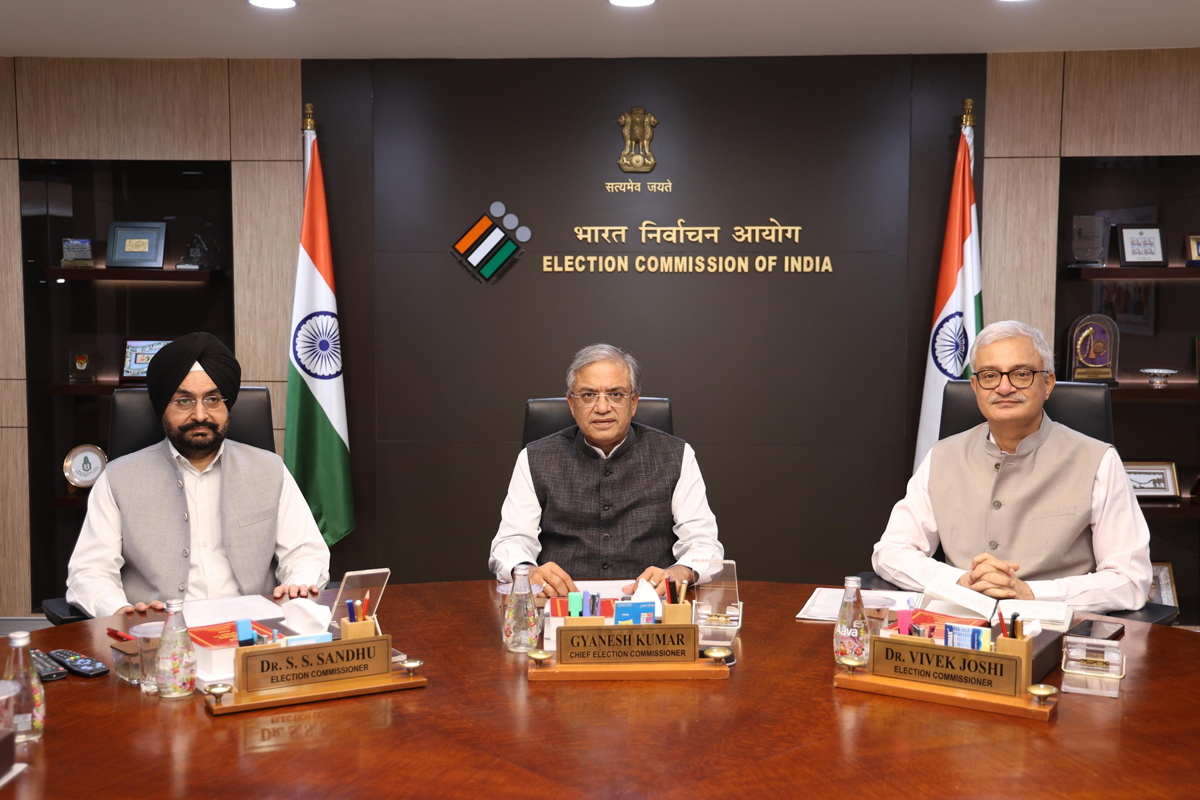
United we stand, divided we fall? CEC Shri Gyanesh Kumar with Election Commissioners Sukhbir Singh Sandhu and Vivek Joshi on September 26.

Synopsis: The Constitution makes it very hard to remove a sitting Chief Election Commissioner. This is why Gyanesh Kumar resigning on his own, in the light of recent revelations and the ensuing outrage, would matter more than him being forced out.
Chief Election Commissioner Gyanesh Kumar is under pressure to quit.
The opposition has tried twice to move a motion for his removal in Parliament. The first failed. The April 24 notice filed by 73 Opposition MPs in the Rajya Sabha is pending. A third is now being prepared.
Rahul Gandhi has termed Kumar’s actions ‘treason’ and said he must turn approver. The Cockroach Janta Party (CJP) has given the CEC an ultimatum to resign or face nationwide protests.
Earlier this year, it led weeks of protests that forced Union Education Minister Dharmendra Pradhan to resign over leaked exam papers. That resignation was described as the biggest political setback of Prime Minister Narendra Modi’s twelve years in power. The CJP had shown that concerted protests can force a government to act.
However, a group’s ability to force a resignation does not by itself make this particular demand right. Those are two separate questions, and the second one needs its own evidence.
In the Pradhan case, the evidence consisted of the leaked papers themselves and the deaths associated with them. In this case, the evidence sits inside the Commission itself, in written objections filed by two sitting commissioners against decisions taken in the Commission’s name.
That is not anger from outside the institution. It is documented dissent from inside it, and it deserves to be read with the same seriousness as the evidence in the Pradhan case, not less. So, set the ultimatums and the parliamentary motions aside, and look only at what has actually come out.
An Indian Express investigation, based on the Commission’s own internal records, found that two of the three Election Commissioners, Sukhbir Singh Sandhu and Vivek Joshi, formally objected to Commission decisions at least 14 times over ten months. Four of those objections came on a single day. Some called specific actions illegal or unauthorised. These were written objections, addressed to the Commission, with copies sent to Kumar’s office.
This is important because of how the Commission is meant to work. Its own rules say decisions should be made by consensus, or by majority if there is no consensus. The CEC alone does not have the final say. When two of three commissioners object in writing, and the decision goes through anyway, the process has not worked as intended. The Commission’s response, that all final decisions were unanimous, does not explain this. It states the outcome without explaining how the disagreement was settled.
Three specific episodes show this clearly.
One, Joshi objected to the centralisation of ECINet, the Commission’s digital system for managing voter rolls, saying it moved control toward the CEC’s office and away from the state-level Electoral Registration Officers, who are the actual legal authority for adding or removing names.
Second, in Goa, this had a direct result: 97 voters were examined by their local Registration Officer, found eligible, and then left off the final roll because the software did not let the officer’s decision be entered.
Third, Form 6, the form used by new voters to register, was changed to ask whether a parent or grandparent appeared on an earlier roll. Both commissioners said this change required a formal amendment to election rules first, but no such amendment was made.
Add to this the numbers from West Bengal. Lakhs of voters were deleted from the rolls. Tens of lakhs of appeals were filed. According to the Indian Express investigation, the two commissioners could not establish who had authorised about 16 lakh of those appeals, filed in the Commission’s own name. This means the Commission filed appeals against voters through a process that two of its three members say they cannot trace to any clear authority.
Behind all of this lies a fundamental problem, and it may be the root cause: how the CEC is appointed in the first place. Until 2023, the selection panel for the CEC included the Prime Minister, the Leader of the Opposition, and the Chief Justice of India. The 2023 law removed the Chief Justice and replaced that seat with a Union Cabinet Minister chosen by the Prime Minister.
This means the government now controls two of the three votes in the panel, regardless of who the Leader of the Opposition is. The law is currently being challenged in the Supreme Court.
Frankly, it might take years for the resolution to come. Until then, a new CEC would be selected through the same process that produced this one. Replacing the person without changing the process does not guarantee a different outcome.
The Constitution also makes it very hard to remove a sitting CEC. He can only be removed the same way a Supreme Court judge can be. This is why the opposition’s motions kept failing. This protection exists for a real reason: it stops a CEC from being pushed out by whichever party holds power. However, it also means there is no easy formal way to hold him accountable, even when his own colleagues are on record objecting to his decisions.
This is exactly why resigning on his own would matter more than him being forced out. If Kumar waits for a motion to succeed, or for the political pressure to become impossible to withstand, any exit will look like a defeat forced on him rather than a choice made for the institution. A voluntary resignation would send a different message: that the office understands what is at stake and is willing to act before being compelled to.
“Free and fair elections” is not a phrase the Commission gets to say about itself. It has to be evident in the Commission’s behaviour, especially when its own members are on record objecting to its decisions. The longer this issue drags on, the more people are likely to stop trusting the institution, not just the individual leading it. That trust is hard to rebuild once gone, and it will take far longer than stepping down would.
The CEC must view the resignation not as punishment. Unfortunately, it is the clearest option left when the formal route is, by design, nearly impossible to use.
True, the resignation would not, by itself, fix ECINet’s centralisation or Form 6, or explain who authorised those West Bengal appeals. Those need an actual audit. But it would do one thing an audit cannot: separate the institution from the person currently at the centre of every new disclosure.
Right now, each new story about the Commission becomes a story about Gyanesh Kumar personally. That is not good for an institution meant to outlast any one official.
Finally, it is heartening to see the growing public demand that the ECI take measures to rebuild faith in the electoral system. It will become clear in the next few days who will help rebuild that trust: the opposition, CJP, the government, or Kumar himself?
Also Read:
Behind Bengaluru’s 24 lakh SIR notices: Old rolls, shifting homes and a scramble for documents
The struggle to be counted: Informal workers among the worst affected by SIR process in Telangana
(Edited by R Rajesh Kumar.)



