

Published Sep 20, 2026 | 12:00 PM ⚊ Updated Sep 20, 2026 | 12:00 PM

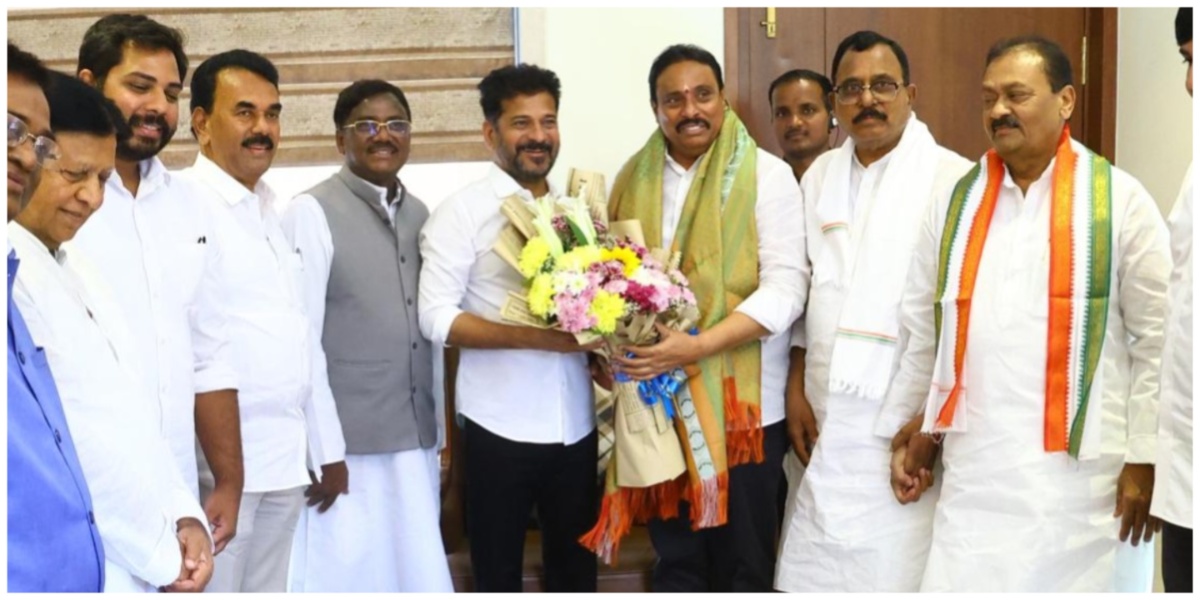
On Friday the Telangana High Court disqualified MLA Danam Nagender.

Synopsis: From Mizoram’s Lalduhoma to Danam Nagender, the attempts to prevent defections and the manner in which political parties have exploited loopholes in the law and manipulated them to their advantage have repeatedly demonstrated one thing: the anti-defection law has outlived its usefulness.
A former Central Vigilance Commissioner from the 1980s once observed that the anti-defection law could be an important first step towards curbing political corruption, which in turn could be the beginning of a broader effort to tackle corruption of all kinds in the country.
He made this observation in 1985, when Prime Minister Rajiv Gandhi was determined to introduce an anti-defection law. Rajiv Gandhi, who brought in the law, expressed the hope that it would be the first step towards cleansing public life.
Neither of them could perhaps have imagined that political parties and elected representatives would possess the ability to find ways around even the strongest of laws. They therefore hoped that the law would do good for the country.
The law was created with the objective of protecting and strengthening India’s parliamentary democratic system. It came after years of deliberation.
According to one estimate, of the nearly 4,000 legislators elected to either the Lok Sabha or state legislative assemblies in the 1967 and 1971 general elections, nearly 50 percent, or around 2,000 representatives, defected from the parties on whose tickets they had won and joined other parties. This led to a serious political crisis in the country at the time.
It was this situation that first prompted the idea of introducing a law to prevent defections. The idea became law in 1985, after Rajiv Gandhi became Prime Minister.
Later, in 2003, during Atal Bihari Vajpayee’s tenure as Prime Minister, a constitutional amendment was introduced to make the law more effective. The amended law came into force in 2004, when Manmohan Singh was Prime Minister.
The first elected representative to be disqualified under this law was Lalduhoma of Mizoram. He was elected to the Lok Sabha in 1984 as a Congress candidate. After giving up his party membership in 1986, he was disqualified by the Lok Sabha Speaker in November 1988.
Lalduhoma was also the first legislator to be disqualified under the law. In 2018, he was elected to the Mizoram Assembly as an independent candidate.
He later joined the Zoram People’s Movement and was disqualified in 2020. This serves as a lesson to those who assume that winning an election as an independent candidate gives them the freedom to subsequently join any political party.
Also Read: “Perversity in the eye of law”: What the Telangana HC said while disqualifying Danam Nagender
If we look at the sequence of events, the Congress government of the time introduced the anti-defection law in 1985. Later, in 2003, the BJP-led NDA government introduced amendments intended to make it more effective. The amended law was then approved and brought into force in 2004 by the Congress-led UPA government.
Look at this entire history and it appears that, from then until now, both the introduction of the law and the subsequent amendments have amounted to little more than a farce.
The reason for saying this is that, over the past four decades, almost all major political parties in the country have tried to increase their strength in legislatures by exploiting loopholes in the law.
At the same time, many elected representatives have crossed the floor in pursuit of personal interests, positions of power or other benefits.
Political parties have interpreted the anti-defection law in ways that suit them. In the process, a law framed with good intentions has been undermined by political actors to the extent of their ability.
On Friday, 18 September, while the Telangana Legislative Assembly was in session, MLA Danam Nagender was making a submission to the Speaker that the rights of legislators were being violated because of the negligent attitude of officials in the allocation of Indiramma houses and that steps should be taken to protect those rights.
At that very moment, the Telangana High Court delivered its judgment disqualifying him as a legislator.
This is certainly a historic judgment.
From Mizoram’s Lalduhoma to Danam Nagender, the attempts to prevent defections and the manner in which political parties have exploited loopholes in the law and manipulated them to their advantage have repeatedly demonstrated one thing: the anti-defection law has outlived its usefulness.
Political parties and the elected representatives who enter legislatures through them have repeatedly demonstrated the need to wrap up this law, throw it into the Bay of Bengal and draft a new one.
Also Read: Telangana Home Guard arrested, dismissed for assaulting woman at Hafeezpet Railway Station
In 1967, in Haryana, a Congress MLA named Gaya Lal changed political parties twice in a single day. He changed parties three times within 15 days. It became a major topic of discussion in Indian politics at the time.
Later, another episode of mass defection in Haryana in 1980 gave the phrase “Aaya Ram, Gaya Ram” a permanent place in India’s political vocabulary.
While Gaya Lal defected as an individual, Bhajan Lal gave a new meaning to political defections by taking an entire legislative party with him.
After the Emergency, Bhajan Lal became Chief Minister of Haryana after the Janata Party formed the government there. When the Congress wave led by Indira Gandhi swept the 1980 mid-term elections, Bhajan Lal changed course completely and defected with the entire legislative party.
Given all these incidents, the anti-defection law that eventually emerged should have been drafted in a far more watertight manner. That is why there is now a need for a new law to replace it.
The new law should be designed in such a way that a defector loses membership immediately, without the matter having to reach the courts and without leaving room for Speakers to be constrained by political considerations.
If that happens, it would bring an end to the political games played by ruling parties in the two Telugu states since the formation of Telangana.
After the united state was divided, the parties that came to power in Andhra Pradesh and Telangana adopted extreme approaches towards defections.
In Andhra Pradesh, Chandrababu Naidu brought 23 MLAs from the opposition into his fold. In Telangana, K Chandrasekhar Rao went a step further by inducting a Telugu Desam MLA into his cabinet and subsequently emptying out opposition camps.
Coming back once again to the present situation in Telangana, what will the court do about the other nine MLAs who, like Danam Nagender, defected from the Bharat Rashtra Samithi to the Congress?
There is, however, one distinction between Nagender and the others.
Nagender was elected to the Assembly as a BRS candidate and, only a few months later, obtained a Congress B-form and contested the Lok Sabha election on a Congress ticket. His defection therefore became clear.
Assembly Speaker Prasad Rao escaped the issue technically by arguing that his contesting the Lok Sabha election as a Congress candidate was not a matter that fell within the jurisdiction of the Assembly.
Also Read: Telangana’s Danam Nagender verdict: A test of the Speaker’s Constitutional credibility
The Speaker’s decision to push the ball into the court of the judiciary has invited the view that it was a mistake. As far as Nagender is concerned, switching parties is hardly new to him.
When he did not get a Congress ticket at the last moment, he moved to the Telugu Desam Party. He returned to the Congress when his favourite leader became Chief Minister. After the Congress lost power, he left the party for the Bharat Rashtra Samithi. When the Congress returned to power, he went back to the Congress.
He has therefore made several political turns.
What is remarkable this time is that he was disqualified as an MLA while he was still a sitting legislator and, more importantly, while the Assembly was actually in session.
He is now saying that he is ready to face a by-election. But is the Congress party prepared to field him again? So far, the Congress has not responded to the episode.
The Congress party will surely seek legal advice on whether to approach the Supreme Court challenging the Telangana High Court’s decision or prepare for a by-election.
The Khairatabad Assembly constituency, from which Nagender was elected as a BRS MLA, falls within the Secunderabad Lok Sabha constituency, where he contested the Lok Sabha election as a Congress candidate and lost.
It is worth noting that BJP candidate and Union Minister G Kishan Reddy secured more votes than Nagender in that Assembly segment during the Lok Sabha election.
It is well known how seriously a ruling party takes a by-election. As for the opposition parties in Telangana, there is certainly reason to welcome Nagender’s disqualification if people themselves celebrate it. But the BRS and BJP need not be overwhelmed with joy.
It would be wise for both parties to remember the proverbial “pot calling the kettle black”. From Lalduhoma to Danam Nagender, these disqualifications are isolated incidents. Many others have managed to escape.
That is precisely why there is a need for a much stricter law.
(Edited by Dese Gowda)



