

Published Sep 18, 2026 | 6:22 PM ⚊ Updated Sep 18, 2026 | 6:22 PM

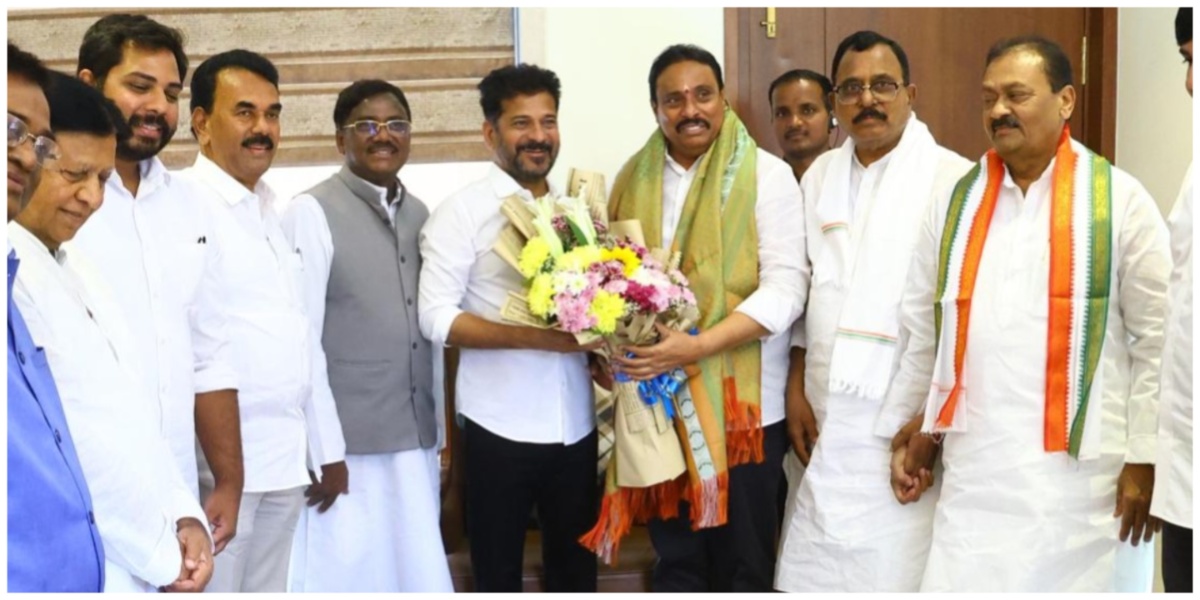
File photo of Danam Nagender with CM Revanth.

Synopsis: The judgment has brought the institutional credibility of the Speaker’s office under renewed scrutiny. The more difficult question now belongs to the legislature itself: can the office of the Speaker command confidence as an impartial constitutional authority?
A Speaker’s decision being overturned by a High Court is not, by itself, a constitutional embarrassment. Judicial review exists precisely because no public authority is infallible. But when the decision concerns defection—the very practice that the Constitution seeks to restrain—the reversal raises a question that cannot be brushed aside: how credible is an anti-defection process when its first constitutional adjudicator arrives at a conclusion that the judiciary finds unsustainable?
The Telangana High Court’s disqualification of Khairatabad MLA Danam Nagender has consequently acquired significance beyond the fate of one legislator or one Assembly constituency. It has brought the institutional credibility of the Speaker’s office under renewed scrutiny.
The Court set aside the decision of Speaker Gaddam Prasad Kumar rejecting petitions seeking Nagender’s disqualification and held that he stood disqualified under the Tenth Schedule. Nagender had been elected as a BRS legislator in the 2023 Assembly election and subsequently contested the 2024 Lok Sabha election from Secunderabad as a Congress candidate. The High Court treated this conduct as sufficient to attract disqualification.
The immediate consequence is that the Khairatabad seat falls vacant. The constitutional implication is more significant. The judgment once again exposes the structural weakness of a system in which the authority to decide defection petitions is entrusted to a political office-holder who remains an integral part of the legislature.
The Tenth Schedule was introduced to curb the political culture of legislators changing parties for office, power or advantage. Yet the law left its enforcement largely within the legislature itself. The Speaker was made the adjudicating authority. This arrangement may have been intended to preserve legislative autonomy, but it has always carried an inherent tension: the person deciding whether a legislator has defected belongs to the same political institution whose composition may be altered by that very decision.
That tension becomes acute when the Speaker’s ruling is perceived to coincide with the interests of the ruling establishment. Perception alone cannot establish bias. Nor should every judicial reversal be interpreted as proof of political motivation. But constitutional institutions cannot survive on formal legality alone. They also depend upon public confidence in the neutrality and consistency of their processes.
The Danam Nagender episode therefore deserves to be examined on institutional, rather than merely political, terms.
The Speaker had rejected the disqualification petitions on the assessment that the material before him did not establish that the legislator had voluntarily given up membership of the BRS. The High Court reached a different conclusion after examining the circumstances surrounding Nagender’s conduct.
The divergence between the two conclusions is precisely where the larger question arises: were the standards applied by the Speaker sufficiently rigorous, transparent and consistent with the constitutional purpose of the Tenth Schedule?
A disqualification proceeding cannot become a political waiting game. Delay itself can alter political realities.
A legislator facing a disqualification petition may continue to vote, participate in debates and influence the numerical strength of a government while the legal process remains pending. By the time a final determination arrives, the political consequences of the alleged defection may already have been absorbed into the functioning of the House.
This is why the anti-defection law cannot be judged merely by the number of petitions disposed of. The quality, reasoning and timeliness of those decisions matter equally.
The Supreme Court has already recognised that the Speaker’s role under the Tenth Schedule is subject to judicial review. That principle does not diminish the authority of the Speaker. Rather, it defines the constitutional limits within which that authority must operate. Legislative privilege cannot become a shield against constitutional accountability.
There is, however, an equally important caution. The judiciary should not become the routine first forum for resolving every political disagreement inside a legislature. Excessive judicial intervention could itself disturb the constitutional balance between the legislature and the courts. The objective should not be to transfer the Speaker’s jurisdiction wholesale to the judiciary. It should be to ensure that the Speaker exercises that jurisdiction in a manner that withstands constitutional scrutiny.
The present controversy also exposes the larger failure of political parties to treat the anti-defection law as a matter of principle rather than convenience. Parties that condemn defections when they lose legislators frequently celebrate the same conduct when they gain them. Such selective indignation has steadily weakened the moral force of the Tenth Schedule.
The real casualty is not merely one MLA, one party or one Assembly seat. It is the credibility of the constitutional mechanism designed to prevent political opportunism from determining the composition of elected legislatures.
The answer lies in reforming the process. Disqualification petitions should be dealt with within clearly defined and enforceable timelines. Orders should contain detailed reasoning and should apply consistent standards to comparable cases. The institutional framework must minimise the possibility that the outcome of a disqualification proceeding appears to depend upon which side of the political divide the legislator happens to occupy.
The Danam Nagender judgment should therefore be read neither as a victory for one political camp nor simply as a setback for another. Its more important message is institutional: constitutional offices acquire authority not merely from the powers assigned to them, but from the confidence that those powers are exercised impartially.
A Speaker need not agree with a court in every case. A court need not endorse every decision of a Speaker. That is how constitutional democracy is designed to function. But when a Speaker’s determination on a question central to legislative integrity is overturned, the appropriate response is not institutional defensiveness. It is introspection.
The Tenth Schedule was created to prevent legislators from converting electoral mandates into instruments of political bargaining. If its enforcement becomes vulnerable to delay, inconsistency or perceptions of partisan discretion, the law can remain on the statute book while its deterrent force steadily evaporates.
The High Court has settled the immediate question concerning Danam Nagender. The more difficult question now belongs to the legislature itself: can the office of the Speaker command confidence as an impartial constitutional authority when it exercises one of the most politically consequential powers inside the House? That question cannot be answered through political rhetoric. It can only be answered through the quality, consistency and constitutional discipline of future decisions.
Also Read:
Even a dead worker’s family wasn’t spared: The decline and fall of Telangana’s police
Telangana’s quiet double-engine sarkar — Part 1: The Congress-BJP policy convergence
(Edited by R Rajesh Kumar.)



