

Published Jul 02, 2026 | 7:00 AM ⚊ Updated Jul 02, 2026 | 7:00 AM

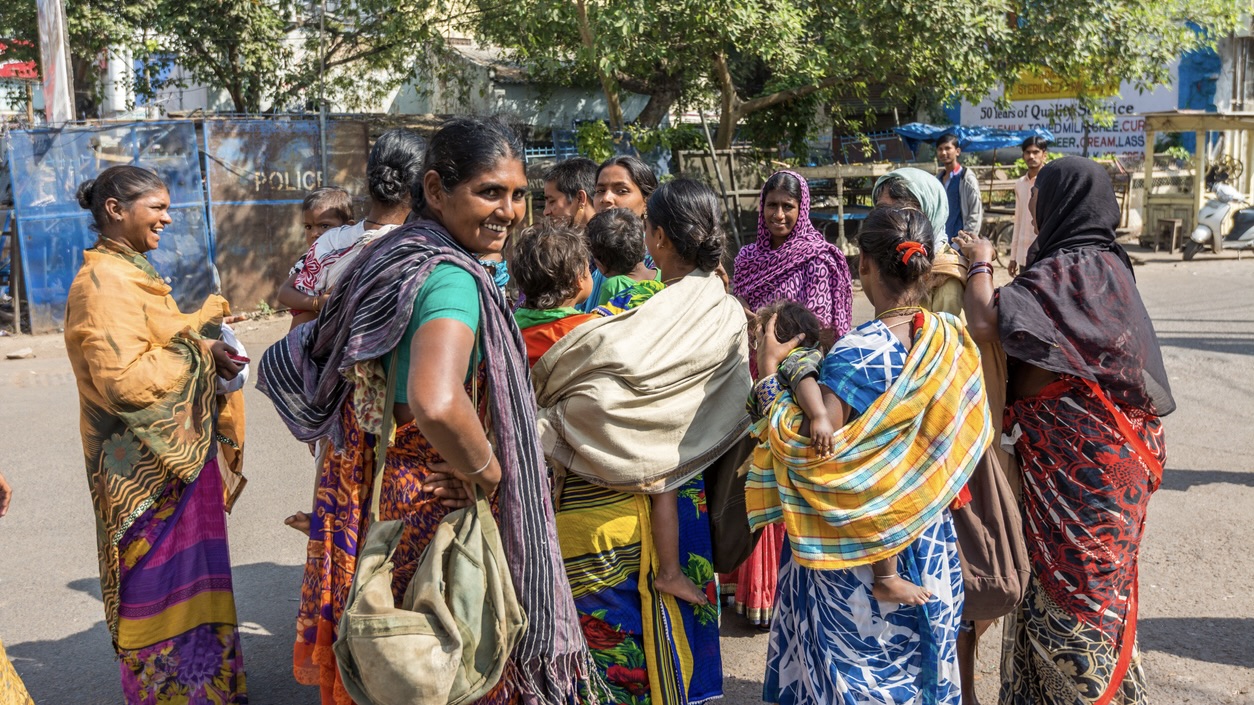
Over 98 percent of women in Telangana hold a bank or savings account that they themselves use.

Synopsis: Telangana leads India in women’s cash earnings and ranks among the top states for women’s access to bank accounts, according to the National Family Health Survey (NFHS-6). However, the survey shows these economic gains have not translated into equally high levels of women’s participation in household decision-making.
More than half of Telangana’s women earned cash for their work over the past year, the highest proportion in India, according to the National Family Health Survey (NFHS-6).
Nearly every woman in the state now operates her own bank account. Yet fewer than nine in 10 married women participate in the three household decisions measured by the NFHS-6: their own healthcare, major household purchases and visits to relatives.
In Telangana, 89.9 percent of women reported participating in all three, up from 87.2 percent in NFHS-5, a gain of 2.7 percentage points.
Paid work, access to bank accounts and ownership of mobile phones are widely used measures of women’s economic participation because they reflect a woman’s ability to earn, save and independently access financial and digital services.
Participation in household decisions measures whether these gains translate into agency within the family. Taken together, these indicators reveal where progress stalls and where it has not yet begun.
Also Read: ISKCON claims soya beats eggs on protein. ICMR-NIN nutrition tables say otherwise
NFHS-6 records that 98.5 percent of women in Telangana hold a bank or savings account that they themselves use, placing the state fifth in the country.
Only Ladakh (99.3 percent), Tripura (99 percent), Uttarakhand (98.9 percent) and West Bengal (98.7 percent) ranked higher.
The figure rose from 96.9 percent in NFHS-5, extending gains that were already substantial.
The national average stands at 89 percent, up from 78.6 percent in NFHS-5, a rise of 10.4 percentage points that reflects the expansion of Jan Dhan accounts and direct benefit transfers over the past decade.
Among the southern states, Telangana leads. Tamil Nadu recorded 97.3 percent, Karnataka 94.7 percent, Andhra Pradesh 92.3 percent and Kerala 91.7 percent.
Maharashtra (84 percent), Gujarat (82.2 percent) and Meghalaya (81.5 percent) all remain below the national average despite their relatively higher economic output, pointing to uneven penetration of formal banking among women.
The states recording the steepest gains include Nagaland (up 22 percentage points), Madhya Pradesh (up 17.4 percentage points) and Mizoram (up 12.9 percentage points), all starting from a lower base.
Telangana and Tamil Nadu, already above 96 percent, recorded more incremental gains.
Among women who worked during the previous 12 months, 53.2 percent in Telangana reported receiving cash payment, up from 45.1 percent in NFHS-5, a rise of 8.1 percentage points. No other state reported a higher figure.
Andhra Pradesh and Tamil Nadu followed, both at 48 percent, followed by Meghalaya (43.9 percent), Chhattisgarh (42.8 percent) and Arunachal Pradesh (41.8 percent). Karnataka stood at 40.6 percent and Maharashtra at 39.5 percent. Nationally, only 30.8 percent of women who worked received cash payment.
The bottom of the distribution tells a contrasting story. Bihar stood at 16.5 percent, Jammu and Kashmir at 14.2 percent and Ladakh at 16.2 percent, which also saw a decline of 12.1 percentage points from NFHS-5, the steepest in the country.
Uttar Pradesh recorded 21.1 percent and Haryana 25.1 percent.
One of the survey’s more striking findings in Telangana is the rural-urban divide. While 58.3 percent of rural women earned cash, only 40.1 percent of urban women did, suggesting that much of the state’s female workforce remains concentrated in rural livelihoods and self-employment.
The same pattern appears in Tamil Nadu (55 percent rural versus 39 percent urban) and Karnataka (44.2 percent versus 35.8 percent), running counter to the expectation that urban economies generate more formalised, wage-based work for women.
Also Read: Centre softens hospital enforcement as study traces long battle over Clinical Establishments Act
The banking numbers suggest broad financial inclusion. The mobile ownership figures complicate that picture.
Only 65.8 percent of women in Telangana own and use a mobile phone, according to NFHS-6, up from 60 percent in NFHS-5, but still leaving roughly one in three women without personal access to a device.
The gap between banking access and mobile ownership stands at approximately 33 percentage points, one of the widest in the country.
Among the southern states, Kerala leads at 89.1 percent, followed by Tamil Nadu (76.8 percent) and Karnataka (72.4 percent). Andhra Pradesh recorded 64.1 percent, slightly below Telangana. At the lower end nationally, Chhattisgarh recorded 47.8 percent and Uttar Pradesh 56.4 percent.
Nationally, women’s mobile ownership rose from 53.9 percent to 63.6 percent, a gain of 9.7 percentage points. Telangana’s gain of 5.8 percentage points fell short of that pace, meaning its relative position weakened even as the absolute figure increased.
The steepest increases were recorded in Andhra Pradesh (up 15.2 percentage points), Haryana (up 14.5 percentage points) and Chandigarh (up 14.4 percentage points).
Without a phone, women’s ability to use digital banking, access government services or seek health information remains constrained, making the gap between banking access and mobile ownership a practical limitation on how far financial inclusion translates into everyday use.
If employment and banking reflect economic participation, household decision-making reveals whether those gains translate into greater influence within the home.
Telangana ranks behind several states that record lower workforce participation or banking coverage. Kerala tops the country among the larger states at 96.5 percent, followed by Gujarat (93.5 percent), Punjab (93.2 percent), Maharashtra (93.1 percent) and Jharkhand (92.9 percent).
Uttarakhand recorded 93.8 percent and Chhattisgarh 94.4 percent, although both states rank below Telangana in women’s banking access and cash earnings.
The north-east records the highest figures in the country.
Nagaland recorded 98.9 percent, Mizoram 98.5 percent and Sikkim 98.6 percent, combining high female labour force participation with social structures that have historically granted women greater authority within households.
Some states recorded declines between the two surveys. Assam fell 5.4 percentage points to 86.7 percent. Puducherry dropped 8.2 percentage points to 89.7 percent. Odisha fell 3 percentage points to 87.2 percent, and Rajasthan 3.2 percentage points to 84.5 percent.
Andhra Pradesh is not an exception to the pattern seen in Telangana.
The state ranks second nationally in women receiving cash income, at 48 percent. More than 92 percent of women operate their own bank account.
Yet only 84 percent of married women reported participating in all three household decisions, almost unchanged from 84.1 percent in NFHS-5 and among the lowest figures recorded by any large state.
Both Telugu states rank at the top for women’s cash earnings and both record banking coverage above 92 percent.
Neither ranks among India’s leaders in household agency, and Andhra Pradesh has seen virtually no movement on that indicator across two survey cycles. The pattern is not unique to Telangana. It extends across both states.
Jharkhand recorded 92.9 percent on household decision-making despite a cash earnings figure of 27.7 percent, less than half Telangana’s rate.
Chhattisgarh recorded 94.4 percent despite lower overall development indicators. These comparisons show that income and banking access do not, by themselves, determine a state’s level of household agency.
Telangana sits slightly above the national average of 89 percent on this indicator, but well below its own standing on employment and financial inclusion.
Ranking first in cash earnings, fifth in banking access and behind 10 states on household agency illustrates the gap between economic participation and autonomy within the family.



