

Published Jun 28, 2026 | 6:30 PM ⚊ Updated Jun 28, 2026 | 6:30 PM

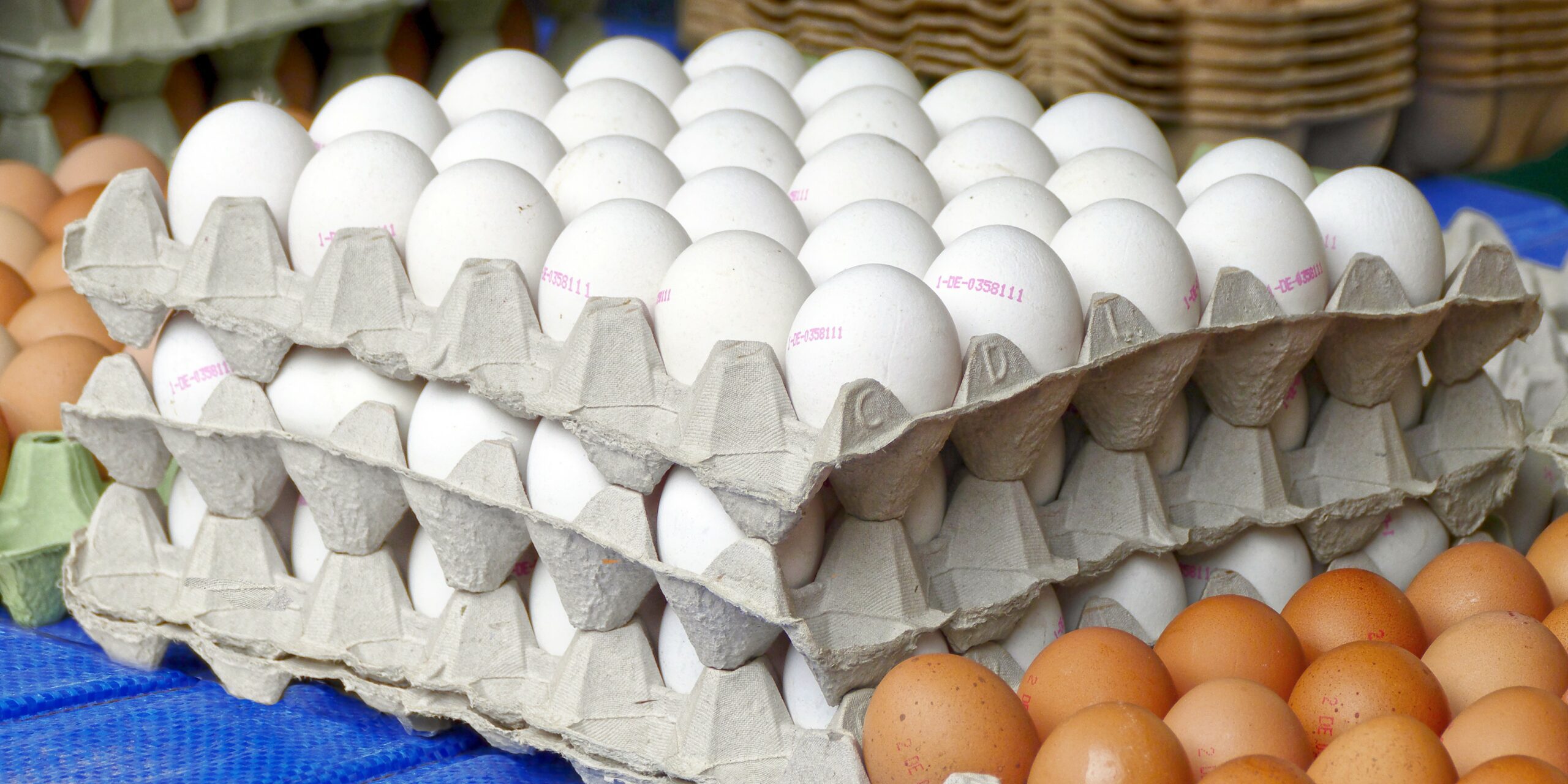
For growing children, many of those nutrients present in eggs support brain development, bone growth and immune function.

Synopsis: The West Bengal government and ISKCON have defended the decision to remove eggs from Kolkata’s school midday meals, arguing that vegetarian alternatives such as soya are better. ICMR-NIN nutrition data show that while soya is a valuable source of protein, it does not match eggs in protein quality or provide key nutrients such as vitamin B12, vitamin D, choline and preformed vitamin A.
When West Bengal’s new BJP government awarded the mid-day meal contract for Kolkata Municipal Corporation schools to the Annamrita Foundation earlier this year, the change seemed, on paper, administrative. A new supplier. A new kitchen. A new menu.
But one item did not make it onto the new menu: eggs.
Annamrita operates under the religious organisation the International Society for Krishna Consciousness (ISKCON), whose kitchens adhere to strict vegetarian rules prohibiting meat, fish, eggs, onions and garlic.
Both ISKCON and the state government have argued that the removal of eggs will not affect the children’s nutritional needs. If anything, an ISKCON spokesperson claimed the organisation’s vegetarian alternatives would be better.
“One hundred grams of egg contains about 13 grams of protein. In comparison, 100 grams of soybean chunks contains around 52 to 54 grams of protein. That is much higher, almost four times as much. Even if we leave soybean aside, the ordinary lentils that vegetarian families commonly eat contain, on average, around 25 grams of protein per 100 grams. That is nearly twice the protein found in eggs. Then there is paneer, which contains about 22 grams of protein per 100 grams. So, if we are talking scientifically and sticking to the facts, the claim does not hold up,” Radharaman Das, Vice President and spokesperson for ISKCON Kolkata, told ANI.
Das also cited state-level data showing that predominantly vegetarian states such as Rajasthan, Gujarat, Haryana and Madhya Pradesh compare well with meat-eating states on protein consumption.
He pointed to Virat Kohli, who follows a vegetarian diet, as evidence that plant-based eating supports peak performance. He described concerns over removing eggs as misinformation.
But do those claims stand up to scrutiny?
Also Read: When no ban feels like a ban: Tamil Nadu’s morning-after pill confusion
The Indian Food Composition Tables, published by ICMR-NIN in 2017, are the country’s most authoritative record of food nutrition. They contain analytical data for hundreds of Indian foods across dozens of nutrients, measured across multiple regions.
For eggs, the tables list 13.28 ± 0.29 grams of protein per 100 grams for whole raw egg, and 13.43 ± 0.28 grams for whole boiled egg. The Dietary Guidelines for Indians 2024, also published by ICMR-NIN, give the average as 13.3 grams. Das’s figure of 13 grams is accurate.
Soyabean tells a different story. Brown soyabean contains 35.58 ± 0.66 grams of protein per 100 grams, while white soyabean contains 37.80 grams. Elsewhere, the tables note that “among the vegetal foods, pulses were found to be rich sources of protein ranging from 17.08 percent in bengal gram to 43.22 percent in soya bean.”
None of those figures approaches the 52 to 54 grams Das cited.
The number 54 does appear in the tables. But it refers to Biological Value:
“The FCT revealed that the proteins derived from animal sources such as beef muscle and whole egg had comparatively higher protein BV of 98 and 94 percent, respectively, which were much higher than vegetal proteins like bengal gram with 76 percent and soya bean with 54 percent.”
Biological Value is not a measure of how much protein a food contains. It measures how efficiently the body uses that protein after it is absorbed.
Biological Value measures the percent of absorbed protein nitrogen that the body retains and converts into usable tissue.
A food with a Biological Value of 100 would mean the body uses every gram of absorbed protein. In practice, no food reaches that ceiling. Whole egg, with a Biological Value of 94, comes close. Soyabean, at 54, means the body retains and uses just over half of the absorbed protein.
This is the distinction between protein quantity and protein quality. The body’s nutritional needs are met not by the protein a food contains, but by the protein the body can digest, retain and use.
Dr Sudhir Kumar, a senior neurologist based in Hyderabad, explains it this way:
“The statement that 100 grams of soya chunks contains much more protein than 100 grams of egg is broadly correct. However, nutrition cannot be judged by protein quantity alone. Egg protein has one of the highest digestibility and amino-acid quality scores. Soya protein is also considered a high-quality plant protein, but eggs generally score slightly higher for digestibility and amino-acid availability,” he told South First.
Digestibility is another part of protein quality. It measures how much of a food’s protein the body can break down and absorb. The Dietary Guidelines for Indians 2024 note that most plant foods have a digestibility of 70 to 85 percent, while animal proteins are generally digested more efficiently.
Protein quality also depends on amino acid composition. The Dietary Guidelines explain:
“Proteins are complex molecules composed of 20 different amino acids. Nine of these 20 amino acids are termed ‘essential’ and have to be obtained from proteins in the diet, since they are not synthesized in the human body.”
Because these essential amino acids must come from food, their balance matters. As the guidelines note:
“Animal proteins are of high quality as they are bioavailable and provide all the essential amino acids in right proportions, while plant or vegetable proteins are not of the same quality because of their low content of some of the essential amino acids.”
Soya is among the highest-quality plant proteins, but it still has a Biological Value of 54 compared with 94 for egg. Protein quantity and protein quality are different measures, and India’s own nutrition tables distinguish between them.
Also Read: One American hospital publishes more research than all Indian private hospital combined
The removal of eggs will reduce not only protein intake but also the intake of vitamins and minerals that plant-based alternatives cannot provide at equivalent levels.
For growing children, many of those nutrients support brain development, bone growth and immune function.
Dr Sudhir Kumar says brain development is the aspect of this debate that receives the least attention.
“Eggs provide high-quality protein with excellent digestibility, along with vitamin B12, choline, vitamin D, and other nutrients important for neurodevelopment in growing children,” he says.
Among them is choline, which supports the development of the hippocampus, the brain region responsible for memory, learning and spatial reasoning, and helps produce acetylcholine, a neurotransmitter that carries signals between nerve cells. Eggs, particularly the yolk, are a rich source of choline. Soyabean contains significantly less.
Vitamin B12 plays an equally important role. It supports the formation of myelin, the protective sheath around nerve fibres that allows signals to travel efficiently through the nervous system.
Deficiency in early childhood can cause neurological damage before symptoms become apparent, and some of that damage may be irreversible. B12 occurs almost exclusively in animal-source foods. Soyabean contains none.
Eggs also supply nutrients important for growth beyond the brain. The ICMR-NIN tables record cholecalciferol (Vitamin D3) at 0.84 ± 0.13 micrograms per 100 grams in whole raw egg and 0.74 micrograms in boiled egg. Vitamin D regulates calcium absorption and supports bone mineralisation during childhood. The soyabean entries record no Vitamin D.
Although fortified plant foods can provide it, school kitchens operating on standard supply chains do not routinely receive fortified ingredients.
The tables also record retinol, the bioavailable form of Vitamin A, at 198 ± 6.7 micrograms per 100 grams in whole raw egg and 180 ± 10.5 micrograms in boiled egg. Retinol supports vision, maintains epithelial tissue and contributes to immune function.
Plant foods provide beta-carotene instead, which the body must first convert into Vitamin A. That conversion varies widely between individuals and depends on factors including fat intake, gut health and genetics. The soyabean entries record no retinol.
Iron presents a similar problem. In their introductory analysis, the ICMR-NIN tables note that “the bioavailability of iron in meat, like pork muscle (86 percent) and beef liver (70 percent) was much higher than that of vegetables like spinach (19 percent) and lettuce (25 percent).”
Iron deficiency remains the most common micronutrient deficiency among Indian schoolchildren. What matters is not simply how much iron a food contains, but how much the body can absorb.
Also Read: As C-sections dominate, one Bengaluru hospital champions natural delivery model
The Dietary Guidelines for Indians 2024 note that carefully planned vegetarian diets can meet the body’s essential amino acid requirements.
The guidelines recommend combining cereals and pulses in a 3:1 ratio to improve protein quality. Cereals such as rice and wheat contain methionine but are relatively low in lysine.
Pulses such as lentils and rajma have the opposite profile. Together, they complement one another, producing a protein profile that more closely resembles that of animal-source foods.
As the guidelines state:
“However, a combination of cereals, millets and pulses provides most of the amino acids, which complement each other to provide good quality proteins and essential amino acids.”
Dr Sudhir Kumar agrees, while placing that recommendation in context.
“Soya chunks are also a valuable, affordable protein source and can certainly be part of school meals. From a public-health perspective, the important question is not whether eggs or soya are ‘better,’ but whether children receive adequate total protein, calories, and essential micronutrients through a balanced meal,” he says.
The distinction is important. A vegetarian diet planned by an informed adult, with access to a varied diet and an understanding of nutritional requirements, can be nutritionally complete. That is consistent with both the scientific evidence and the dietary guidelines.
Replacing an egg with soya chunks, however, does not by itself provide the same nutritional profile. While soya can replace much of the protein, it does not replace nutrients such as vitamin B12, vitamin D, choline and preformed vitamin A. Nor does it match egg’s protein quality, reflected in its lower Biological Value.
The guidelines also identify the groups most vulnerable to inadequate protein and micronutrient intake:
“More proteins are required by growing infants and children, adolescents, pregnant women and individuals during infections, illness and physical stress.”
The question is not whether vegetarian diets can support good health. They can. Das pointed to vegetarian athletes, states with large vegetarian populations and ISKCON’s global reach to make that case.
The question is whether replacing a weekly egg with soya chunks provides schoolchildren with the same nutrition.
Nutrition scientists draw a distinction between voluntary dietary choices made by informed adults and public nutrition programmes designed for growing children, particularly those from food-insecure households.
Teachers and school officials who worked under the previous mid-day meal programme report that attendance often rose on egg days among children from the lowest-income families.
For many of them, the weekly egg was not a supplement to a varied diet at home. It was the most nutritionally complete single food they would eat that day.
Replacing it with soya chunks may preserve much of the protein, but not the full nutritional profile. Without additional sources of vitamin B12, vitamin D, choline and preformed vitamin A, those nutrients are lost from the meal.



