

Published Jun 25, 2026 | 6:53 PM ⚊ Updated Jun 25, 2026 | 6:53 PM

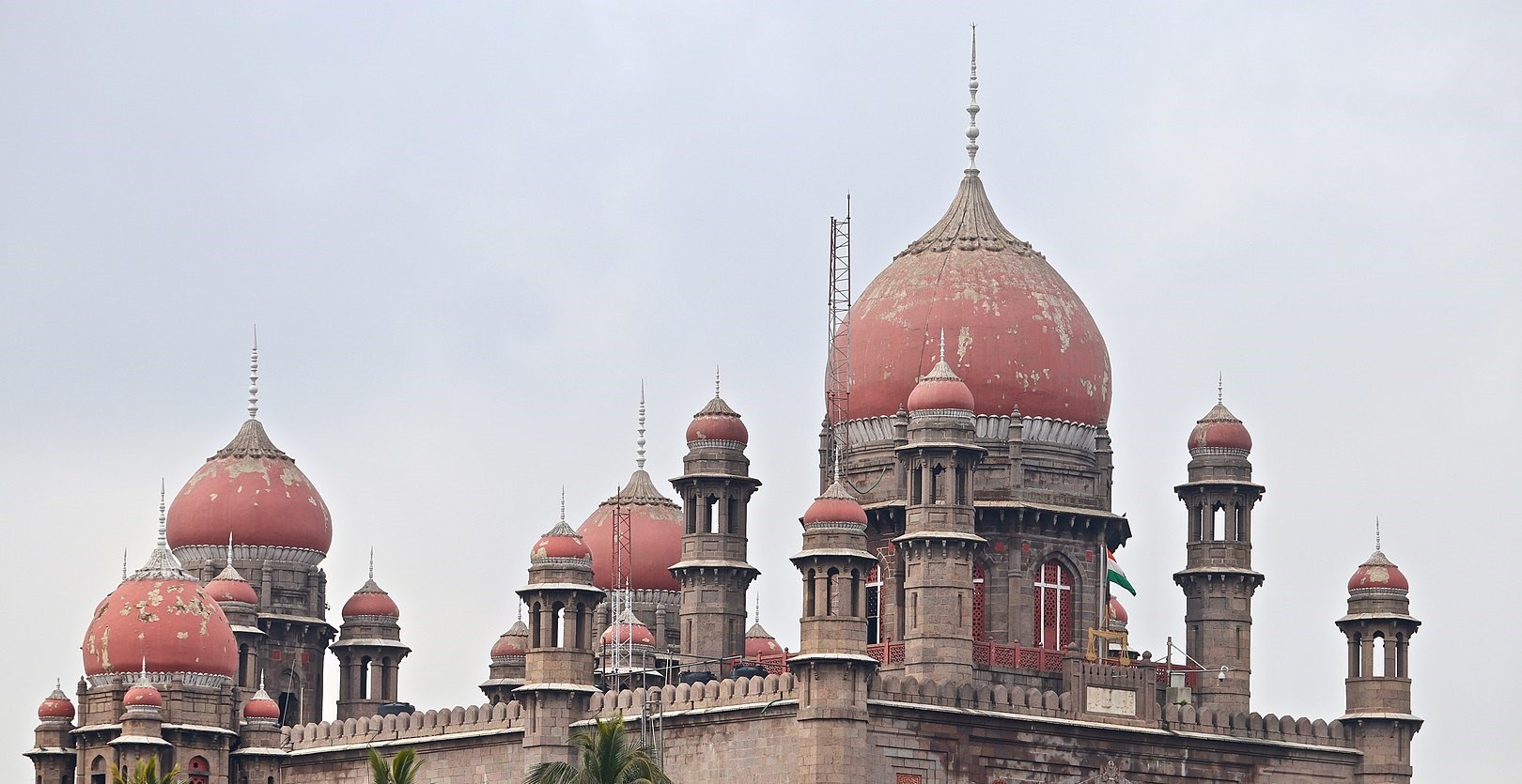
The Telangana High Court. (Wikimedia Commons)

Synopsis: Hearing a writ petition filed by social activist MA Mujeeb Ayyub, Justice Pulla Karthik questioned whether the policy could disadvantage non-Telugu speakers, linguistic minorities, migrant workers and students educated under central school boards.
As the Election Commission of India (ECI) commenced the Special Intensive Revision (SIR) of electoral rolls in Telangana on Thursday, 25 June, the Telangana High Court raised concerns over the distribution of physical enumeration forms exclusively in Telugu in districts outside the Greater Hyderabad Municipal Corporation (GHMC) limits.
Hearing a writ petition filed by social activist MA Mujeeb Ayyub, Justice Pulla Karthik questioned whether the policy could disadvantage non-Telugu speakers, linguistic minorities, migrant workers and students educated under central school boards.
Senior Advocate V. Ragunath, appearing for the petitioner, argued that restricting physical forms to Telugu outside Hyderabad creates an arbitrary barrier for many eligible voters. “Electoral participation is a constitutional right,” he submitted, adding that citizens should not have to depend on others to understand documents that determine their inclusion in electoral rolls.
He contended that rural Telangana also has significant populations of non-Telugu speakers. “If I am from Karimnagar, belong to a minority community, and do not know Telugu, I cannot understand these forms,” Ragunath argued, insisting that voters have a right to receive forms in a language they understand.
The Court appeared to agree with the concern, observing that many younger voters educated under CBSE and other central boards may not be proficient enough in Telugu to comprehend procedural electoral documents. “Correct. They may not be able to understand it,” Justice Karthik remarked while asking the ECI, “How do you justify this?”
Also Read: Are thirty-seven per cent of voters in Telangana suspect? Seriously!
Defending the policy, the ECI said the arrangement was adopted after consultations with political parties and the Chief Electoral Officer. It submitted that the SIR exercise covers nearly 3.5 crore voters across the state and that Telugu forms had already been printed. Printing physical forms in multiple languages at this stage would be expensive and logistically difficult, the Commission argued.
The ECI informed the Court that English, Telugu and Urdu versions of the forms are available online. It also stated that Booth Level Officers (BLOs) carry English sample forms during field visits and can provide physical copies on request. Urdu forms are also available if voters specifically seek them.
However, the petitioner argued that voters should not have to request accessible forms as a favour or rely on the discretion of BLOs. He maintained that language accessibility should be ensured as a matter of right.
Observing that the concerns raised warranted serious consideration, the High Court indicated it may examine the constitutional validity of the policy if the issue is not adequately addressed. At the ECI’s request for additional time to obtain instructions, the Court adjourned the matter to Monday, 29 June.
Also Read: What next for Telangana after caste census?
(With inputs from Sumit Jha)



