

Published Sep 04, 2026 | 12:56 PM ⚊ Updated Sep 04, 2026 | 12:56 PM

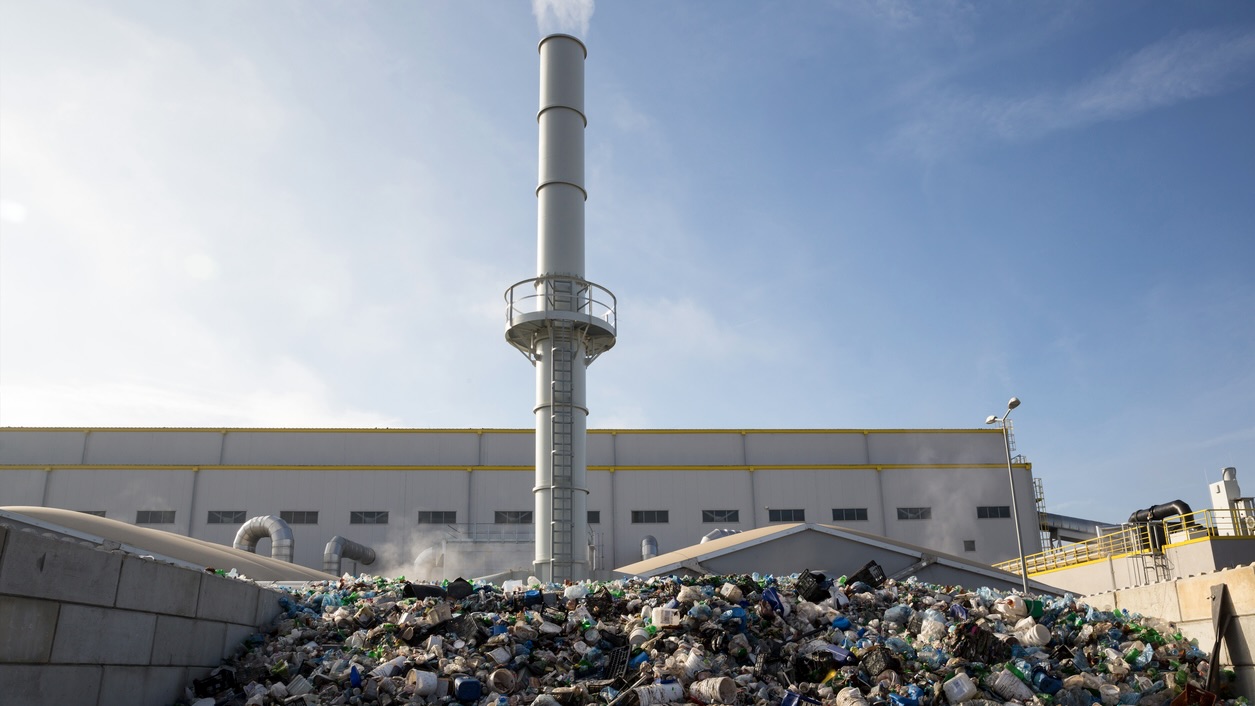
The report says the Blue-category classification reduces the Telangana Pollution Control Board’s (TGPCB) ability to hold WTE operators accountable.

Synopsis: Waste-to-energy (WTE) incineration plants are the highest-polluting industrial sector in India, with a maximum cumulative PI of 100, a new Centre for Financial Accountability report, based on official monitoring and inspection records, has found. The report also found that Hyderabad’s Jawaharnagar landfill emits an estimated 5.9 tonnes of methane an hour and said Telangana’s 4,000-tonnes-per-day WTE waste facility at Siddapur has been wrongly placed in the Blue category, allowing it to bypass an environmental impact assessment.
Waste-to-Energy (WTE) incineration plants have a cumulative Pollution Index (PI) score of 100 out of 100, making them the highest-polluting industrial sector in India, according to a report by the Centre for Financial Accountability (CFA) released on 4 September.
The report, based on official monitoring data and inspection records submitted by the Central Pollution Control Board (CPCB) and the Delhi Pollution Control Committee (DPCC) to the Supreme Court and the National Green Tribunal (NGT), says WTE plants record maximum or near-maximum pollution scores across water, air and hazardous-waste parameters. It places them above open-cast coal mining, copper smelters and thermal power plants.
In Hyderabad, two WTE plants operated by Re-Sustainability Ltd. at Jawaharnagar have a combined incineration capacity of 48 MW.
The report cites University of California, Los Angeles and Carbon Mapper satellite data supported by NASA’s Jet Propulsion Laboratory (JPL) showing that the Jawaharnagar landfill emits 5.9 tonnes of methane an hour.
It identifies the landfill as India’s largest methane emitter from waste and the fourth largest globally, with annual methane emissions of 49,000 tonnes and a global warming potential of 3.96 million tonnes of CO2 equivalent a year.
The methane emissions also challenge the premise that incineration resolves municipal solid-waste problems, the CFA said in a statement.
About 60 percent of municipal waste is wet waste, making incineration inefficient, it said. Burning such high-moisture organic waste releases large quantities of carbon dioxide, while unprocessed waste continues to decompose and generate methane.
The CFA calculated the Pollution Index using the CPCB’s standard formula, which combines scores for water pollution, air pollution and hazardous waste. Its assessment gives WTE plants a score of 95 for water pollution, 100 for air pollution and 95 for hazardous waste, producing a cumulative score of 100.
The CPCB score for water pollution is 45, compared with the CFA’s 95. The report records high biochemical and chemical oxygen demand, heavy metals including hexavalent chromium and copper, wastewater from toxic-ash quenching, effluent-treatment-plant sludge, and leachate seepage into groundwater exceeding limits for total dissolved solids, nitrate and sulphate.
For air pollution, the CPCB score is 95 and the CFA score is 100. The documented pollutants include dioxins and furans, which the report says exceed prescribed limits by up to 900 percent, along with lead, mercury, cadmium and thallium, hydrochloric and hydrofluoric acid gases, sulphur oxides, nitrogen oxides and PM2.5 and PM10. The plants also consume more than 48 tonnes of fuel a day.
The hazardous-waste score rises from the CPCB’s 60 to the CFA’s 95. The report cites annual generation of more than 5,000 tonnes of fly ash and bottom ash containing heavy metals and notes the mandatory requirement for their disposal at secured Treatment, Storage and Disposal Facilities (TSDFs).
Under the CPCB’s 2025 framework, industries with a PI of 80 or above fall in the Red category. The CFA says WTE plants therefore meet the threshold for the highest pollution category, while the CPCB’s published cumulative score of 97.6 does not reflect the 100-point maximum identified in its assessment.
Also Read: Iconic Hyderabad eatery Shadab Hotel’s FSSAI licence suspended over food safety violations
The report also notes the Telangana government’s proposed 4,000 tonnes-per-day WTE and waste facility at Siddapur in Ranga Reddy district, being developed under the name “Eco-Town”.
The project has been reclassified under the CPCB’s 2025 “Blue” category. The CFA says it has consequently bypassed mandatory public hearings and Environmental Impact Assessments (EIA).
The report says the Blue-category classification reduces the Telangana Pollution Control Board’s (TGPCB) ability to hold WTE operators accountable.
It also says the classification removes statutory public consultation and shields operators from environmental compensation, while directing public funds towards incineration infrastructure instead of decentralised biomethanation and circular-waste systems.
“The Blue categorisation effectively gives the incineration industry a licence to pollute while deepening existing environmental injustice. It must be scrapped immediately. Waste management policy must protect people and ecosystems—not legitimize technologies that shift pollution and risk onto those who have the least power to resist it,” said Ruchit Asha Kamal of Climate Front, Hyderabad.
“Reclassifying Waste-to-Energy incinerators as ‘Blue’ environmental services is pure regulatory bluewashing. Our evaluation using CPCB’s own mathematical framework proves these plants score a perfect 100/100 in pollution potential—outranking coal power plants and copper smelters. The proposed stripping away of environmental impact assessments for blue category industries compromises public health,” said Chythenyen Devika Kulasekaran, senior research associate, CFA.
The report calls for cancellation of the CPCB’s 2025 direction and the return of all WTE incineration plants to the Red category.
It also calls for an end to self-assessment mechanisms for high-risk industrial units and mandatory, independent continuous emissions monitoring for dioxins, furans and heavy metals.



