

Published Nov 03, 2026 | 7:24 PM ⚊ Updated Nov 03, 2026 | 7:24 PM

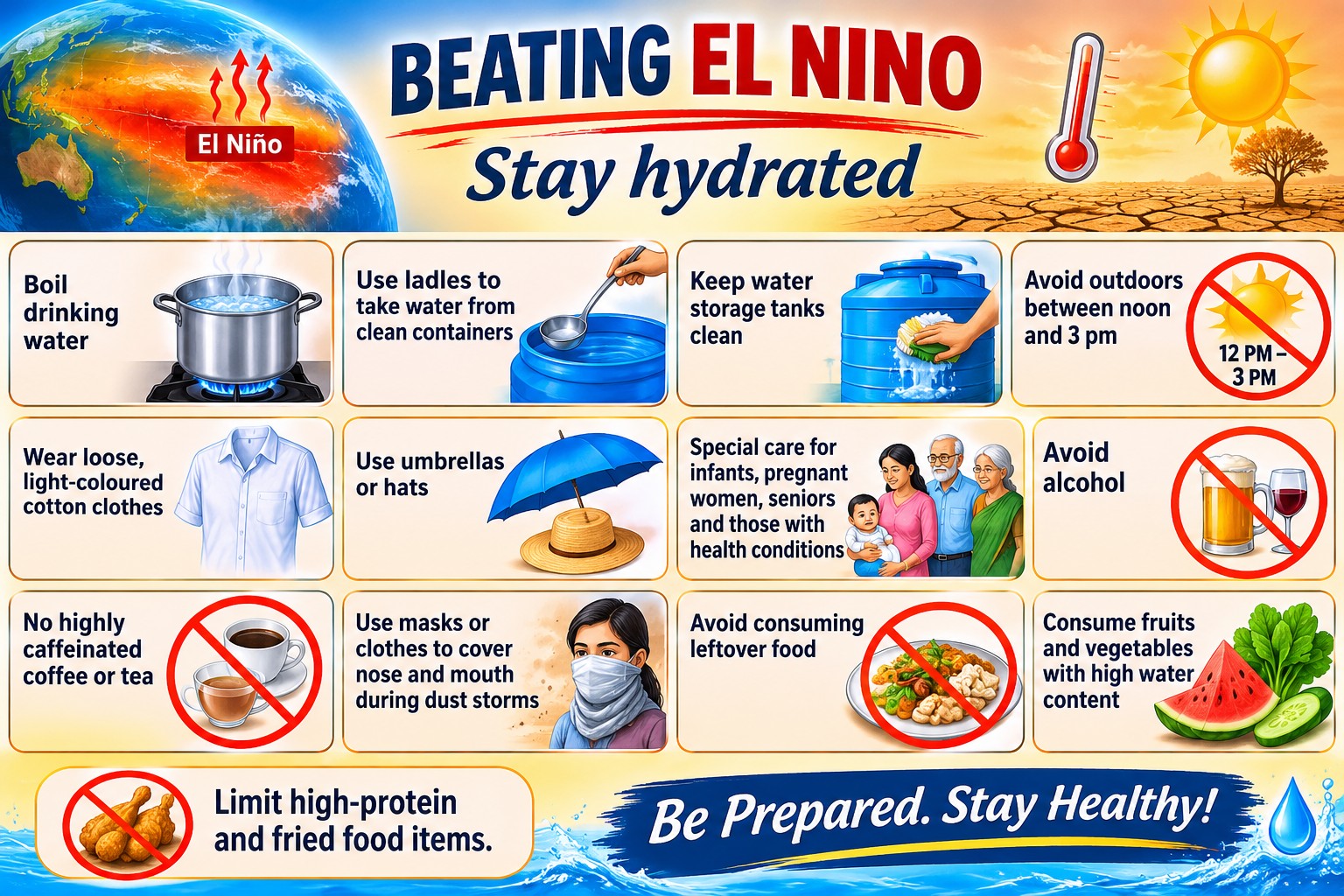
Telangana Health Department issued a public health advisory, warning of potential health risks linked to El Niño conditions. (AI -generated image).

Synopsis: The Telangana Health Department has made arrangements at public health facilities to manage potential health emergencies, including providing special beds, intravenous fluids and essential medicines. Oral Rehydration Salts sachets have been made available through Auxiliary Nurse Midwives, Accredited Social Health Activists and Anganwadi workers.
The Telangana Health Department has issued a public health advisory on Tuesday, 3 November, warning of potential health risks associated with prevailing El Niño conditions, including extreme heat, acute water shortages, water-borne diseases, malnutrition and mental stress.
The 2026–2027 El Niño event is a record-breaking “super” or “hyper” El Niño that developed in mid-2026 and is projected to peak around December 2026 before persisting into early 2027.
Director of Public Health and Family Welfare Dr B Ravinder Nayak urged people to take precautions related to drinking water, sanitation, heat exposure, food safety and vector-borne diseases.
“El Niño conditions trigger prolonged dry spells, extreme heat and acute water shortages. These changes directly impact public health by increasing the risk of water-borne diseases, heat-related illnesses, malnutrition and mental stress,” the advisory stated.
The department has also said it has made arrangements at public health facilities to manage potential health emergencies, including providing special beds, intravenous fluids and essential medicines. Oral Rehydration Salts (ORS) sachets have been made available through Auxiliary Nurse Midwives (ANMs), Accredited Social Health Activists (ASHAs) and Anganwadi workers.
Also Read: Is Telangana prepared for the heat of El Niño?
With water shortages potentially increasing the risk of water-borne infections, the department has advised people to boil drinking water for at least one minute or use chlorine tablets and filters, even when the water appears clean.
It has also recommended storing drinking water in clean, covered, narrow-necked containers and using a ladle to draw water instead of dipping hands into it.
“Wash hands thoroughly with soap and safe water after using the toilet, before cooking and before eating,” the advisory said.
The department has cautioned against drinking water from unregulated wells, tankers and surface water bodies without proper purification. It has also asked residents to stop using running water to wash courtyards, driveways and vehicles.
The advisory highlights the risk of heat-related illnesses and recommends adequate fluid intake throughout the day. People have been advised to supplement water with ORS, homemade lemon water or buttermilk with a pinch of salt.
Also Read: Karnataka may lose 1,870 lives, Andhra Pradesh and Kerala 1,680 each
The department has specifically urged people to avoid outdoor activities and strenuous physical work between noon and 3 pm.
“Choose thin, loose-fitting, light-coloured cotton garments. Cover your head with an umbrella, hat or towel when exposed to direct sunlight,” it said.
The advisory also asked households to keep windows and curtains closed during peak hot hours on the sunny side of their homes and open them at night to allow cooler air to circulate.
Infants, pregnant women, elderly people and those with pre-existing heart or blood pressure conditions should receive particular attention and be kept cool and hydrated.
The department has also advised people to avoid alcohol, highly caffeinated tea or coffee and sugary carbonated drinks, warning that these can increase fluid loss. It cautioned against leaving children or pets inside parked vehicles, where temperatures can become lethal within minutes.
The department has also flagged the risk of vector-borne diseases during periods of water scarcity, when households may store water for longer periods.
It advised residents to empty, scrub and completely dry domestic water storage tanks, coolers and buckets at least once a week to prevent mosquito breeding.
“Never leave emergency water storage containers open, as they quickly become prime breeding grounds for dengue and chikungunya vectors,” the advisory stated.
It has also recommended using masks or clean cloth to cover the nose and mouth during dust storms and dry, windy conditions to protect against respiratory exposure.
The advisory warns that high temperatures can accelerate food spoilage and increase the risk of contamination.
People have been asked to avoid eating leftovers that have not been properly refrigerated and store food in tightly sealed containers to prevent contamination by rodents and insects.
The department has also recommended consuming seasonal fruits and vegetables with high water content, including cucumbers, melons, oranges and gourds, while limiting excessive consumption of high-protein and fried foods.
(Edited by Majnu Babu).



