

Published Apr 20, 2026 | 7:00 AM ⚊ Updated Apr 20, 2026 | 7:00 AM

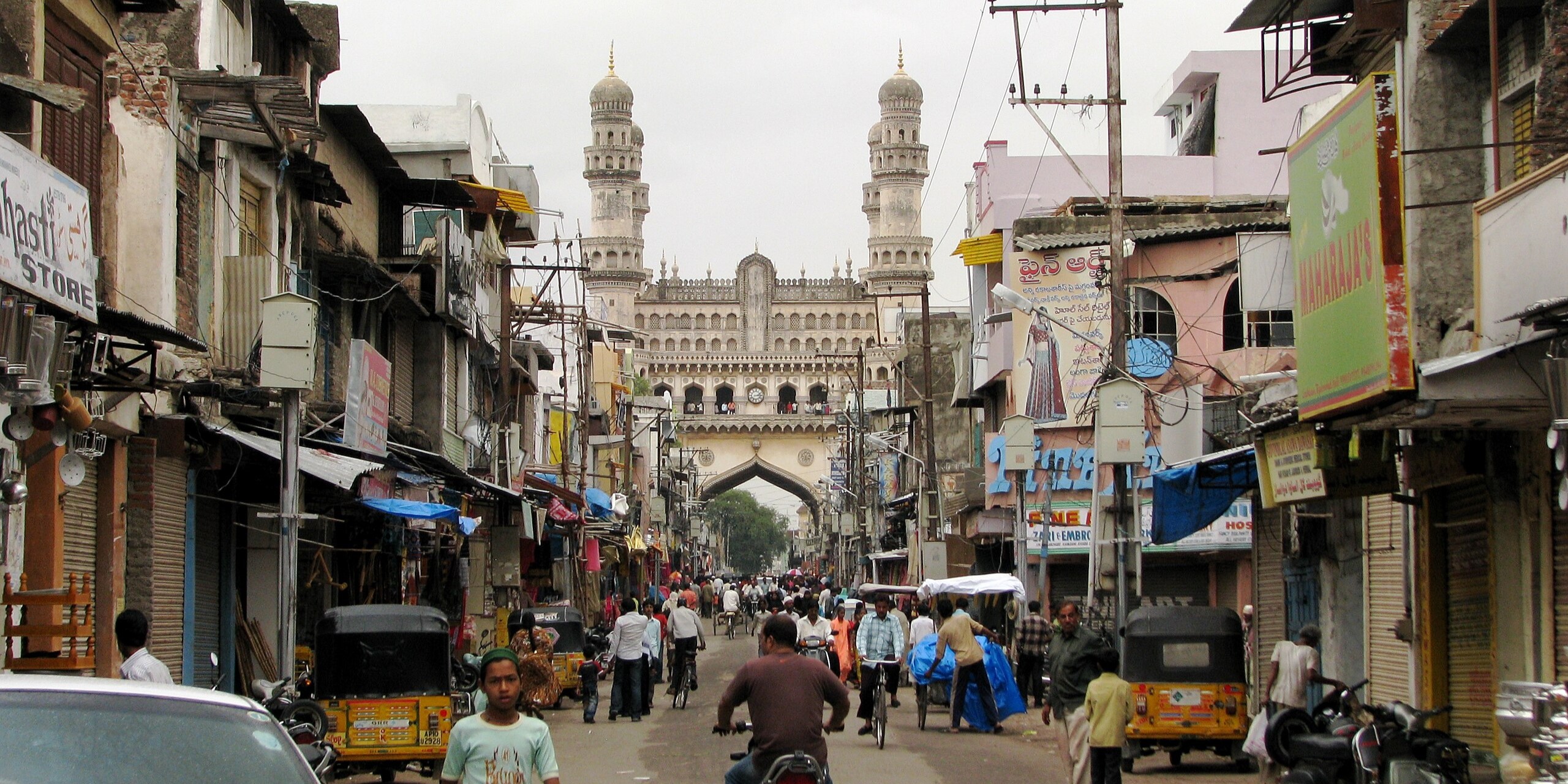
The survey found 86% of the No Caste section living in Hyderabad. The city provided what the report called geographic and economic shelter.

Synopsis: The comprehensive SEEEPC Survey in Telangana revealed that the state has a large, diverse group of people who identify themselves as having No Caste. However, a significant number of ‘No Castes’ have caste certificates, and 13.5% admitted to having accessed reservation benefits. The survey revealed that this section of the people, largely affluent and urban-based, could afford to shed their caste tag compared to their counterparts in villages where people know each other in detail.
The Telangana Socio-Economic, Educational, Employment, Political and Caste (SEEEPC) Survey has found a large group of citizens who identify themselves as having “No caste”.
The group — 10th largest in the state — consisted mostly of the affluent class. IAS and IPS officers comprised 22.9% of the group, judges 9.3%, and central government officials constituted 13.2%.
They pay income tax three times above the state average. The group’s engagement with MGNREGA is as low as 0.2%, against a state average that runs many times higher.
The ‘No Caste’ community comprises 3.4% of Telangana’s population. Their representation in the state’s most powerful institutions runs at nearly seven times higher than that share.
The SEEEPC Survey, which covered 3.55 crore people across 242 caste groups and represents the most detailed caste census any Indian state has conducted, does not treat this as a coincidence.
The Independent Expert Working Group (IEWG), constituted by the Telangana government in March 2025 to analyse the data, described the No Caste identity as an ideological proxy for the relatively well-off people for whom caste has ceased to be a barrier.
What the data presented is something sharper than that fact. “No Caste” is not a post-caste identity. It is what caste privilege looks like when it no longer needs to announce itself.
Also Read: Caste survey finds high rate of under-18 marriages of girls in OC Iyengars
Interestingly, 43.3% of the people who identified as No Caste still hold a caste certificate. Among the group, 13.5% admitted to having accessed reservation benefits.
They used the system caste has built before dropping the caste label.
The IEWG put it directly: caste neutrality is often not the absence of caste, but the ability to walk away from its consequences. For communities that still need to claim their identity to access rights, to fight discrimination, to receive welfare, opting out is not available, contrary to the 12 lakh No Caste population.
The survey found 86% of the No Caste section living in Hyderabad. The city provided what the report called geographic and economic shelter. In the anonymous professional environments of GHMC and Medchal-Malkajgiri, caste detachment became possible in a way it never could be in Narayanpet or Mulugu. One cannot opt out of caste in a village where everyone knew your family, your well and your god. But one can be in a technology park in Kondapur.
Their Composite Backwardness Index score was 48, against a state average of 81. They sent 25.9% of their children to private schools, against a state average of 9.8%. Among youth under 30, 48.5% study in English medium. Only 11.4% were dependent on daily-wage work, against a state average of 31.3%.
Also Read: Telangana’s Dalits, Adivasis go to the Gulf, forward castes to the US and UK
If No Caste represented how forward caste communities managed identities, inter-caste marriage represented how they managed everything else.
The survey revealed that 95% of families were married within their caste. Only 5.6% of households, approximately 6.27 lakh families, reported a member who had married outside their caste. The figure suggested that the caste system has not faced any structural challenge from within matrimony.
Knowing who sits just above and below that 5.6% state average, and why, tells a more layered story.
Also Read: Dalits nearly four times more likely to avail loans for medical treatment
OC Iyengars/Iyers led the state in inter-caste marriages with 11.9%. BC-C SC Christians followed at 9.9%. OC Rajus recorded 8.7%. These are urban, educated, professionally mobile communities. The IEWG attributed their higher rates to urbanisation and exposure to diverse social networks.
OC Iyengars/Iyers also recorded the highest girl child marriage rate in the state at 21.2%, five times the state average. They record the lowest female-to-male ratio at 90.7%.
These are not the indicators of a community that has dissolved its caste boundaries. They are indicators of a community that crosses caste lines in some marriages while tightening control over women in others.
Inter-caste marriages among elite communities do not necessarily signal caste dissolution. It can signal network expansion. A community that marries strategically across caste lines while maintaining early marriage practices and skewed sex ratios uses matrimony as a tool of social management, not social progress.
Also Read: Caste survey reveals BCs make up 56% of Telangana’s population
The dominant caste paradox, the survey revealed, cuts in the opposite direction.
OC Velamas record an inter-caste marriage rate of 5.1%, below the state average. OC Reddys record 4.4%, also below average. These are the wealthiest land-owning communities in Telangana. They hold the highest asset ownership and the deepest roots in the state’s agricultural economy.
They also guard the matrimonial boundary more tightly than communities far below them on the development index.
The survey data on land ownership, read against inter-caste marriage rates, revealed the reason. Land passes through marriage. Keeping marriage within the community keeps land within the community. For communities whose wealth sits in soil and property rather than salaries and stocks, the caste boundary in marriage functions as a property boundary. Opening it means opening the inheritance.
The IEWG described this as a cultural residue of caste limiting personal agency, particularly for women. It also functions as an economic strategy that has operated for generations, and that wealth, by itself, does not dissolve.
At the other end of the inter-caste marriage table sit ST Kolams and BC-D Malis, both at 2.6%, and ST Gonds at 2.8%. The IEWG attributed these low rates to geographical isolation and strict adherence to traditional norms.
The survey shed light on a more troubling layer within the ST data. Non-ST men marry ST women to gain legal access to land in Scheduled Areas, exploiting provisions under the 1/70 Act. What registers in the data as inter-caste marriage in tribal communities can function as land acquisition through matrimony. Social integration as a mechanism for dispossession.
The rural-urban gap reinforces how geography shapes these dynamics. Inter-caste marriages occur at 8.7% in urban areas and 3.3% in rural ones. The city loosens caste barriers in marriage. It also concentrates the communities for whom those barriers were never load-bearing in the first place.
The survey found that discrimination at places of worship runs higher in urban areas at 8.2% than in rural areas at 3.8%. The city does not dissolve caste. It changes how caste operates.
The No Caste professional in Hyderabad rejects the label while holding the certificate. The elite community crosses the matrimonial line while deciding who their daughters should marry. The land-owning community guards the matrimonial boundary because it guards the land. The tribal woman marries across caste lines and loses access to her own community’s land protections.
Each of these is a different expression of the same structure.
The IEWG described Telangana as a society where caste is imposed, not just inherited. The survey data made the case for why that distinction matters.
Inheritance suggests that caste passes down through families and can be interrupted. Imposition suggests it operates through institutions, through land law, through the state, through the certificate system, through the labour market, regardless of what any individual chooses to call themselves.
Post-caste India, the data suggested, is not a destination the country is moving toward. It is a postcode. And it sits, overwhelmingly, in Hyderabad.
(Edited by Majnu Babu).



