

Published Apr 17, 2026 | 1:06 PM ⚊ Updated Apr 17, 2026 | 1:06 PM

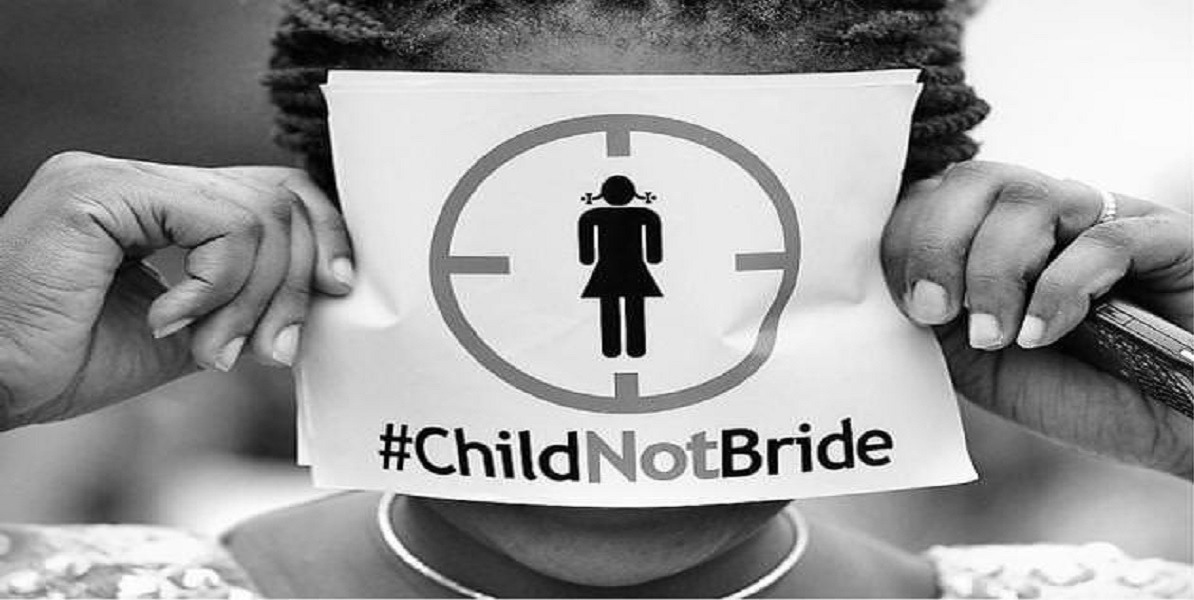
Representational image

Synopsis: The comprehensive SEEEPC survey has found that the OC Iyengar/Iyer community has the highest instances of marrying off their girls before they turn 18. Ironically, the same community has been sending the highest number of children to private school, but it recorded the lowest female illiteracy.
OC Iyengar/Iyer community in Telangana recorded the highest instances of marrying off underage daughters: 21.2%, much higher than the state average of 5%.
This finding was revealed in the Telangana Socio, Economic, Educational, Employment, Political and Caste (SEEEPC) Survey – 2024, the most detailed caste survey any Indian state has undertaken, covering 3.55 crore people across 242 caste groups.
Ironically, the same community has been sending the highest number of children to private school, but it recorded the lowest female illiteracy. The community also leads the state on nearly all education indicators.
Also Read: How Sphoorthi army is preventing child marriages
The OC Jain community recorded an 11% girl-child marriage rate, more than double the state average. OC Velamas recorded 5.1%. OC Reddys recorded 4.4%. OC Muslims returned figures that placed them among the higher end of the table.
As a group, General Castes recorded a girl-child marriage rate of 4.4%, higher than both the Scheduled Castes at 4.0% and the Scheduled Tribes at 3.8%.
Across the 56 major castes surveyed, the least backward communities on the state’s Composite Backwardness Index did not record the lowest child marriage rates.
The survey found 2.16 lakh girls below 18 had married across Telangana. The communities driving that number were not the ones the state has built its child protection architecture around.
Also Read: Telangana’s Dalits, Adivasis go to the Gulf, forward castes to the US and UK
Scheduled Tribes recorded the lowest girl-child marriage rate in the state at 3.8%. Scheduled Castes followed at 4.0%.
These were the same communities the survey identified as the most deprived. ST women recorded the worst educational outcomes: only 9.6% of rural ST adults aged 15 and above have completed SSC, against a state average of 14.1%.
Among ST Kolam women, 82.9% have not studied beyond the 10th standard.
Yet these women come from communities that marry their daughters later, not earlier, than forward caste communities.
BC-A Gangiredlavaru recorded the highest girl-child marriage rate among the 56 major castes at 8.1%. OC Kapu recorded the lowest at 2.1%. The data did not map any clean narrative about poverty and early marriage.
Also Read: Ceremony of unity in Kerala now mired in doubt, probe
OC Brahmin women recorded the lowest share of below-10th education in the state at 36.2%. Nearly 59% of General Caste individuals held a diploma or higher qualification, against 34.4% for Scheduled Castes and 28.4% for Scheduled Tribes. General Caste youth studied in English at 56.6%, against a state average of 47%.
The survey’s findings have questioned the assumption that education protected girls from early marriages.
The OC Iyengar/Iyer community led the state in educational attainment and recorded the lowest female-to-male ratio at 90.7%, a figure that pointed to deeper gender distortions. It also recorded a girl-child marriage rate of 21.2%.
The Independent Expert Working Group (IEWG), constituted by the Telangana government in March 2025 to analyse the survey, found that for some elite communities, cultural conservatism operated as a force independent of economic status or educational access.
Also Read: AP leads South India in child marriages
The IEWG, chaired by former Supreme Court judge Justice B Sudershan Reddy, and including development economist Prof Jean Drèze and inequality scholar Prof Thomas Piketty as special invitees, pointed to a pattern that the numbers reflected.
Dominant land-owning communities maintained inter-caste marriage rates well below the state average. OC Velamas record an inter-caste marriage rate of 5.1%, OC Reddys 4.4%, against a state average of 5.6%. OC Iyengars/Iyers record the highest inter-caste marriage rate at 11.9%.
What the data reflected was matrimonial practice becoming a tool for social and economic consolidation. Communities used early marriage to control who their daughters married, when they married and what property and caste position that marriages preserved. Education did not dissolve that impulse. In some communities, it appeared to coexist.
Also Read: Groom’s wife looks on as 40-year-old man marries girl, 13
The geography of child marriage in Telangana reinforced this reading.
Within the Greater Hyderabad Municipal Corporation, 11.6% of girls aged 10 to 18 married before the legal age, the highest figure in the state. No rural district came close. Narayanpet, the rural district that led all others, recorded 6.7%.
Urban Telangana recorded a girl-child marriage rate of 6.9% against a rural figure of 4.7%. Rangareddy recorded 7.3%. Medchal Malkajgiri posted 6.8%.
These were the districts with a higher concentration of upper-caste and high-income households.
Current interventions targeted SC and ST districts. Mahabubabad and Mancherial featured as priority zones in government planning documents. These communities required support on multiple indicators that the survey has identified.
But the survey placed Hyderabad at the top of the child-marriage table. It placed Iyengar/Iyer households at five times the state average. It also placed General Castes above Dalits and Adivasis on this specific indicator.
The IEWG described the survey as a social x-ray. It exposed a problem the state has not been screening for, in the households it has not been watching, and in the city it assumed had moved past the issue of child marriage.
Incidentally, most of the 2.16 lakh girls found married before 18 in Telangana came from educated households.
(Edited by Majnu Babu).



