

Published Nov 05, 2026 | 3:57 PM ⚊ Updated Nov 05, 2026 | 4:03 PM

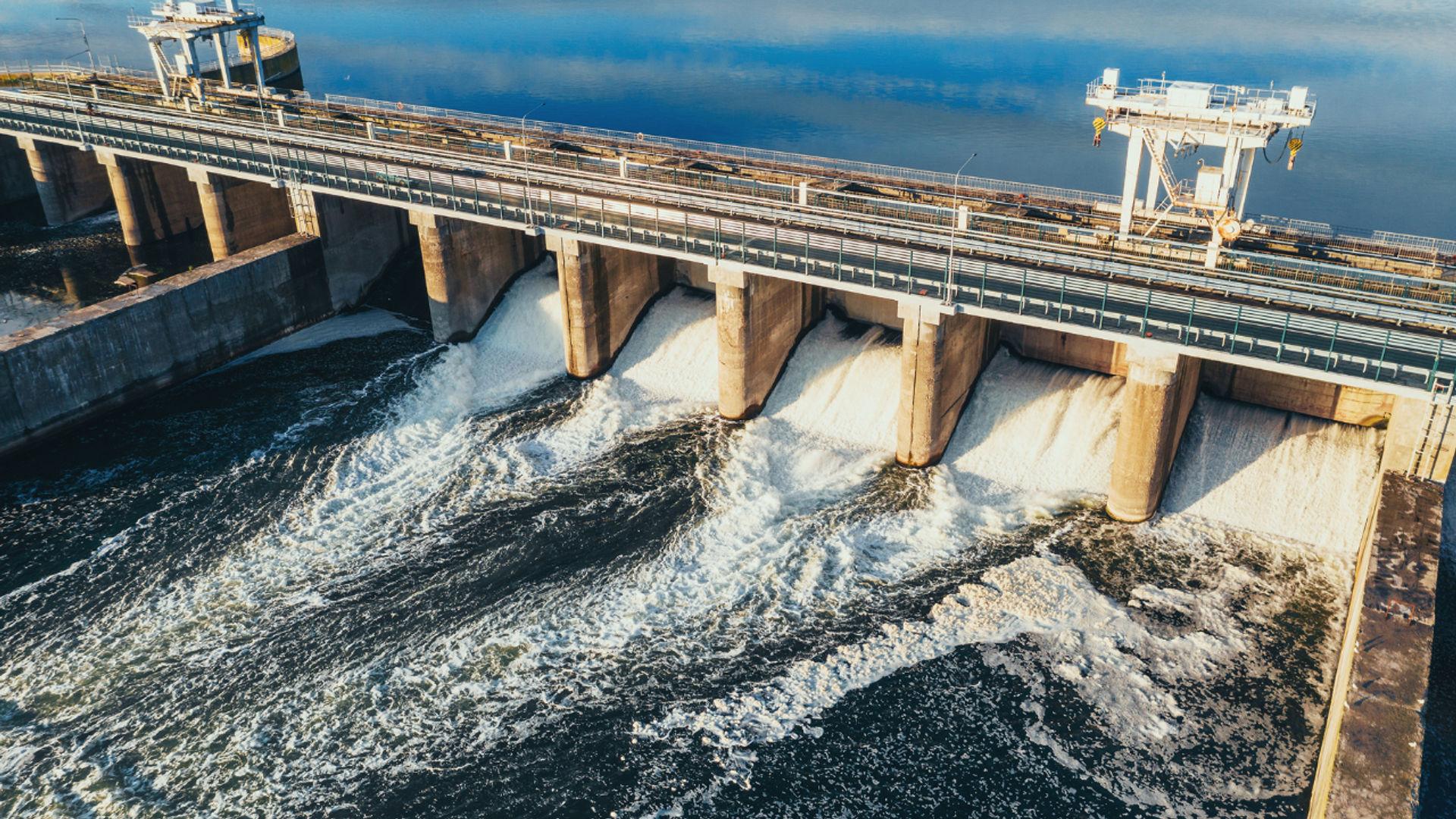
The Singur dam, a key water source for Hyderabad, held about 3 tmcft in late October against its full capacity of 29.91 tmcft.

Hyderabad is under severe water stress as a weak monsoon has sharply lowered the reservoirs that feed the city, while borewells have dried up in many localities. The consequence is a rush for tankers, panic over wastage, and a crackdown on illegal borewells.
Rainfall in the state ran 17 per cent below normal from 1 June to 30 September, prompting the government to declare a drought. It has notified 365 mandals across 31 districts as drought-hit for the 2026 kharif season.
Although Hyderabad’s core urban region has been excluded from the list of drought-hit areas, the government has acknowledged the severity of the water crisis and instructed officials to treat the situation with the same urgency.
The Singur dam, a key water source for Hyderabad, held about 3 tmcft in late October against its full capacity of 29.91 tmcft, while the Manjira reservoir held just 0.19 tmcft of its 1.5 tmcft capacity. At a high-level meeting on El Niño preparedness in October, Chief Minister A. Revanth Reddy noted that Telangana’s reservoirs held less than 200 tmcft and urged citizens to prepare for a tough 9-10 months, with Chief Secretary Sanjay Jaju adding that storage levels had dropped by 30 to 40 per cent.
Ashok Reddy, Managing Director of Hyderabad Metropolitan Water Supply and Sewerage Board (HMWSSB), said that lower availability at Singur and Manjira led to a shortfall of 100 million gallons a day (MGD) in supply.
Alternatively, Hyderabad is set to receive around 60 million gallons per day (MGD) from other sources. About 40 MGD will come from the Godavari River, while 10 to 15 MGD will be drawn from the Krishna River by adjusting existing supplies or boosting pumping. An additional 5 MGD will be drawn after filtration from Osman Sagar and Himayat Sagar. Even with these measures, the city will be staring at a deficit of 40 to 50 MGD.
Also Read: Telangana issues El Niño advisory: Reduce high-protein intake, go for seasonal fruits and vegetables
With municipal water supply switching to alternate days — even once every 3 days in some areas– the daily tanker bookings in the CURE (Core Urban Economy) region have surged. On average, 6000 to 7000 tankers were booked per day in October, a steep rise from the usual off-season level. For comparison, bookings hit a record 15,200 in a single day on 30 May, when summer demand peaked.
West Hyderabad, home to the city’s IT corridor, has been hit hardest by the water crisis, especially in areas like Kondapur, Kukatpally, and Serilingampally. Beyond these areas, Hyderabad’s peripheries, such as Boduppal and Bandlaguda, are also facing major supply disruptions.
S. Hari Shankar, HMWSSB general manager (engineering) for Kukatpally, told South First that the zone alone gets 40,000 to 45,000 tanker bookings a month, which translates to 1,200 to 1,500 a day. He said the bulk of this demand comes from commercial establishments such as hostels and paying guest (PG) accommodations, many of them built in cramped spaces and without necessary permits.
Across affected areas, people have complained of insufficient municipal supply and tanker deliveries delayed by 3 to 4 days. Many are also using private water tankers, which charge Rs 1500, compared with the Rs 500 charged by HMWSSB for domestic use.
Residents of Sri Krishna Colony in MMC’s Boduppal area said they have faced inconsistent drinking water supply for almost two years. Satish, a member of the colony’s association, told South First that the colony receives municipal supply only once every three days, for less than 30 minutes, at extremely low pressure. Families in the colony have been spending nearly Rs 7000 per month on water tankers, in addition to the monthly water bill.
Residents of the Ambernagar area near Jamia Osmania, which falls under GHMC, have complained that the entire colony has gone without water for days. Water tankers are not sufficient, they said; an 800-foot borewell installed for the colony’s welfare has been dormant due to a motor breakdown. They have submitted multiple representations to the HMWSSB but are still awaiting official action.
Speaking to South First, a resident who wanted to stay anonymous said, “We need a 3-phase meter for this submersible pump; the respective DGM and GM have requested the finance team to release the funds for meter connection. But neither the director of finance nor anyone from the department is taking care of this.”
Meanwhile, operations manager for the Malkajgiri Municipal Corporation (MMC), Satya Narayana, told South First that East Hyderabad’s water supply from the board has not been impacted. He blamed depleting groundwater and dried-up borewells for the crisis.
Also Read: Telangana HC extends interim protection to HYDRAA Commissioner AV Ranganath
According to Hari Shankar, groundwater depletion has emerged as the key issue this year. While demand typically rises in February and drops sharply after June or July, bookings in his division remained unusually high, at 30,000 to 40,000 a month even in July, because dried-up borewells failed to recharge adequately. He expects more borewells to fail as summer nears, pushing people further toward tankers.
Satyanarayana also noted dried-up borewells were a major issue in East Hyderabad while adding that most tanker requests in the region came from apartments. He also stated that gated communities are setting up their own sewage treatment plants (STPs).
The Telangana Ground Water Department’s data shows how deep the problem runs. Groundwater levels in the CURE region, which covers Greater Hyderabad, Cyberabad and Malkajgiri corporations, dropped by 6.85 metres in September compared to the previous year. The average depth to water reached 11.58 metres, with Kukatpally recording a steep 47.23 metres.
The 46 monitored mandals recorded just 484 mm of rainfall through October 31 against a normal average of 729 mm, a 34 per cent deficit. In Ranga Reddy district, average groundwater depth increased to 12.75 metres from 6.14 metres a year earlier, with Medipally hitting 28.41 metres.
In view of both water and electricity crises, Chief Secretary Sanjay Jaju has instructed officials to deny borewell permissions for new constructions in the city.
HMWSSB serves 1.3 crore people in Hyderabad through 14.5 lakh connections. Officials estimate that three lakh of those connections, in areas that depend on Singur and Manjira dams, could face shortages by December.
Chief Secretary Sanjay Jaju has set a target of a 20 per cent cut in water use across the three civic corporations, which he says could save about 80 MGD. HMWSSB MD Ashok Reddy said an additional 40 MGD under Mission Bhagiratha will be operational by 15 December. Separately, an ₹84.14-crore proposal has been framed for extra pumping at the Singur reservoir, with officials evaluating emergency motors should water levels drop below dead storage.
The board also repaired leaks in the Gandipet conduit at Subza Colony, Tolichowki and Manikonda over 36 hours, from 6 am on 3 November to 6 pm on 4 November.
On 1 November, the board launched the Green Water Tanker service to supply treated water from Sewage Treatment Plants (STP) across its three regions. The tankers carry treated sewage water for construction, gardening, parks, road cleaning and industry, with a warning that it is not to be used for drinking.
Users pay only transport charges and can visit a plant and check the quality before using the water. To ease doubts about quality, LED boards at 20 plants built with sequencing batch reactor (SBR) technology show readings for BOD, COD, total suspended solids, and pH. Another 25 older plants will also be fitted with the technology soon.
Within two days of its launch, the board said 79 tankers had made 124 trips from 18 STPs, delivering 1,107 kilolitres (11.07 lakh litres) of treated water. Government departments took 609.5 kilolitres, while private users accounted for 497.5 kilolitres. The Cyberabad region led demand with 505 kilolitres supplied via 14 tankers, followed by Malkajgiri with 306.5 kilolitres and Hyderabad with 295.5 kilolitres.
Also Read: Is Telangana prepared for the heat of El Niño?
Amid the ongoing scarcity, private tanker supplies have increased, and the authorities have received several complaints about illegal borewell operations in residential areas and near lakes.
In Tellapur, a neighbourhood sprawling with under-construction high-rises, residents have repeatedly written to the Mandal Revenue Officer asking for immediate seizure and closure of illegal groundwater extraction points in Tellapur and Osman Nagar. A delegation of the Tellapur Neighbourhood Association (TeNA) met the revenue officer on 31 October.
According to the letter, water extraction points sit next to densely populated apartment complexes. They alleged that more than 200 heavy tankers reportedly plied the Tellapur-Osman Nagar road every day. They have asked for the seizure of equipment, pumps, motors, and tankers, legal action against owners and operators, police coordination to stop threats, and regular monitoring to prevent extraction from resuming.
The Hyderabad Disaster Response and Asset Protection Agency (HYDRAA) has been tasked with removing illegal borewells in the City and cracking down on illegal water supply. On 2 November, it removed seven borewells and six sumps in Tellapur, seized tankers, and registered cases. The agency also seized 31 borewells around Sunnam Cheruvu and Thammidikunta, along with seven unpermitted borewells operating near Fox Sagar. They also seized tankers carrying HMWSSB stickers.
On 3 November, private tanker owners in Hyderabad protested against the removal of their borewells, with some stopping their tankers on the road and emptying them. The strike hit PG hostels in Cyberabad, with about 2,500 clustered around Madhapur, Kokapet, Narsingi, Raidurgam, Manikonda and KPHB. The same day, the residential campuses of several colleges around Madhapur announced early holidays until Diwali.
The strike ended on 4 November after Chandrashekar, president of the Water Tankers’ Association, met HYDRAA chief AV Ranganath. The operators agreed to resume supply immediately and draw groundwater only from outside the Outer Ring Road, after obtaining permissions.
According to HYDRAA, domestic borewells are usually 100 to 300 feet deep, while commercial operators drill 1,000 to 1,500 feet with powerful motors.
The agency said it would coordinate with HMWSSB to limit large-scale extraction in dense areas and help keep tankers running to commercial establishments, especially PG hostels in IT hubs.
On 29 October, Minister Ponnam Prabhakar launched HMWSSB’s PAANI app, which helps citizens report water wastage and misuse.
To take part, residents sign up as “Save Water Volunteers” using a government ID. Once registered, they can report instances of water wastage. The board verifies each complaint through SMS and field inspections while keeping the complainant’s identity confidential. If misuse is confirmed, notices and penalties will follow. Reportedly, 437 people registered within the first six days.
Within days, several users took to social media platforms to complain that the app was not functioning as expected and that they were facing issues while logging in and raising complaints. HMWSSB assured that the issues were being fixed and that they had already begun addressing the complaints raised through it.
Officials said the board’s first aim was to cut wastage and not penalise.
“Before penalising, we are giving awareness. Field officers have been asked to visit areas during supply hours, and the board is using vans, autos with loudspeakers and community meetings to spread the message,” Haris Shankar said.
The board has advised residents not to wash vehicles and floors with drinking water, to stop sumps and overhead tanks from overflowing, to repair leaks, and to build soak pits and rainwater harvesting systems.
Meanwhile, the board had been receiving misuse complaints well before launching the app. Metro Customer Care reportedly logged 1,523 such complaints between April 2025 and October 2026. About 60 per cent (915) involved illegal motors fitted directly to supply pipelines, 184 (12.08 per cent) pertained to overflowing sumps, and 132 (8.67 per cent) related to washing entrances or floors with drinking water.
In October alone, the board received 50 complaints, resulting in penalties totalling about ₹2.5 lakh. On October 28, inspections in the Shamshabad zone led to the seizure of 13 illegal motors at RB Nagar in Kotwalguda. First-time offenders face a ₹5,000 fine along with the confiscation of their equipment.
Also Read: Telangana’s Kamareddy medical college suspends 14 MBBS students over ragging complaint
According to CM Revanth Reddy, the drinking water crisis could last until July 2027. Sanjay Jaju said El Niño’s impact is expected to peak around February 2027.
HMWSSB officials emphasised that resolving the crisis relies heavily on unseasonal rains to replenish groundwater levels. Until then, the board stressed the need to strictly enforce water conservation measures and curb wastage, while calling for rainwater harvesting, lake restoration, and recharge pits to help depleted aquifers recover.
(Edited by Fayisa CA)



