

Published Jun 22, 2026 | 3:00 PM ⚊ Updated Jun 22, 2026 | 3:06 PM

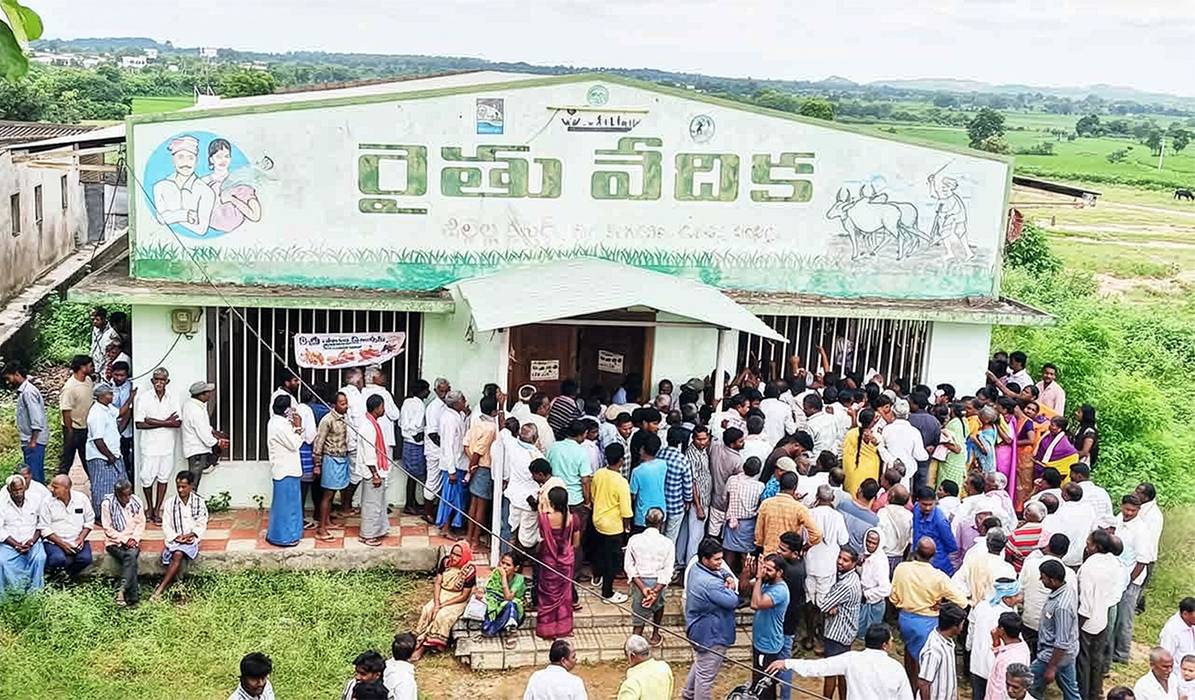
Telangana's fertiliser consumption has risen from around 29 lakh tonnes combined in 2018-19 to over 41 lakh tonnes recently. (Special Arrangement)

Synopsis: When launched, the Fertliser App was touted as India’s first statewide digital solution for transparent urea distribution. But the farmers on the ground say it has failed them in multiple ways.
Ramaiah, a 48-year-old small landholder in Telangana’s Mahbubnagar district with its drought-prone red soils now partially revived through irrigation, has a lament.
“Earlier, we would stand in line from dawn for fertiliser, often returning empty-handed after losing a full day’s work. With this Fertilizer App, I tried booking two bags for my paddy fields, but technical glitches (server overloads and OTP failures) wasted two precious days. The rains won’t wait for glitches,” he tells South First.
Hundreds of kilometres away in Warangal district, Lakshmi, a 42-year-old paddy grower and mother of two from Warangal Rural, shares a similar despair: “Managing fields and home was tough with long queues. Now, even after checking stocks on my phone, the app shows ‘no slot available’ or crashes. We lose critical top-dressing windows, risking crop failure despite better irrigation.”
The two farmers are not alone. Others tilling the green yet vulnerable fields of the state also say that Telangana’s much-touted Fertilizer App, instead of bringing them relief, has only added to their woes.
A quick check reveals that farmers in rural Telangana are left battling “technical glitches” and enduring daylong waits in front of fertiliser supply stores. This comes at a time when Telangana’s agricultural landscape has transformed significantly. Enhanced irrigation in recent years through initiatives like Mission Kakatiya and the Kaleshwaram Lift Irrigation Project has assured water to vast tracts and expanded the cultivated area.
Paddy acreage has surged, alongside cotton and maize, driving urea demand to unprecedented levels. For the 2026 Kharif season, the state’s requirement has outstripped allocations, with consumption rising sharply due to a good monsoon and more planting. Yet, central supplies remain constrained, and the app—intended as the solution—has struggled to bridge the gap.
Also Read: Telangana Rising? Not until the farmer can sell
The Fertilizer App was developed by the Telangana Agriculture Department in collaboration with the National Informatics Centre as India’s first statewide digital solution for transparent urea distribution.
Farmers were promised real-time stock checks, acreage-linked bookings via the Dharani portal, and SMS-confirmed slots to bypass queues. Official figures as of mid-February 2026 claimed over 12.73 lakh farmers booked nearly 50.48 lakh bags, with high purchase rates. Agriculture Minister Tummala Nageswara Rao hailed it as a shift “from crowded queues to planned booking.”
But farmers have a different story to tell.
Srinivas Rao, a 55-year-old from a Warangal village, voiced widespread frustration: “The app crashes or shows no stock when I try during evenings. Power cuts and weak signals make it worse—I wait hours for OTPs that never arrive. Volunteers help sometimes, but we lose critical days.”
These issues echo across other regions.
Peddi Reddy of Station Ghanpur (formerly in Warangal district) recounted, “Expanded irrigation brought more land under paddy, but urea supply hasn’t kept pace. The app promises scientific allocation, yet I stood in line for six hours after failed bookings. My two acres are suffering.”
From Huzurabad, Tirupathi echoed the sentiment: “We have better canals now, more acreage, but the app’s glitches force us back to old queues. Middlemen thrive while we wait. This Kharif, my maize crop needs timely nitrogen, but delays are costing yield.”
Yadagiri of Vangapalli highlighted concerns that less fortunate farmers face: “Not everyone has a smartphone or knows the app. With increased cultivation, thanks to irrigation projects, the demand is high. But supply through this faulty system is low. We protested, yet there has been little beyond assurances.”
In Siddipet, Ekamtham added, “The government talks of buffer stocks, but the reality is long lines at depots. Technical issues apart, the app limits bags per acre, ignoring actual needs in high-yielding irrigated fields.”
Komuraiah of Ashwaraopalli (near Siddipet) was blunt: “Despite the Rythu Bandhu support, we face a crisis. Irrigation expanded our fields, but urea shortage and app failures threaten everything. Crops are yellowing without top-dressing.”
The underlying mismatch is stark.
Telangana’s fertiliser consumption has risen dramatically—from around 29 lakh tonnes combined in 2018-19 to over 41 lakh tonnes recently—with urea dominating. Expanded irrigation and cultivation area (now over 2.27 crore acres) has fuelled this surge, yet central allocations and lags in domestic production, including at the Ramagundam plant, persist.
The app manages distribution but cannot create supply, leading to hoarding allegations, black marketing, and protests. High Court interventions have sought government responses on shortages threatening yields.
While the administration promotes Nano Urea and awareness camps with a helpline (1800-599-5779), ground-level implementation lags. Digital literacy gaps, inconsistent connectivity, and server failures when demand is high have renewed calls to scrap the app-based system and revert to manual distribution in some areas.
As the 2026 Kharif season progresses, Telangana’s farmers—the backbone of the state’s economy—find themselves caught between the state’s app-driven ambition and practical failures. Increased irrigation potential now underscores the urgent need for reliable and timely fertiliser inputs.
Without addressing supply gaps, technical robustness, and inclusive access, the Fertilizer App risks becoming a symbol not of empowerment, but of unfulfilled promises. For districts from Mahbubnagar to Warangal and beyond, the real harvest depends on bridging this divide before it is too late.
(Edited by R Rajesh Kumar.)
Also Read: Why Telangana has reasons to fear the likely “super” El Niño



