

Published Sep 17, 2026 | 4:12 PM ⚊ Updated Sep 17, 2026 | 4:12 PM

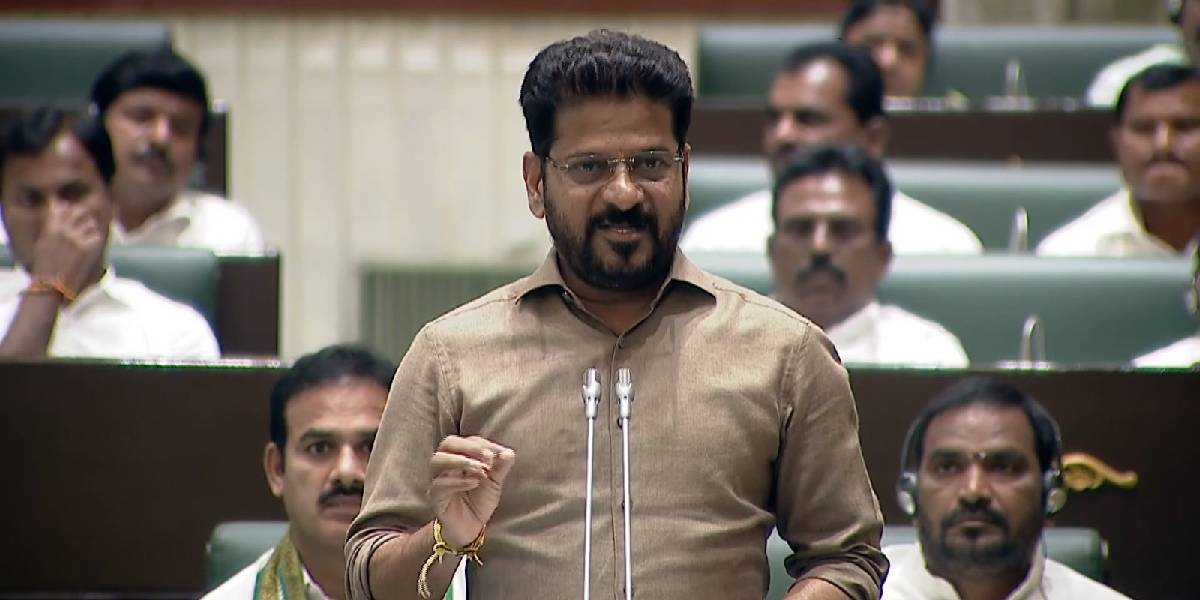
Telangana Chief Minister A Revanth Reddy addressing the Section 22A issue at the state Legislative Assembly on 16 September.

Synopsis: In his address to the State Assembly on Wednesday, CM Revanth Reddy announced that the government has recognised 12 major issues behind the Section 22-A logjam. A new 12-point plan has been laid out to address these issues, beyond the panel set up to review appeals by the property owners affected by prohibited properties list. The roadmap promises regularisation of several pending lands and announces new schemes for resolving longstanding issues.
Chief Minister A Revanth Reddy on Wednesday, 16 September, during his Assembly address said that the government has identified 12 major recurring problems behind Section 22-A of the Registration Act.
While the CM has already laid out a redressal mechanism for owners contesting the inclusion of their properties in the prohibited list, he said the government is also working to fix the problem at the root.
In the 12-point action plan, the Telangana government has sorted the complaints piling up into 12 distinct categories, each needing its own administrative or legal route for resolution. The government said it would set up a high-powered committee to oversee all 12 strands, comprising high-ranking administrative officers.
The 12 are as follows: ULC surplus land, government land inside approved layouts, Singareni coal-belt land, GO 59 cases, GO 118 cases, houses built on assigned land, indiramma houses on government-allotted plots, Indiramma houses on beneficiaries’ own land, assignment land of freedom fighters and former servicemen, Bhoodan land, private patta land with unpaid NALA charges, government-land encroachments and unauthorised layouts, and Secunderabad leasehold properties.
Also Read: Revanth Reddy orders inquiry into alleged encroachment of government land by KCR family
The first category covers land classified as surplus under the Urban Land Ceiling Act, some of it in colonies only partly regularised in the past.
The government will soon unveil a new scheme that will apply retroactively to pending applications as well as fresh ones. Registration and regularisation will now run in parallel rather than one waiting on the other.
A second scheme will be announced next week, targeting government land inside layouts that authorities such as the HMDA, GHMC or DTCP had already approved. The scheme would introduce a dedicated mechanism to work through the backlog of registration requests there.
For land in the Singareni coal belt, a district-level committee will screen pending applications against defined eligibility criteria before clearing them.
Separately, a panel will finalise roughly 1.22 lakh cases where conveyance deeds were already issued under Government Order 59, while the remaining 18,590 pending applications in that category move into the broader new scheme instead.
In the LB Nagar constituency, the State government directed that the Government Order 118 cases must be cleared within a set time frame, with each resolved case struck off the list at once.
GO 118 regularises long-disputed lands across 44 colonies in and around Hyderabad, with the single largest cluster of 36 colonies sitting within the LB Nagar constituency itself.
Many of these are held by lower- and middle-income families who have been fighting since 2007 for the proper implementation of the GO and for their lands to be regularised.
According to the action plan, houses built on assigned land, governed by the Telangana Assigned Lands (Prohibition of Transfer) Act, 1977, will undergo detailed legal vetting and broader consultation rather than an immediate policy change.
The same caution applies to public housing units or Indiramma houses built with government funds on government-allotted plots, since many of the poorest households are involved. For Indiramma houses built on lands owned by beneficiaries, the government said that sale and purchase will be allowed once the scheme’s five-year lock-in period ends.
Assignment lands held by freedom fighters and former servicemen, along with Bhoodan land donated for redistribution, will be brought under a comprehensive land-pooling scheme. The government says the funds raised through the scheme would be earmarked specifically for housing programmes for poor SC, ST, BC and minority beneficiaries.
The State government said that it would allow the registration for private patta lands stuck over unpaid conversion charges under the Non-Agricultural Land Assessment (NALA) once the NALA fee is paid, along with stamp duty and registration charges.
Encroachments and unauthorised layouts on government land will be absorbed into the same new regularisation policy used for ULC surplus land.
For the longstanding regularisation proposal of leasehold properties in Secunderabad, a new committee will be set up within the next 30 days to work out the conversion of the properties into freehold ones.
(Edited by Sumavarsha)



