

Published Jul 01, 2026 | 10:35 PM ⚊ Updated Jul 01, 2026 | 10:35 PM

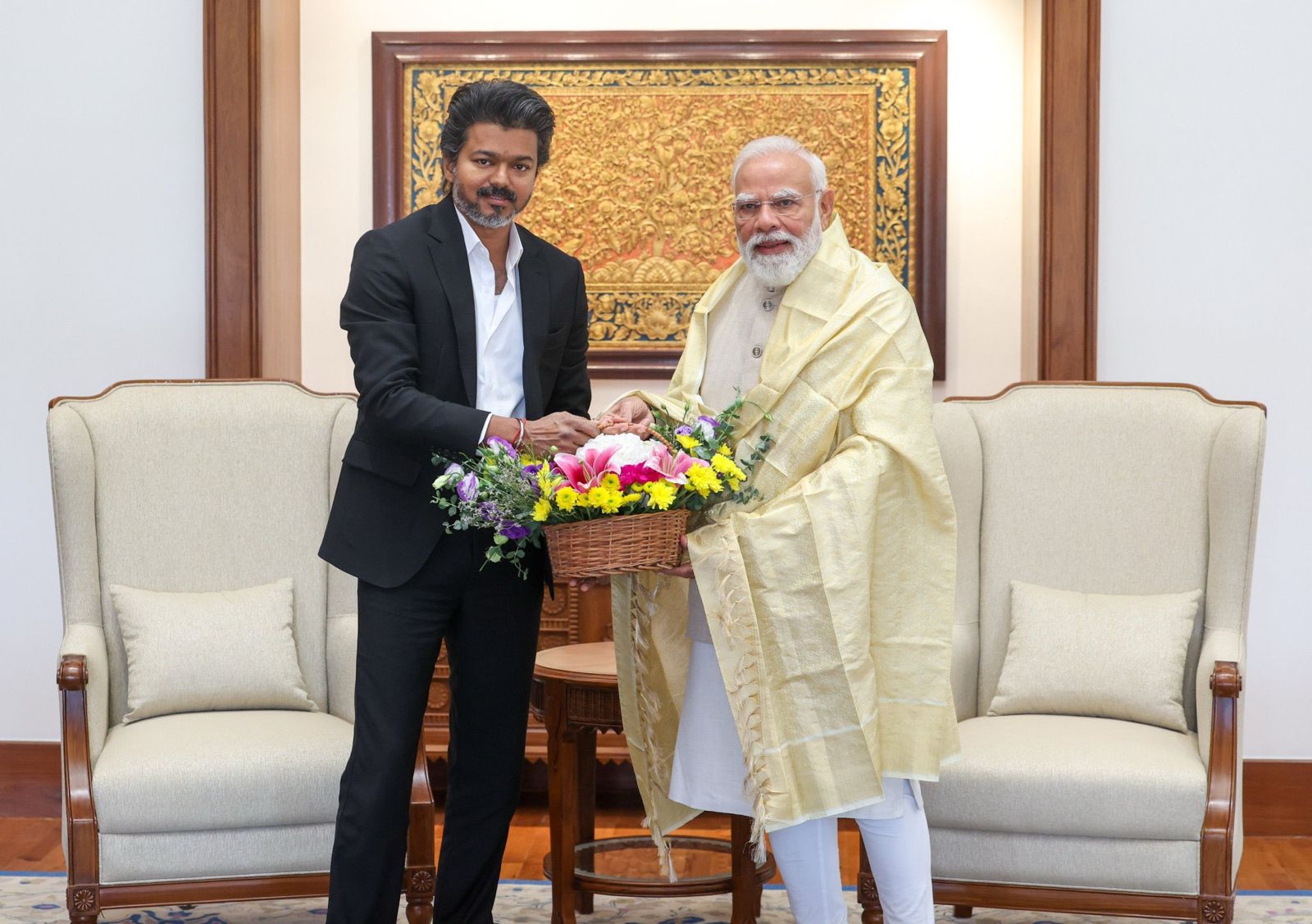
File photo of TN CM Vijay and PM Modi

Synopsis: The Chief Minister objected to the new 60:40 cost-sharing formula between the Union and State governments for wage, material and administrative expenses. He said the shift from the long-standing structure of Mahatma Gandhi National Rural Employment Guarantee Scheme (MGNREGS) would place unsustainable pressure on the state exchequer, potentially reducing employment days for rural workers and affecting other welfare schemes.
Tamil Nadu Chief Minister C. Joseph Vijay on Wednesday, 1 July, wrote to Prime Minister Narendra Modi raising concerns over the implementation of the Centre’s newly launched Viksit Bharat – Guarantee for Rozgar and Ajeevika Mission (Gramin) or VB-G RAM G scheme, which came into effect on July 1, 2026.
In his letter, Vijay said the new scheme, introduced under the VB-G RAM G Act, 2025, would impose an additional financial burden of more than ₹5,000 crore on the Tamil Nadu government because of its revised funding pattern and operational restrictions.
The Chief Minister objected to the new 60:40 cost-sharing formula between the Union and State governments for wage, material and administrative expenses. He said the shift from the long-standing structure of Mahatma Gandhi National Rural Employment Guarantee Scheme (MGNREGS) would place unsustainable pressure on the state exchequer, potentially reducing employment days for rural workers and affecting other welfare schemes.
Vijay urged the Centre to continue 100 percent Union government funding for wages and administrative costs, while proposing a 75:25 sharing ratio for material costs between the Centre and Tamil Nadu.
The Tamil Nadu government also opposed the Centre’s proposed centralized formula for village panchayat classification and fund allocation, arguing that a uniform national model ignores regional socio-economic differences and could lead to uneven grassroots-level distribution of funds.
Raising concerns over agricultural flexibility, Vijay said the law’s requirement for states to pre-notify a fixed 60-day peak agricultural season, during which work must be suspended, is impractical because unpredictable climate events such as El Niño frequently alter farming cycles. He requested that district collectors be allowed to dynamically decide such periods based on local conditions.
The Chief Minister also asked the Centre to permit state-funded housing schemes under the programme, pointing out that the current framework allows convergence only with Union government rural housing schemes.
Further, he sought decentralization of project approvals, arguing that requiring Union government approval for every scheme convergence could create administrative bottlenecks and delay implementation.
Also Read | Vijay’s June 23 Assembly speech: When performance trumped governance
In his final request, Vijay urged the Centre to continue the scheme under the name of Mahatma Gandhi, saying it would preserve Gandhi’s legacy and maintain public goodwill associated with rural employment programmes.
Stating that Tamil Nadu has consistently been a national leader in implementing rural employment guarantee programmes, Vijay said the scheme could be executed more effectively with these changes and expressed hope that the Prime Minister would consider the state’s proposals favourably.
(Edited by Sumavarsha, with inputs from Subash Chandra Bose)



