

Published Jun 06, 2026 | 9:33 AM ⚊ Updated Jun 06, 2026 | 9:33 AM

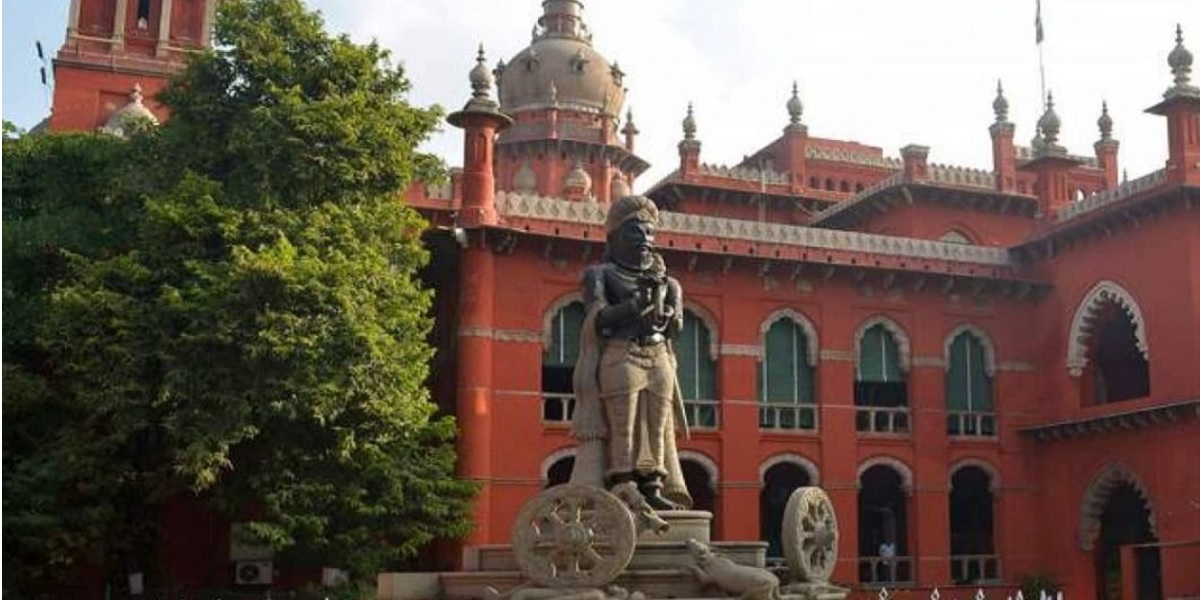
The Madras High Court

Synopsis: From Chennai to Coimbatore, many Muslims in Tamil Nadu say this year’s Bakrid was marked by fear, police intervention and uncertainty following the Madras High Court’s order restricting animal slaughter outside designated slaughterhouses.
Forty-three-year-old K. Basheer from the Kurichi Pirivu area in Coimbatore’s Podanur has been participating in Bakrid celebrations for as long as he can remember—nearly four decades. For the last 20 years, he has also been performing qurbani (ritual sacrifice) during Bakrid.
This year too, on 28 May, he was preparing cattle in a car shed near his house for the festival. However, Basheer did not know that just a day earlier, on 27 May, the Madras High Court had ruled that no animal slaughter could take place outside designated slaughterhouses.
Like every year, Basheer was waiting to distribute the meat among relatives, neighbours, friends and poor families after the sacrifice. But this time, instead of relatives arriving at his home, three policemen from the Podanur police station turned up.
“They told me, ‘You cannot slaughter these cattle. Orders have come. We are taking them to a goshala’,” Basheer recalled.
Shocked, Basheer argued with the police, saying that his family had been sacrificing cattle and goats during Bakrid from his grandparents’ generation as part of their religious practice and sharing the meat with the poor. “This is our fundamental right. We cannot give this up,” he told them.
As a crowd gathered at the spot, the police eventually left after issuing a warning.
Also Read: ‘Sacrificing cows not obligatory religious practice’: Madras HC bans slaughter during Bakrid
But in Chennai’s Tiruvottiyur Kargil Nagar, 37-year-old Aleemullah Sharif did not get the same opportunity.
Aleem had organised a collective qurbani for more than 140 Muslim families. He had arranged 17 cattle in a secluded area in Kargil Nagar after obtaining permission from the landowner and local area leaders. While the sacrifice was underway, more than 30 members of Hindu Munnani arrived at the spot and stopped the event.
“They shouted, ‘Do not slaughter our mother. Otherwise, we will slit our throats,’” Aleem said.
As tensions escalated in the locality, police and corporation officials intervened and seized more than ten cattle from Aleem, taking them to animal shelters.
As a result, over a hundred Muslim families were unable to perform what they considered their religious obligation. It was only after Islamic organisations intervened and held talks the next day that the cattle were returned to Aleem.
“Out of the 30 people who came and created trouble, only five were actually from Kargil Nagar. Most of them had even bought and eaten beef from me earlier. But on Bakrid day, they suddenly spoke about devotion and religion just to snatch away our rights for politics,” Aleem said emotionally.
Basheer and Aleem say they were not alone.
Across Tamil Nadu, including districts such as Mayiladuthurai, Madurai, Coimbatore and Chennai, police reportedly visited Muslim households that had prepared goats and cattle for Bakrid sacrifices, citing the Madras High Court order and in some places seizing the animals.
Many Muslims in Tamil Nadu now say that they experienced fear and anxiety during Bakrid this year unlike ever before.
On a petition filed by Indu Makkal Katchi state youth wing secretary K Surya Prasanth, the Madras High Court on 27 May, 2026, delivered a significant order directing the Tamil Nadu government to ensure that no cow or calf is slaughtered during Bakrid or on any other day.
The Division Bench comprising Justices GR Swaminathan and V Lakshminarayanan also ruled that authorities cannot permit slaughter of any animal in places other than designated slaughterhouses.
The court directed the Chief Secretary to the Government and the Additional Director General of Police (Law and Order) to issue suitable instructions to officials across the State to ensure strict implementation of the order and prevent any violations. The matter was posted on 29 May, 2026, for reporting compliance.
Following the High Court’s order, the Tamil Nadu police department on 29 May filed a compliance report before the Madras High Court detailing the steps taken to implement the directive across the State.
Also Read: Beef, red sanders and Pawan Kalyan’s twin battle
According to a report published by The Hindu, Additional Director General of Police (Law and Order) TS Anbu informed the court that circulars had immediately been issued to all Commissioners, Inspectors General, Deputy Inspectors General and Superintendents of Police.
The circular instructed officials not to permit slaughter of any animal outside designated slaughterhouses and to ensure that no cows or calves were slaughtered during Bakrid or on any other day. The police also informed the court that special squads and local inspectors had been deployed across Tamil Nadu to conduct patrols and prevent illegal slaughter, especially in public places and unapproved locations.
The compliance report further stated that police officials were coordinating with district collectors, municipal commissioners and local bodies to ensure slaughter takes place only in licensed slaughterhouses with proper veterinary certification. Police personnel were also stationed in “vulnerable and sensitive localities,” while Special Branch and city intelligence units were activated to continuously monitor the situation.
After recording the compliance report, the High Court closed the matter stating that no further orders were necessary.
Many Muslims say the new restrictions have shaken the sense of security they long associated with Tamil Nadu as a relatively safe state for minorities.
Several Muslims, including Basheer, fear that this could become the beginning of a North India-style atmosphere where transporting cattle itself may invite harassment, violence or accusations.
“When more than 30 Hindu Munnani members surrounded me and demanded that we immediately vacate the place, I did not know what to do. I reached the peak of anxiety. This is a Bakrid I can never forget in my life. Until the next day, I could not even sleep peacefully,” said Aleem, who has organised collective qurbani events more than five times.
Chidambaram MLA and Manithaneya Jananayaga Katchi leader M Thamimun Ansari criticised the developments as a direct violation of constitutional rights.
“Bakrid is a festival during which Muslims sacrifice goats, cattle or camels once a year and distribute the meat not only among themselves but also to people from other communities and the poor. Passing such an order and implementing it immediately without even allowing this practice is shocking,” he said.
He further argued that it was the responsibility of the government to create proper infrastructure and designated spaces for such sacrifices.
“If the government fails to provide proper facilities, naturally people conduct sacrifices in secluded areas near their homes. Nobody is disturbed by this. But using officials to stop it is not just a human rights violation, but also a violation of religious freedom,” he alleged.
The High Court order also stated that no animal slaughter can take place outside designated slaughterhouses.
DMK deputy spokesperson Dr SAS Hafeezullah criticised this aspect of the ruling.
“A slaughterhouse is fundamentally a commercial facility, not a place where religious rituals are performed. During such festivals, lakhs of people participate. Even during Hindu family functions and temple festivals, people sacrifice goats in private lands and open spaces. These practices are culturally embedded in society. Treating all of them as criminal acts by overriding existing practices is unacceptable,” he said.
Under the court order, not just Muslims but also Hindus who perform animal sacrifices in temples and religious rituals would technically be required to carry out such practices only in government-approved slaughterhouses.
Even if one considers only Muslims, Tamil Nadu has nearly 42 lakh Muslims, constituting around 6 percent of the state’s population according to the 2011 Census.
However, according to official data available on the Tamil Nadu Animal Husbandry Department website, the State has only 182 slaughterhouses in total.
Districts such as Karur and Perambalur have only one slaughterhouse each. Six districts have only two slaughterhouses, while another six districts have only three. Coimbatore has the highest number with 13 slaughterhouses.
At the same time, conflicting numbers exist in public records. A 2019 Deccan Herald report stated that Tamil Nadu had 266 slaughterhouses, while a 2017 Indian Express report citing RTI data mentioned 425 slaughterhouses in the State.
But irrespective of the official numbers, Basheer says he was not even aware of any such designated slaughterhouse facility in Coimbatore.
“I think there may be one slaughterhouse somewhere in Coimbatore, but I am not really aware of it. And practically, how will that work during Bakrid? How can lakhs of people use the same facility on a single day meant for a religious occasion?” he questioned.
This has now raised a larger question: whether the available slaughterhouse infrastructure in Tamil Nadu is sufficient for lakhs of people who perform animal sacrifice as part of religious and cultural practices.
While many Muslims say the court order itself pushed the community into fear, several also accuse the ruling Tamilaga Vettri Kazhagam (TVK) government led by Chief Minister C Joseph Vijay of failing to handle the issue properly.
Aleem said, “I have been organizing a collective qurbani for five years. During the DMK government, nobody ever disturbed us. But now, after the TVK government came to power, this is happening. It creates fear in me. This feels like just the beginning. I don’t know what may happen in the future.”
Ansari too criticised the government’s handling of the issue.
“The TVK alliance government made a huge mistake here. The moment this judgment came, the government should have immediately gone on appeal. But they did not,” he alleged.
When South First contacted Minority Welfare Minister A.M. Shahjahan for a response, he described the judgment as “fundamentally confusing.”
“We and the Law Department are discussing the next course of action. Immediate steps will be taken,” he said.
Explaining the government’s stand, Shahjahan said the order was delivered at around 9 pm on May 27 and contained several confusing elements.
“First, the order says cows and calves cannot be slaughtered. But nowhere in Tamil Nadu are cows and calves sacrificed for qurbani. Second, it says slaughter should happen only in slaughterhouses. Practically, that is impossible. Lakhs of goats and cattle are sacrificed on that single day. How can all of them be taken to slaughterhouses? Even in Hindu temples and other religious places in Tamil Nadu, animal sacrifice traditions exist. Has anyone ever told them that sacrifices can happen only in slaughterhouses?” he asked.
Shahjahan said he had immediately spoken to the Law Minister CTR Nirmal Kumar that same night and discussions were underway regarding legal and administrative options.
“At 9 pm the judgment came. By 9.30 pm I had spoken to the Law Minister. We were assured that the judgment would not create problems in Tamil Nadu because nobody here sacrifices cows or calves. Based on that understanding, we issued announcements asking people to continue regular practices. But due to misunderstanding by some officials, tension arose in certain places. We have also received information that cases were filed in some places,” he said.
After consulting the Law Minister again, Shahjahan said he was informed that no formal cases had been registered anywhere in Tamil Nadu specifically over qurbani practices. He added that even if any cases had been mistakenly filed due to misunderstanding by local officials, steps would be taken to withdraw them.
Strongly criticising the timing of the judgment, Shahjahan said it could damage communal harmony.
“Delivering such a judgment barely 12 hours before Bakrid affects social harmony. We have requested the Chief Minister to find a permanent solution. Discussions are happening on whether to file an appeal or issue a government order to prevent confusion in the future. We are consulting legal experts and the Law Department is also examining the issue. Action will be taken soon,” he said.
When asked whether the issue had been discussed with Chief Minister Vijay directly, Shahjahan said discussions had so far taken place only with the Law Minister, who would later brief the Chief Minister.
He also accused some political forces of falsely portraying the government as inactive due to political motives.
“But just as this Bakrid passed peacefully, future festivals too will happen peacefully,” he assured.
Ansari, however, insisted that the government should act faster.
“If this had been the DMK government, they would have immediately filed an appeal. Just as the previous DMK government protected the religious rights of Muslims without creating civic issues, this government too must act quickly,” he said.
For Basheer and Aleem, Bakrid is no longer just associated with sacrifice and celebration. This year, they say, it also became associated with fear.
At the same time, democratic and minority rights organisations argue that this issue is not limited to Muslims alone. They say the order also affects Hindus and other communities who practice animal sacrifice as part of temple rituals and local religious traditions. They insist that the government must protect the religious freedoms guaranteed under the Constitution.
Also Read: Annamalai announces new political movement
(Edited by Sumavarsha)



