

Published Oct 15, 2026 | 11:42 AM ⚊ Updated Oct 15, 2026 | 11:43 AM

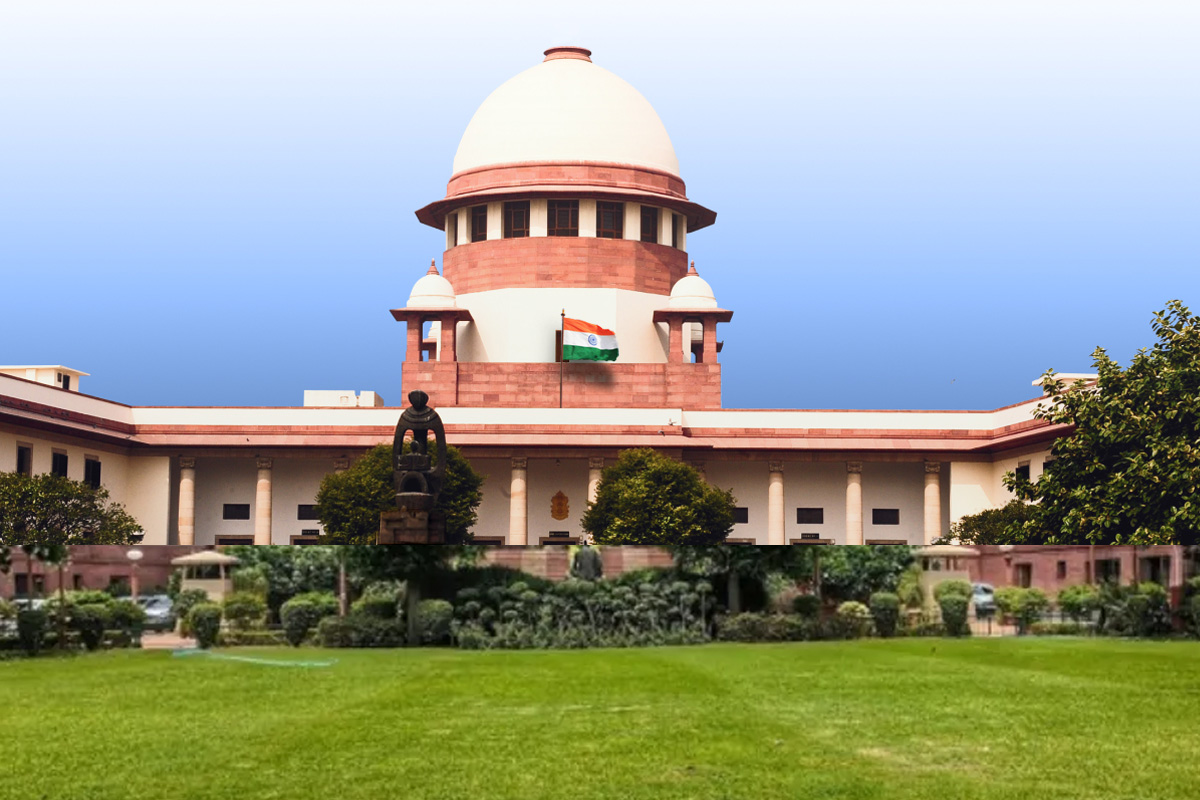
The Bench directed that Metro and rail facilities should function normally unless restrictions were required.

Synopsis: The Supreme Court has ruled that people converting from Hinduism to a non-Hindu religion cannot claim reservation benefits solely on the basis of their pre-conversion caste status. The ruling has implications for Tamil Nadu’s 3.5% Backward Class Muslim (BC(M)) sub-quota and the State government’s attempt to extend its benefits to eligible converts from BC, MBC, Denotified Communities and Scheduled Castes.
In a setback to the Tamil Nadu government, the Supreme Court has ruled that a person who converts from the Hindu social order to a non-Hindu religion cannot claim affirmative action benefits under Article 16(4) of the Constitution merely on the basis of their social backwardness before conversion.
The Supreme Court was upholding the Madurai Bench of the Madras High Court’s June 25, 2026, order striking down the Tamil Nadu government’s March 2024 order that extended Backward Class Muslim (BC(M)) reservation eligibility to eligible converts from BC, MBC, Denotified Communities and Scheduled Castes.
The Tamil Nadu government’s Government Order (Ms.) No. 31, dated March 9, 2024, allowed eligible converts from Backward Classes (BC), Most Backward Classes (MBC), Denotified Communities (DNC) and Scheduled Castes (SC) to seek community certificates under the Backward Class Muslim (BC(M)) category.
A Supreme Court bench comprising Justices Prashant Kumar Mishra and Shree Chandrashekhar rejected the appeal to reinstate this order, observing that backwardness experienced in a person’s former social order cannot, by itself, be carried forward to confer membership of a different notified backward-class community after conversion.
The court further clarified that conversion to a non-Hindu social order does not automatically establish membership of any particular backward-class community. A person’s pre-conversion caste or community status cannot simply be transferred to a different notified community in the post-conversion social order.
This principle is central to the dispute over Tamil Nadu’s BC(M) reservation policy. The government had argued that people who experienced social and educational disadvantage before converting to Islam should not lose reservation benefits solely because of their change of religion. However, the legal question was whether their previous community status could establish membership of a different notified Backward Class Muslim community.
The court also addressed the position of people who convert from the Hindu social order to another religion and subsequently return to Hinduism.
It held that their entitlement to affirmative action cannot be determined merely by referring to their antecedent caste status. Instead, the authorities must undertake an independent, fact-specific assessment to determine whether the person’s original caste or social identity has genuinely been revived and whether the applicable constitutional and legal requirements have been fulfilled.
In other words, reconversion alone does not automatically settle the question of reservation eligibility. The person’s claim must be examined in accordance with the applicable legal requirements.
The court also referred to the Constitution (Scheduled Castes) Order, 1950, which specifies the religions under which a person can be recognised as belonging to a Scheduled Caste.
Under the Order, a person professing a religion other than Hinduism, Sikhism or Buddhism cannot be deemed to be a member of a Scheduled Caste. Consequently, a person who converts to a religion outside those specified cannot retain Scheduled Caste status under the Order or claim benefits that depend on such membership.
Tamil Nadu already provides a separate 3.5% reservation for Backward Class Muslims within its broader Backward Classes reservation framework.
The sub-quota was introduced under the Tamil Nadu Backward Class Christians and Backward Class Muslims (Reservation of Seats in Educational Institutions Including Private Educational Institutions and of Appointments or Posts in the Services under the State) Act, 2007.
The 3.5% allocation is carved out of the 30% reservation provided for Backward Classes under the State’s reservation framework. It is intended for eligible members of notified Backward Class Muslim communities and is not automatically available to every person professing Islam.
The notified communities include Ansar, Dekkani Muslims, Dubekula, Labbais, including Rowthar and Marakayar, Mapilla, Sheik and Syed.
The legal dispute concerns whether people converting to Islam from Hindu Backward Classes (BC), Most Backward Classes (MBC), Denotified Communities (DNC) and Scheduled Castes (SC) could be treated as members of these notified Muslim communities and claim reservation benefits. The Supreme Court has now ruled that they cannot avail these benefits.
The Tamil Nadu government issued Government Order (Ms.) No. 31 on March 9, 2024, following a recommendation by the Tamil Nadu Backward Classes Commission. The order provided for eligible converts from the specified categories to be treated as Backward Class Muslims for reservation purposes.
The move was intended to protect people from socially and educationally backward backgrounds from losing access to reservation benefits solely because they had converted to Islam.
The dispute arose after Sameer Ahamed, who was born into a Hindu family and converted to Islam in 2015, sought a community certificate identifying him as belonging to the Muslim Lebbai community. His conversion was notified through a Gazette notification in 2016.
After the revenue authorities rejected his application, he approached the Madras High Court.
On June 25, 2026, the Madurai Bench of the Madras High Court struck down the State government’s March 2024 order. The High Court held that conversion to Islam did not automatically confer membership of a particular notified Backward Class Muslim community and that an executive order could not override the applicable legal principles and judicial precedents.
The Tamil Nadu government challenged the High Court’s decision before the Supreme Court, arguing that its policy sought to protect people who had experienced social and educational disadvantage and should not deprive them of reservation benefits solely because of religious conversion.
Also Read:
How broken is our economy? New inflation data raises further questions; TN worst hit
(Edited by R Rajesh Kumar.)



