

Published Jun 07, 2026 | 8:00 AM ⚊ Updated Jun 07, 2026 | 8:00 AM

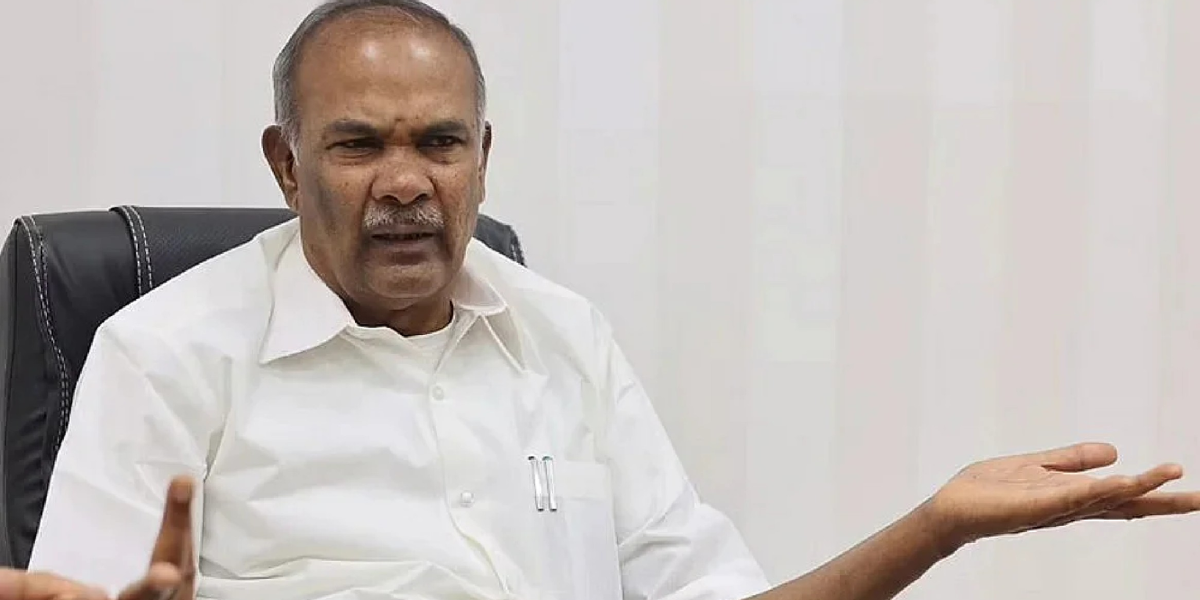
M Appavu. (X)

Synopsis: Madras High Court ruled that valid votes were rejected, election procedures were violated, and voters were forced to accept a candidate ‘not duly elected’, while declaring former Speaker M Appavu as the winner in the 2016 Assembly polls.
The former Speaker of the Tamil Nadu Assembly, M Appavu, was declared the winner almost 10 years after he was officially defeated in the 2016 Assembly election from the Radhapuram constituency.
In a landmark judgment delivered on 3 June 2026, Justice G Jayachandran of the Madras High Court set aside the election of AIADMK candidate IS Inbadurai and declared Appavu as the duly elected MLA from Radhapuram for the 2016–2021 Assembly term.
The judgment brought an end to one of Tamil Nadu’s longest-running election disputes, a legal battle that revolved around rejected postal ballots, counting irregularities, alleged violations of election rules, recount proceedings in the high court, and years of litigation that stretched all the way to the Supreme Court.
More importantly, the judgment raised serious questions about the conduct of the election process.
The controversy began in May 2016 when votes were counted in the Radhapuram constituency in Tirunelveli.
After several rounds of counting, AIADMK candidate Inbadurai was declared elected with 69,590 votes (41.05%), defeating DMK candidate Appavu, who secured 69,541 votes (41.02%), by a thin margin of 49 votes.
Appavu immediately challenged the result, alleging that valid postal ballots cast in his favour had been rejected during counting.
According to the election petition, the rejection of postal ballots and irregularities in the counting process had materially affected the election result.
Also Read: How Madras HC order turned Bakrid into fear fest for TN Muslims
The entire dispute revolved around 203 postal ballots that election officials rejected because they were attested by middle school headmasters instead of gazetted officers.
However, the high court later ruled the rejection improper.
Justice Jayachandran held that middle school headmasters were qualified as gazetted officers for attesting postal ballots under Tamil Nadu government rules.
The court categorically observed that:
The judgment further stated that, “No law prohibits en masse attestation of postal ballots if it is otherwise valid.”
Also Read: After BJP exit, K Annamalai announces new political movement
The high court also identified serious lapses in the maintenance of official counting records.
During the trial, the Returning Officer admitted before the court that mandatory portions of Form 17C, the official counting record prescribed under election rules, had not been filled for the 19th, 20th and 21st rounds of counting.
Instead, separate “replica” sheets had been prepared and kept in sealed covers.
Due to these irregularities, the court concluded that the counting process in those rounds was not conducted in compliance with election rules.
The court subsequently ordered:
Also Read: Was Annamalai BJP’s failed experiment or missed opportunity?
In October 2019, a recounting was held in the Madras High Court under judicial supervision.
However, the matter soon moved to the Supreme Court after Inbadurai challenged the recount order. The apex court permitted the counting process to continue but restrained the declaration of the final result pending further hearings.
The recount findings later proved explosive.
According to the sealed recount report examined by the courts:
The high court concluded that these wrongly rejected ballots completely altered the election result.
Instead of losing by 49 votes, Appavu had actually won the election by 103 votes.
Justice Jayachandran used unusually strong language while discussing the case and the consequences of the flawed election process.
The court observed, “A grave mockery of justice… has been committed to the people of India, particularly the voters of No.228 Radhapuram Assembly Constituency… who were forced to bear a person as their Assembly representative though he is not duly elected.”
The judgment stopped short of directly accusing the Election Commission of deliberate wrongdoing. However, it strongly implied that serious procedural failures in the election machinery and counting process had fundamentally altered the democratic outcome.
What followed was years of prolonged litigation before the Supreme Court.
The matter remained pending through repeated adjournments and interim proceedings, while:
By the time the case returned to final disposal in 2026, Tamil Nadu had already gone through yet another election cycle.
Finally, on 21 May 2026, the Supreme Court disposed of the appeal, observing that because the Assembly term had already expired, “no useful purpose” would be served in continuing to adjudicate the issue surrounding postal ballot attestation.
However, the apex court left it open for the high court to pass consequential orders.
A major part of the judgment focused not just on the election errors, but also on judicial delay.
Justice Jayachandran cited Section 86(7) of the Representation of the People Act, which states that election petitions should ideally be resolved within six months.
The court sharply criticised the fact that the dispute took nearly a decade to conclude.
Quoting Supreme Court observations, the judgment noted that prolonged election litigation often turned democratic adjudication into a “mockery of justice”.
The court warned that delays in resolving election disputes undermined democracy, weakened adult franchise, and damaged public faith in constitutional institutions.
Speaking to reporters outside the Madras High Court, Appavu said the judgment had finally established justice despite the long delay.
“The Madras High Court has now confirmed my victory in the 2016 election case. Even though delayed, justice has been upheld,” he said.
Appavu also emotionally dedicated the victory to the late former Chief Minister M Karunanidhi on the occasion of his birth anniversary.
“On Kalaignar’s birthday, I dedicate this victory to him,” he said.
Based on the recount findings, the Madras High Court:
At the same time, the court clarified that the improper declaration was not personally attributable to Inbadurai and therefore would not disqualify him from contesting future elections.
(Edited by Majnu Babu).



